
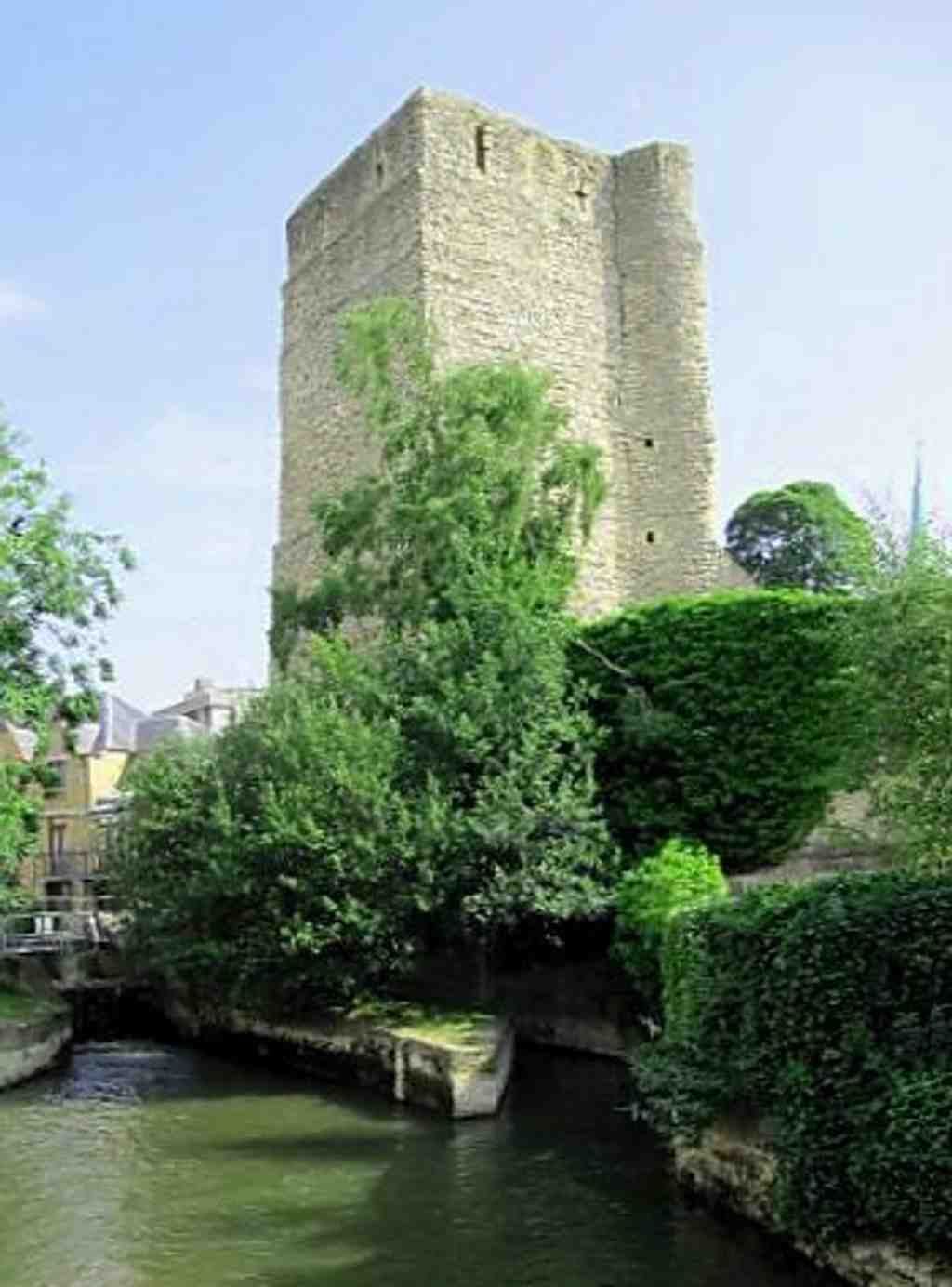
Ahead of you, Oxford Castle appears as a pale stone mound beside a tall rectangular tower, with sturdy prison blocks folded around the older medieval core.
This place has had an identity crisis for almost a thousand years... fortress, royal stronghold, county jail, execution site, courthouse, prison, hotel. Very efficient, really.
The story starts just after the Norman Conquest. Between ten seventy-one and ten seventy-three, Robert d'Oyly, one of William the Conqueror's men, set up a castle here to dominate a town that had already been stormed and damaged. He chose this western edge of Oxford carefully. A nearby branch of the Thames, now called Castle Mill Stream, gave him natural protection, and he diverted water to form a moat. If you glance at the image on your screen, you can see how the moat, barbican, keep and west gate once fitted together like a very unfriendly machine.
The earliest castle was probably a motte and bailey. That means a steep earth mound, the motte, paired with an enclosed yard, the bailey. The mound here rose to about sixty feet, and later builders replaced the timber defenses with stone. But the real old-timer is St George's Tower. Historians now think it predates the castle entirely and began life around the year ten twenty as a Saxon watchtower guarding Oxford's west gate. So yes, one of the castle's most famous pieces may actually be older than the castle itself. History does enjoy a technicality.
This fortress earned its reputation in the civil war called the Anarchy. In the year eleven forty-two, Empress Matilda took refuge here while King Stephen besieged the castle for months. According to the famous version of the story, she escaped at night dressed in white, slipping past Stephen's men across the frozen ground and stream. Local legend insists she never entirely left; people have claimed to see a woman in white waiting on the stairs.
By the late Middle Ages, the castle's military role faded and Oxford turned it into something grimmer: a center of county government and a prison. In fifteen seventy-seven, a notorious court session here ended in the "Black Assize," when judges, jurors and officials died after a sudden outbreak. People blamed a bookseller's curse, naturally. Modern historians blame typhus, then called gaol fever, spread from filthy prison conditions. Less dramatic than a curse... but more convincing.
Then came one of the strangest survival stories in English history. In sixteen fifty, Anne Green was hanged here for allegedly killing her newborn child. After half an hour on the gallows, doctors opened her coffin and discovered she was still breathing. They revived her, she recovered, and authorities pardoned her. That is an astonishing second chance, even by Oxford standards.
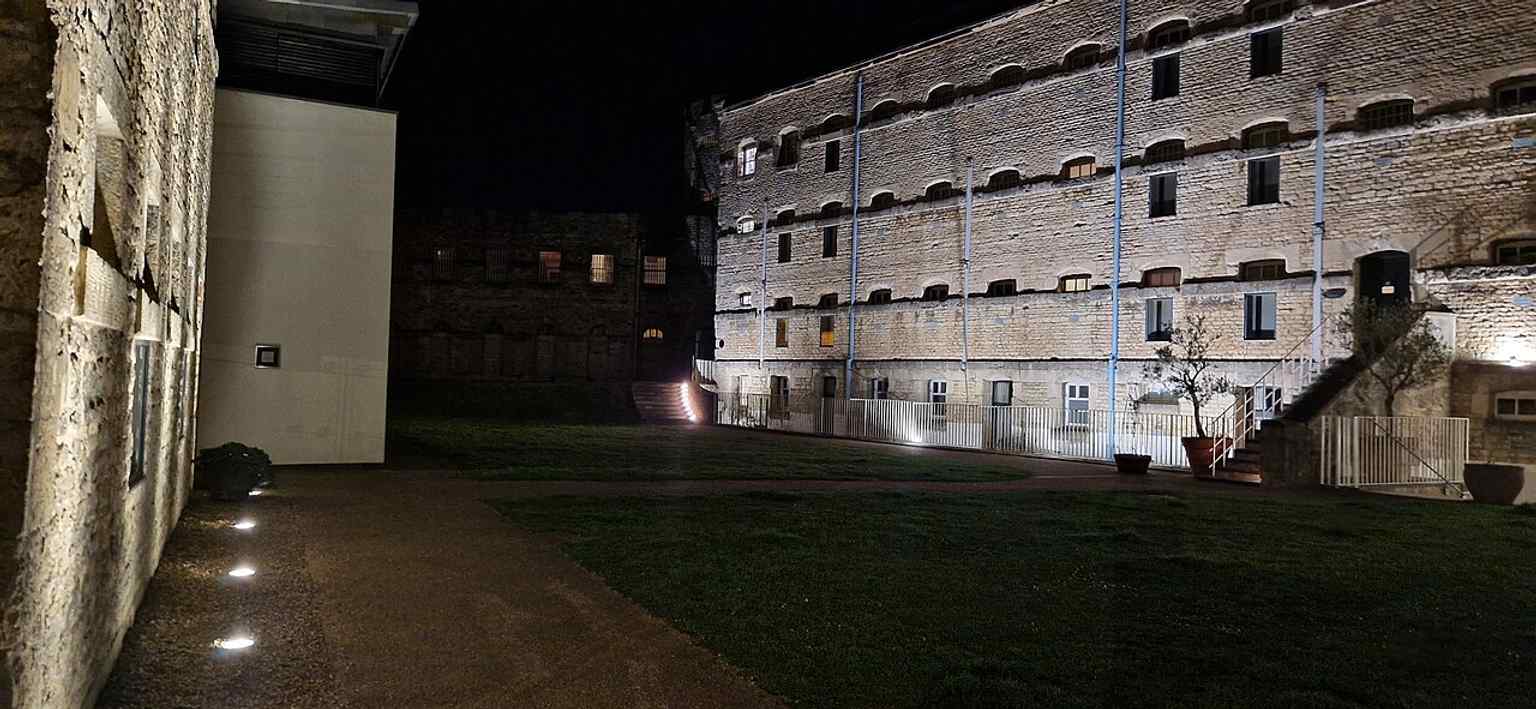
From seventeen eighty-five, officials rebuilt the prison under William Blackburn, and Daniel Harris later completed it. The prison expanded through the Victorian period, held adults and children alike, and eventually became H-M Prison Oxford. If you check the aerial image, you can trace how the mound, St George's Tower, Debtors' Tower and prison wings all sit together in one layered site. The prison closed in nineteen ninety-six, and the cells now serve a gentler purpose than they once did.
Oxford began here as a statement of power, and it still wears every century on its walls.
If you want to go inside later, the site usually opens daily from ten AM to five thirty PM.
When you're ready, continue on to St Ebbe's Church.





.jpg)