
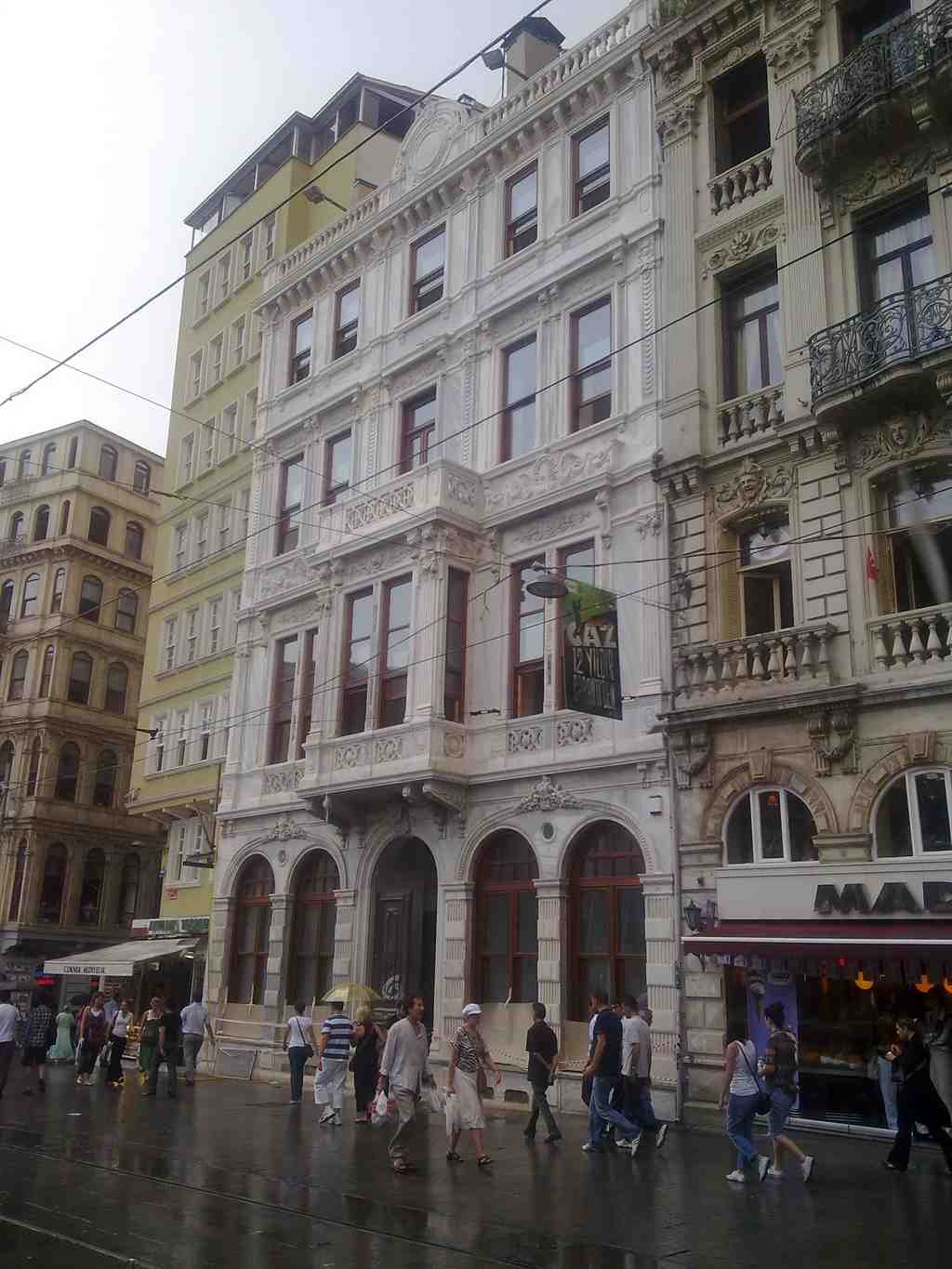
On your right, look for the elegant white, four-story corner building with arched ground-floor windows and lots of ornate trim-right where the street opens up and the foot traffic bunches around the corner.
This is the Galatasaray Museum, and if you’re wondering why a museum needs to sit right on one of Istanbul’s busiest strolling streets, that’s kind of the point: Galatasaray is not just a school or a sports club here-it’s a whole identity, with a memory longer than most family photo albums.
The origin story starts in a surprisingly weird place: a stuffed mammoth. In 1868, as the Ottoman Empire pushed modernization reforms during the Tanzimat era, Galatasaray High School restarted its activities with fresh energy and big ambitions. And along comes a gift from Napoleon III of France: an actual taxidermied mammoth. It helped spark the idea of a natural history museum at the school. So, in an oddly charming way, Galatasaray’s “museum instinct” began with prehistoric branding-nothing says “serious institution” like a giant extinct animal in the hallway.
Fast-forward to 1909. Imagine a meeting room, people speaking French-because that’s what elite education sounded like in late Ottoman Istanbul-and the General Assembly of Galatasaray Sports Club is talking about the future. Not tactics, not transfer gossip: they set a goal to create a museum corner to keep the club’s memories safe. It’s a sweet idea, and also a very practical one. Sports glory is thrilling, but it’s also fragile-medals get lost, photos fade, and yesterday’s heroes become “wait, who was that again?”
By 1912, the club’s founding figure, Ali Sami Yen, makes it real and opens the first Galatasaray Museum in Kalamış. Picture the early collection: cups and medals won up to that point, along with historic photos, documents, jerseys, and plaques. Not polished and corporate-more like a proud, carefully guarded treasure chest.
Then comes the tension. After World War I, rumors spread that the club’s memorabilia might be confiscated. Istanbul is in turmoil, authority is shifting, and “ownership” can become a very flexible concept. Ali Sami Yen doesn’t wait around to find out. By a General Assembly decision dated May 15, 1919, the museum is transferred to Galatasaray High School-essentially placing the club’s memories into the safest vault they had: the school itself. You can almost feel the urgency there-like someone quietly moving the family silver before the knock at the door.
Today, the collection has been enormous-775 cups and medals in total. Space, of course, is the permanent enemy of every museum. In 2018, Galatasaray opened a newer museum at the Ali Sami Yen Sports Complex, and many trophies and plaques were moved there. But this Beyoğlu location still keeps a selection on display-enough to remind you that this club didn’t just win in one sport and call it a day.
Inside, the museum is organized like a life story. The first floor follows Galatasaray High School from its founding to the present, with student uniforms, classroom tools, and photographs-everyday objects that somehow make history feel more personal. The second floor is where the sports pride lives: key trophies, famous shirts like Metin Oktay’s jersey, and loads of photos and gear. The third floor is mainly administrative-because even legends need paperwork.
And yes, the trophy list is outrageous: football league titles, cups, super cups, major European wins like the UEFA Cup in 2000 and the UEFA Super Cup the same year-plus basketball, volleyball, rowing, water polo, swimming, even esports. Basically, if it can be competed in, Galatasaray has tried to win it, frame it, and store it somewhere.
When you’re set, Beyoglu is a 4-minute walk heading southwest.




