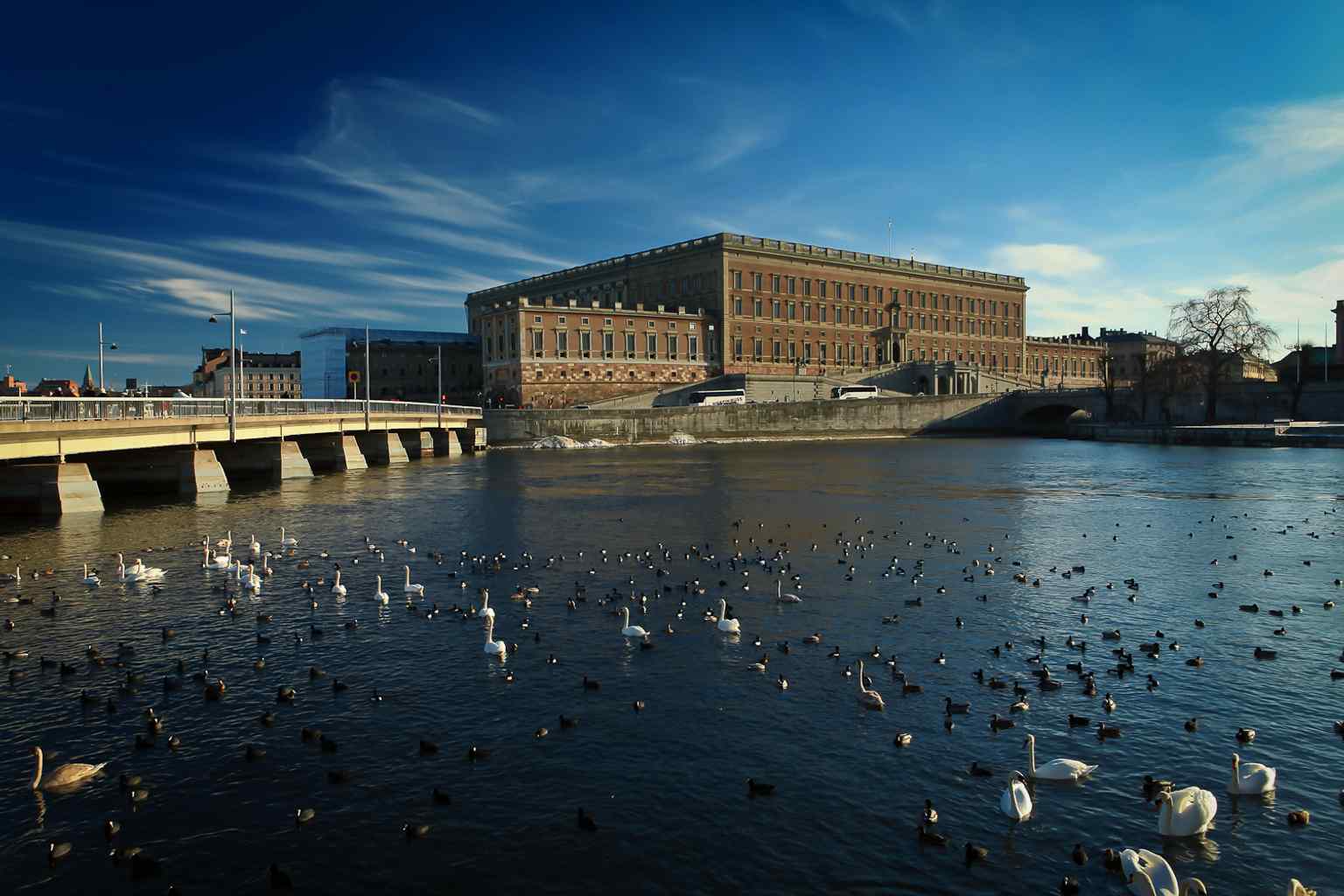
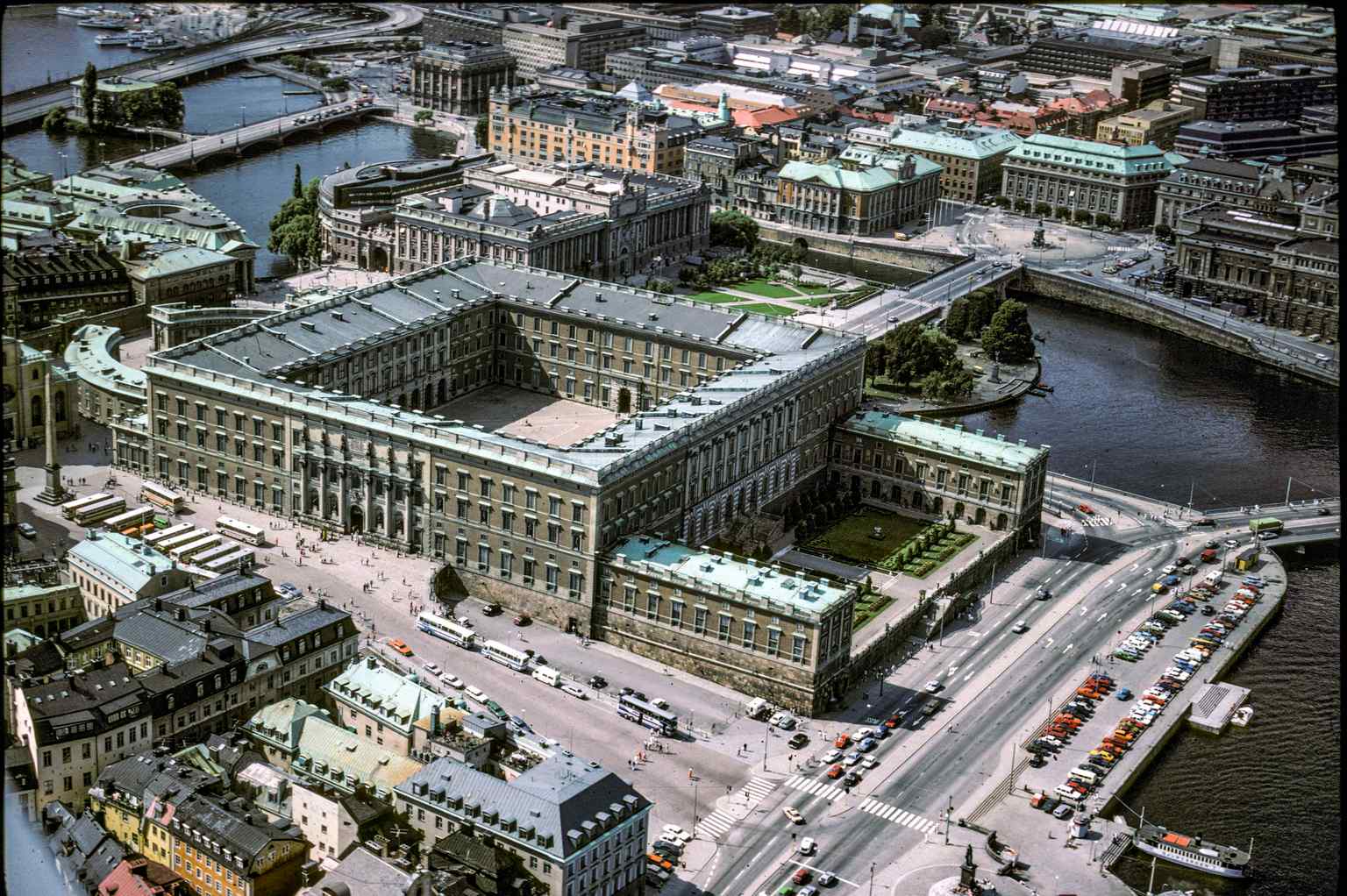
Right in front of you sits the Stockholm Palace, a colossal, rectangular block of earthen-colored brick and sandstone defined by its seemingly endless, uniform rows of windows.
For centuries, this exact spot was home to Tre Kronor Castle, a thirteenth-century fortress built to defend the lake, famous for its towering central spire topped with three crowns. But the massive palace you see today is the ultimate phoenix rising from ashes.
On May seventh, 1697, a catastrophic fire broke out in the attic. At the time, the recently deceased King Charles the Eleventh was lying in state inside. The evacuation was sheer panic. The teenage King Charles the Twelfth and the royal family sprinted down the stairs just steps ahead of terrified servants frantically hauling the dead king's body away from the flames. The blaze consumed the castle in half an hour.
An investigation revealed a shocking level of negligence. The fire marshal had sent one watchman on a personal errand, while the other had simply wandered off to get a snack. As you might expect, the crown was not forgiving. The fire marshal was sentenced to run the gauntlet, a brutal military punishment of running between rows of soldiers striking him, and he did not survive his injuries.
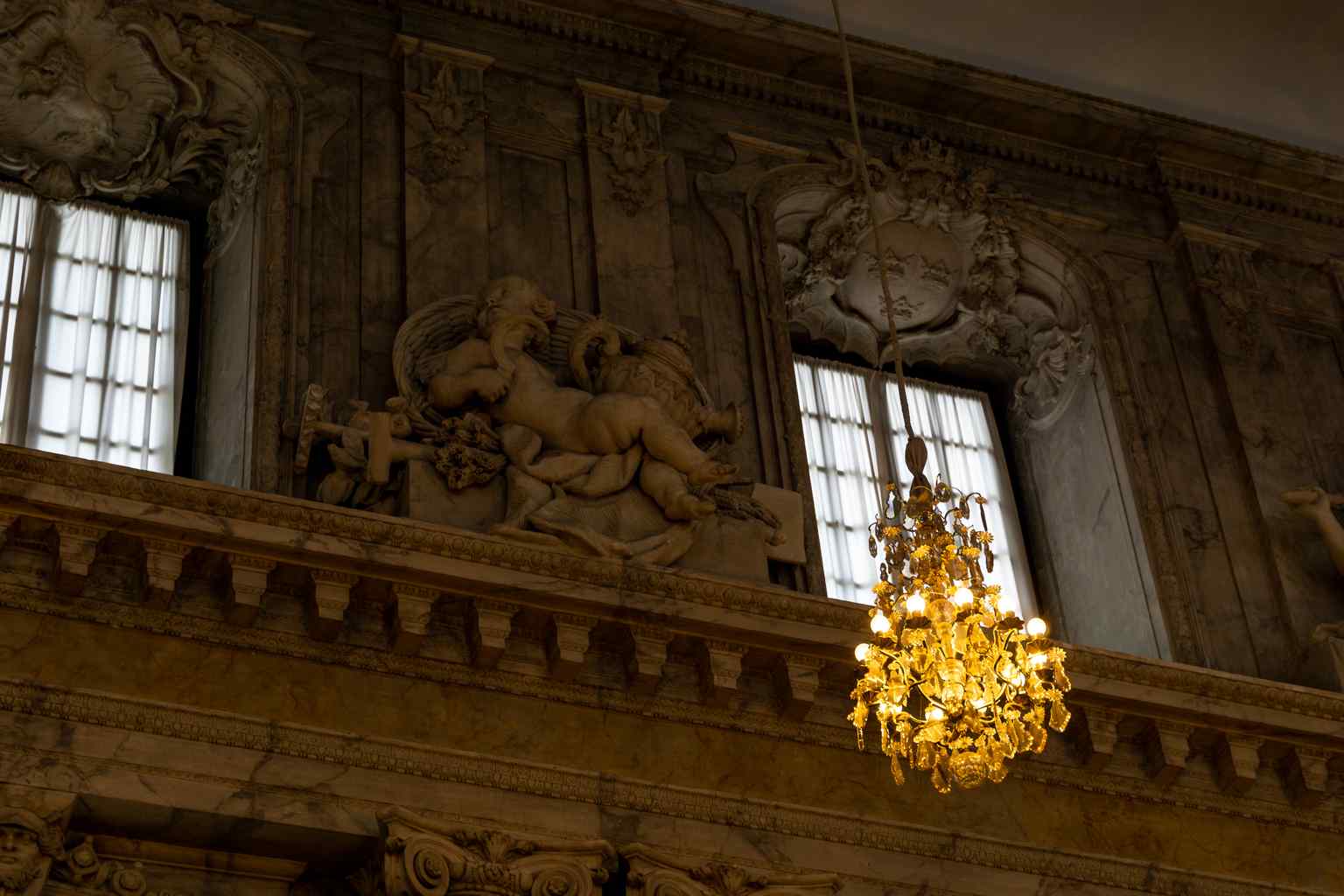
From that smoking ruin, a brilliant architect named Nicodemus Tessin the Younger was tasked with building a modern marvel. He was wildly ambitious. Take a look at your screen to see a painting of Tessin and his successor overseeing the monumental work. To achieve his vision, Tessin recruited a colony of elite French craftsmen to bring the highly ornate Rococo aesthetic to Sweden. These artisans were Catholic, and because practicing their faith publicly in Lutheran Sweden carried severe penalties, they lived and worked in a strict, isolated community near the French embassy. Their incredible artistry fundamentally modernized the city, even as the soaring cost of royal wars halted construction for almost two decades.
When the palace finally opened, it became a theater for intense political drama. In 1756, Queen Louisa Ulrika was so desperate to overthrow the parliament and restore absolute monarchy that she secretly pried forty-four diamonds out of her own crown, replacing them with cut glass. She pawned the real diamonds to foreign bankers to fund a coup. The plot collapsed before it even started, her closest supporters were executed, and the humiliated queen was forced to buy back her own jewels.
Between the relentless ambitions of the crown and the crushing weight of history, it is no wonder people say the palace is haunted. The most famous resident is the White Lady, a ghost said to appear before a royal death, jingling a heavy ring of keys.
Despite the drama, the palace stands as an enduring anchor of the city. You can check out the before and after image on your app to see how its commanding presence has remained virtually unchanged since the 1930s. If you want to explore the massive interior, it is open daily from 10 AM to 4 PM.
Now, let us walk to a much smaller palace built in this royal shadow... Tessinska palatset is just a four-minute walk away.