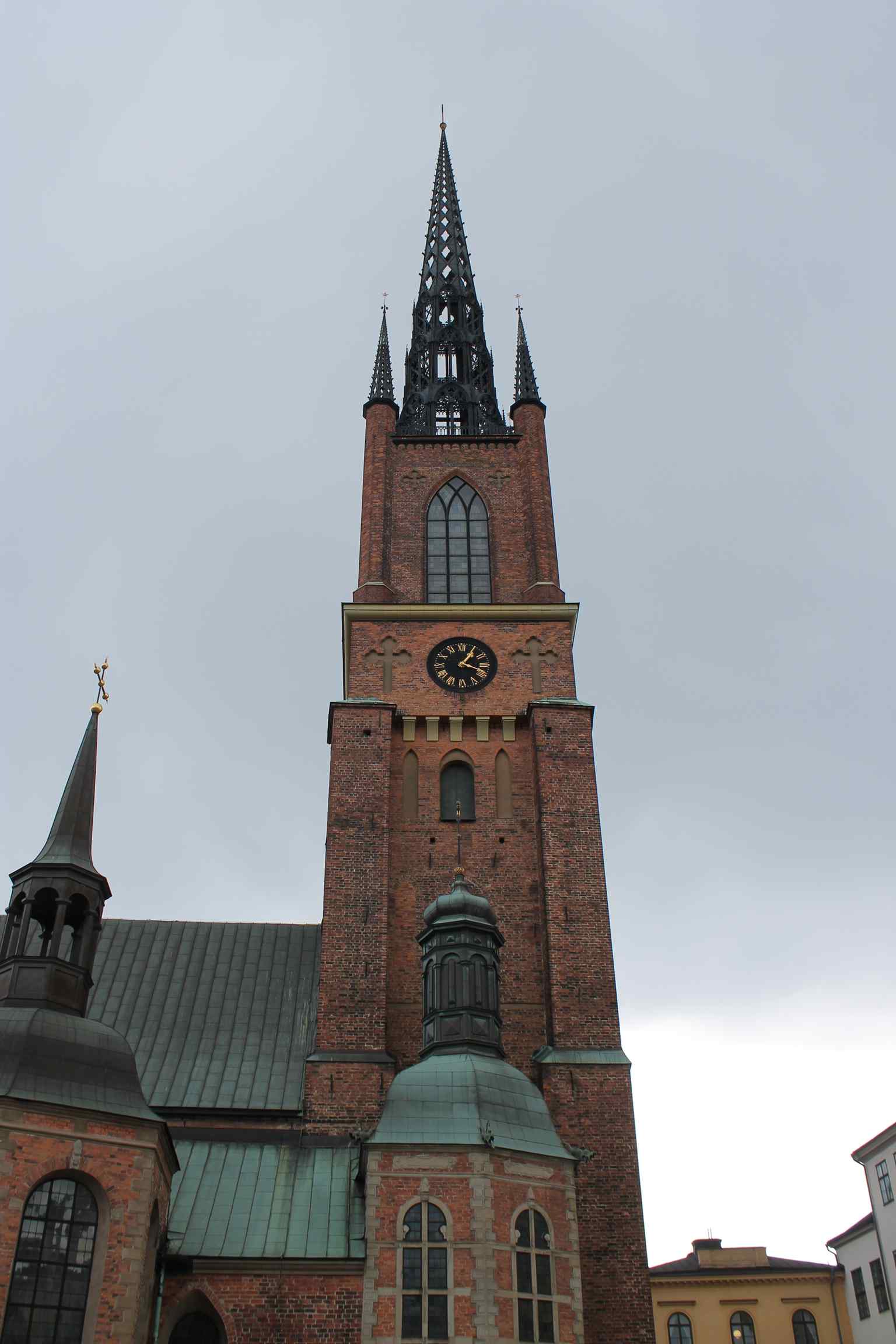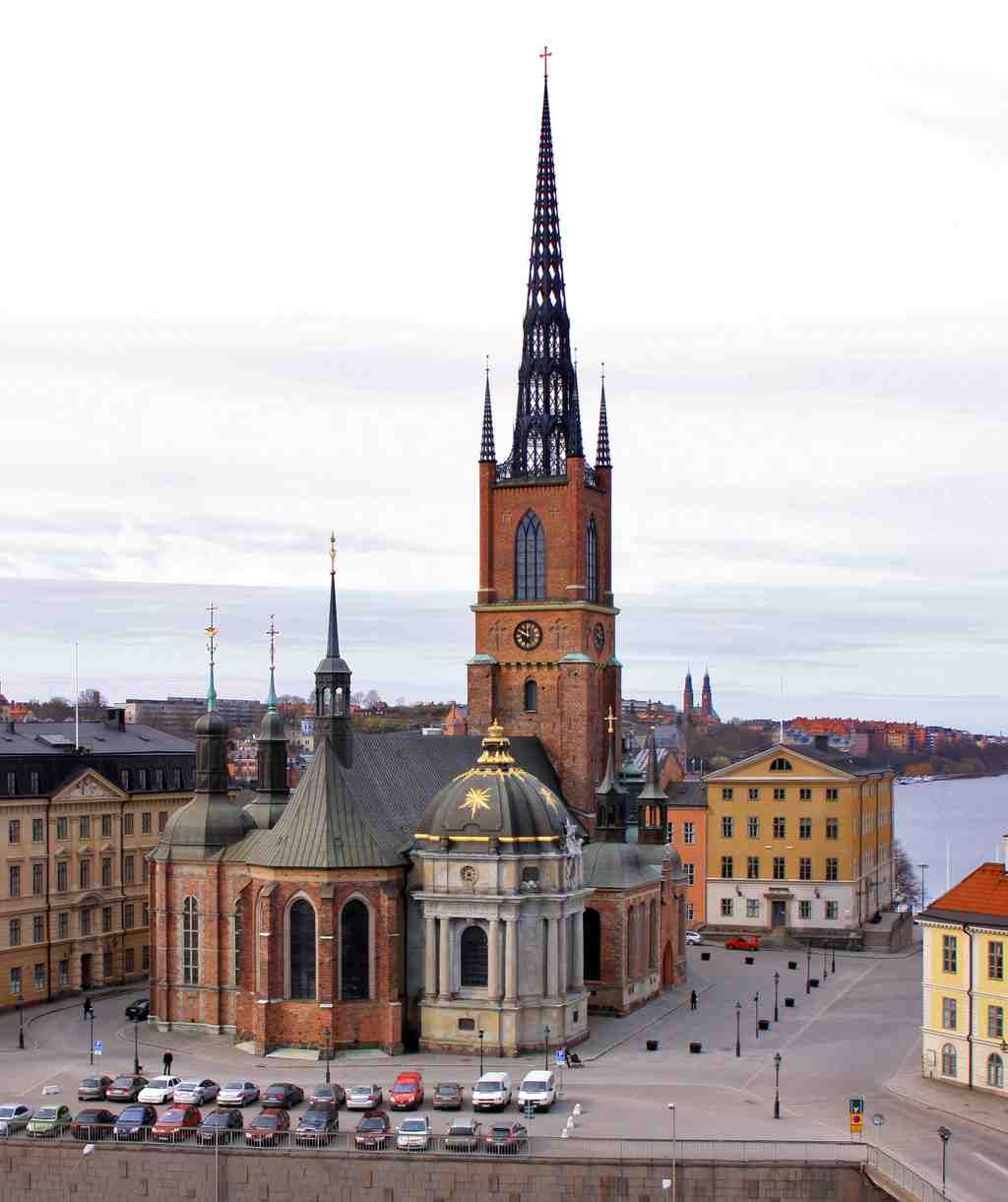
Look to your left and you will spot Riddarholm Church, a massive red brick structure defined by its tall, square tower topped with a striking, see-through cast-iron spire.
This is the oldest preserved building in Stockholm. It started in the late thirteenth century as a humble Catholic abbey for Franciscan monks. But over the centuries, it transformed into a grand theater of memory, serving as the final resting place for nearly every Swedish monarch from 1632 to 1950.
Kings have always known that where you are buried is just as important as how you ruled. In the 1570s, King Johan III was eager to project a deep, ancient legitimacy for his reign. He commissioned a brilliant Dutch sculptor to build two magnificent Renaissance monuments right in front of the high altar, claiming they covered the remains of medieval kings, including Magnus Ladulås. For over four hundred years, everyone believed him. Then came 2011. Modern carbon dating on the skeletons beneath the monument revealed they belonged to people who died over a century after King Magnus. Johan had essentially orchestrated a majestic historical illusion just to bolster his own royal pedigree.
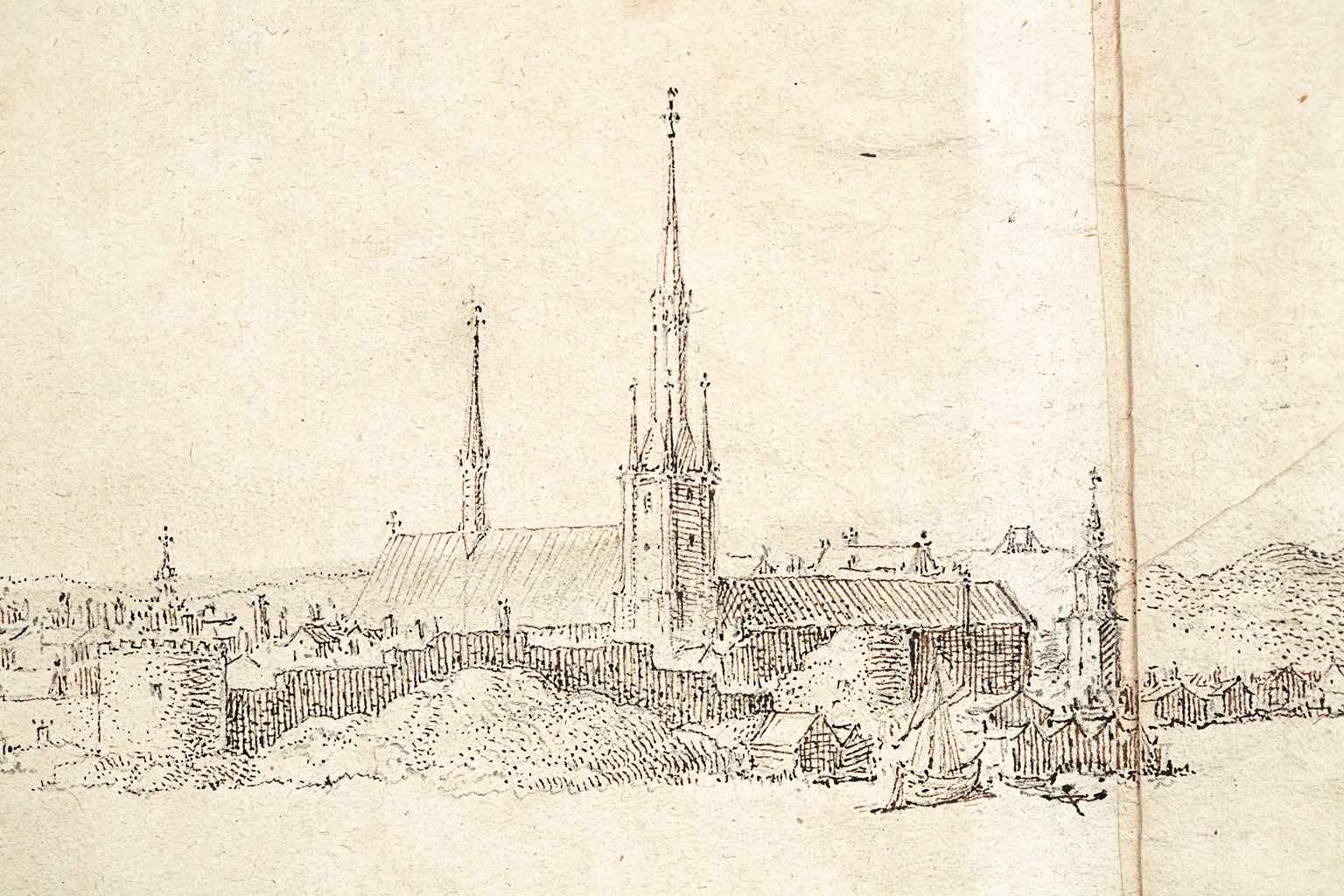
The church itself has seen its share of dramatic transformation. In 1835, lightning struck the tower, sparking a fire that raged for three days and completely destroyed the towering wooden spire. Take a look at your screen for a 1630s drawing showing that original, soaring wooden needle before the flames took it. When it came time to rebuild, the crown chose to embrace the industrial age. Sculptors and architects designed the delicate, black gothic web of cast iron you see today. You can check out the before and after image on your app to see how this iron crown has stood enduringly over the shifting skyline.
But perhaps the heaviest toll exacted by royal ambition rests inside the church's burial vaults. King Karl XIV Johan wanted a resting place fit for a Roman emperor. After his death, his son ordered a colossal, sixteen-ton sarcophagus made of Garberg granite, a brutally hard rock, from a quarry the royal family owned in central Sweden. It took the quarrymen eight grueling years to carve the stone. The intense, unyielding work and the thick stone dust permanently ruined the lungs of several stonemasons. Once finished, the sarcophagus was so heavy they had to wait four years for a winter cold enough to freeze the lakes solid. Finally, nearly two hundred men dragged the mammoth stone over the ice in temperatures of thirty-six degrees below zero. The king achieved his eternal glory, but it was shaped by the broken lungs and frozen hands of the craftsmen he ruled.
While the monarchs spent centuries building these grand monuments to secure their immortality in death, the kingdom's aristocrats were busy securing their power in life. We are now going to walk over to The Palace of the House of Nobility, just three minutes away, to see where the real administrative muscle of the Swedish empire flexed its strength.