
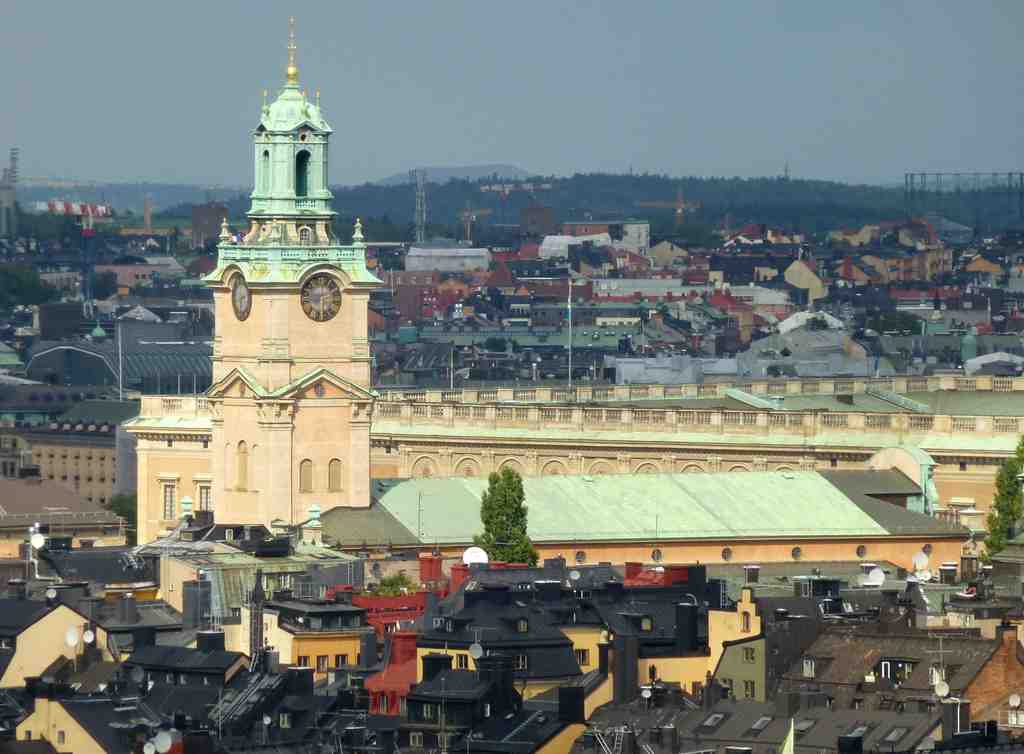
To spot Storkyrkan, look for the tall, light-toned church with a distinctive green copper tower and golden spire, rising above the rooftops directly in front of you.
As you stand here, imagine you’re at the beating heart of Old Stockholm-a place that has seen moments of glory, fear, and celebration echoing across centuries. Storkyrkan, also known as Sankt Nicolai Church, has watched the city transform since the 1200s. Picture ancient Stockholm just rising from marsh and islands, merchants and knights tramping up to this very spot for worship. The church was born thanks to gifts from Birger Jarl, one of the founders of the city, dedicated to St. Nicholas, patron saint of sailors-a perfect choice when so many traders from the Hanseatic League called Stockholm home.
If you listen carefully, you may almost hear the shouts of medieval craftsmen as they lay the first bricks, working in the cold winds off Lake Mälaren. Over time, the church grew into a grand, five-aisle hall of brick and stone-an odd, but beautiful, slightly misshapen rectangle, crowned with a mighty west tower. Look up: that tower soars about 66 meters, a true city landmark. Flanked by two wings, one cradling a staircase, it catches the sunlight on its baroque façade, which surprises you with dramatic lines and the play of shadow among pilasters and deep windows.
But the most dramatic moments came inside these ancient walls. You’re standing where Sweden’s monarchs have come to be crowned, starting as far back as 1336, when Magnus Eriksson and Blanka of Namur were dressed in glory. Later, it was here that kings, queens, and even conquerors like Kristian II received their crowns, filling the cold air with the scent of incense and the rustle of velvet robes.
Storkyrkan was not always so grand-its earliest chapel was a humble wooden affair, built on the city’s highest point. Through the 1300s and 1400s, generations of builders reshaped it, adding chapels dedicated to the Virgin Mary and other saints, knocking down walls, building higher, always aiming for something bigger. Imagine master craftsmen by candlelight, carving capitals, stacking stones. By the end of the 1400s, the roofline soared, mighty pillars held up rolling vaults, and light spilled through larger windows-a church finally fit for royal ceremonies.
Speaking of drama, imagine the moment in 1489 when the church first unveiled Bernt Notke’s statue of Saint George and the Dragon. The whole city must have gathered, gasping as the fearsome dragon and brave knight, carved from oak and elk horn, shimmered in torchlight. Beneath the armor, hidden inside the statue’s chest, were bits of bone said to belong to saints-a touch of medieval magic hidden for centuries.
During turbulence of the Reformation, Storkyrkan was literally transformed. Gone were the “papist superstitions,” as one king put it; old decorations vanished, walls changed, and warriors stood ready to defend the church from the upper floors if the city was attacked. Can you imagine the tension in the air as iron-clad soldiers kept watch from those very halls?
Through the years, kings came and went. At times, the church even served as a fortress. The great bell, Storklockan, cast in 1638, weighed over five tons and its solemn tolls called both worshippers and rulers to great events. If you luck out today, you might hear it ring, a deep note that rumbles through the stone streets like thunder.
Since 1942, Storkyrkan has sat at the center of Stockholm’s diocese, but its name remained stubbornly tied to the past: “Storkyrkan,” the Great Church-never quite giving itself over fully to being the bishop’s cathedral. Outside, the baroque face you see was shaped to match the Royal Palace nearby, a symbol that church and crown stood side by side.
Not just royal stories: the church is woven into the lives of Stockholmers. From humble medieval gatherings, to the celebration of the royal weddings-like Carl XVI Gustaf and Silvia in 1976 or even Princess Victoria and Daniel Westling in 2010-Storkyrkan has always been the stage for the city’s greatest joys and sorrows.
Today, as the city bustles, step close and just for a moment, feel the centuries pressing in from every side-the flicker of ancient candles, the cold marble beneath your feet, and perhaps, just perhaps, the muffled notes of an organ high above you. You are standing where history lives and breathes, right here at Storkyrkan.
Yearning to grasp further insights on the name of the church, the church bells or the church tower clock? Dive into the chat section below and ask away.




