
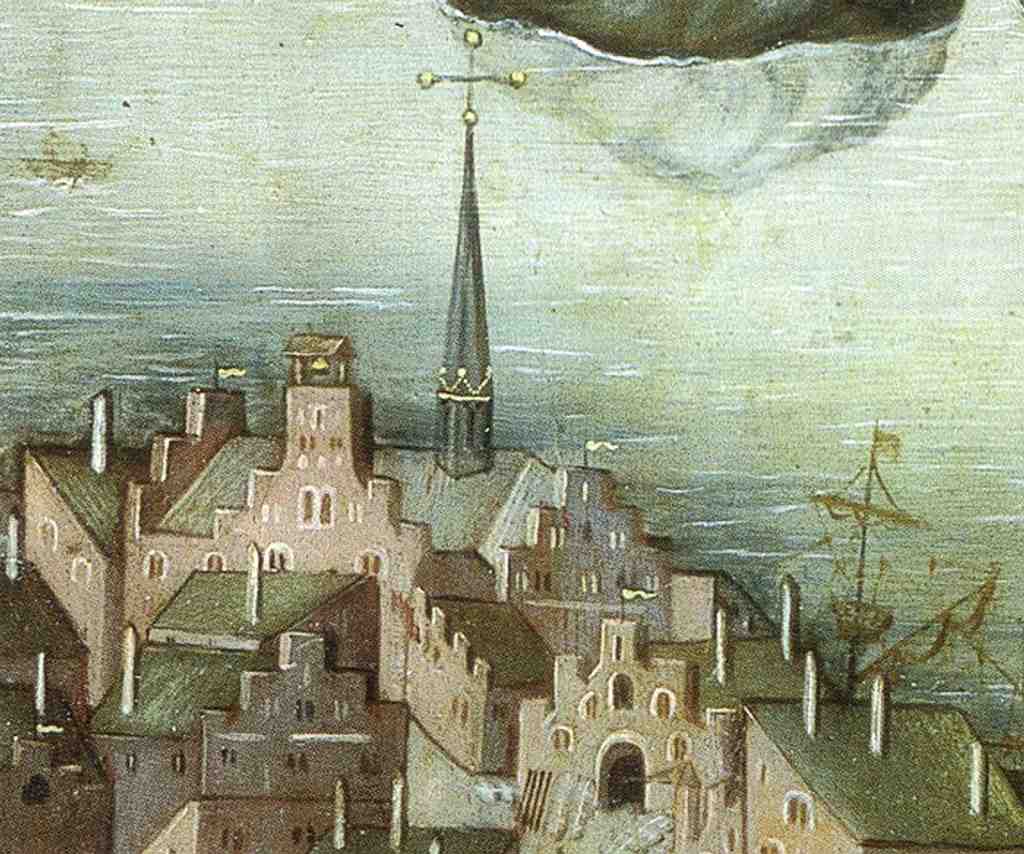
To spot the landmark, look ahead for a cluster of old brick-like buildings with step-gabled roofs and a tall, sharp spire rising above them-it’s an imposing presence, right on the edge of the historic Gamla stan near the water.
You are now standing where secrets and stories from Stockholm’s distant past linger in the air. Close your eyes for a second and imagine the early 1300s: the cobbled street beneath your feet is muddy, the bitter scent of wood smoke floats through the chill, and the only soundtrack is the clatter of carts. This is where the Blackfriars-the “black brothers,” Dominican monks in sweeping black mantles with hoods-once made their home. Their order, begun by Dominicus in 1216, only reached Stockholm after decades of searching for the perfect plot.
Kings and commoners alike were entangled in their journey. It wasn’t until 1336, when Magnus Eriksson, newly crowned, gifted a piece of the royal estate to the monks, that their dream became reality. Imagine the excitement as the first stones were laid near today’s Prästgatan and Österlånggatan, so close to the old city walls that you could have touched both at once. Just a year after granting the land, the king gave them a handsome pile of coins to help them finish their work. But nothing in old Stockholm was simple-strife between distant bishops and popes meant that it took nearly another decade before the pope finally allowed building to begin.
Once finished, the Blackfriars’ convent wasn’t just a spiritual haven. It was the biggest ecclesiastical building in town, playing host to great royal dramas. Picture the darkness inside, stone archways echoing with the prayers of monks-a place even queens found solace. Some say the young Queen Beatrix and her son were laid to rest in its church. When a terrible fire tore through in 1407, flames lighting up the night sky, some monks lost their lives, and the air was thick with despair. Yet, Stockholm rebuilt quickly, stronger and grander.
Life in the convent was a rich tapestry: monks hosting weary travelers, the cellar beneath leased out to a jolly wine merchant, the laughter and squabbles from his rowdy guests rising up into sacred halls. In 1479, a rowdy patron drew a knife on the wine man-proof that even sanctuaries could not escape the brawling spirits of Stockholmers.
But the Blackfriars’ golden days couldn’t last forever. Come 1528, Gustav Vasa marched in, dissolving the convent as part of his sweeping reforms. The stone walls echoed with silence, while some monks refused to leave at first. Just under twenty years later, the king’s men finished the job: the convent was broken up for stone and timber to reinforce his castle-yet curiously, the deep cellar vaults, echoing with the memories of pilgrims, survived mostly untouched. Here, at Södra Benickebrinken 4, you can still glimpse these medieval archways, now looked after by Stockholm’s Medieval Museum.
And although centuries have passed and new buildings like the grand Ehrenstrahlska house now stand here, the spirit of the Blackfriars lingers. Every detail under your feet is stitched with memory: wine-soaked laughter, whispered prayers, and the distant roar of a fire that once changed everything.
For further insights on the arrival, in the neighborhood of venus or the demolition, feel free to navigate to the chat section below and inquire.




