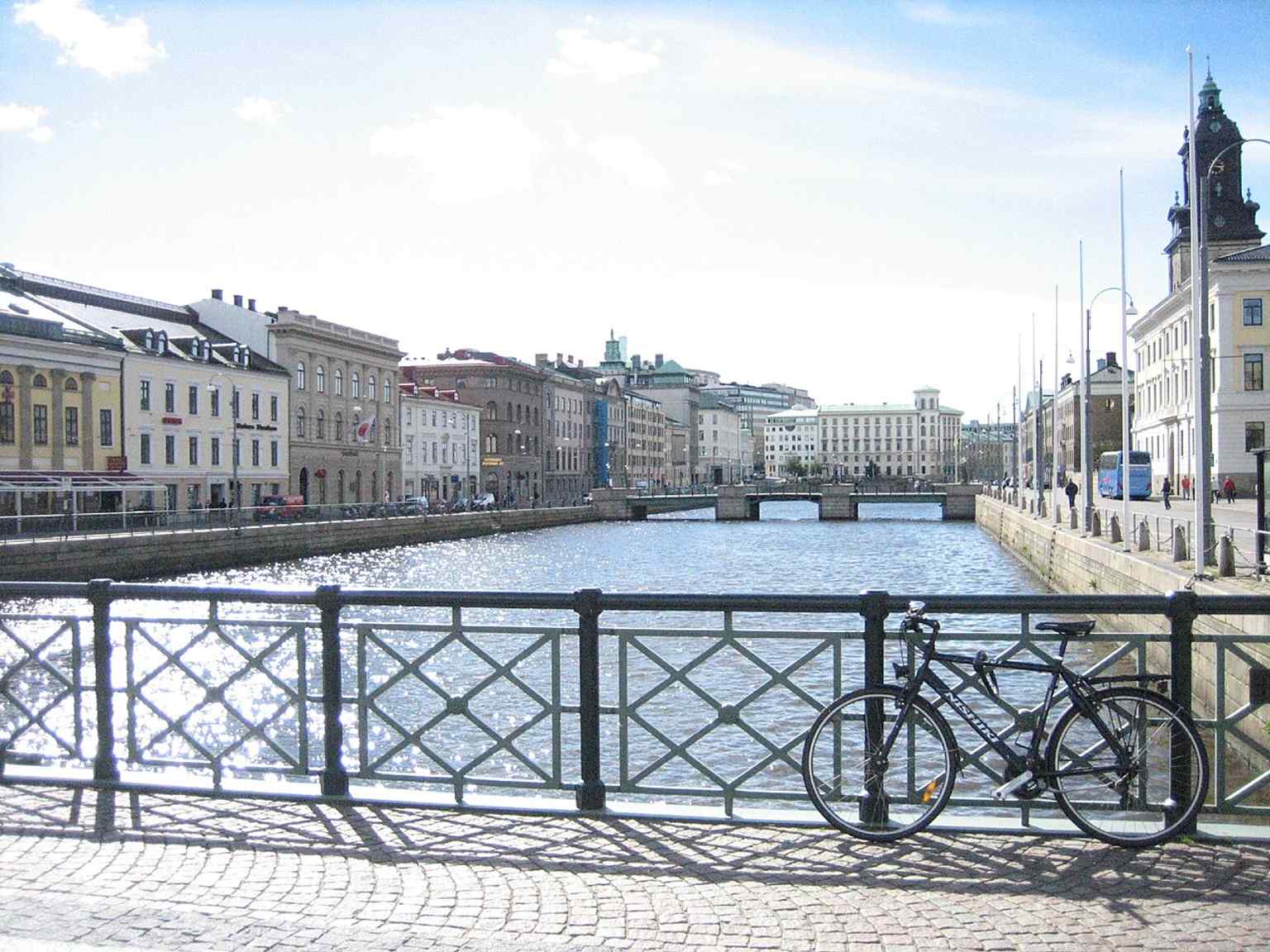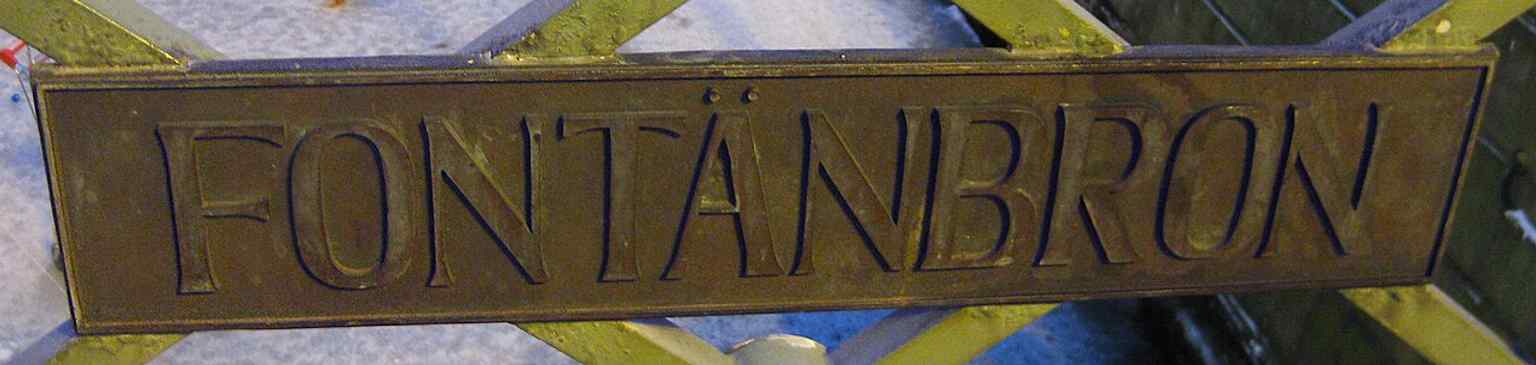
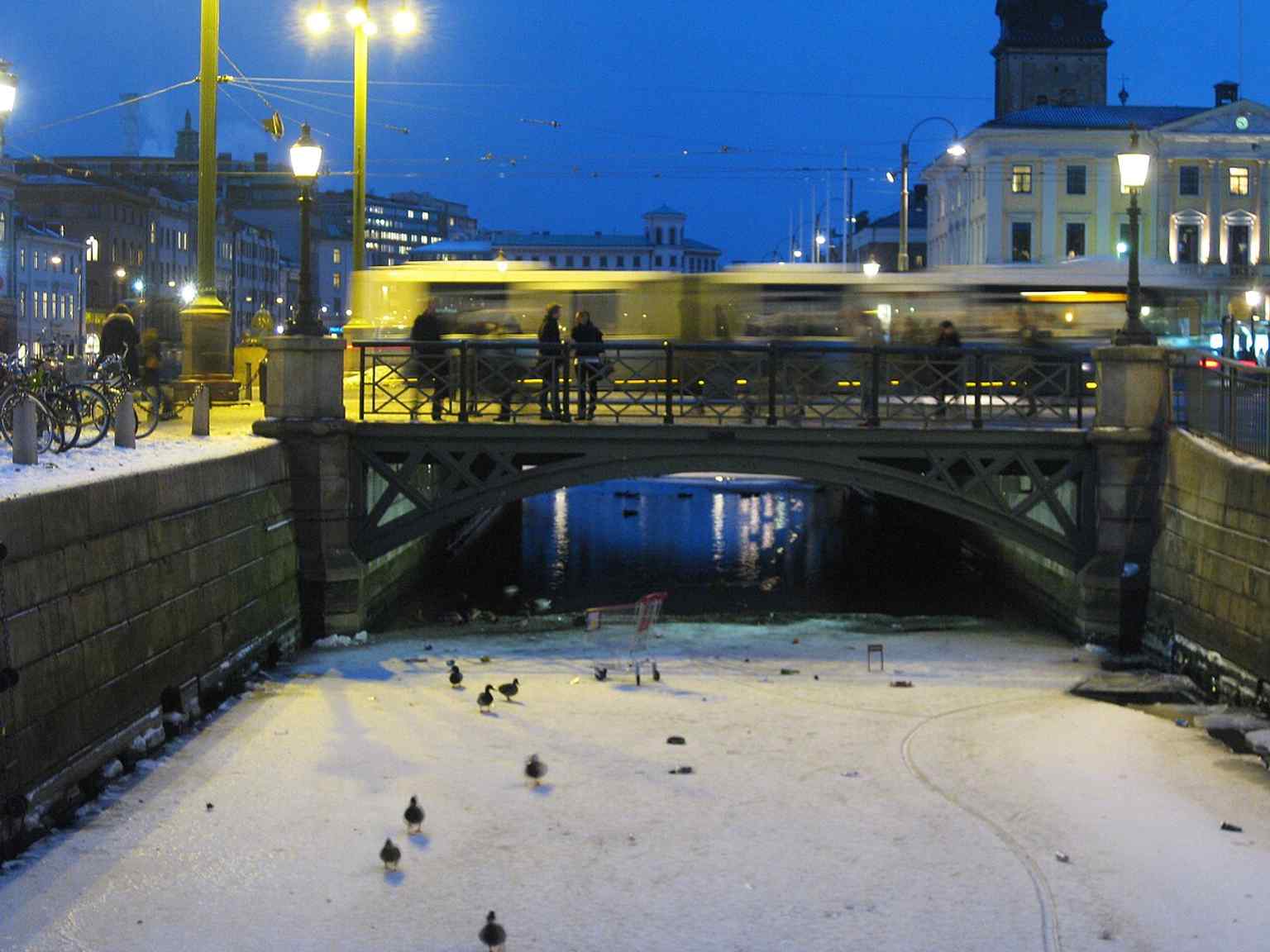
Look for the shallow metal arch with its crisscrossing green ironwork, flanked by heavy stone pillars and crowned with cast-iron street lamps. You are standing at Fontänbron, or the Fountain Bridge. It takes its name from the famous fountain nearby, but its real story is built right into its foundations.
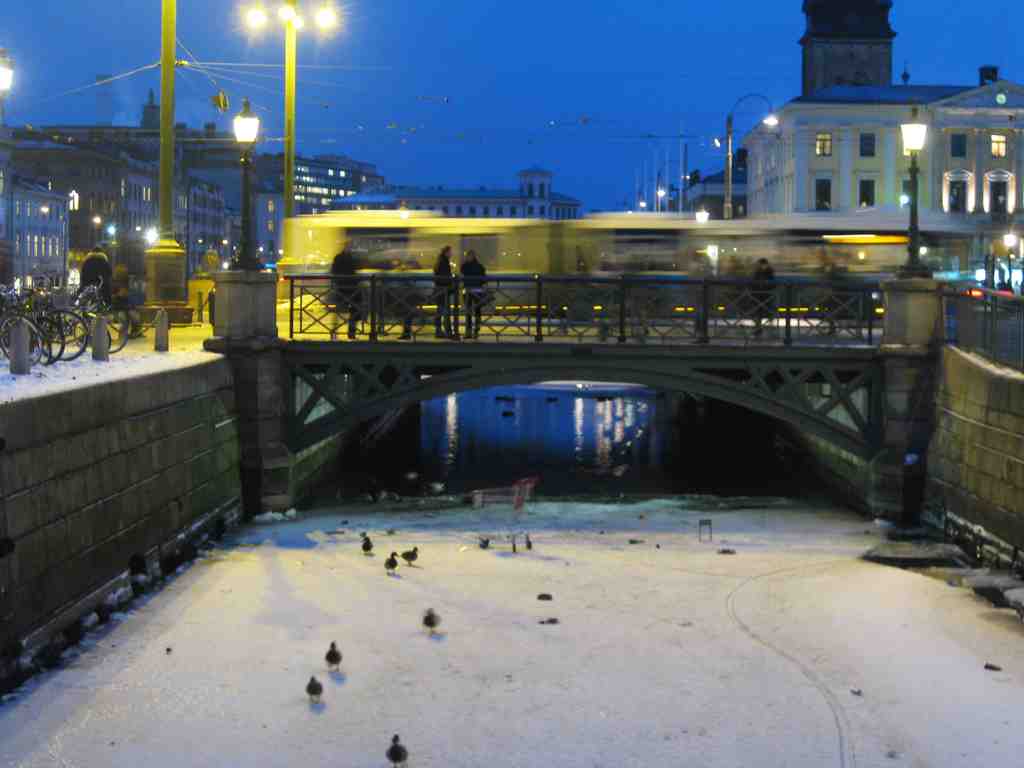
Even though regular cars are strictly banned, this is an intensely busy spot, buzzing with trams, buses, and pedestrians. Take a glance at your phone to see a snapshot of just how lively this car-free transit hub gets.
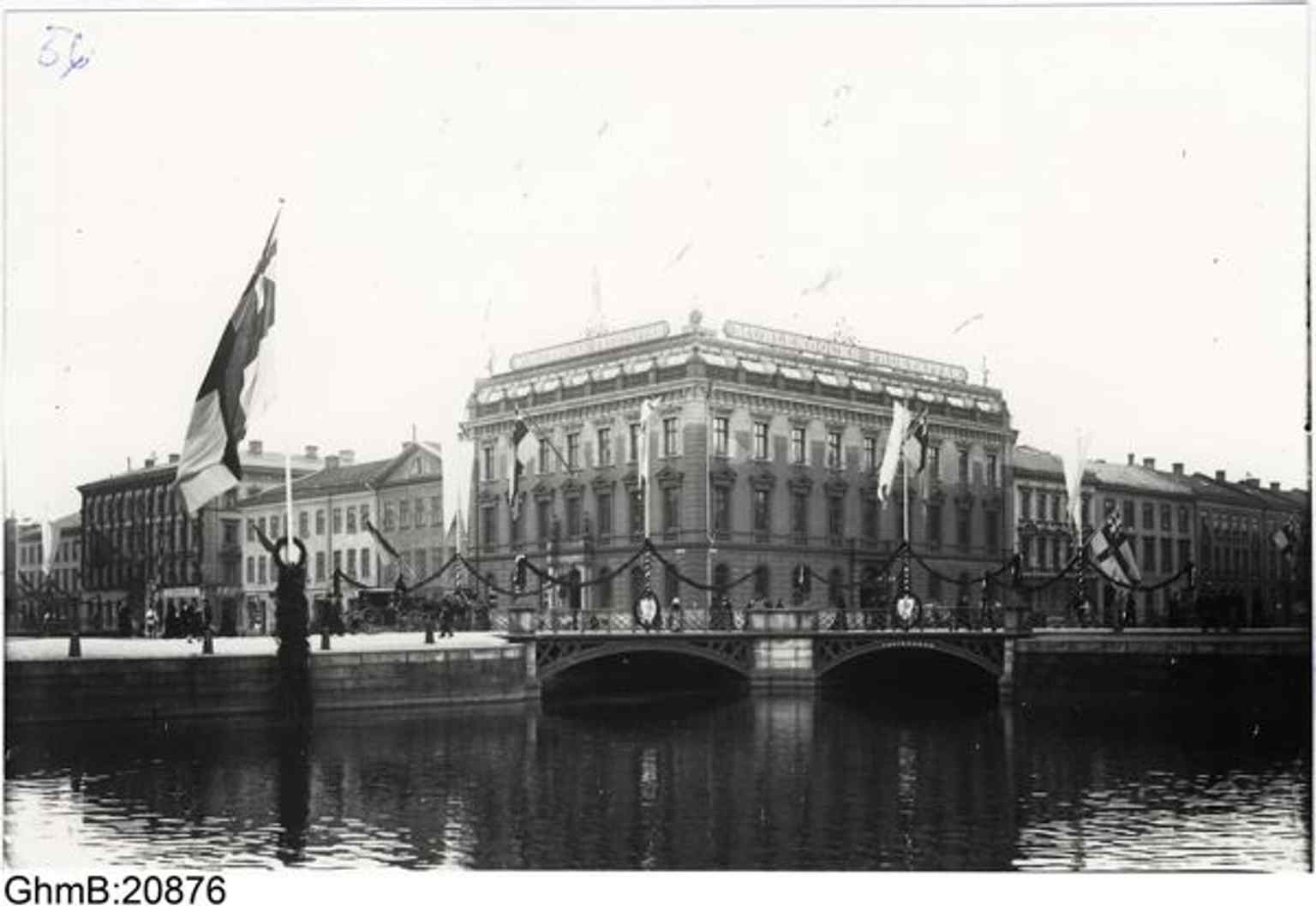
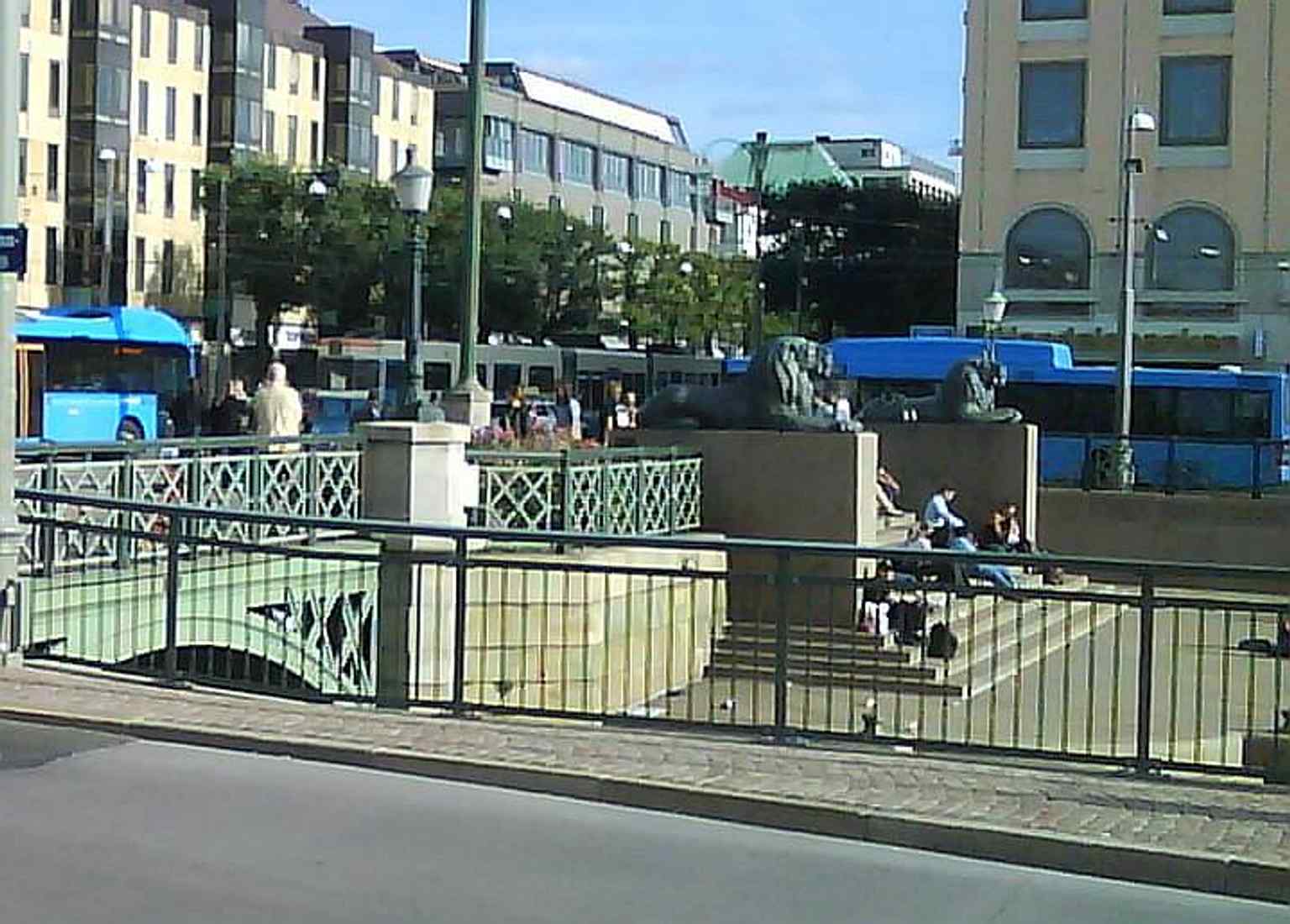
Gothenburg's very first bridge was constructed right here in 1624. Imagine thirty city soldiers hauling timber to build a wooden crossing. Fourteen years later, they painted it bright red and added four massive, crowned wooden lions. Those wooden beasts were actually Gothenburg's first public artworks. They eventually wore down and had to be removed, but the legacy stuck. The bridge was rebuilt in wood, stone, and finally iron, but the lions always returned. Check your screen to see one of the two reclining bronze lions that guard the steps here now. They were added in 1991 to continue that centuries old tradition.
During the eighteenth century, this spot was nicknamed the Horse Bridge because locals used it as a livestock market. But the most bizarre addition came much later, in 1915. Engineers built a public toilet directly into the internal structure of the iron bridge itself. Known as the Cabinet, this underground restroom served the public for over seventy years before being demolished in the late nineteen eighties.
The Fountain Bridge remains a fascinating, vital piece of urban engineering. Take a moment to watch the trams glide by. Whenever you are ready, we can head to our next stop.