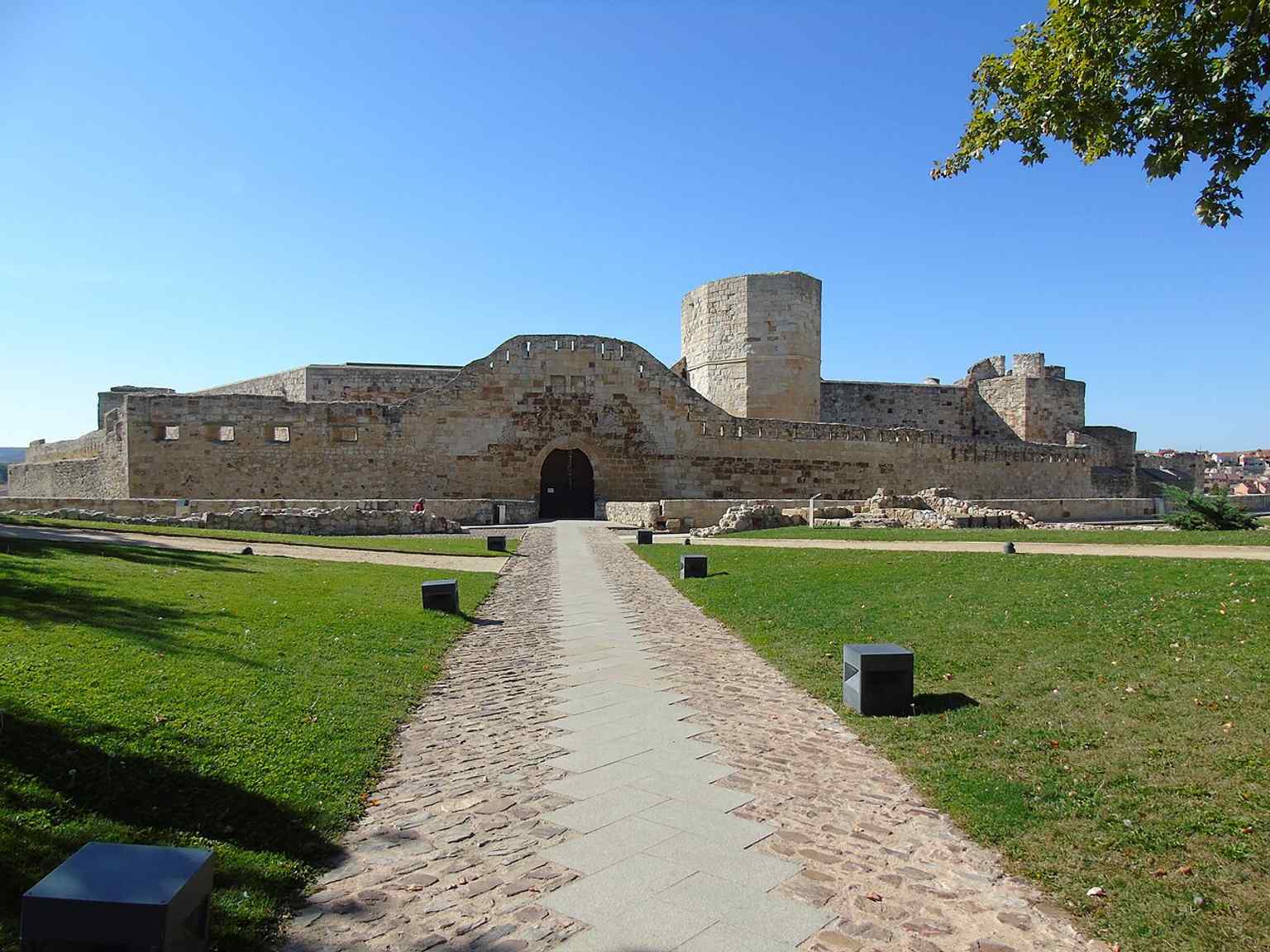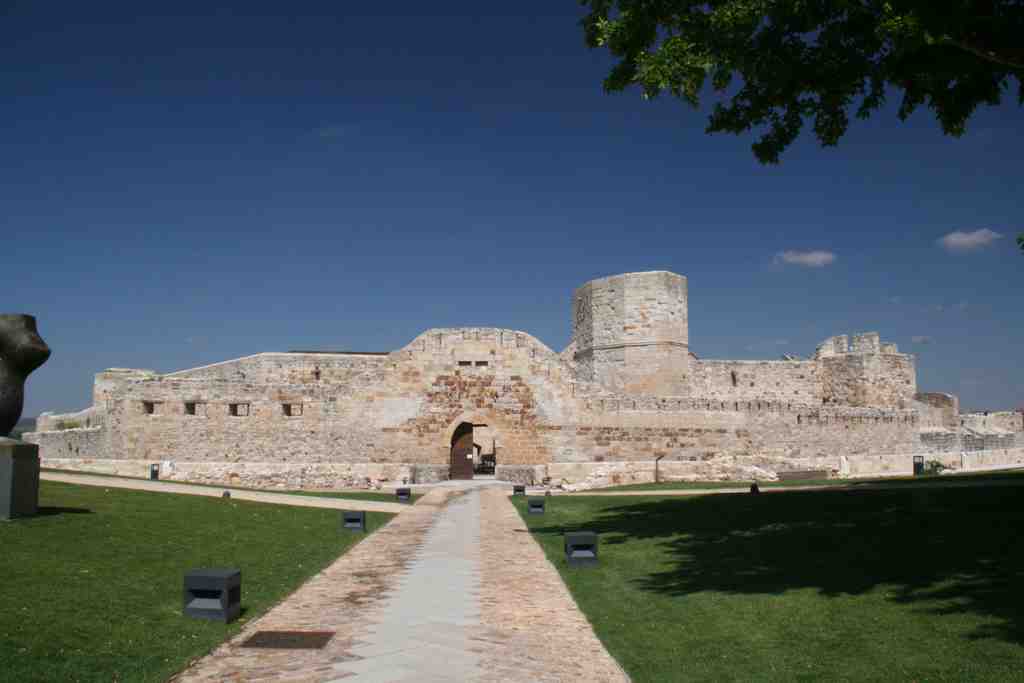
On your right, the Castle of Zamora rises in pale stone as a compact fortress with thick rectangular walls, a squat keep, and a jagged crown of battlements.
This is where Zamora’s political drama hardens into masonry. Underneath lie foundations older than the castle itself, and the structure you see took shape between the tenth and twelfth centuries, with a broadly Romanesque design - that is, the solid, rounded, heavy style that likes to look as if it plans to outlast arguments. Ferdinand the First of León likely ordered it built or strengthened in the mid-eleventh century as frontier defense, and his daughter Doña Urraca became the ruler this place was meant to protect.
Then came the great test. In the year ten seventy-two, King Sancho the Second besieged Zamora to take it from Urraca. He failed. On the seventh of October, ten seventy-two, someone killed him outside these walls, and the city turned the episode into a lasting badge of resistance. Later chroniclers, being human, tried to tidy up the scandal. Some blamed a Zamoran noble sheltered inside the city; others strongly suspected Alfonso the Sixth and Urraca, but never named them outright.
If you check your screen, image two shows the restored roofline reopened in two thousand and nine, where the battlements became a lookout over the river and cathedral. That feels right... walls can shield a city, but not its reputation, its grief, or its legends.
When you’re ready, continue about ten minutes to the Church of Santiago el Viejo, beyond these defenses, where the city’s story slips free of the walls again. If you want to return, the castle usually opens Tuesday through Sunday from ten thirty to two and from five to eight, and closes on Mondays.