
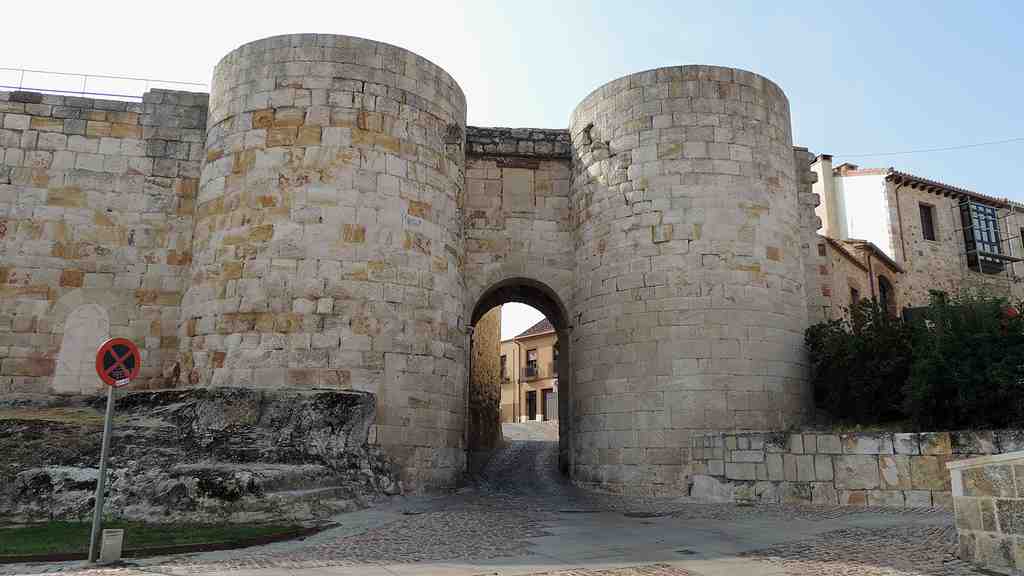
Ahead of you stands a stout stone gate with a broad rounded arch, flanking wall towers, and the worn remains of medieval masonry that once marked Zamora’s northern entrance.
This is the Gate of Doña Urraca... though that name arrived later than the legend. Doña Urraca of Zamora was the sister of King Alfonso the Sixth, and tradition says he handed her the city. In the Siege of Zamora of ten seventy-two, she became the woman tied forever to its defense while her brother Sancho the Second tried to take it, with El Cid fighting on Sancho’s side. Family arguments, in other words, had become fully militarized.
The old ballads, the Romancero del Cerco de Zamora, place the scene right here: Urraca calling out from this gateway, urging El Cid to abandon the siege. So what are you looking at... a military entrance, a literary stage set, or a political memory dressed up as stone? Zamora’s answer is: yes.
Names matter here. This gate also answered to San Bartolomé, Zambrano, and even Gate of the Queen before “Doña Urraca” stuck in the seventeenth century. Renaming is how cities edit themselves in public.
Most people miss the giveaway that this medieval picture is incomplete: look for the surviving trace of a second arch, and imagine the towers with their lost tops. If you check the image in the app, you can study that scarred outline more closely. Protected as a national monument since eighteen seventy-four, it survives... but not whole. And that uncertainty follows us to City Hall, about a three-minute walk away. Conveniently, the gate keeps twenty-four-hour hours.




