
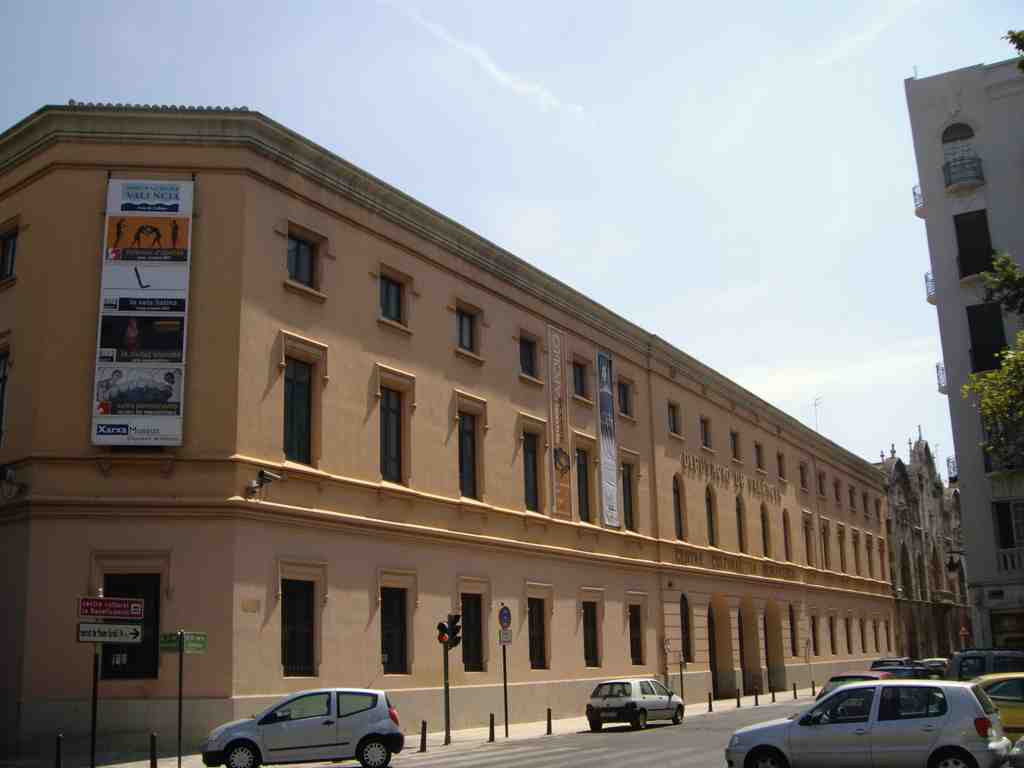
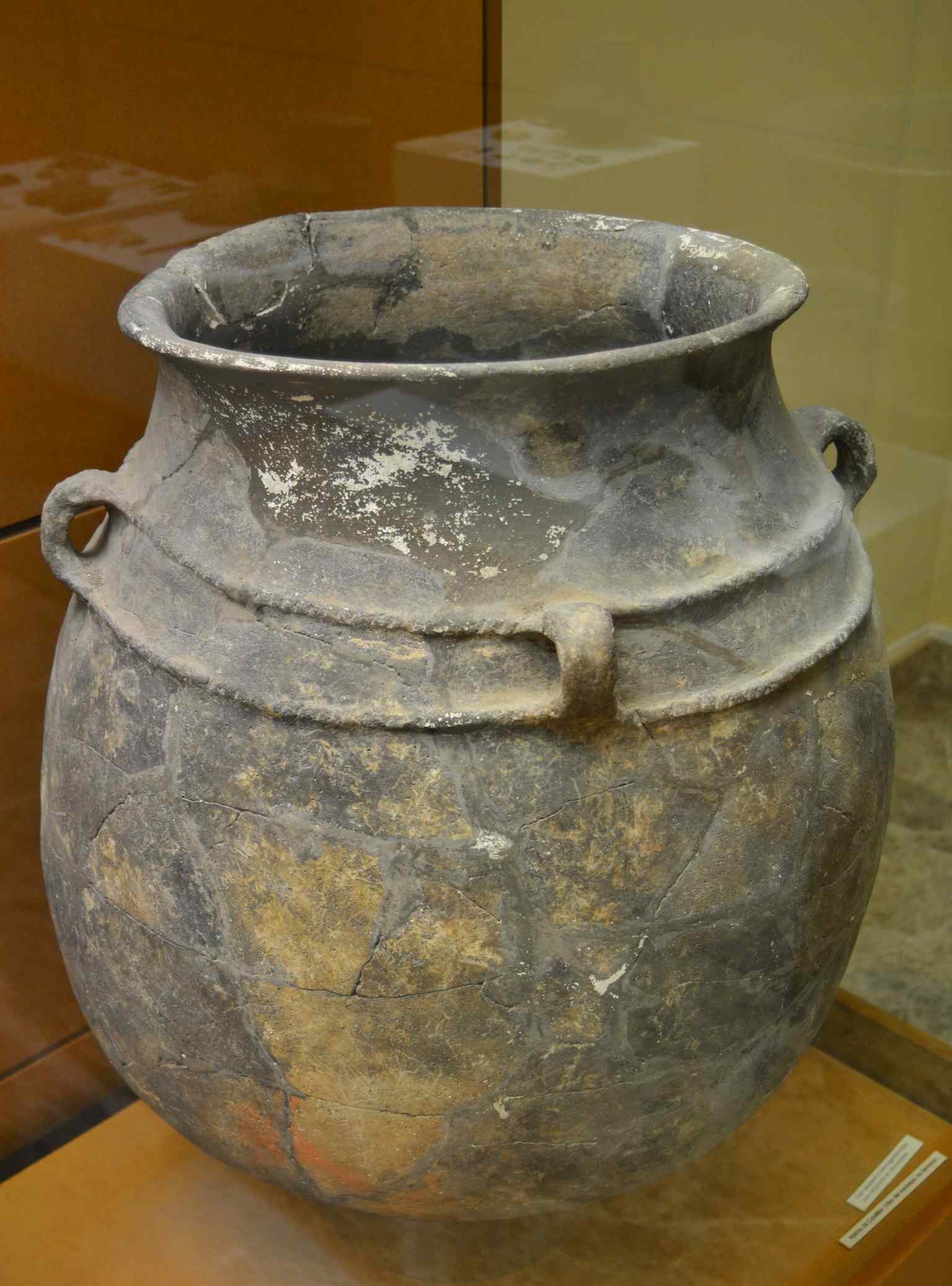
On your right, you will spot a long, tan stucco building characterized by its neat rows of rectangular windows and the large exhibition banners hanging vertically from the facade. Just a short walk from the Palace of the Merchants, we have arrived at the Prehistory Museum of Valencia. This expansive structure was not always dedicated to ancient history. It actually began in 1841 as the Old House of Charity, a refuge for the city's vulnerable. If you were to walk through it, you would see the complex wraps around five distinct courtyards and holds a striking church built in 1881 in the Byzantine style, an architectural form inspired by the Eastern Roman Empire that often features rich mosaics and soaring domes. Today, that historic church cleverly serves as the museum's main entrance hall. Architect Rafael Rivera led a massive restoration in 1995 to properly house a staggering collection. The artifacts span from the Paleolithic era... the early stone age... all the way to the Visigoths, the Germanic tribes who ruled Spain after the Romans fell. You really have the Prehistory Research Service to thank for all these treasures. Back in 1927, a man named Isidro Ballester Tormo founded the service to unearth and protect Valencia's archaeological heritage, and his teams have been digging ever since. At one of their excavation sites, the Bolomor Cave, archaeologists uncovered the absolute oldest human remains ever found in the Valencian lands. The materials they have unearthed over the decades, like the highly prized Font de Mussa mosaic, elevated this institution to one of the most important museums of its kind in Spain. The building is open Tuesday through Sunday from 10 AM to 8 PM, should you wish to explore the first floor's Stone Age tools or the second floor's Roman galleries. This ancient history gives us a wonderful sense of scale before we completely switch gears. Enjoy this glimpse into antiquity before we head to our final stop at the modern art museum just down the street.





