
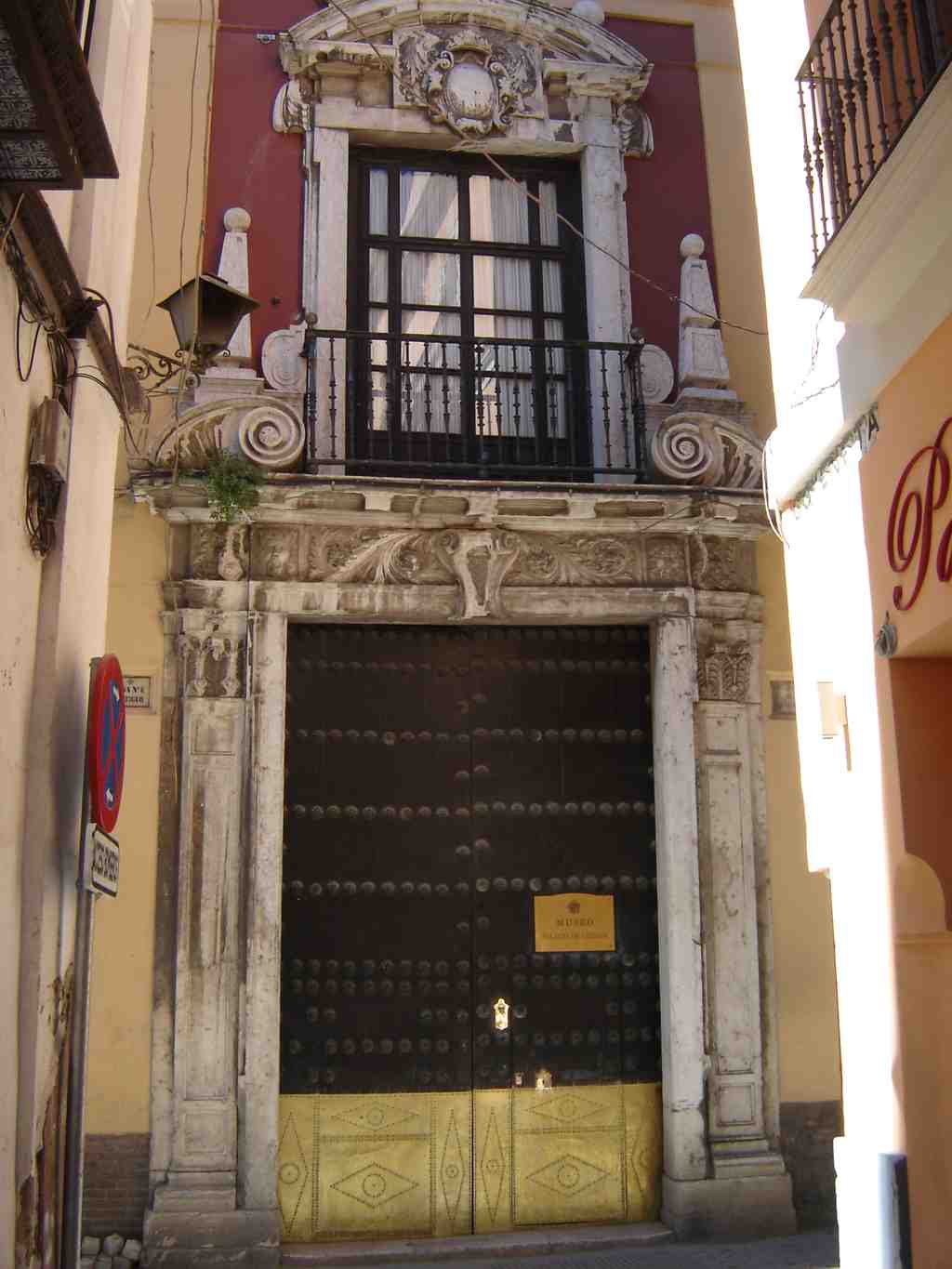
As you’re walking down this narrow street, glance to your left and you’ll spot a building with a grand, dark wooden door studded with bronze, topped by a richly decorated stone archway. Above the entrance, there’s a balcony with bold black railings and some fancy stone scroll work curling out to the sides. You’re looking for that elegant but slightly dramatic doorway, almost as if it’s waiting for a countess to sweep out in a swirl of mystery and history.
Welcome to the Lebrija Palace, one of Seville’s best-kept secrets! Imagine the bustling sounds of carriage wheels bumping along the cobbles as noble families come and go, centuries ago. This building has been standing here since the 16th century-though, trust me, its story is much older than the paint on its walls.
Now, the outside is classic Andalusian-that deep red behind the stonework, the carved windows, and just a hint of drama. But inside? Well, you’d better let your imagination loose. It’s like stepping into a treasure chest where every inch hides a new surprise. The Countess of Lebrija, Regla Manjón, collected Roman mosaics as if she was gathering rare stamps. In fact, there are mosaics straight from the ancient city of Italica, spread like magic carpets across the ground floor. A historian once called this the “best paved house-palace in Europe”-which honestly sounds like an Olympic event, but with a lot more marble.
Picture this: in the palace courtyard, sunlight bounces off the colorful stones of a giant Roman mosaic. Right in the center, you’d find Pan, the god of wild music, playing his flute and trying to charm a nymph. You might even hear the echo of a flute if you listen closely-of course, that might just be my imagination or a clever tour guide with a sound app. All around, marble busts grin or stare, ancient columns stand like guards, and everywhere you look, there’s another curious artifact or artwork.
The countess loved archaeology so much she turned her house into a living museum. She filled it with treasures from Roman times, Moorish pieces, and even art from distant China and Persia. And just when you think it can’t get more impressive, you wander upstairs to discover libraries packed with over 4,000 old books-enough to keep any bookworm busy for the next several centuries.
So, as you stand here, try to imagine being invited inside for a grand dinner or secret meeting. Maybe you’d discover a priceless painting, or perhaps just lose yourself in the echoes of the past. In 1999, the palace was opened to the public, so luckily, you don’t need to be a count or countess to enter now-just a curious visitor thrilled by stories and beauty. Don’t worry, no secret passwords required!




