
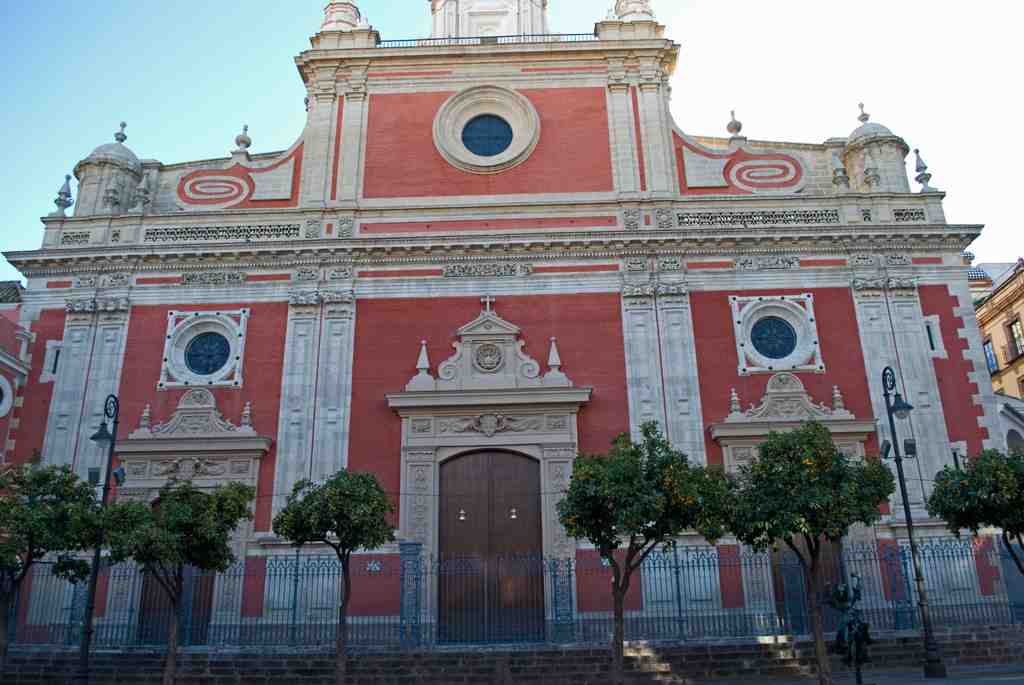
Look ahead and slightly upward-you can’t miss the bold, rosy-red facade of the Iglesia del Salvador! Framed by striking white stone columns and topped with decorative domes, the church almost looks like it’s wearing a royal coat, complete with a giant circular window in the center, like a jewel on its chest. Notice the ornate carvings and the grand wooden doors, all behind a line of playful orange trees standing guard by an old iron fence. If you’re facing the busy plaza, that magnificent building right in front is where the history happened.
Alright, picture this: more than a thousand years of stories have stacked up on this very spot! First, there may have been a Roman building here, then a Visigothic church-or so the legends say. But one thing’s for sure: in the early 800s, the grand mosque of Ibn Adabbás rose up here, filling these stones with the sound of ancient prayers.
Jump forward to 1248, and things get dramatic! King Ferdinand III of Castile takes Seville, and suddenly, this mosque is transformed into a church, dedicated to the Divine Savior. Imagine the whirlwind of change: minarets turning into bell towers, and the buzz as people wondered what would come next.
By the 17th century, the church was in bad shape-so sunken into the street you had to walk down 20 steps to get inside! You could almost touch the roof from the outside, which is quite convenient if you’re scared of heights, but not great for a church. In 1671, they tore it all down and started fresh. But oops-a classic builder’s blunder! The new church collapsed just before opening, thanks to hasty removal of supports.
Back to the drawing board! The fiery red walls and white trim you see now were finally finished in the early 1700s by architect Leonardo de Figueroa. Imagine the grand opening-all the music, the voices, and the pride as Seville’s largest Baroque church shone in the sunlight. Inside, this place turned into a musical hotspot, echoing with some of the best sacred music in town.
After all those ups and downs, the church lost its old title in the 1800s and became a regular parish, though plenty of locals stubbornly call it the old name anyway! Its last big facelift was in 2003, restoring a touch of that original shine.
So as you stand here, outside this feast of color and history, take a deep breath and listen-you can almost hear the footsteps of Romans, the prayers of Moors, and the joyful sounds of centuries gone by.




