
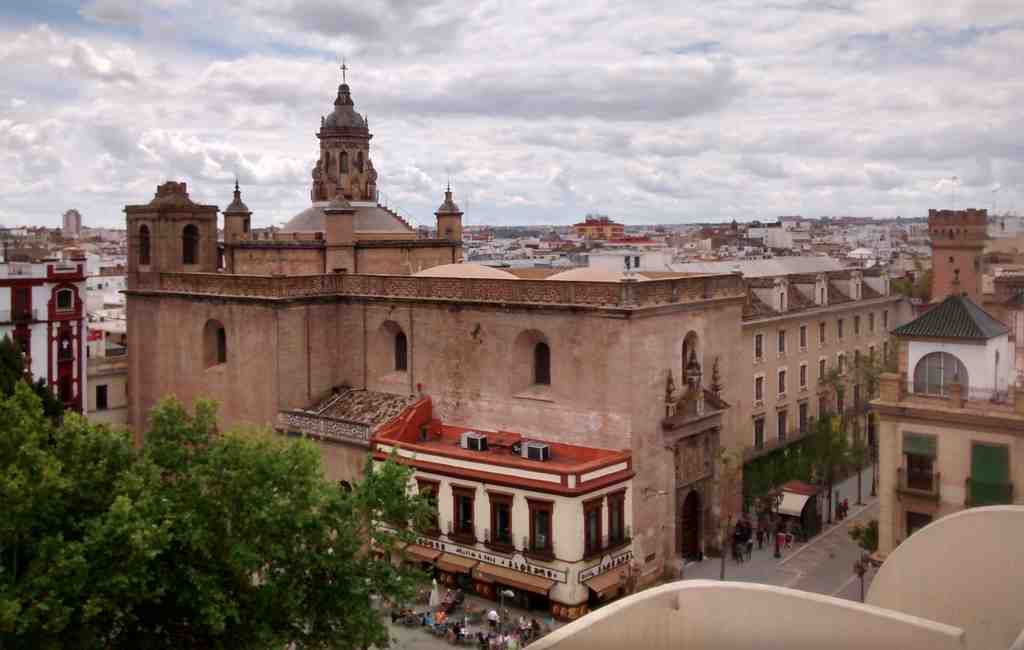
Take a look to your left-the Church of the Annunciation stands out with its solid brick walls and a proud, domed bell tower rising above the rooftops. The church faces Calle Laraña, and you’ll spot its grand entrance flanked by two mighty columns, almost like a couple of muscular guards on door duty. There’s a tall rectangle of a facade, broken up by a large arched door, and if you squint, you might see stone statues peering down from their perches. Over the entrance, notice the central statue of the Virgin and Child, keeping watch over everyone passing by. The building’s reddish-brown color gives it a warm “baked in the sun” look.
Now, imagine standing here in Seville nearly 500 years ago. The street noise would have been a little different-maybe clopping horse hooves and excited chatter as people hurried to lectures. The Church of the Annunciation was more than just a church; it was a powerhouse during the Spanish Counter-Reformation and a launchpad for Jesuit missions that sailed to lands far away. It was built beginning in 1565, and its design shows off the brains of not one but two masterminds: Bartolomé de Bustamante and Hernán Ruiz the Younger-the latter being the “rockstar architect” of Seville’s cathedral. No pressure, right?
Standing by the impressive entrance, picture yourself in front of two floors of stonework. There are columns, rectangular windows, fancy frames, statues of saints, and-if you look in the middle niche-a careful sculpture of the Virgin Mary by Juan Bautista Vázquez. But here’s where it gets even more interesting: below your feet, hidden from view, is a crypt that keeps the remains of Sevilla’s most celebrated citizens, like the poet Gustavo Adolfo Bécquer. Maybe if you put your ear to the ground you’ll catch a whisper of poetry!
This spot has been a chameleon through time: first a Jesuit HQ, then the beating heart of a university, stuffed with scholars and books and wild discussions about the future. It’s seen the Jesuits booted out, the university move in, and generations of knowledge-hungry students pass through. When you’re ready, we’ll take our next step through the living history of Seville-no time machines required.




