
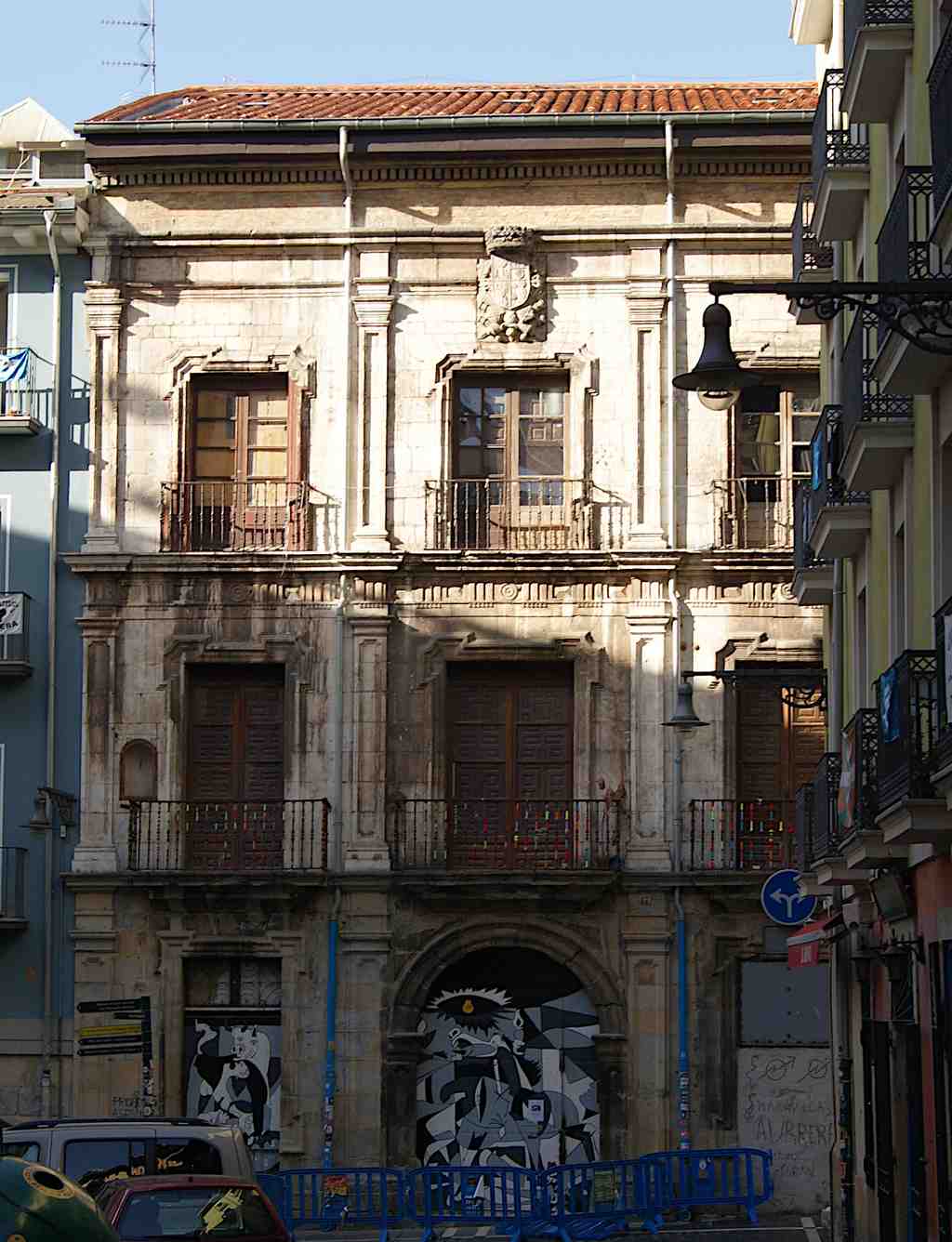
To spot the Palacio Marqués de Rozalejo, just look ahead for a stately beige stone building that stands out between the colorful, narrower houses. You’ll recognize it by its grand arched doorway, with distinctive old wooden balconies above and a large, proud coat of arms sitting right in the middle of the upper facade. If you see intricate stonework and classic baroque flourishes, you’re in the right place. The building’s broad frontage and symmetrical look make it hard to miss on this street corner.
Now that you’re standing in front of it, take a moment to imagine life here nearly three hundred years ago! This isn’t just any palace-it’s more like a noble’s massive old house, built in the 1700s for the powerful Guendica family, who came from the Basque Country and planted their roots right here in Pamplona. Picture a bit of drama: a proud military man named Luis Guendica Mendieta built it in 1739, but he never actually lived in it. Instead, it became home to his children-including one who grew up here while Spain spun with intrigue and change.
You’re looking at an impressive example of baroque style, with a facade so grand that it had to be protected by the city-imagine rain and sun working for centuries to shape the stone you see. The entrance, the big coat of arms, even the hidden stone hallway right behind the doors, all give this building a mysterious, almost secretive air.
This palace sits right on the trail of pilgrims walking the Camino de Santiago. People have wandered past here for centuries, maybe stopping for water at the old Santa Cecilia fountain just across from you or catching a little gossip from the house’s noble residents. It’s changed purposes many times-at one point, it was full of rental apartments, with people clattering up and down the interior staircases. In recent years, the palace was even “occupied” by local activists, who gave it a new nickname-Gaztetxe Maravillas. Talk about a house with stories!
Despite all these changes, you’re looking at a protected piece of Pamplona’s soul. Today, it’s being readied to hold the city’s Memory Institute, so its walls will continue to keep the stories and history of Pamplona alive for generations. Imagine the creak of the old floors, the distant echo of cathedral bells, and the laughter of people who have walked by here for nearly 300 years. If these walls could talk, they’d definitely have a few spicy secrets to share!
To delve deeper into the urban context, historical context or the description, simply drop your query in the chat section and I'll provide more information.


