
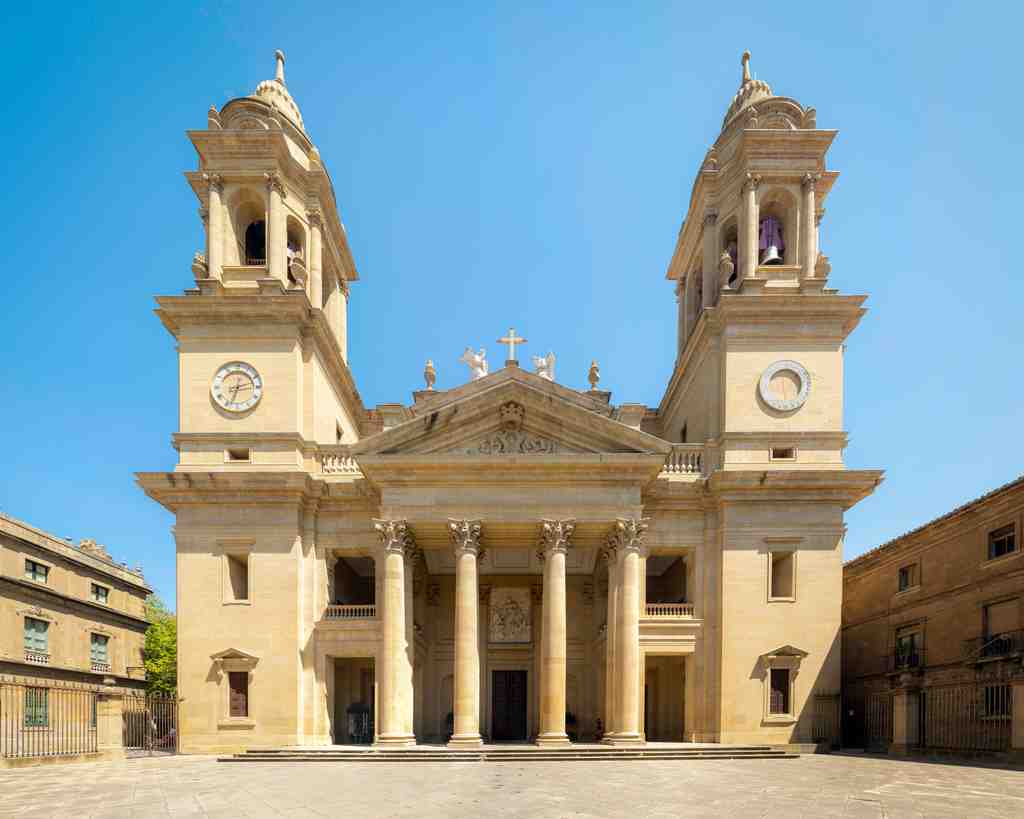
As you walk forward, set your sights ahead and look for a grand Neoclassical façade rising above the rooftops. The tall, twin bell towers frame a portico with classic columns that almost make the cathedral look like it’s auditioning for a role in an epic movie. Trust me, you can’t miss it-this is the proud heart of old Pamplona.
You’re now standing in front of Pamplona Cathedral, or as the locals know it, Santa María de la Asunción. Take a moment to imagine centuries of history pressing at your back, the stones around you echoing with footsteps from Romans, medieval kings, and the occasional lost tourist.
The building you see today mostly dates from the 1400s, when the old Gothic church replaced an even older Romanesque one. Archaeologists have actually found ruins here from two churches before those. Looks like even churches couldn’t resist renovating back in the day.
You’ll notice that dignified façade-it’s thanks to Ventura Rodríguez, who gave the cathedral a fancy new look in 1783. It’s a bit like the cathedral got dressed up for a royal portrait and never changed out of its best outfit. Step a little closer in your mind: behind this Neoclassical face lies a world of twisted Gothic arches, ribbed vaults, and the faint hint of candle smoke hanging in the air.
Pamplona Cathedral isn’t just a pretty face, either. Kings of Navarre were crowned and some even buried here. Imagine the trumpets blaring and nervous royalty, moments before the crown was placed on their heads. And way back when, important meetings of Navarre’s Parliament were held right inside these walls. So if you’re feeling the urge to make a grand proclamation, now’s your chance.
This church has always belonged to Saint Mary of the Assumption. For centuries, there was even a local debate about whether to call her Santa María la Real. The name got so popular the paperwork nearly got lost in translation! Just goes to show, even in the Middle Ages, popularity contests were a thing.
If you look at the floor plan, the cathedral is shaped like a cross. Its French Gothic design was so stylish that even the French were jealous. Inside, you’ll find tombs of royals, elaborate choir stalls, gleaming iron grates, and even remnants of ancient retables-ornate altar pieces that seem to sing stories into the halls.
But the real treasure? The 13th-century cloister, cool and shaded, with delicate carvings that tell tales in stone. When you pass through the “Precious Door,” you’re following in the footsteps of meditative monks, heads full of prayers and hands probably sticky from medieval ink.
To your right, listen for the soft creak of ancient wood and the gentle murmur of voices who’ve passed this way for hundreds of years.
In Pamplona Cathedral, history isn’t just written-it’s whispered in every stone and sung in every chapel. So don’t just look-listen. You might catch the echo of a coronation, the low hum of ancient Parliament, or maybe, just maybe, the faintest giggle of history enjoying its little secrets.
Fascinated by the church, cloister or the diocesan museum? Let's chat about it




