
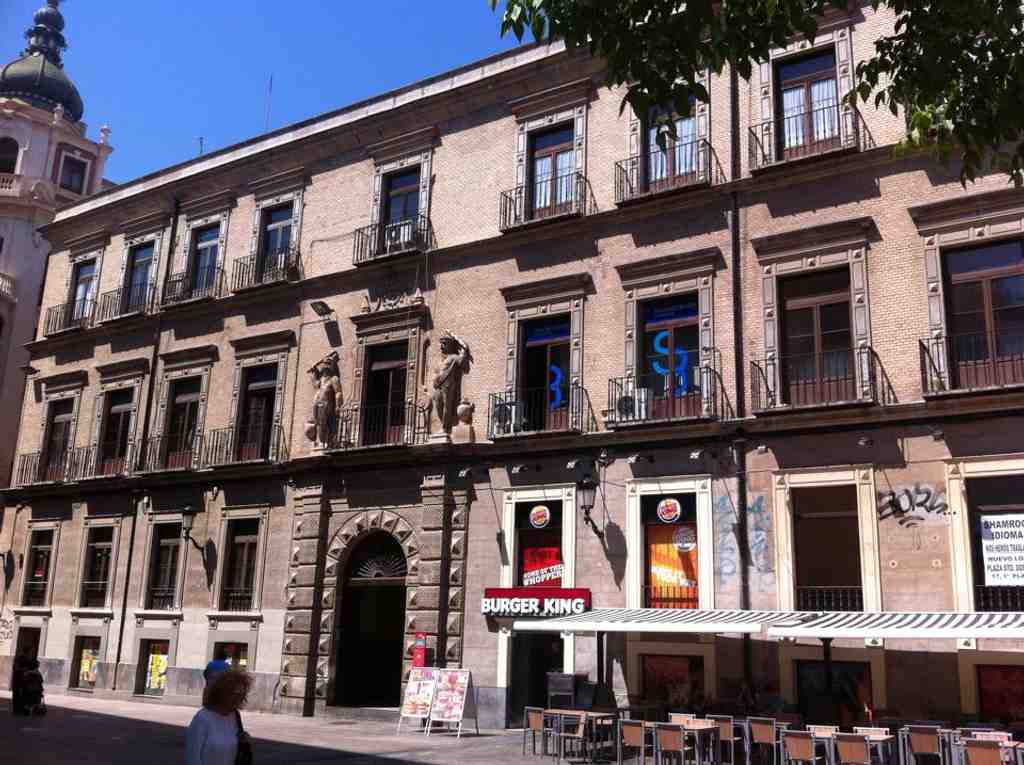
On your left, look for the grand brick and stone facade of the Almodovar Palace, anchored by a heavy arched doorway and two imposing stone giants standing guard on either side of the central balcony.
This is what happens when noble families want to make a statement. The palace origins trace back to medieval houses built right up against the old city walls. Over time, the property passed to the counts of Almodovar. Now, these counts were members of the Rosary Brotherhood, whose chapel was just across the street. But walking across a public street to attend mass? Absolutely out of the question.
So, they hired an architect to build an elevated archway over the street, connecting their palace directly to the chapel. It was the ultimate architectural shortcut, allowing them to attend services without ever having their boots touch the public cobblestones below.
If you glance at your screen, you can get a closer look at those giants flanking the balcony. In architectural terms, these are called salvajes, or wild men. They represent a late Renaissance motif that toyed with the myth of the noble savage, acting as a heraldic symbol and paving the way for the dramatic excess of the Baroque era. To me, they look like they are holding up the weight of all that aristocratic pride.
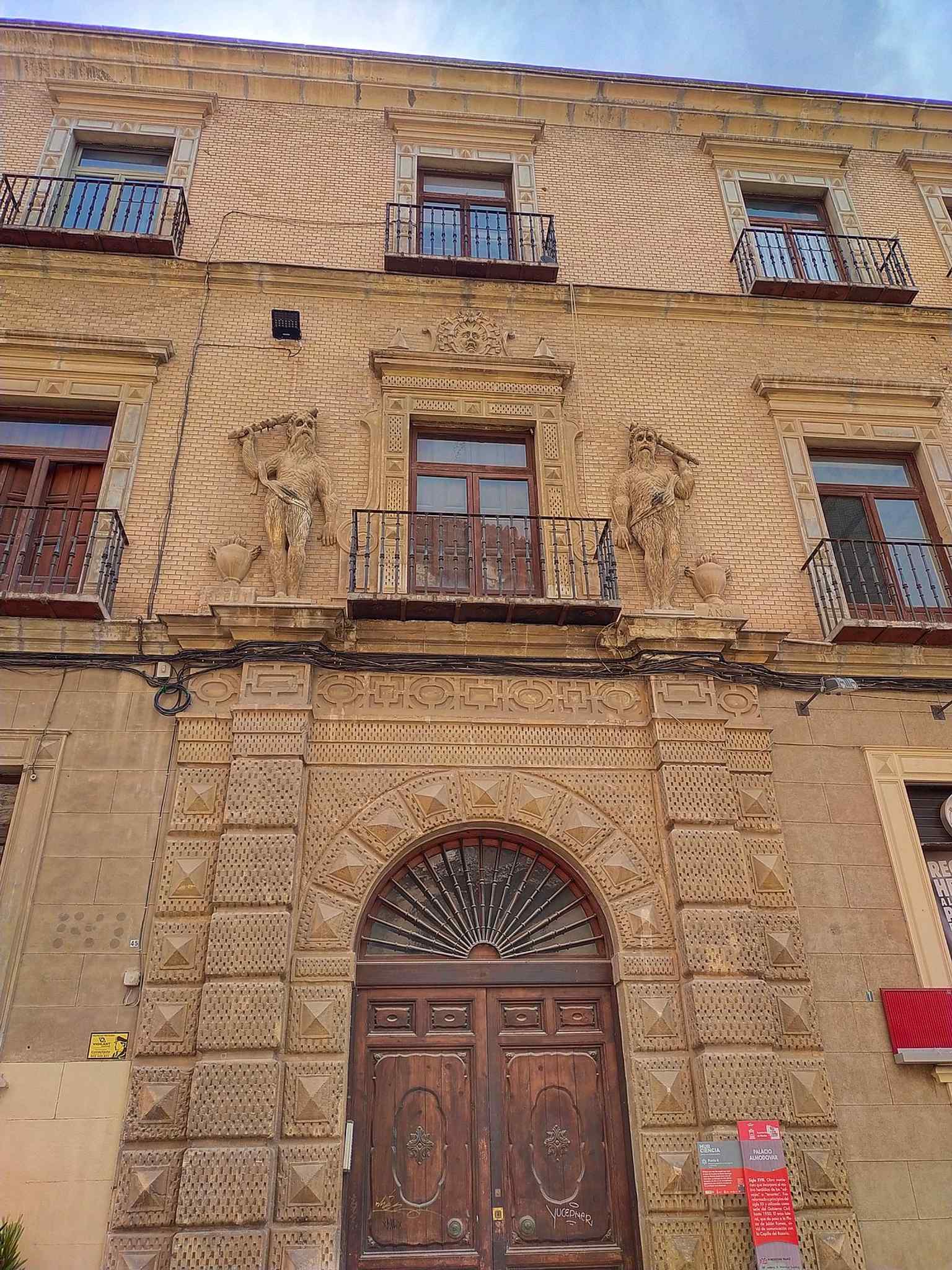
The building underwent a massive renovation in nineteen oh eight. They added a basement with windows, bumped up the roofline with an extra floor, and carefully moved that grand central doorway to its current position. By the twentieth century, the palace traded its noble roots for bureaucratic authority. Up until nineteen fifty, it served as the headquarters for the provincial civil government and, rather fittingly for a building with stone giants acting as bouncers, a police station.
Today, the palace stands as a brilliant piece of layered history, blending medieval ambition with Renaissance flair. Take your time admiring the intricate stonework, and whenever you are ready, we will wander toward our final stop.





