
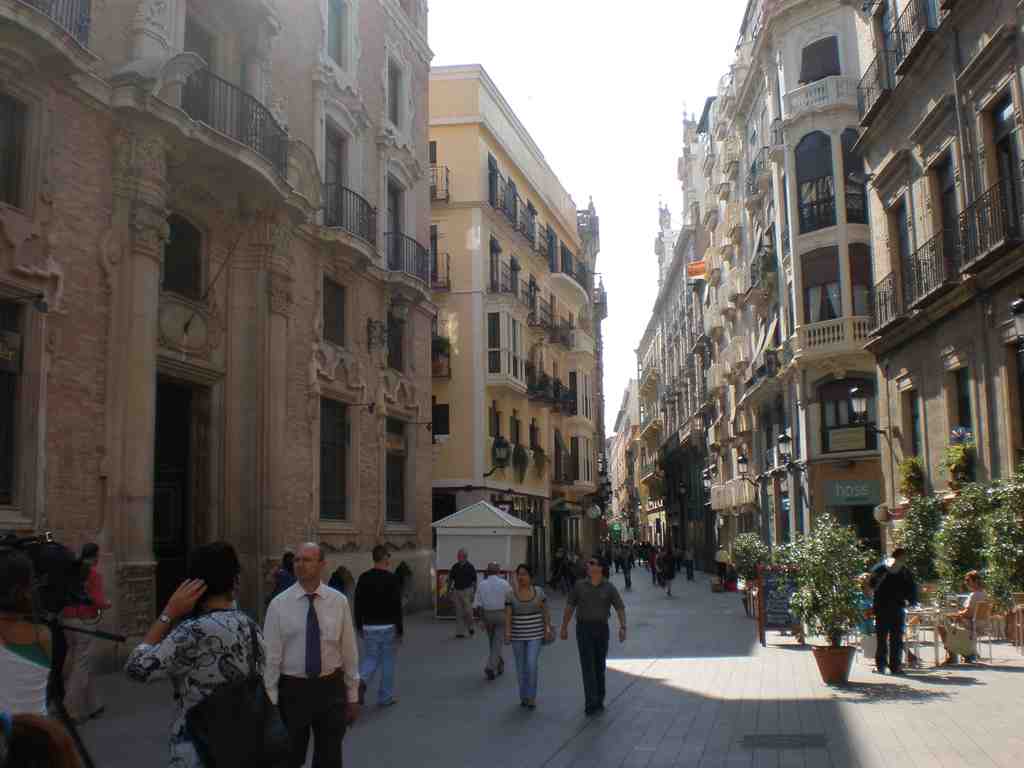
Look down this straight pedestrian thoroughfare framed by towering stone facades, tall wrought-iron balconies, and the large, rounded entrance archways of the historic buildings lining the path. Welcome to Trapería Street, the main north-to-south artery of the old town.
The story of this street begins in February twelve sixty-six, when King James the First of Aragon conquered the city and decided to fix the resulting demographic tension with a massive wall. He quite literally split the city down the middle, forcing Christians to the east and Muslims to the west. As you might imagine, building a giant wall to solve a complex social problem went about as you would expect. It caused immense friction and constant disputes, so much so that soon after, King Alfonso the Tenth decreed that the wall be completely demolished, ordering the Muslim population to move out to the suburbs instead.
When the rubble of the wall was finally cleared, the city was left with a surprisingly wide, perfectly straight avenue. This was a sharp contrast to the winding, maze-like street plans typical of Islamic cities at the time, and from an engineering standpoint, it was a logistical dream. Naturally, it became the commercial center. By the fourteenth century, Maltese, Genoese, and Catalan merchants had flocked here, giving the street its name, which comes from the cloth merchants who set up shop. At the four corners where this street crosses Platería Street, merchants even set up stone altars to Saint Christopher, the patron saint of travelers, to protect their long-distance trade.
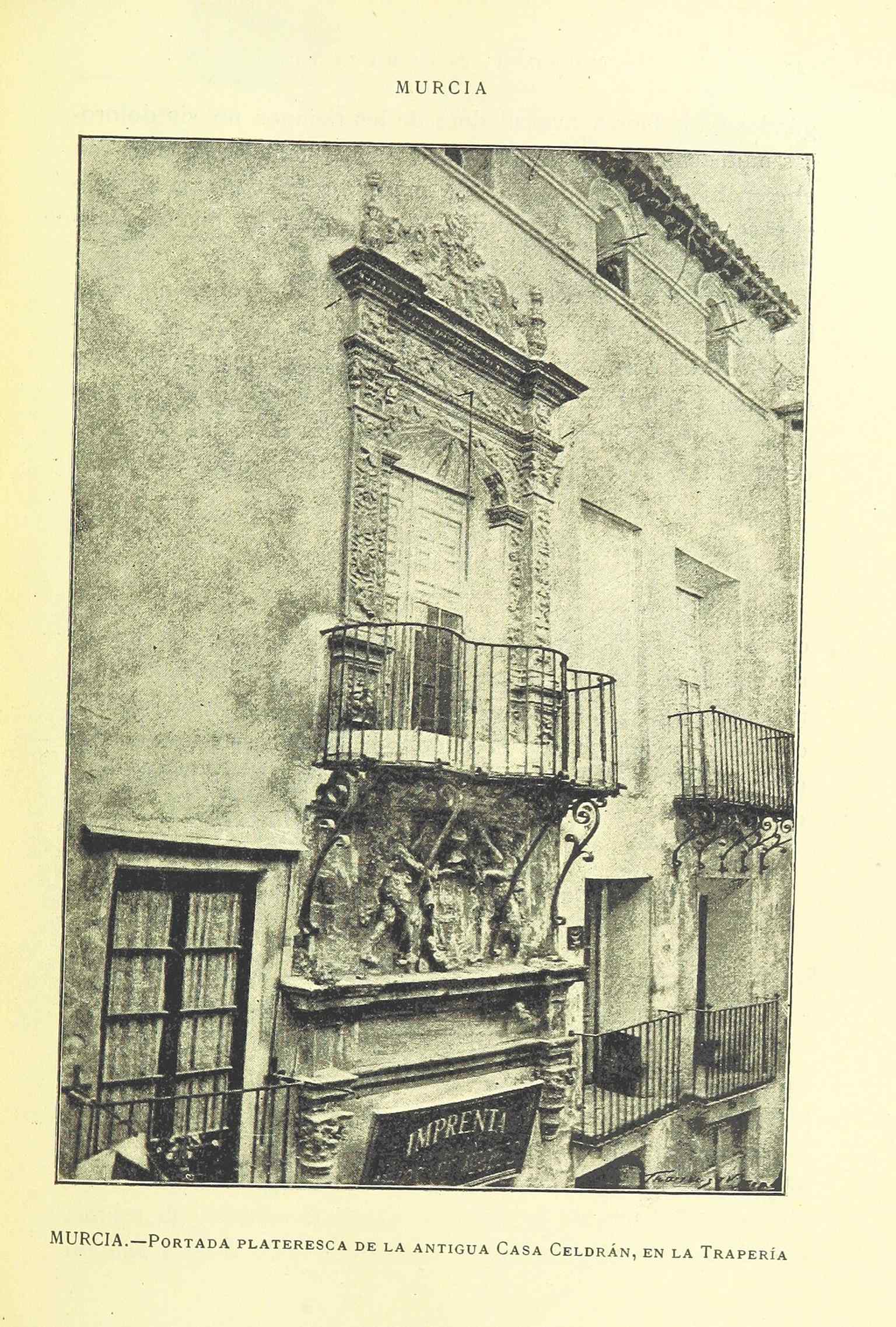
If you take a look at your screen, you can see a historical photo of the Casa de los Celdranes. This was a stunning Plateresque building... Plateresque being a highly ornate Spanish architectural style meant to look like intricate silverwork... that housed the Fine Arts Circle until it was torn down in nineteen thirty-one.
This street has always been a canvas for ambitious redesigns. In fact, since we just visited the Casino of Murcia a few minutes ago, you should know that its wealthy founders deliberately bought and demolished existing buildings in the early twentieth century just to secure a grand entrance right here on Trapería Street. If you were a member of the bourgeoisie, this was simply the only street that mattered. Today, the avenue is a fascinating mix of eclectic twentieth-century designs, where sweeping modernism sits right next to rationalist blocks from the nineteen thirties.
It remains the proud, bustling architectural spine of the city. Enjoy the energetic pulse of the avenue, and our walk will continue when you are ready.





