
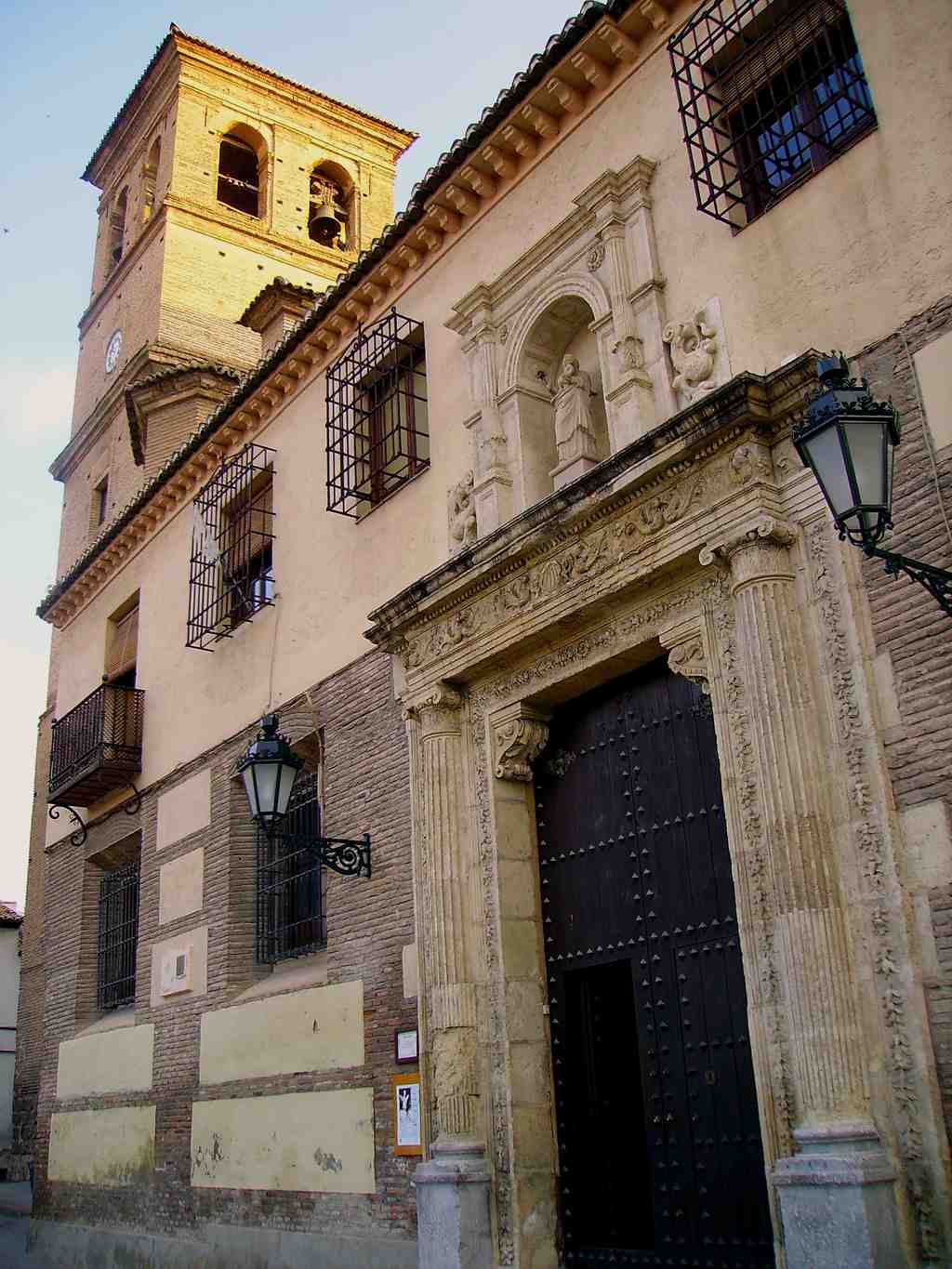
To spot the Church of San Salvador, look to your left for a striking stone portal with elaborate columns and sculptures above the door, set beneath a tall, square bell tower with iron-grilled windows-trust me, it’s hard to miss once you notice that grand entrance!
Imagine standing here centuries ago-maybe you’d get a whiff of lemon blossoms drifting over the stone courtyard, the soft chatter of neighbors echoing off ancient brick. This is no ordinary church; the ground beneath your feet is layered with secrets, whispers, and some seriously dramatic history. Before the first bell ever rang from that lofty tower, this spot was at the heart of the old Albaicín neighborhood-a lively swirl of storytellers, traders, and children playing under the shade of lemon trees.
Let’s rewind to the 13th century. Don’t worry, there are no history exams here-just picture this: instead of a church, you’d see the handsome silhouette of the Great Mosque of the Albaicín. This was the spiritual center for the neighborhood’s Muslim community, built under the rule of the Almohads. The mosque was huge-big enough for all the local faithful, with a prayer hall supported by an impressive forest of eighty-six marble columns. The cool, shady courtyard was planted with real, fragrant lemon trees, and across the street you’d find a bustling school and a place for weary travelers to rest. I like to think even then, people got lost in the side streets just like they do today!
But change was coming, as it always does. In 1492, Granada’s keys were handed over to the Catholic Monarchs, and with the stroke of a royal pen, the mosque became a church. In 1499, Cardinal Cisneros consecrated it for Christian worship-without waiting for everyone’s permission, I might add. Granada’s Morisco community, descendants of Muslims forced to convert, must have watched the changes with heavy hearts and wary eyes. The city’s demographics rearranged, new parishes sprang up, and soon-after a papal bull from Clement VII-the church became a collegiate church in 1527, with extra clergy assigned to teach and guide the locals through their new faith.
Now, let’s peek at the outside architecture. Notice how the doorway frames you in with ornate stonework and a carved niche sheltering the Virgin and Child? This grand entrance was added in 1543, a real show-stopper in the local Plateresque style. Diego Siloe, Granada’s own architectural superstar, made sure this church would impress anyone wandering past. He might even have blushed at the work done by his talented student Juan de la Maeda, who designed the chancel-the holiest part-completed in 1592. The stonemasons, Martínez and de la Vega, must’ve shed a lot of sweat (and maybe a few tears) carving each block and fitting each timber.
Of course, building a monument like this doesn’t always go smoothly. The neighborhood faced tough times after the Morisco rebellion in 1568; many families were forced to leave, which meant fewer hands and pockets to help finish all that stonework. The lofty dreams for the church’s design had to scale back a bit. It’s a bit like setting out to build a castle and having to settle for a very elegant fortress-still impressive, but maybe less gold leaf than planned.
As the centuries rolled on, San Salvador witnessed its own share of drama. The ground shook after the 1755 Lisbon earthquake, forcing the church’s college of canons to scatter to other buildings. By 1771, the church’s collegiate days were over, and it went back to being the heart of the local parish. But perhaps the most devastating blow was the fire of 1936, which roared through here during anti-clerical riots and almost destroyed the building entirely. Precious art, golden altars, and history-all went up in smoke. But in classic Granada fashion, they didn’t just sweep away the ashes. Restoration began almost immediately. Today, as you stand here, know that much of what you see-like the brilliant cement vaults overhead or the rebuilt stonework-comes from tireless reconstruction in the decades that followed.
But one of the best secrets? The peaceful courtyard you can glimpse through the gates is still the same shape as the one in the old mosque, its arcaded horseshoe arches now sheltering quiet footsteps instead of the hush of centuries-old prayers. Even the layout of the lemon trees is a loving nod to the past.
So look up at the bell tower, let your eyes linger on that intricate portal, and maybe tip your hat to the generations who’ve shaped this place-brick by brick, prayer by prayer, lemon tree by lemon tree. If walls could talk, San Salvador would have enough stories to keep us here till sunset-or at least until someone brings us a lemonade! Ready for the next stop?




