
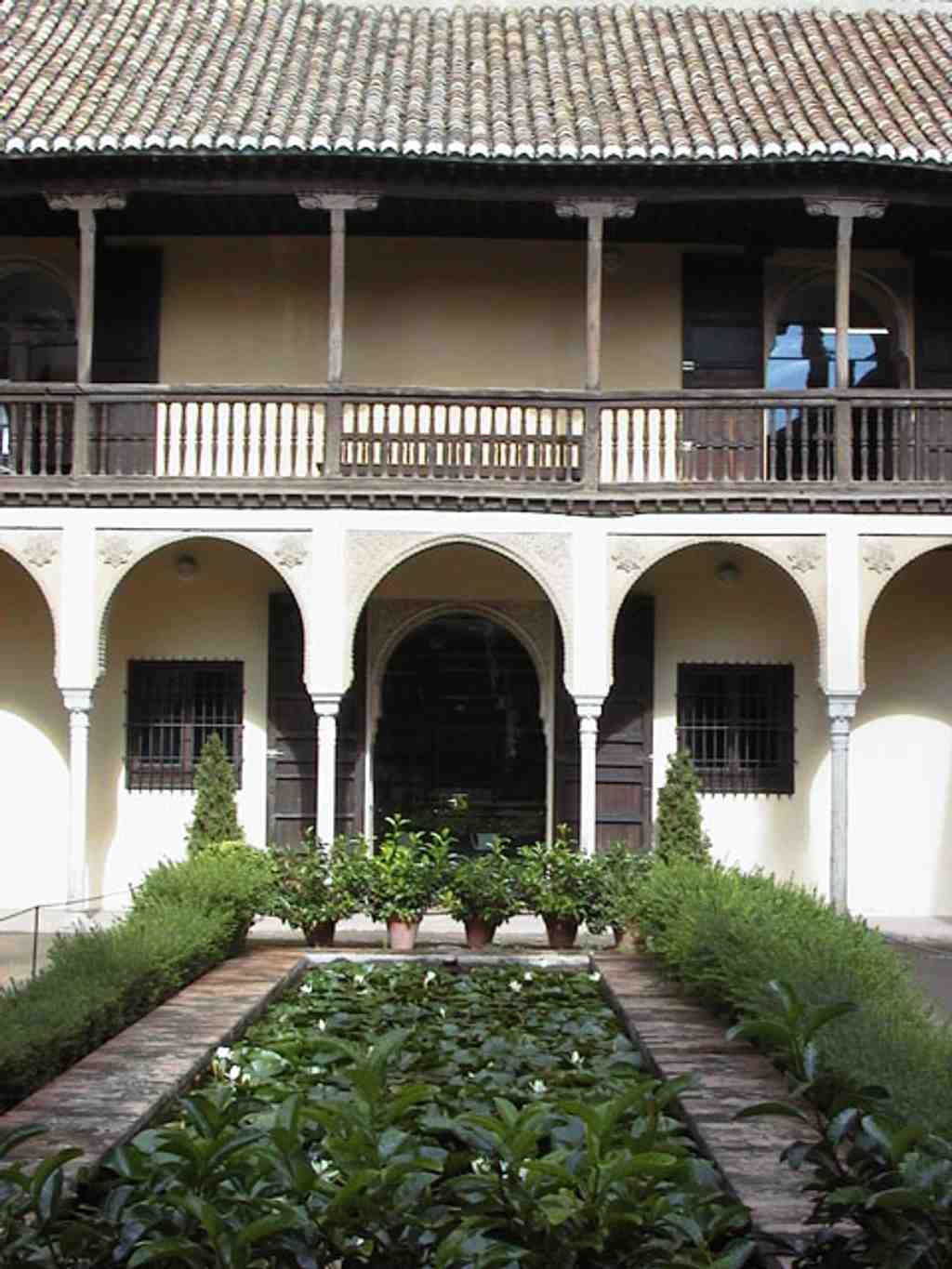
To spot the Casa del Chapiz, look for a grand, whitewashed building with a tiled roof, arched wooden balconies, and a lush garden courtyard with a long, narrow pond right in front of you.
Now that you’re here, take a moment to soak in the scent of plants and the coolness that rolls out from that shaded courtyard. Two houses sit quietly on this spot at the top of the Cuesta del Chapiz, right where the Albaicín and the road to Sacromonte meet-imagine the crescendo of voices, footsteps, and perhaps the braying of donkeys as traders and neighbors have passed here for centuries. But these aren’t just any old houses. They’re relics of Granada’s unique past, born in the 1500s when the air was thick with change and tension.
Ready for a story? Well, make yourself comfortable, because these walls have heard it all. Long ago, these buildings started their lives as two separate homes built by two Moorish men, Lorenzo el Chapiz and his brother-in-law Hernán López el Ferí. Though people often call this “Casa del Chapiz” in the singular, it has always been two houses-a mix-up easy to understand since the buildings are stitched together by a shared wing. If you could step back in time, you’d see horses snorting at the entrance and families crossing the shaded patios.
Lorenzo’s house, the larger of the two, was born from the bones of an even older Nasrid palace. Its heart is the big rectangular patio you see before you-the garden stretches around a central pond, once home to goldfish and a favorite spot to cool off during scorching Andalusian summers. In the old days, you’d find white marble columns holding up elegant arches, sunlight glinting from water, and the low hum of voices beneath wooden galleries. Lorenzo gave his house a fashionable update, creating an upper floor with wooden balustrades displaying Renaissance flair. It’s almost as if he wanted to show Granada that you could have the best of both worlds: Moorish charm below, Renaissance panache above.
But history here is never peaceful for long. In 1571, both homes were snatched away by the Crown, after their owners joined the Morisco uprising-a time of rebellion, suspicion, and secrets whispered in dark corners. Imagine the tension in these streets, as the Spanish King, Felipe II, flexed his power and swept homes like these into royal hands.
After their confiscation, the houses bounced from owner to owner, including a powerful secretary named Juan Vázquez de Salazar. The years marched on, and these grand residences slowly transformed into humble apartments and businesses-a tailor here, a baker there, pots bubbling and tools clanging, as Granada’s working class squeezed into every room, every alcove. The elegant courtyards saw children darting past, workers chatting under peeling plaster, and the once-splendid walls grew shabby and tired. By the early 20th century, these beautiful homes were teetering on the edge of ruin-an architectural cliffhanger, you might say.
Thankfully, in 1919, people realized what was at stake. The old houses were declared an official monument, rescued, and finally scooped up by the State ten years later. Restoration began in earnest-a bit like taking your grandma’s favorite quilt and carefully mending every delicate patch. The architect Leopoldo Torres Balbás swung into action. Today’s lush gardens, cool galleries, and tinkling fountains are thanks largely to his careful hands. Since 1932, the Casa del Chapiz has hosted the School of Arab Studies, so scholars now fill the halls where once fish splashed and merchants bargained.
Hernán’s house, just next door, is smaller but no less fascinating. Its entrance twists away from prying eyes, thanks to offset doorways that keep the central patio a secret unless you know the trick of the angle. This courtyard, too, boasts its own little pond, and wooden galleries wrap around on all four sides. Peer closer and you’ll spot a patchwork of styles: Nasrid muqarnas-a bit like honeycombed ceilings-mingle with gothic touches and even the flourish of Renaissance vases carved into marble columns. Under the north wing, the ancient cistern-an aljibe-once collected water from the Aynadamar canal, keeping the household cool and the gardens green even in the high heat of summer.
So, as you stand here now, just imagine: in every creak of tile and whiff of green, you’re hearing centuries of laughter, ambition, whispers, and even political intrigue. This is not just a house, and not really just two-but a tapestry of Granada’s history, woven with light, water, and a stubborn refusal to fade away.




