
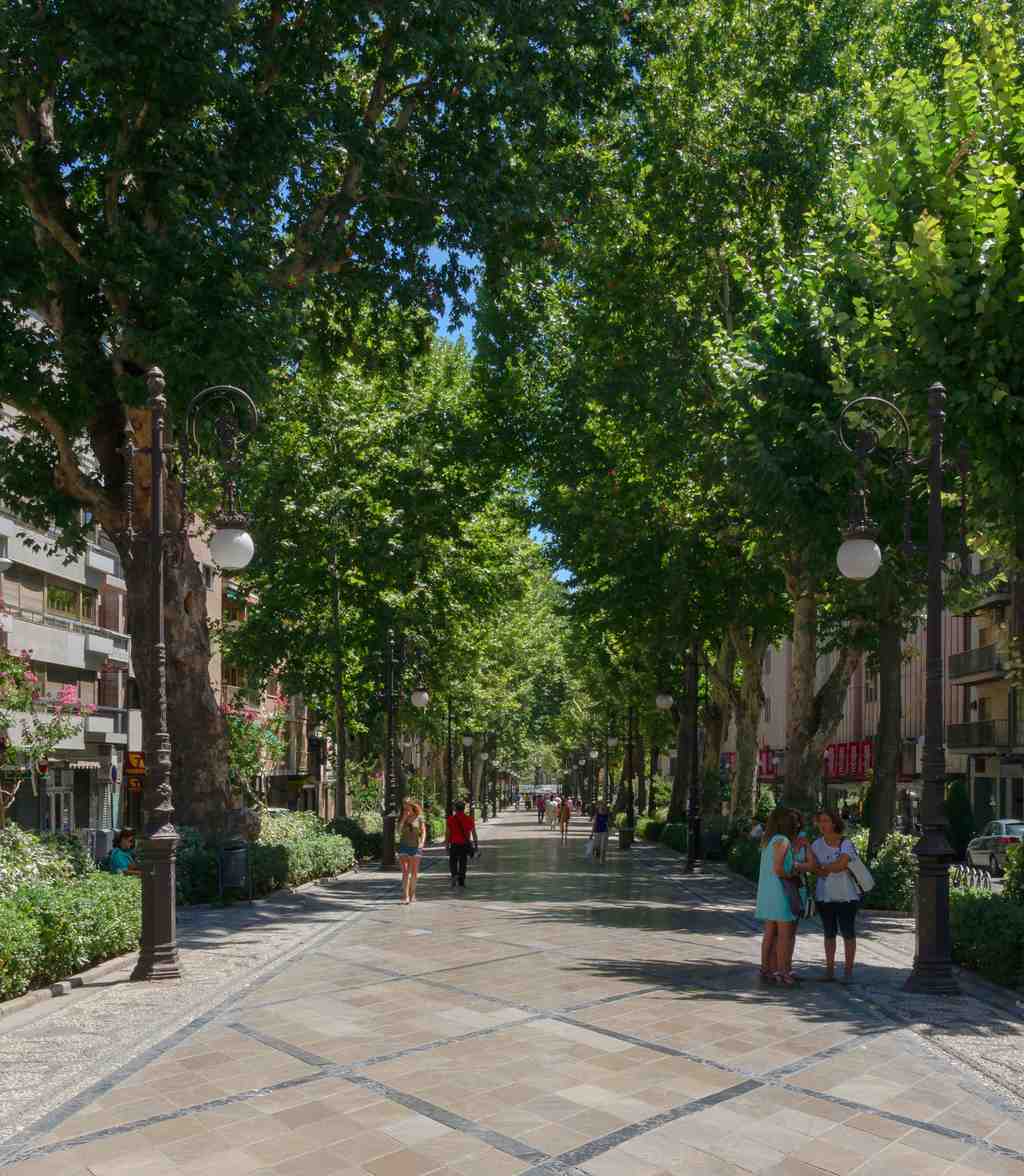
The area earned its name after King Felipe IV's visit on April 8, 1624. It is said that during a storm, the king entered Granada through the gate of El Rastro or La Paja in the Muslim defensive wall, known as Bib-al-Rambla. This gate became the entrance point for the king, and thus the area surrounding it became known as Puerta Real.
During the 16th century, Puerta Real emerged as the central square of Granadine social life. In 1515, it was adorned with the coat of arms of the Catholic Monarchs, Isabella and Ferdinand. Later, in 1610, new national symbols celebrating the reconquest of Spain from Muslim rule were added.
Puerta Real has witnessed numerous transformations throughout its existence. In the past, the Darro River flowed through this area, but for hygiene reasons, it was eventually redirected. This change led to Puerta Real becoming a focal point of social activities, surpassing the importance of Elvira Street and Nueva Square.
Over the years, Puerta Real has become home to various commercial establishments. One notable but no longer existing establishment is the Casino. Additionally, the Swiss Café, constructed in the late 19th century and situated next to Mesones Street, played a significant role in the district's social scene.
Within Puerta Real, you'll also discover Genil Avenue, named after the Genil River that once flowed through this area. At the end of Genil Avenue lies the meeting point of the Genil and Darro Rivers. Don't miss the stunning Nuestra Señora de las Angustias Church along this avenue, which is dedicated to the Virgin of Granada.
So, as we stroll through Puerta Real, take in the rich history and vibrant atmosphere that this historic area offers. From royal visits to social gatherings, Puerta Real has played a central role in shaping the cultural fabric of Granada.




