
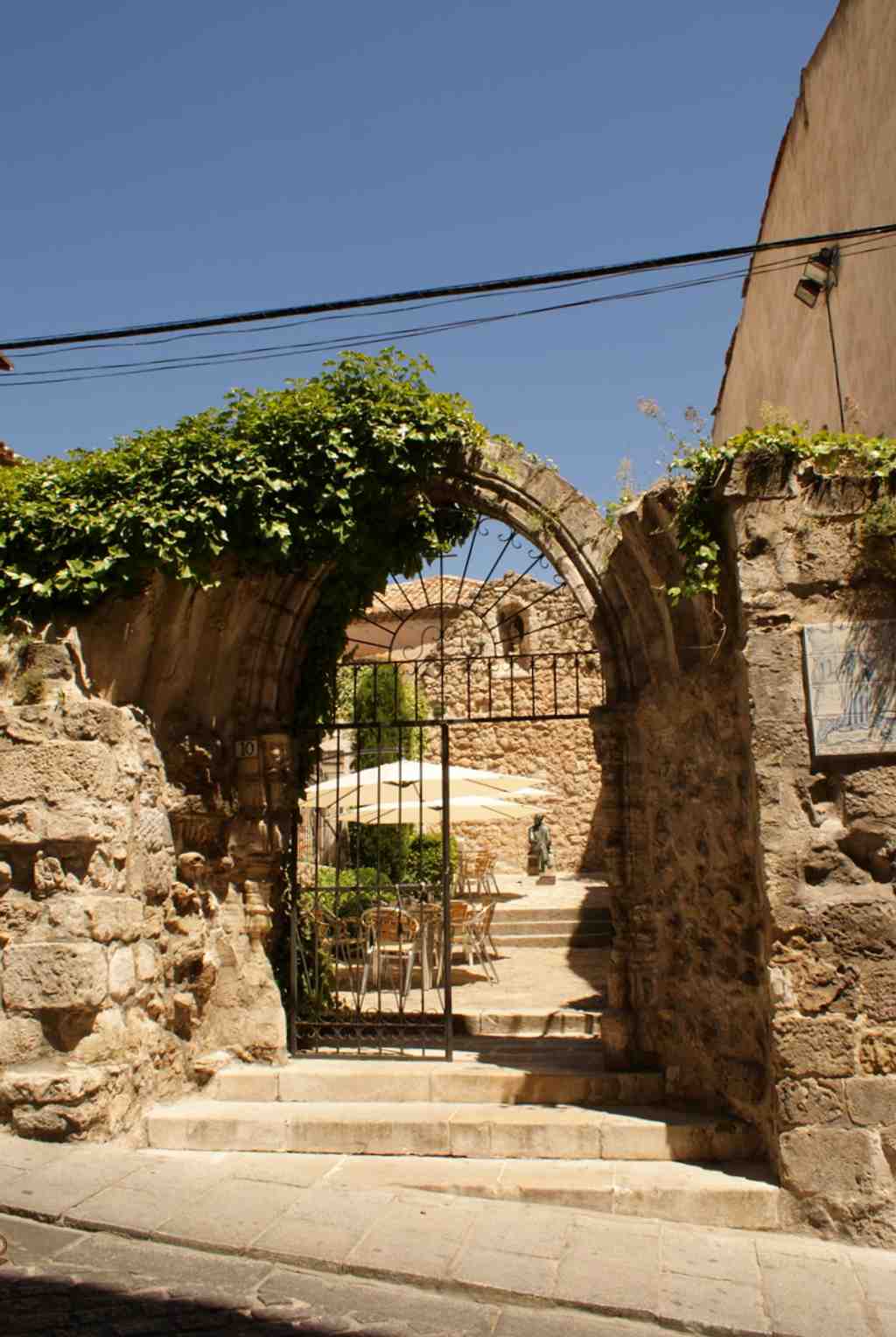
If you look just ahead, you’ll see a charming stone archway draped with ivy and guarded by a black gate-this is the entrance to the evocative ruins of the Iglesia de San Pantaleón.
Now, step closer and imagine you’re traveling back in time. The sun warms the rough stone beneath your feet, and the faint echo of ancient prayers lingers in the air. This was once a lively little church, nestled at number 10, San Pedro Street, a place where neighbors gathered and secrets were whispered among stone walls. Originally, San Pantaleón was a humble church, just one cozy hall stretching out beneath a peaked roof, with a sturdy facade held strong by stone buttresses. The doorway you see before you? That’s the relic of the proud, abocinado arch, shaped in the 12th century-a time when dragons in stories sometimes felt just as real as those carved in stone.
Picture it: inside, narrow and slightly chilly, sunlight might have sneaked in through a small, simple Romanesque window high above the altar. The nave, though single, was cleverly crafted-arched ceilings above, the comforting smell of old timbers and candle wax below. The space stretched about twenty meters deep, just wide enough for a close-knit community, narrowing slightly toward the altar as if gently nudging worshippers closer to the sacred. If you peek through today’s iron grilles, you’ll spot weathered square columns and the remains of powerful supporting arches. It’s said these arches were added later, transforming the space to connect with a narrow alley; perhaps the church even stretched a bit, squeezing into Cuenca’s winding streets like an old friend making room at the table.
Now, here’s a little mystery for you: carved into one of the worn jambs, a secret still lingers-the image of a horseman slaying a dragon, an ancient nod to the rituals and adventures of the medieval Knights Templar. Imagine a young initiate, heart pounding, facing this very symbol as he prepared for a life sworn to courage and faith! Adding to the church’s aura, think of the Byzantine touch in the masonry-light stones, ceramic fragments, and the echoes of artisans gossiping as they built for eternity.
In the last century, while cleaning up these evocative ruins, workers uncovered graves carved into the rock near the altar-a quiet reminder that this place was as much about endings as beginnings. Look for carved stones too: a capstone with the mystical lamb, a rather rough-looking skull in a winged helmet, hints of the secrets kept by time and stone. The church was declared a Cultural Interest Monument in 1992, so even in ruin, it holds the heart of Cuenca’s memory. Who knows? If you stand very still, you might even hear the whisper of a dragon, or catch a wink from a cheeky Templar knight.


