
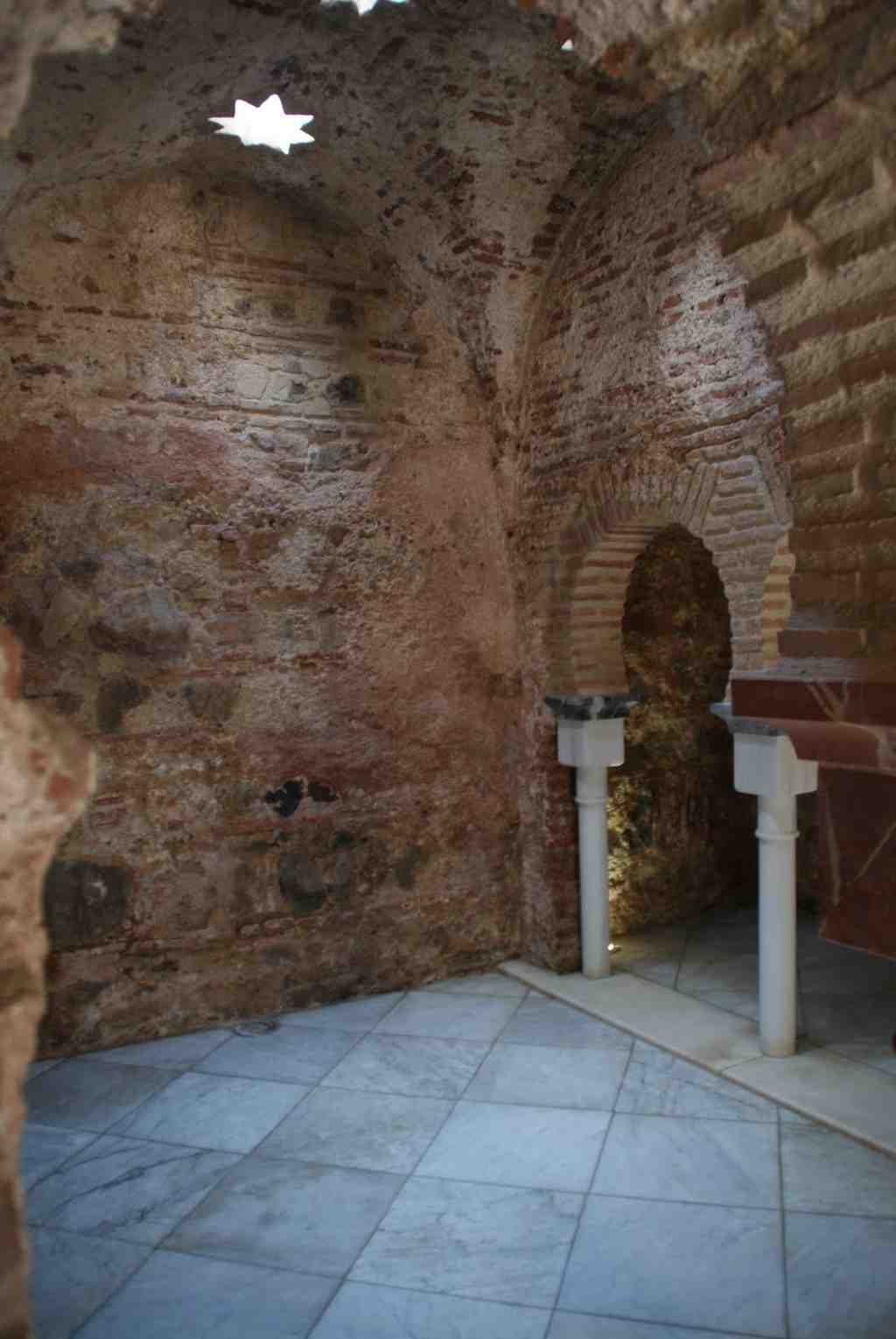
To spot the Arab bath in the Plaza de la Paz, look for a structure tucked partially below street level, made of thick, reddish-brown stone walls, with small star-shaped openings in its arched ceiling. If you peek inside, you’ll notice ancient brickwork, marble columns, and soft, filtered light shining through those star-shaped skylights-almost like little beams of history poking through the past.
Now, as you stand here, try closing your eyes for just a second and imagine stepping into the 12th century. Smell the earthy coolness of stone, feel the echo of footsteps where people once rushed in and out, carrying towels, water buckets, and stories.
This Arab bath was the medieval equivalent of a spa-though, unfortunately, no fluffy robes in sight! It’s in La Almina, built right on the edge of the old Islamic city. These walls? They’ve seen it all, from whispers among friends to the clinking of pots and the gentle steam that once filled these rooms.
It started as part of a lively street in the 11th century, then, between the 12th and 13th centuries, transformed into the bustling bathhouse you see before you. The clever builders dug partway into the hillside, so the baths were snug against the earth, keeping the heat in-and maybe making it a little easier to sneak in during those cold winter mornings. The vaults above, with their star-shaped holes, let in just enough light for a dreamy atmosphere.
In the 14th century, the baths got an update-more rooms, different routes to wander through. Imagine a steamy cold room and people bravely dashing between hot and cold water. Think of the hustle and bustle, conversations echoing off the walls, the sense of community-until the 15th century, when everything changed. These once-grand baths were abandoned. Over time, they became stables, warehouses, and eventually, just ruins half-buried under new homes.
It wasn’t until the 1960s, when some curious demolition uncovered all this, that someone said, “Hey, wait! There’s history under here!” Ever since, archaeologists have been working to reveal its secrets, bit by bit.
So take another look at these ancient stones-nearly a thousand years old, and still here. Who knew a simple bath could soak up so many stories? Ready to follow the steam trail to our next stop?




