
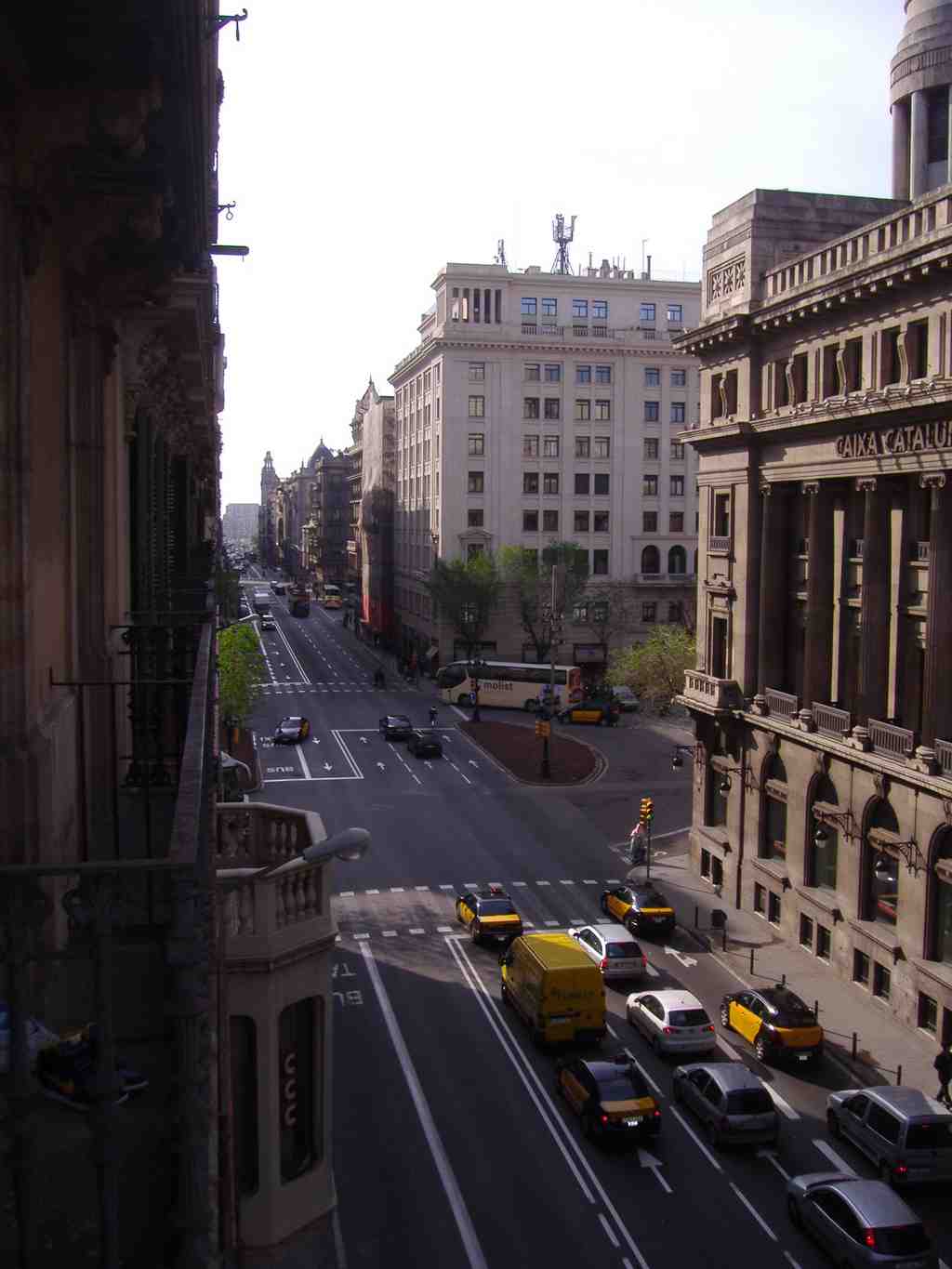
Via Laietana is always bustling with both locals and tourists who are drawn to its stunning Modernista Art Nouveau, Art Deco, and Noucentista neo-classical architecture. Its proximity to the Ramblas and the quiet pedestrian streets of Barri Gòtic adds to its appeal. Additionally, this avenue is home to the headquarters of various banks and institutions, including the historic building of the old Caixa Catalunya.
The construction of Via Laietana was first planned in 1879 and commenced in 1907. However, it faced much controversy due to the need to demolish a significant number of houses and rearrange the streets in the area. As a result, traditional guilds of the city, some dating back to the Middle Ages, had to be relocated, notably to Plaça de Sant Felip Neri.
The first section to be built was named Carrer de Bilbao, which now exists as a separate, shorter street branching off from Via Laietana. Finally, in 1926, the avenue was completed. During the Spanish Civil War from 1936 to 1939, it was temporarily renamed Via Durruti.
As an avenue constructed in the early 20th century, the buildings along Via Laietana reflect the aesthetic ideals of the time and the influence of different political regimes. The architectural style of some buildings is unique to Barcelona and has greater similarities to the architecture seen in Madrid. Interestingly, several of these buildings are currently undergoing conversion into hotels.
Throughout Via Laietana, you can admire notable structures such as the Conservatori Superior de Música del Liceu, Casa Bulbena-Salas, Edifici del Col·legi d'Enginyers Industrials, Casa Artur Suqué, Caixa Catalunya building (formerly Banco de España), Casa dels Velers, Foment del Treball building, Edifici de Tabacs, and Edifici de Correus.
Please take a moment to appreciate the grandeur and architectural diversity of this avenue. Thank you for joining me on this tour of Barcelona's historical landmarks!


