
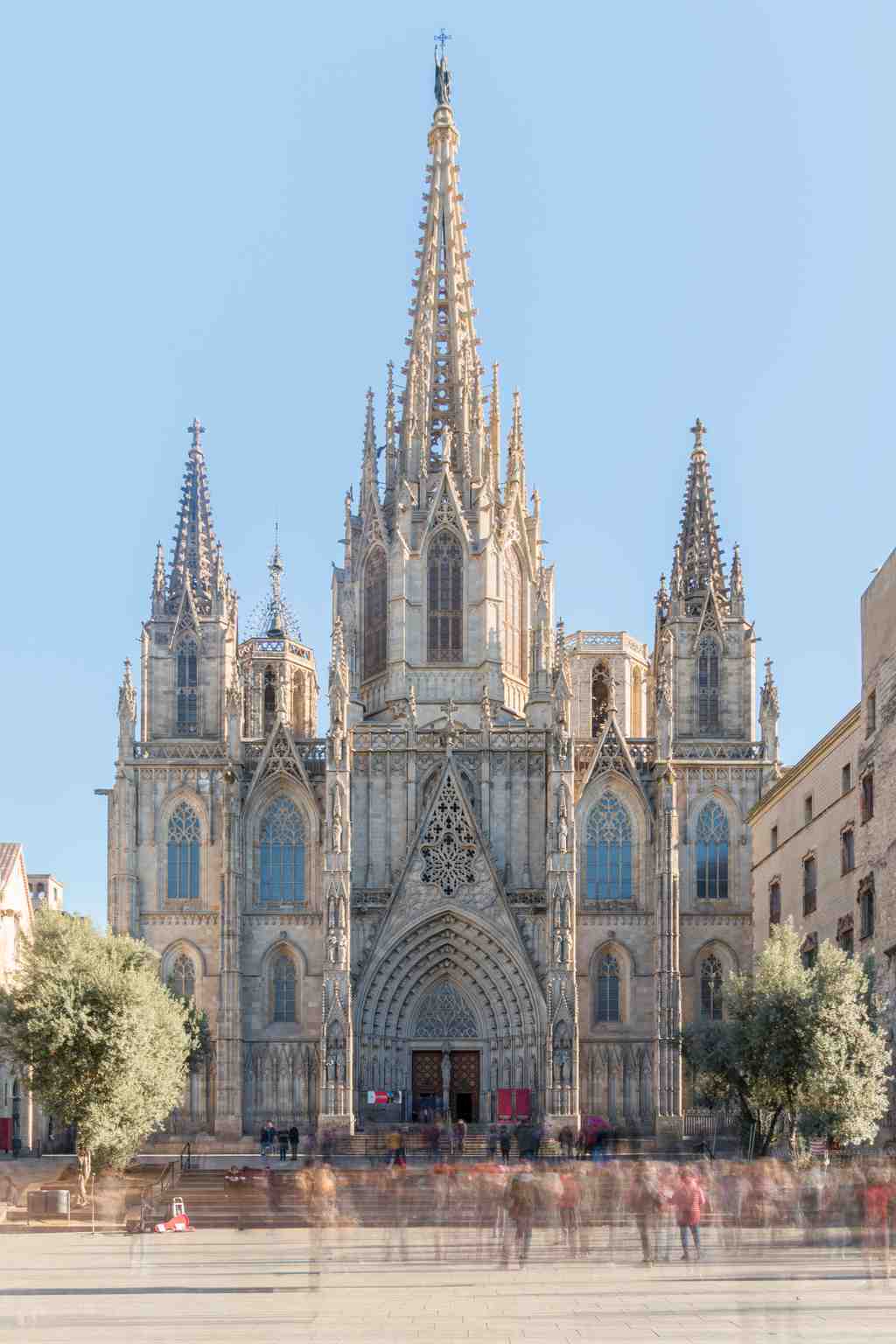
The cathedral features a neo-Gothic façade added in the late nineteenth century, transforming its previously nondescript exterior into a more grandiose structure commonly seen in Catalan churches. The interior is designed in a pseudo-basilica style, with five aisles that are vaulted and divided into chapels.
The transept of the cathedral is truncated, and the east end showcases a chevet consisting of nine radiating chapels connected by an ambulatory. The high altar is elevated, offering a clear view into the crypt beneath. This crypt is where the body of Saint Eulalia, the co-patron saint of Barcelona, is entombed. According to Catholic tradition, she was a young virgin who suffered martyrdom during Roman times in the city. One story recounts that she was exposed naked in the public square, and a miraculous snowfall covered her nudity in mid-spring. The enraged Romans then rolled her down a street in a barrel filled with knives.
If you take a look at the choir stalls, you will notice the coats-of-arms belonging to the knights of the Order of the Golden Fleece. It is worth noting that in his first visit to Spain, Charles, the eventual Holy Roman Emperor, chose Barcelona as the site for a chapter of his Order. The cathedral's large proportions made it suitable for the grand ceremonies he intended.
The Barcelona Cathedral also showcases the Chapel of the Holy Sacrament and the Holy Christ of Lepanto, which houses a cross believed to date back to the Battle of Lepanto in 1571. Additionally, several tombs can be found within the cathedral, including those of Saint Raymond of Penyafort, Count Ramon Berenguer I, his third wife Almodis de la Marche, and several bishops.
Within the Gothic cloister of the cathedral, you will find 13 white geese. It is said that there are precisely 13 geese because Saint Eulalia was 13 years old when she was martyred.
To learn more about the history of the cathedral, you can visit the Barcelona City History Museum, which displays parts of the early Christian and Visigothic episcopal complex that once stood in this location. This complex included a baptistery, a basilical hall, a cross-shaped church, and a bishop's palace.
Thank you for your attention.


