
On your right, you will see a vast paved expanse framed by two towering, multifaceted concrete buildings, one of which is topped by a red digital clock.
Beneath the heavy concrete surface stretching out before you lies a completely different world. This modern plaza was built directly over the northern wall of the ancient Roman city of Emona, hiding an expansive buried landscape of early Christian centers and ancient graves. In the nineteen sixties, the renowned archaeologist Ljudmila Plesničar Gec and her team waged a frantic battle against time and mechanization on this very spot. They dug through the earth by hand with volunteer youth brigades, literally tearing priceless Roman artifacts from the jaws of advancing bulldozers before the massive foundations of the new city erased them forever.
The architect driving this new era, Edvard Ravnikar, layered his grand design directly over that ancient past. If you check your screen, you can see an aerial view of the two stark buildings framing the square. Ravnikar designed them in brutalism, an architectural style defined by its unapologetic use of raw, exposed concrete to project uncompromising strength. He originally intended these two imposing structures to act as a monumental gateway to the city. The locals initially mocked their unusual triangular shape, calling them a pair of poker cards, but Ravnikar deliberately angled them to open up a clear line of sight toward the historic center.
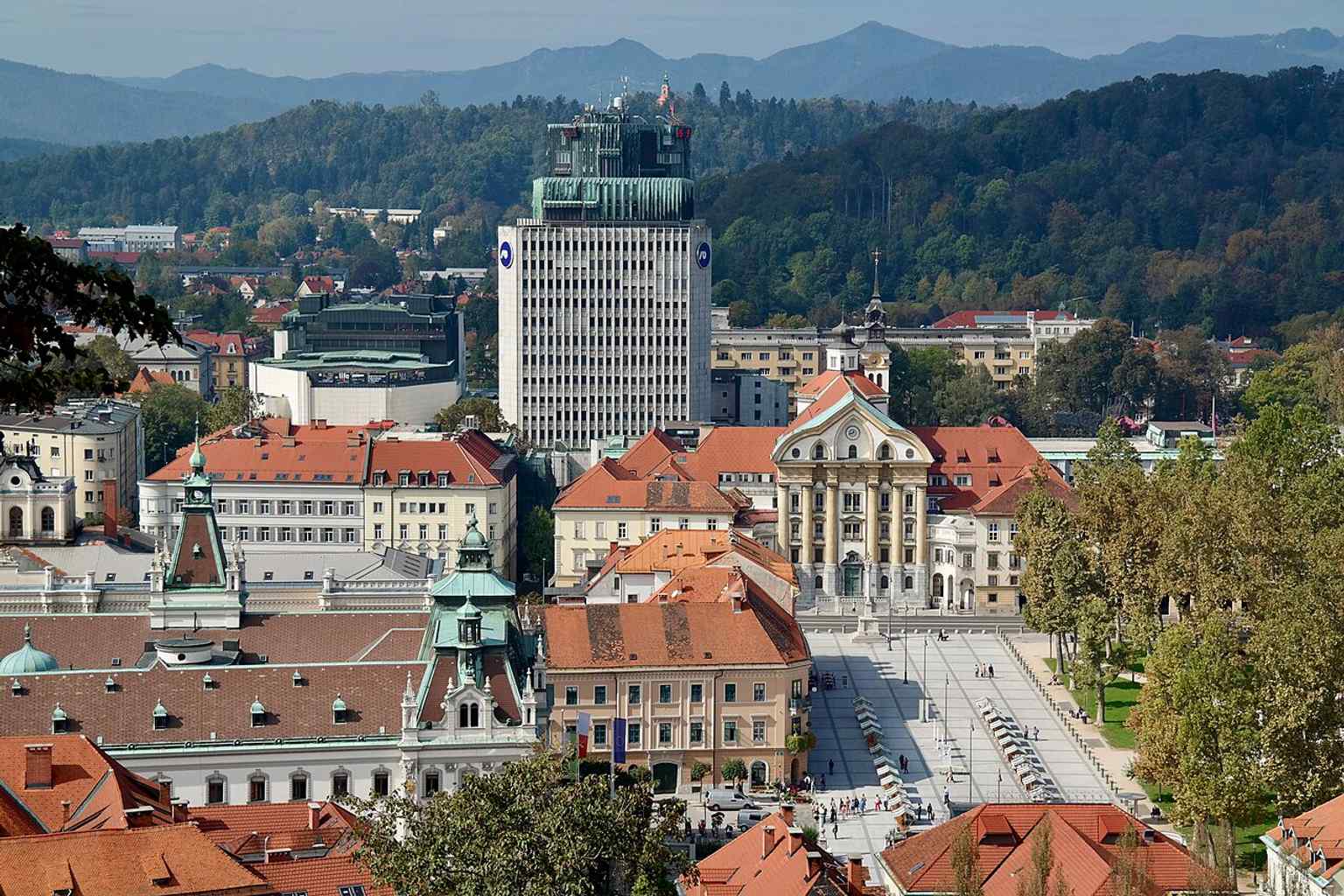
This monumental space ultimately became the stage for a new nation's birth. It was here, in nineteen ninety one, that Slovenia officially declared its independence. But even that defining ceremony had its behind the scenes drama. Just sixty hours before the event, officials realized the newly manufactured national flags were printed incorrectly, with the coat of arms glaringly misaligned. Disaster was only averted when a local sailmaker frantically sewed a replacement of the proper dimensions, which a former champion skier then rushed through road blockades to deliver right to this square. A linden tree was planted during the ceremony as a symbol of the young state, but the harsh environment of this concrete expanse caused it to wither until it was moved to a nearby park, where it finally thrived.
Even in recent decades, the struggle over this space continued. For years, the city lost control of this very plaza due to an unusual legal loophole. Because there is a parking garage underneath, a private company purchased the garage and successfully argued in court that the entire public square above was legally just the roof of their building. It was not until two thousand eleven that the city reclaimed its rightful center.
Look across the wide pavement and imagine the dual realities resting here. You are standing above ancient Roman graves, looking up at the imposing gates of a modern nation. This open expanse is accessible twenty four hours a day. Now, let us walk further into the plaza as we head to our next view of Republic Square, just a minute away.





