
Look to your left at the sweeping white facade of this rectangular mansion, anchored by a heavy stone retaining wall with an arched tunnel, and topped with a classic triangular pediment beneath a red tiled roof.
It looks incredibly serene. But the polished neoclassical surface we see today masks a turbulent past, burying hidden layers of old conflicts. This exact spot was once a medieval fortress. In the thirteenth century, a defensive stone structure known as the Turn tower stood here, guarding the territory of Carinthian dukes, a powerful line of regional nobility. It stood firm until it was reduced to rubble by a rival family during a bitter siege for control over the city.
From those ashes, a new structure eventually emerged. By the early sixteen hundreds, the land was acquired by the Jesuits, a highly influential Catholic religious order. It was the Bishop Tomaž Hren who finally transformed the lingering ruins into a magnificent mansion. He consecrated the new building in sixteen eleven, purposefully turning a site of ancient bloodshed into an elegant recreational retreat.
Under the Jesuits, this estate became an intellectual stronghold. The grounds were reshaped into a hub where students performed ambitious theatrical plays in a natural amphitheater out back. Young poets gathered around a nearby spring they named Hippocrene, after the mythological Greek fountain of artistic inspiration. The physical conflicts of the Middle Ages had evolved into a clash of ideas, where a distinct local consciousness was actively shaped through art, language, and poetry.
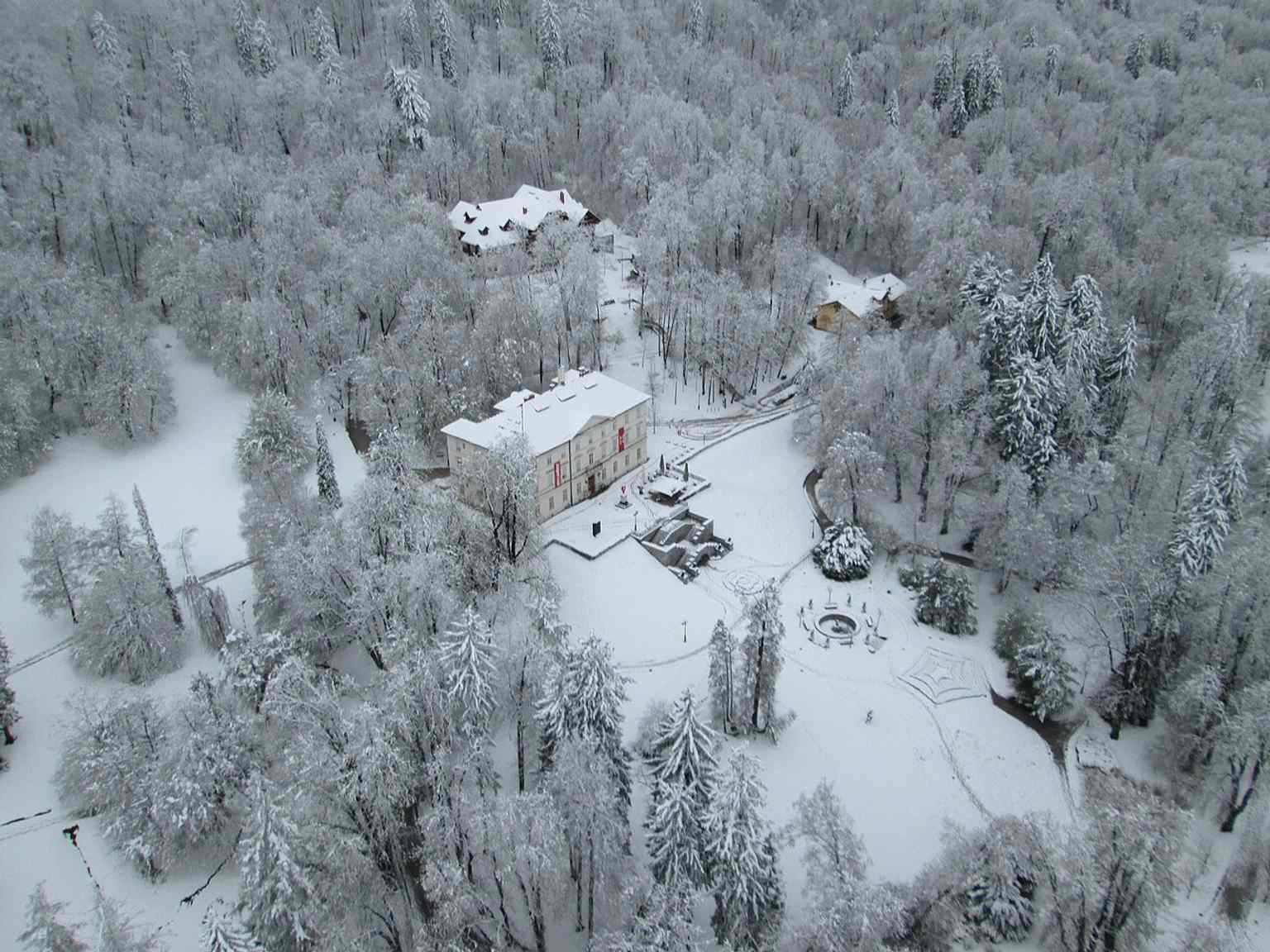
If you pull up the app on your screen, an aerial view shows how the estate sits perfectly at the foot of the forested hill, bridging the wild landscape and the built environment.
Over the following centuries, the building mirrored the changing rulers of the land. It served as a summer palace for bishops, a military hospital, and eventually a gift to an Austrian military commander who finally opened the private gardens to the public.
Every era has left its mark on this ground, claiming it for war, for faith, for the people, and today, for art. Now, we will leave the quiet gardens. Our final stop is an eight minute walk away, where historic passion meets modern sports at Tivoli Hall.





