
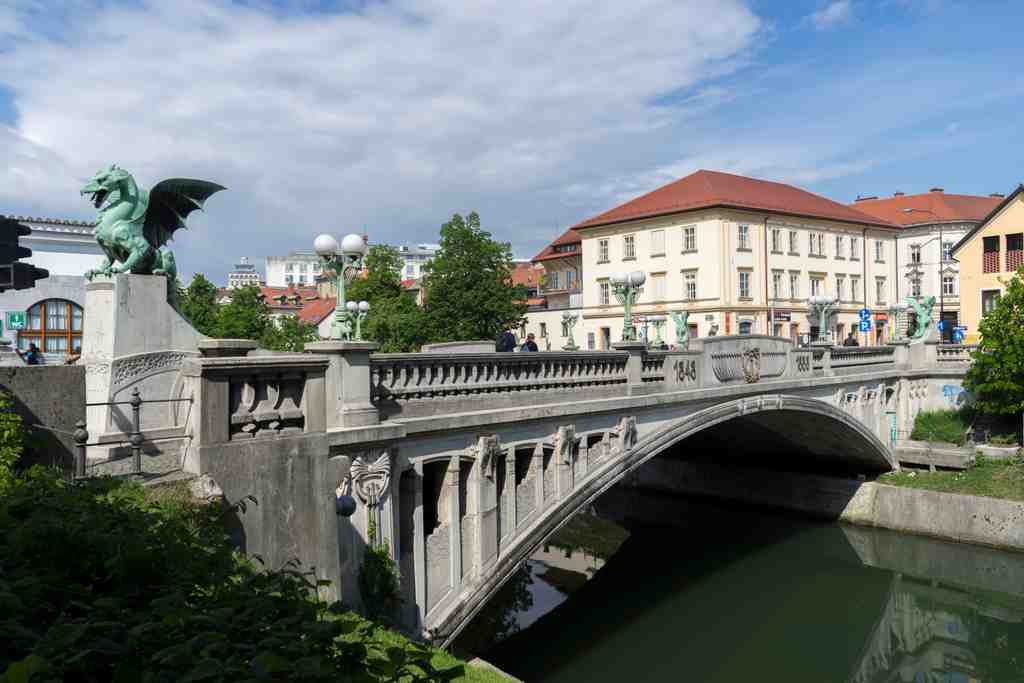
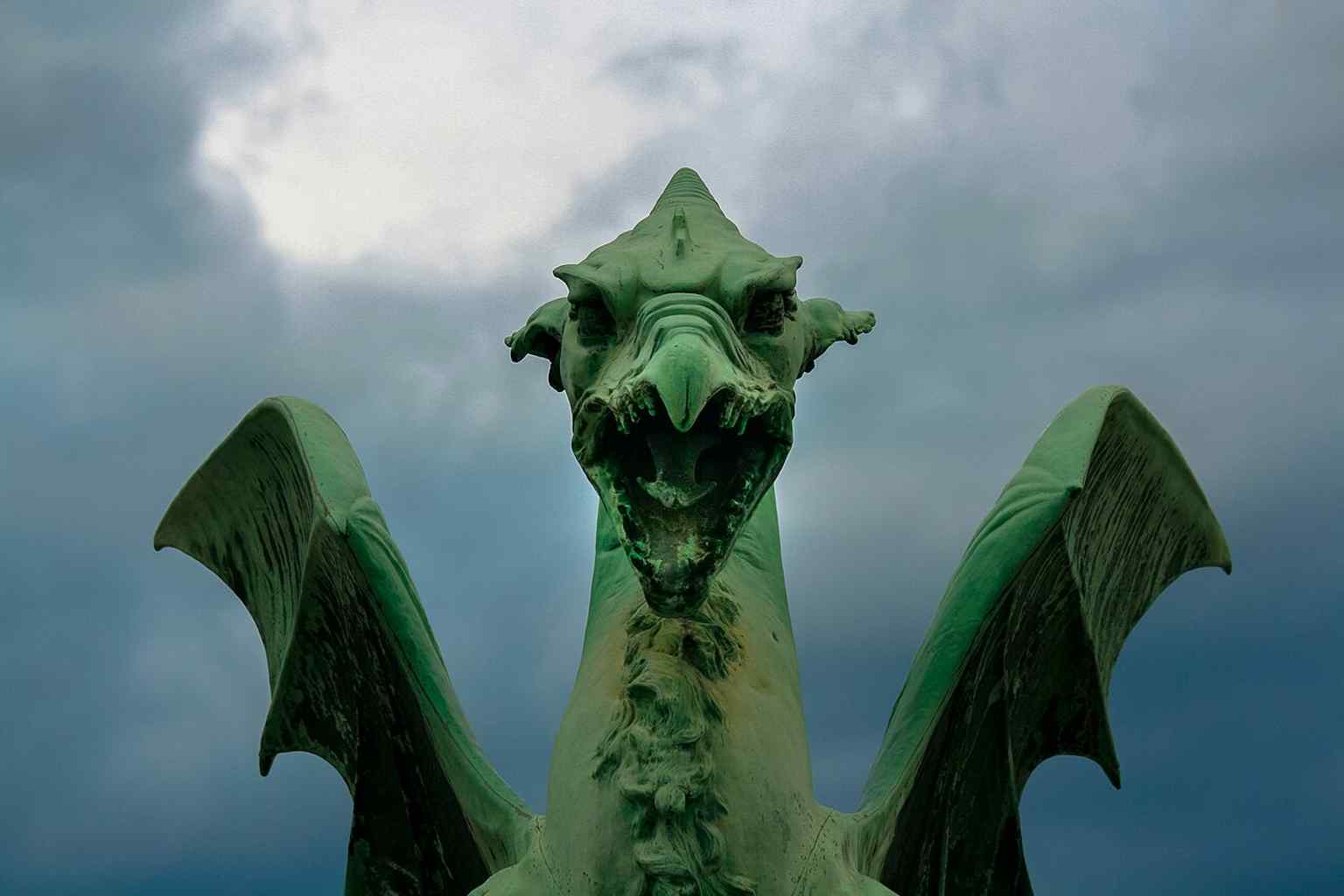
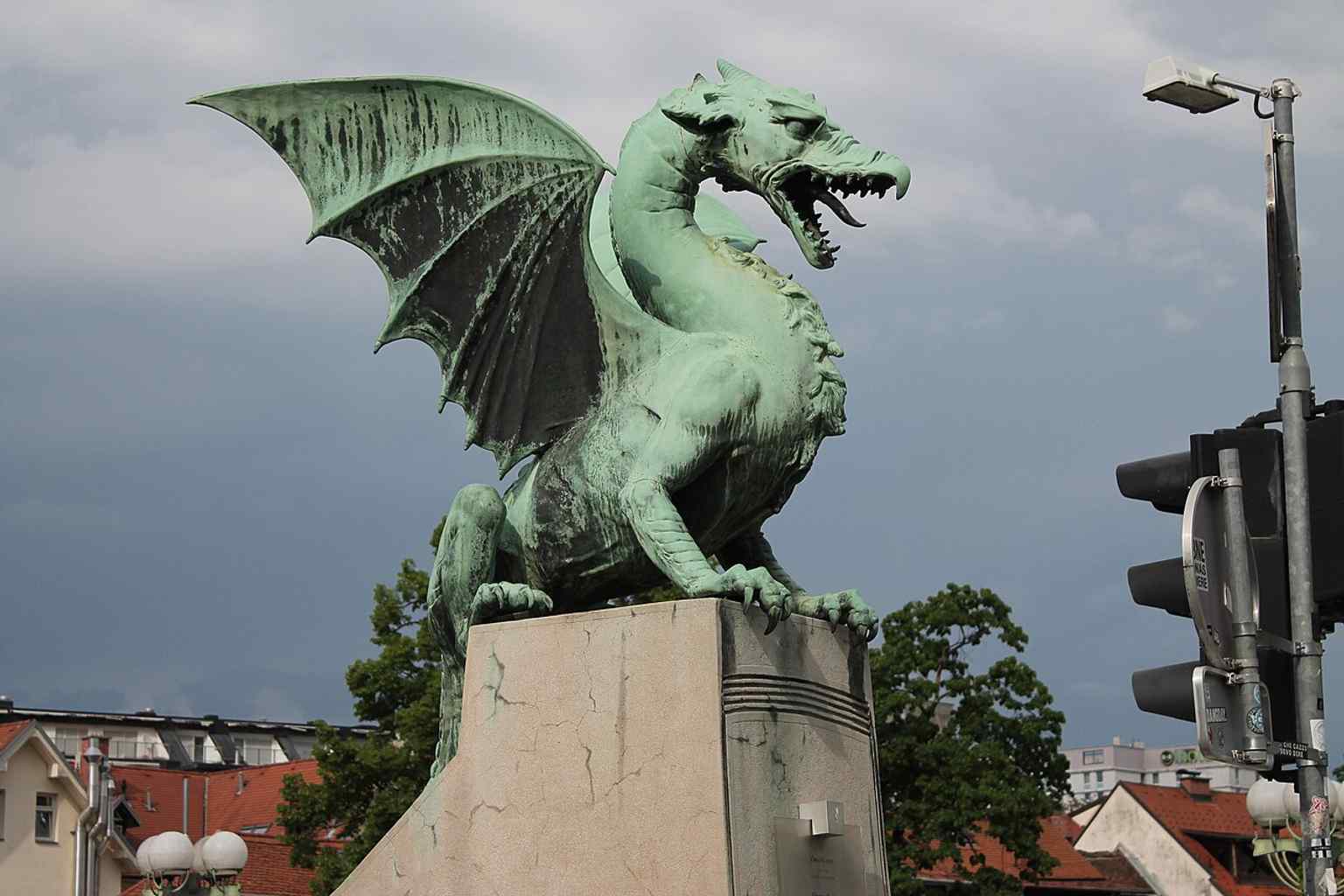
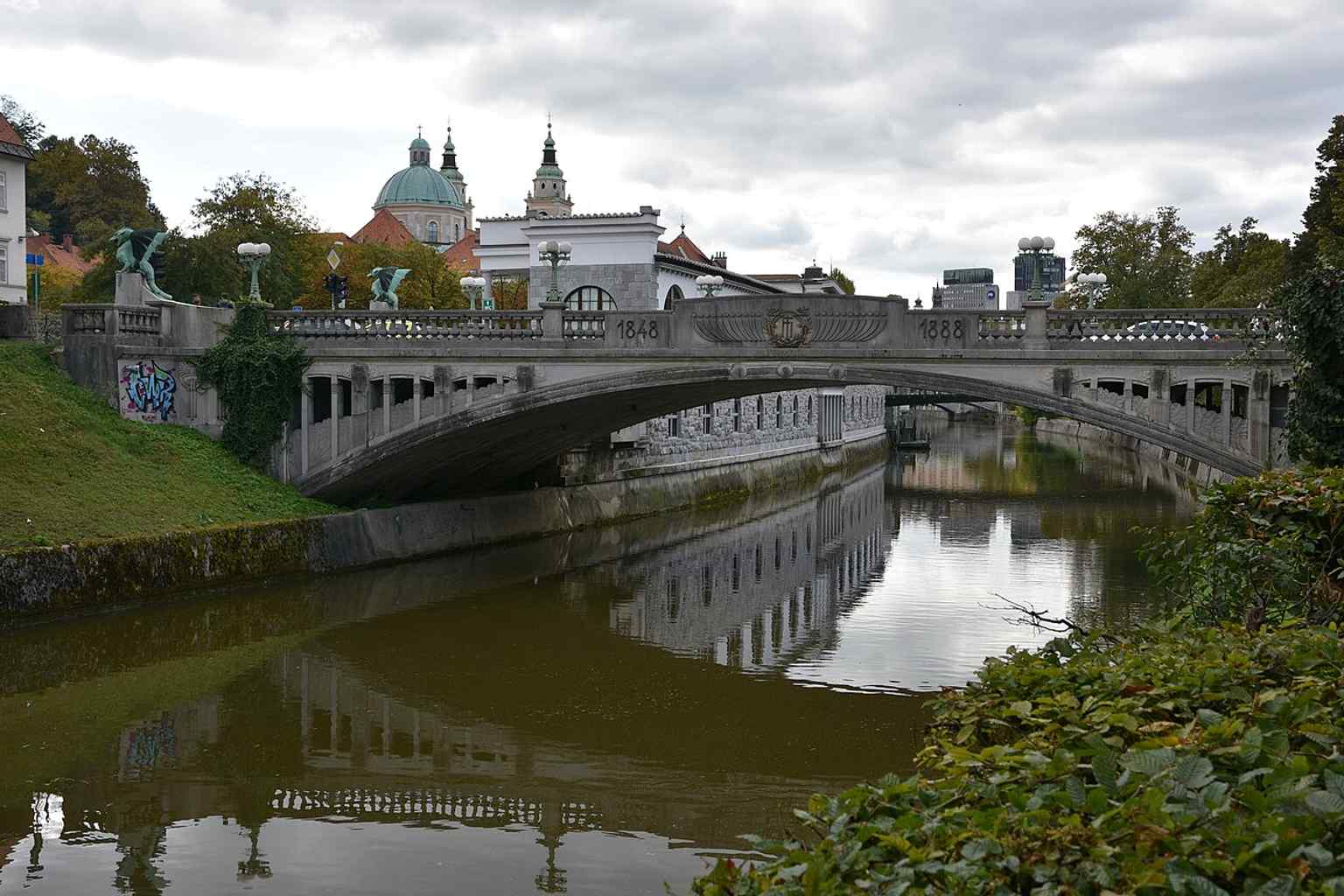
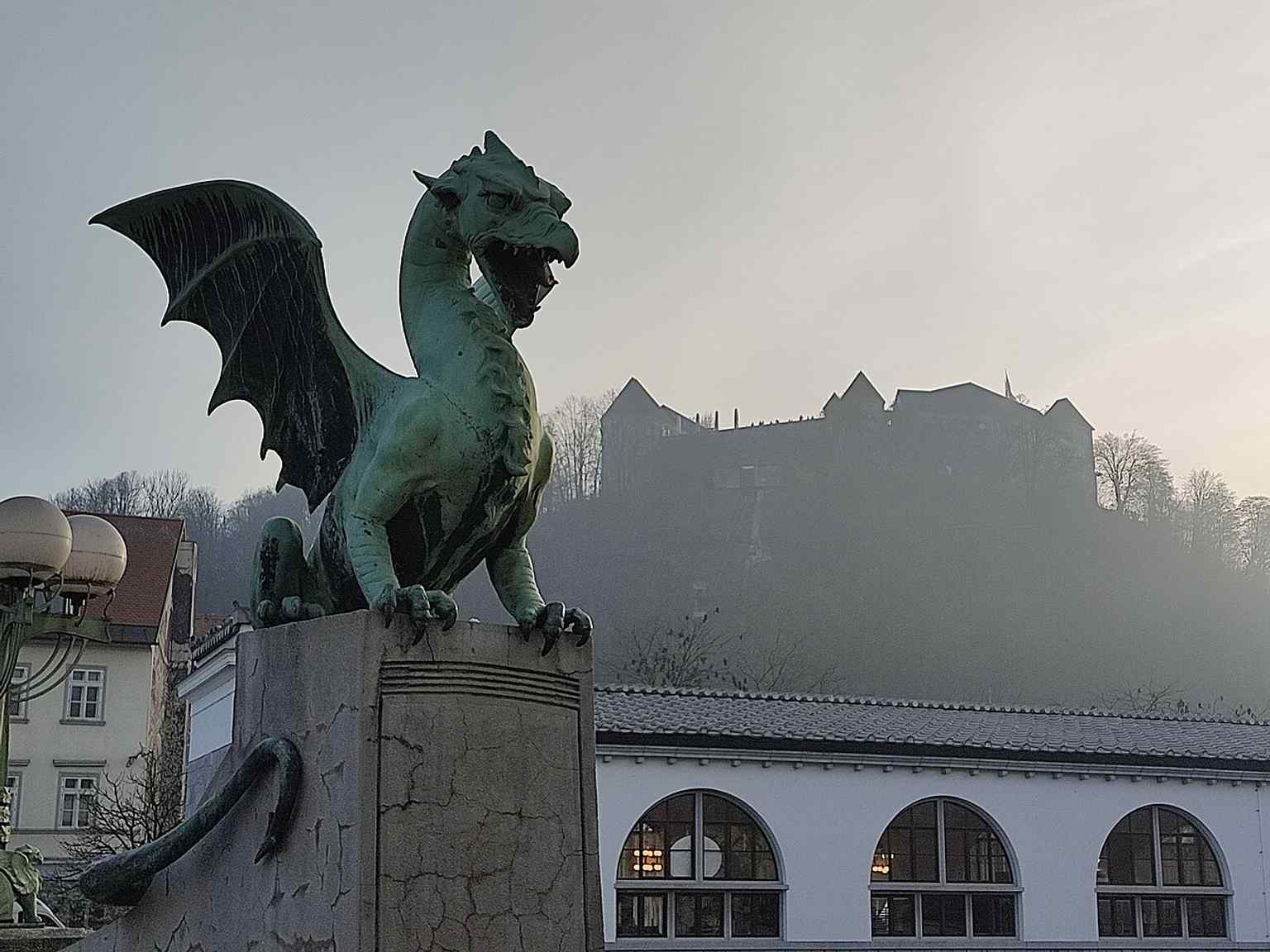
The landmark before you is a gently arching bridge made of pale reinforced concrete, most easily recognized by the imposing, green patinated copper dragons standing guard on stone pedestals at each corner.
Looking at this solid structure, it is hard to imagine it was born from absolute ruin. In 1895, a catastrophic earthquake ripped through Ljubljana, destroying much of the medieval city. Among the casualties was the old oak crossing known as the Butchers' Bridge that used to sit right here. The devastation was absolute, but it provided an unprecedented opportunity to start fresh. Enter Mayor Ivan Hribar. He was a man with a relentless, ambitious vision. He saw the rubble not just as a tragedy, but as a rare chance to build a modernized, forward looking city that embraced the latest artistic styles.
Part of that modern vision meant ditching traditional stone. To stretch the city's reconstruction budget, the authorities made a radical choice to use reinforced concrete. But there was a bit of imperial risk management going on, too. The Austro Hungarian authorities were terrified of testing this relatively new construction method in their capital of Vienna. So, they essentially used Ljubljana as a provincial testing ground. If the massive thirty three meter arch collapsed, the political fallout would be a mere ripple compared to a disaster in the imperial heartland.
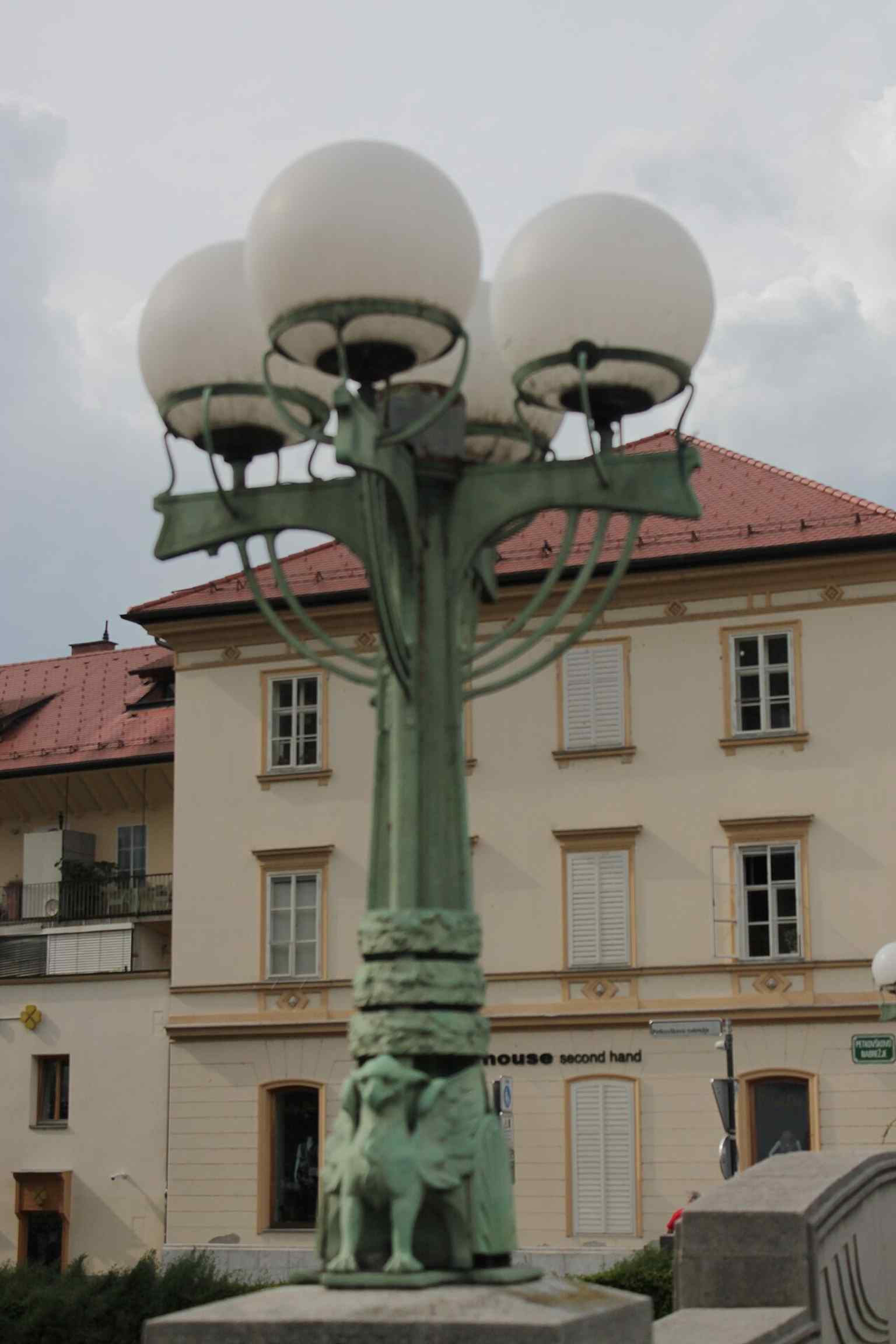
But the bridge held perfectly. The architect, Jurij Zaninović, designed it in the Vienna Secession style, a movement famous for its elegant, geometric natural motifs and meticulous architectural details. If you check your screen, you can see a close up of the ornate lamp posts he designed, which were originally fueled by gas and considered an absolute marvel of urban lighting.
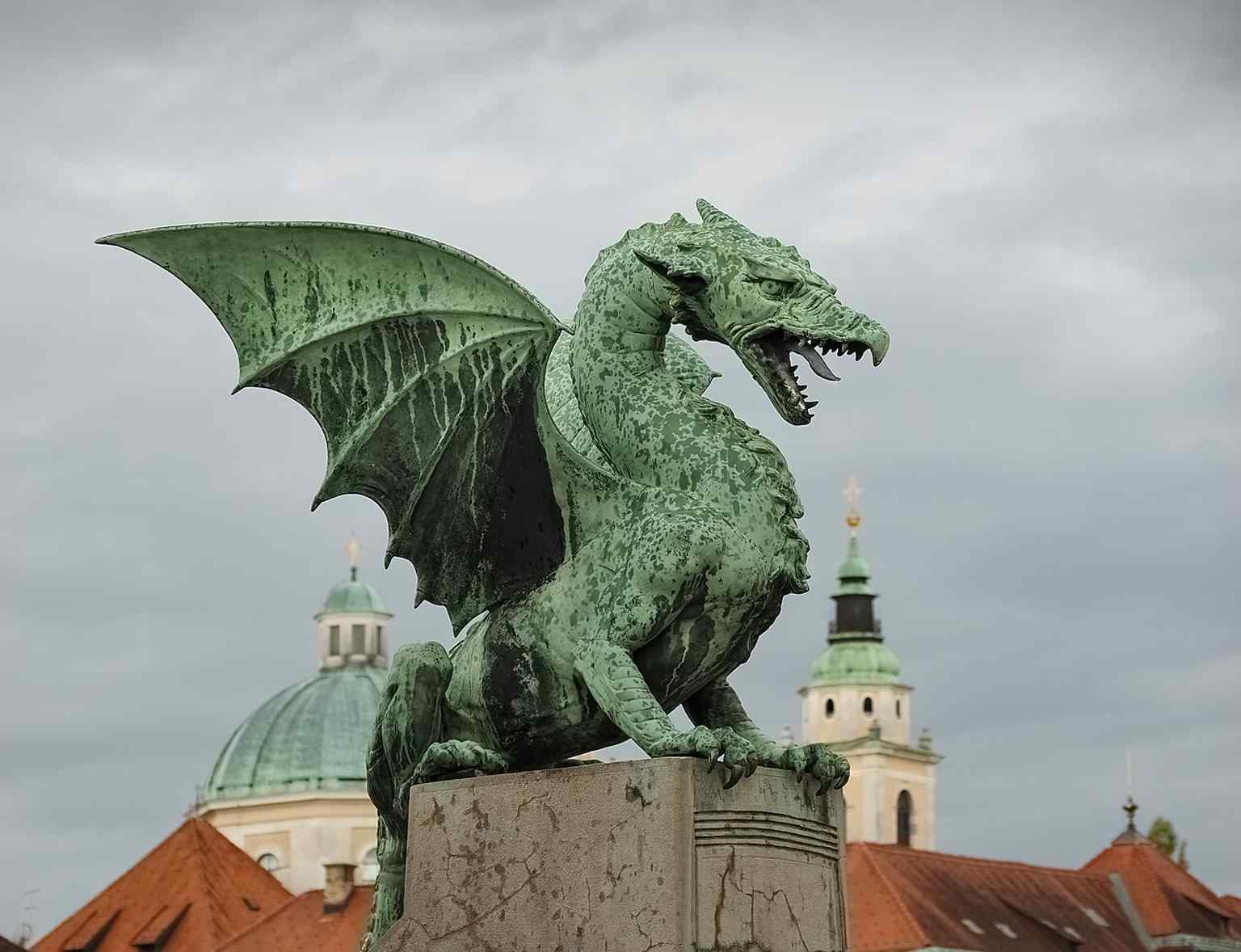
Yet, the greatest twist in the history of this iconic crossing is that it was never actually supposed to have dragons. The original plans submitted to the city featured winged lions, the traditional symbol of the Venetian Republic. It was an unplanned pivot when Zaninović decided to use the dragon instead, a creature tied to local folklore. By adding these mythical beasts, he symbolically linked the city's modern rebirth to its heroic, prehistoric origins.
The four main statues were cast from copper sheets to save weight, with each weighing about one and a half tons. Over the decades, the copper developed its deep green patina. Feel free to pull up a detailed photo of their fierce, judging glares on your app. The legend goes that Jason of the Argonauts founded the city after slaying a dragon here in the marshes. But locals have their own cheeky myth... they claim the dragons will wag their tails when a virgin crosses the bridge. Because the dragons absolutely refuse to budge, young women nicknamed it the mother in law bridge, saying the statues perfectly mirrored the stubbornness of a skeptical mother in law.
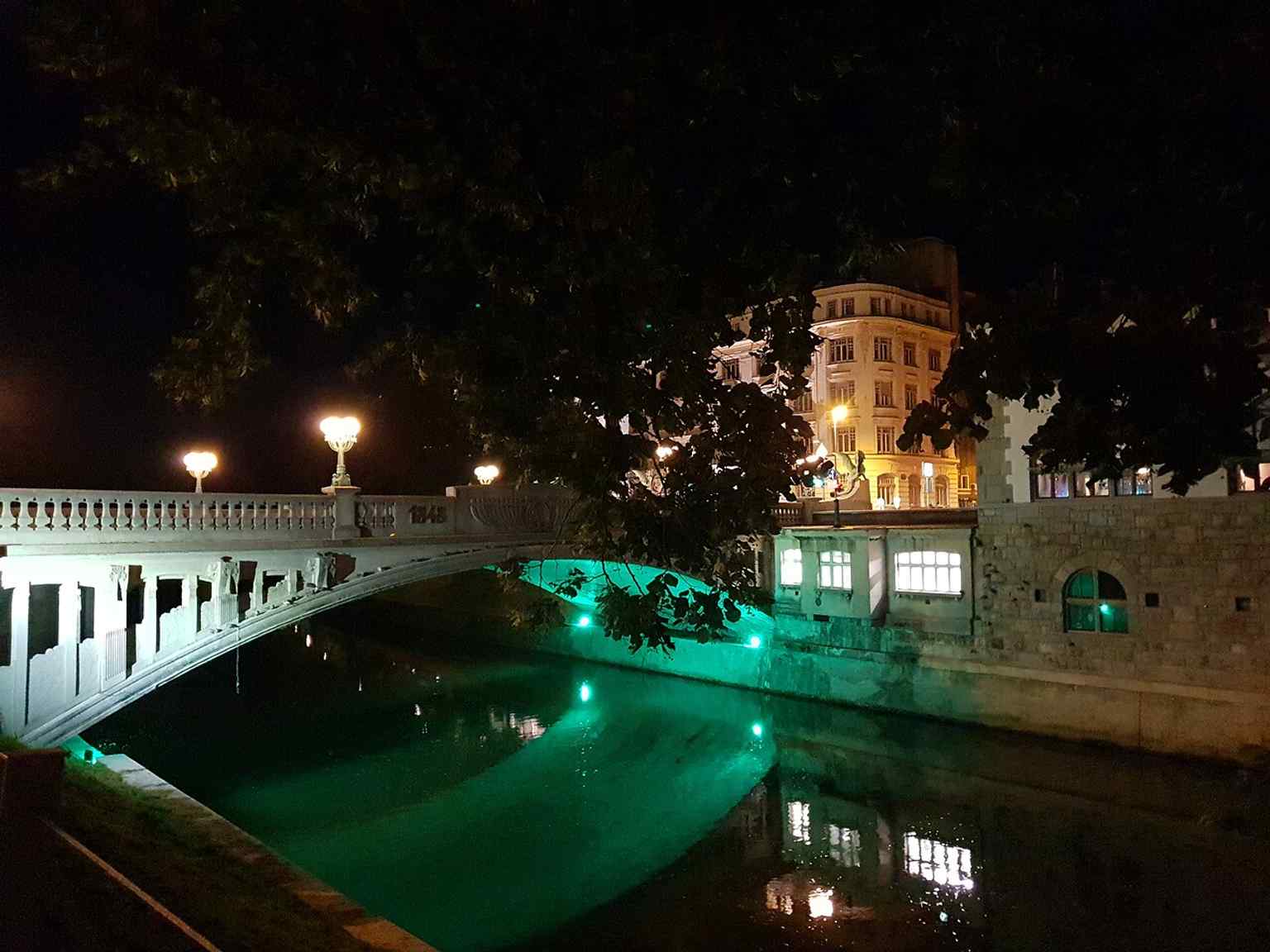
Since it functions as a public road, the bridge remains open twenty four hours a day, meaning those watchful guardians never clock out. When you are ready, let us follow the river downstream... we are heading to the Ljubljana Central Market, just a five minute walk away.





.jpg)
.jpg)


%2003.jpg)

