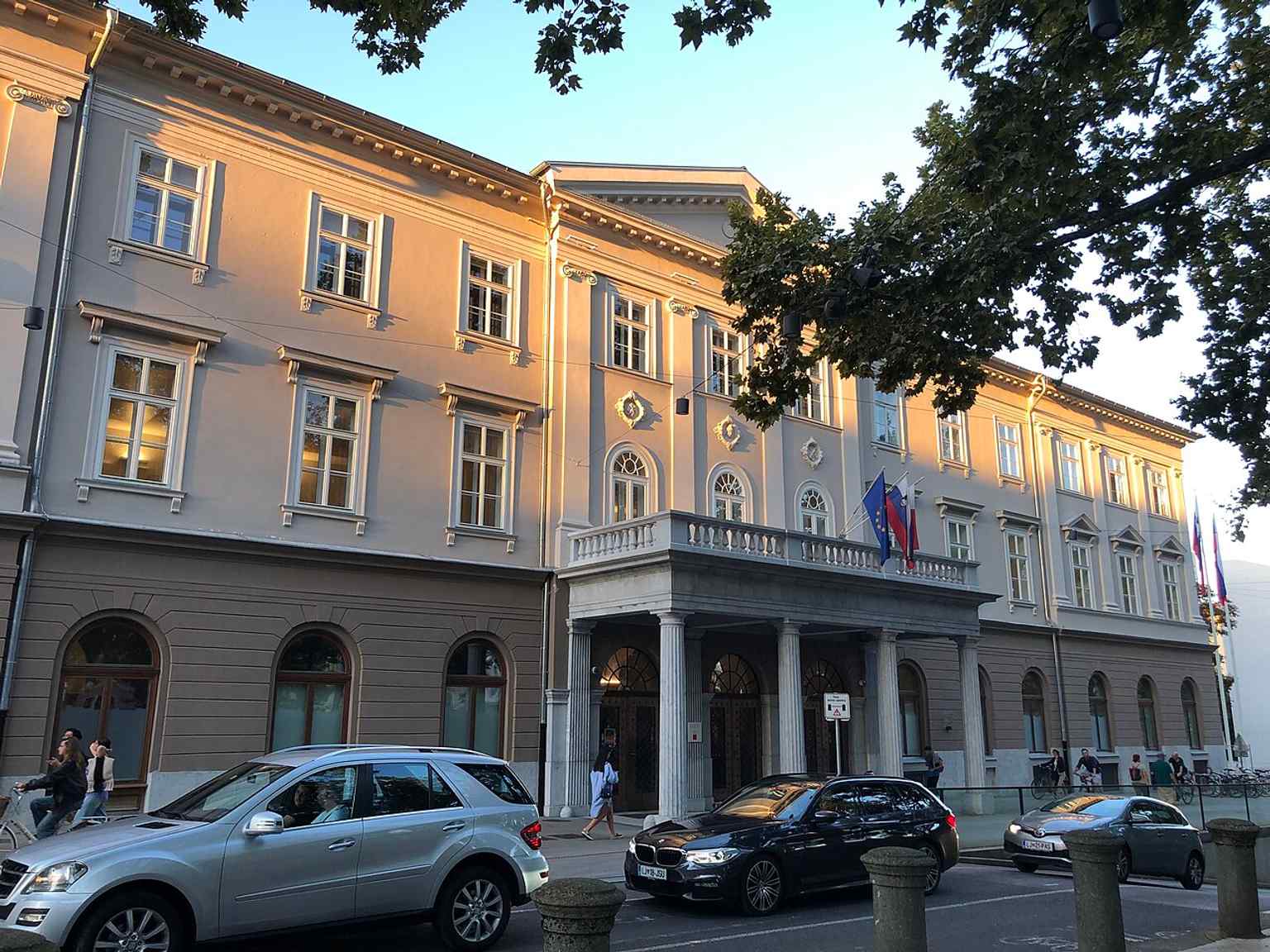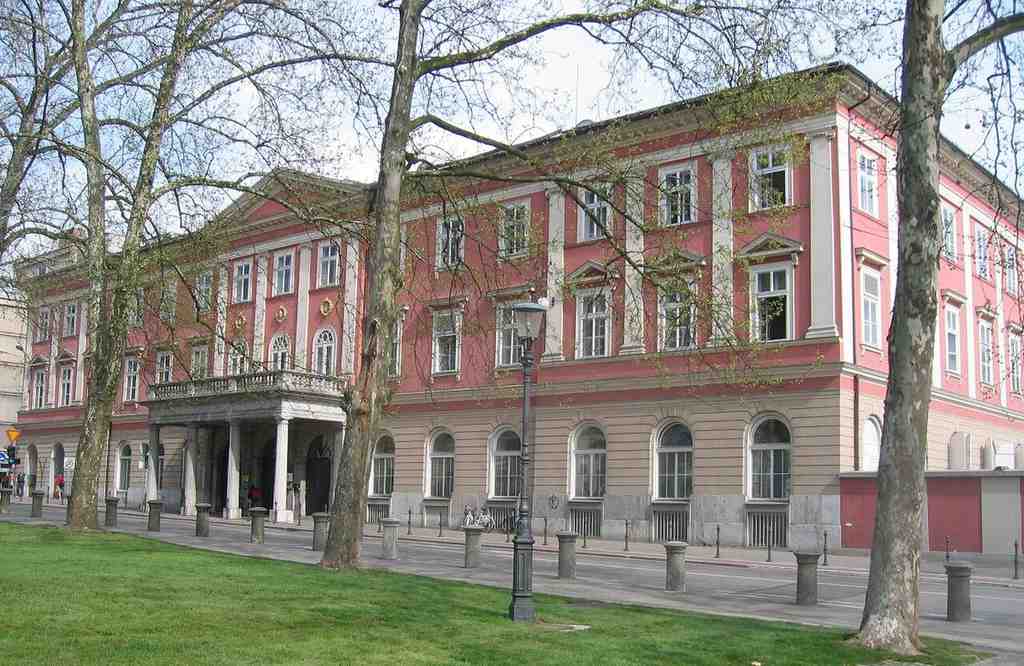
You are looking at a grand, rectangular building with a pale reddish facade separated by flat white pillars, featuring a prominent stone balcony extending over the main entrance. Built in 1837 at the initiative of the Casino Society, this Neoclassical structure, an architectural style reviving the neat symmetry and columns of ancient Greece and Rome, was designed by architect Venceslav Vadlav to be the absolute premier social hub for the educated elite of the city. It was envisioned as a lavish playground of leisure, boasting a well-stocked reading room, a billiards room, and a magnificently decorated ballroom that was the envy of the entire town. The inner circles of the society wanted a pristine, exclusive space to mingle, drink coffee, and dance the night away.
But before a single waltz could be played, the ground itself revealed a completely different history. While digging the foundations in 1836, workers struck something solid and unearthed a gilded bronze statue of an ancient Roman aristocrat, or patrician. It turned out this very site had originally served as a burial ground for the ancient Roman settlement of Emona.
The elite essentially built their high society club directly on top of an ancient cemetery, perhaps assuming the past would stay quietly buried. But history has a habit of interrupting a good party. When the Spring of Nations swept across Europe in 1848, bringing a massive wave of democratic and nationalistic uprisings against traditional empires, the atmosphere inside these walls abruptly shifted from polite gossip to intense action. The refined reading rooms were suddenly thick with radical debate and revolutionary fervor. Intellectual groups gathered right here to draft the very first political platforms for the Slovene people, demanding an autonomous Unified Slovenia within the Austrian Empire.
Amidst this upheaval, the building management offered its space for free to local male choirs, sparking a deep sense of national cultural identity through song. The building endured quite a journey after that, evolving from a site of violent nationalist riots between German and Slovenian communities in 1903 into a Nazi headquarters during World War Two. Right inside these walls, high ranking officers like Erwin Rosener planned brutal reprisals against the local population, mandating the execution of one hundred Slovenes for every German life lost.
Today, the space has been reclaimed by the arts. The Tone Tomsic Academic Choir, carrying a legacy born from wartime resistance, uses this very building for rehearsals. If you take a glance at your screen, there is a slider showing how a recent renovation beautifully revitalized the grand facade when the building became the new home of the Academy of Music.
It is fascinating to ponder what happens when grand, orderly plans meet the deeply unpredictable nature of human history. Let us leave the revolutionaries behind for a moment and take a five-minute walk over to Green Avenue.