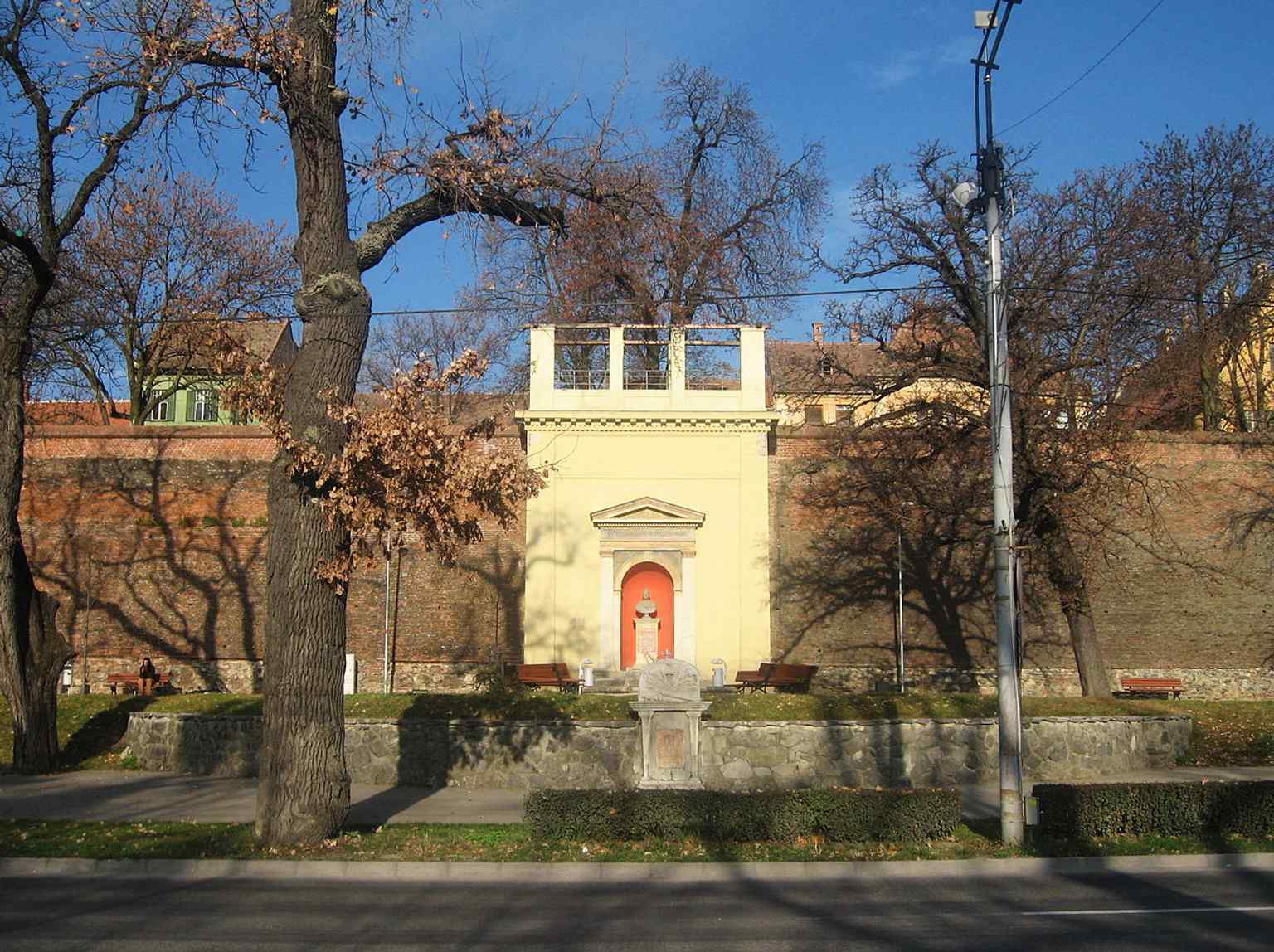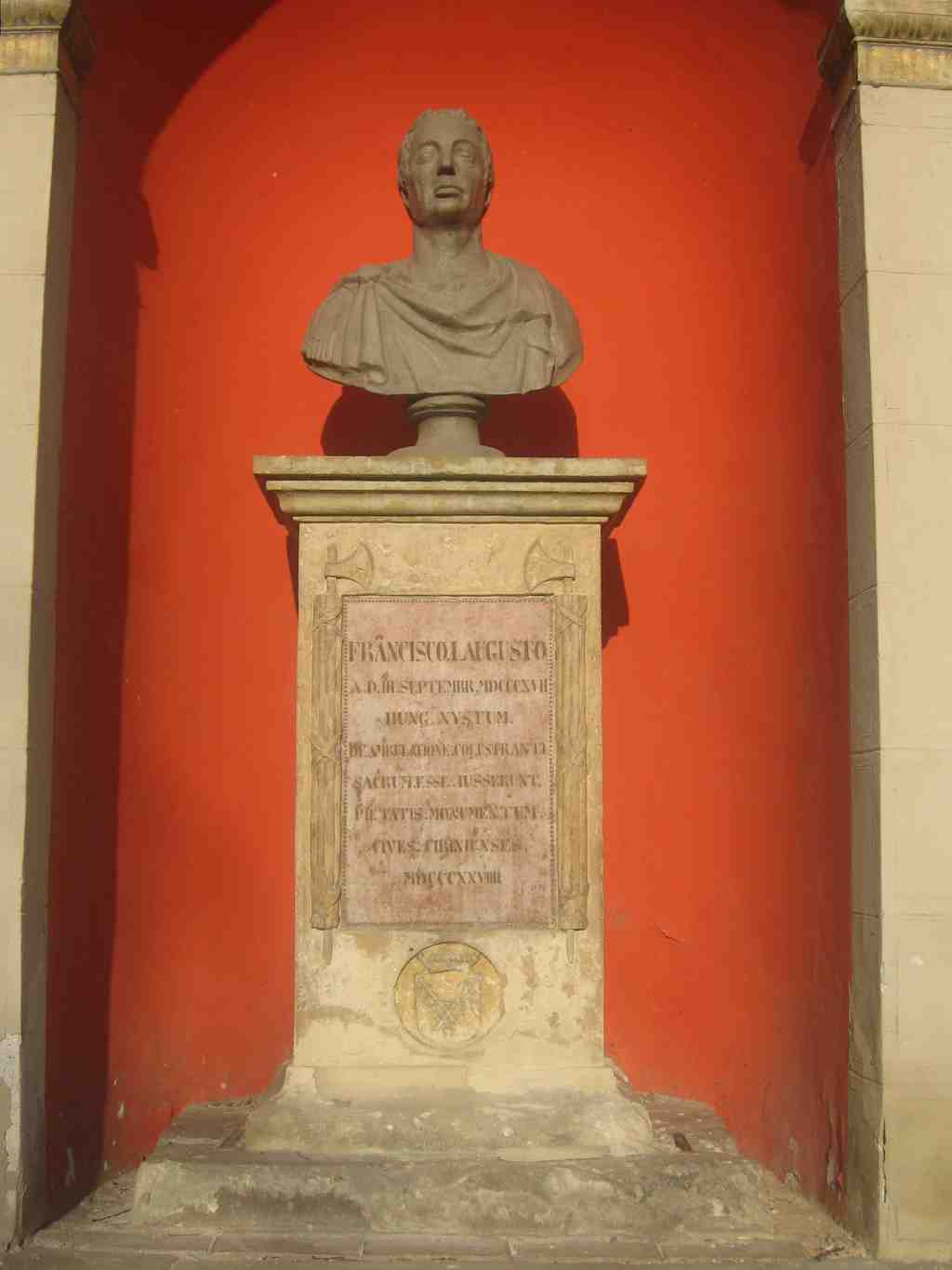
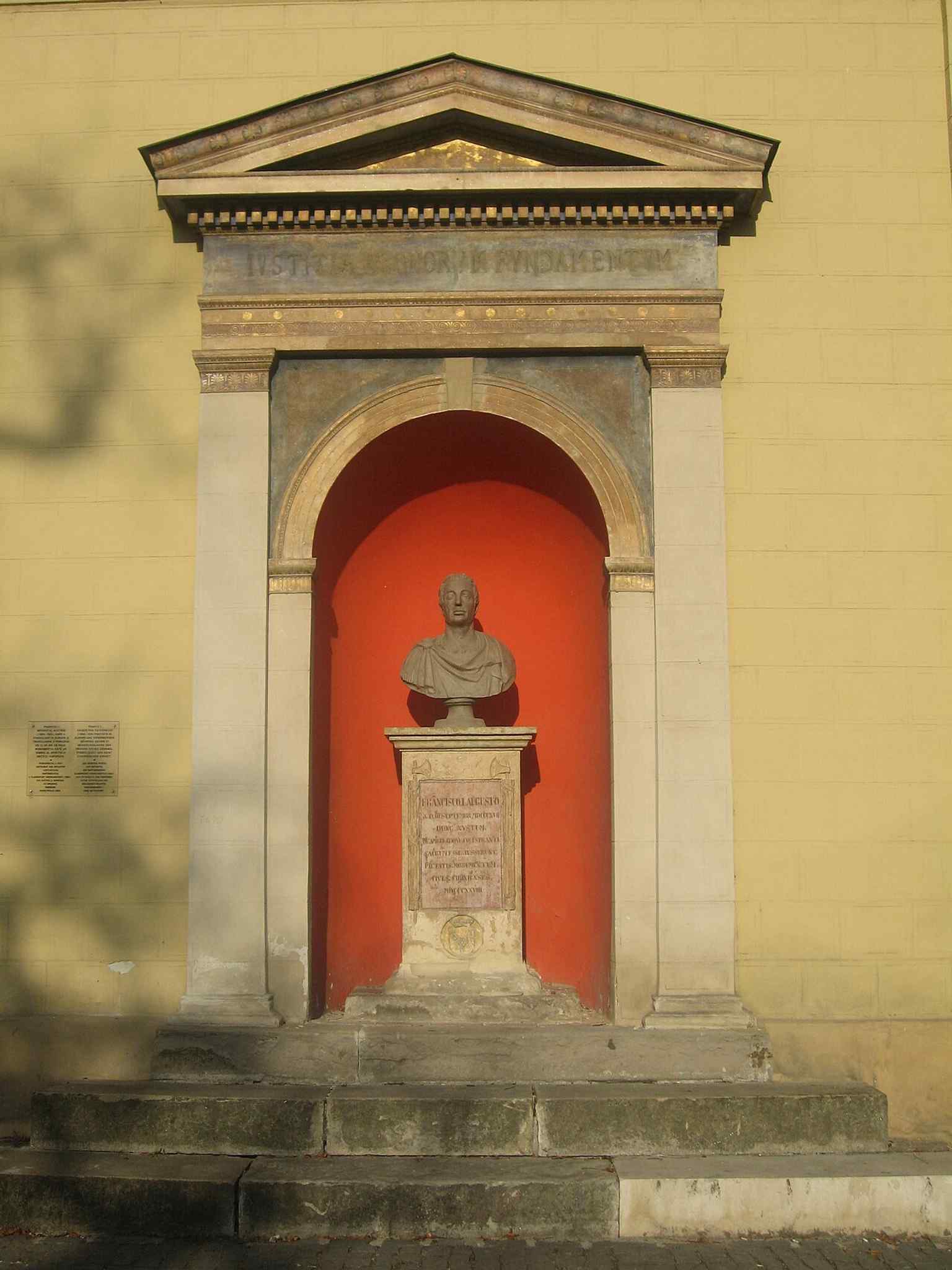
You are looking at a classical stone bust of a man crowned with laurels, resting on a tall inscribed pedestal within a vibrant, red-orange arched niche. The man gazing down at you is Francis the First, Emperor of Austria, and his presence here is the result of what you might call an early nineteenth-century public relations campaign.
Back in eighteen seventeen, Transylvania was reeling from famine and the economic hangover of the Napoleonic Wars. To calm the nerves of the locals, the Emperor and his wife paid a royal visit to Sibiu. They inaugurated the streetlights and officially opened the Brukenthal Museum, which you might remember from earlier on our route.
By eighteen twenty-eight, the citizens decided to honor that visit with this monument, designed by local artist Franz Neuhauser the Younger. Take a look at your screen. The niche is styled like an ancient Greek shrine, framing the emperor in a classicist design. But the setting was not always this grand. Before this became a respectable walkway, the area right by the citadel wall was a chaotic mess of thick birch bushes and, rather unglamorously, illegal pigsties built by locals. A military commander named Colonel Johann von Vecsey ordered the pigs evicted and transformed the space into a xyst. That is an architectural term for a grand garden promenade, originally meant as a respectable place for retired and wounded Habsburg soldiers to take the air.
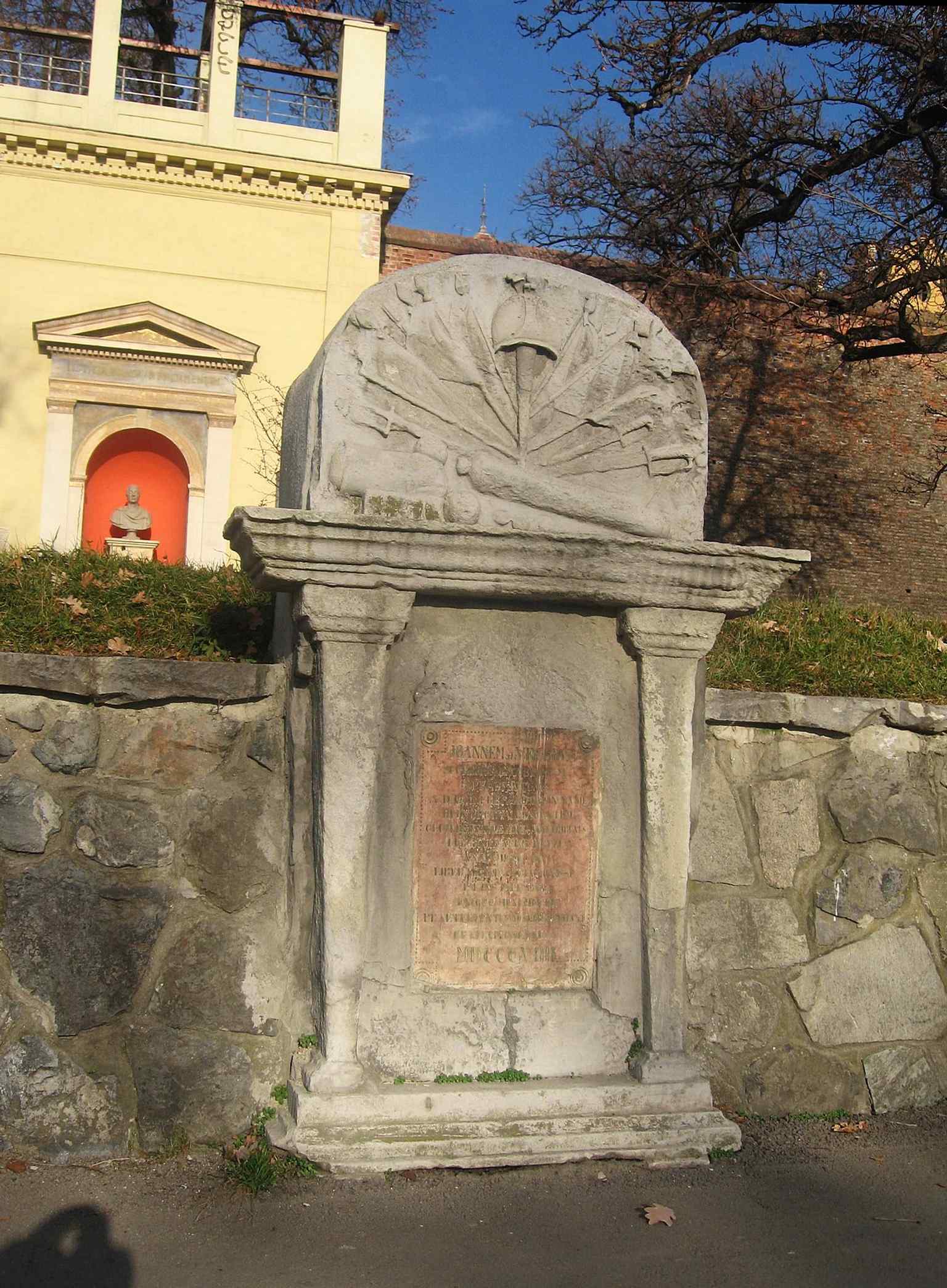
In eighteen eighty-three, Francis the First's grandson, Emperor Franz Joseph, paid one thousand florins out of his own pocket to restore the monument, a sum roughly equal to tens of thousands of dollars today.
Now, the bust you see today is actually a stone replica. The original, crafted by a Viennese sculptor, was cast in lead. Lead is wonderfully soft for carving fine facial details, but it turns out to be a terrible material if your city ever hosts a violent revolution.
During the uprisings of December nineteen eighty-nine, this area became a crossfire zone between military and internal forces. The lead statue took several direct hits. The emperor lost his nose and a good portion of his skull, which is a bit ironic considering Francis the First had absolutely nothing to do with the twentieth-century communist regime that was actually falling from power.
To protect the damaged emperor, he was taken down and moved into storage. And then... he was completely forgotten. For over a decade, the oldest statuary monument in Sibiu was officially declared lost. In two thousand and four, restorers finally gave up hope and carved the stone replica you see before you now.
But the story has a punchline. Four years later, in two thousand and eight, workers cleaning out the basement of the local Prefecture building were moving a pile of broken chairs and old office supplies. Underneath all that junk, they found the original lead emperor, battered but surviving. It has since been beautifully restored using molds from this very replica, and is now safely kept indoors at the Brukenthal Museum.
Take a moment to appreciate this strange survivor of pigsties and revolutions. When you are ready, we can head to the next stop.