
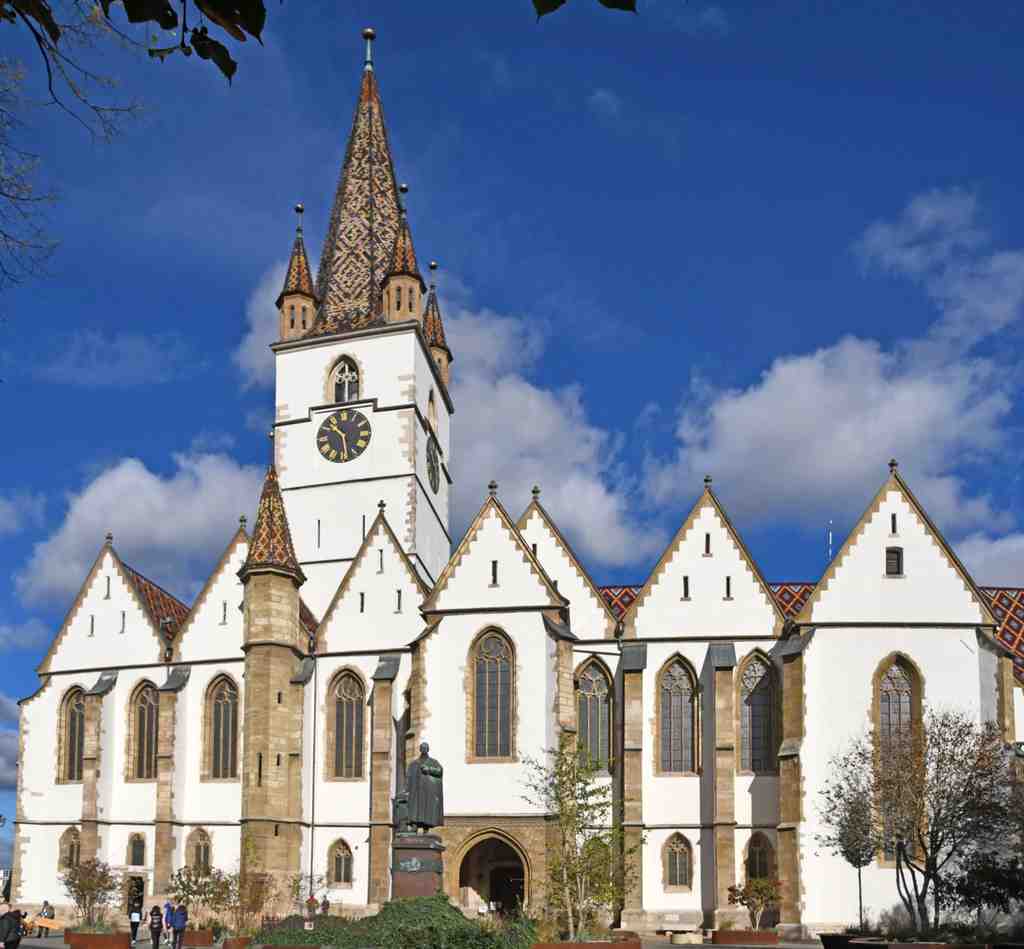
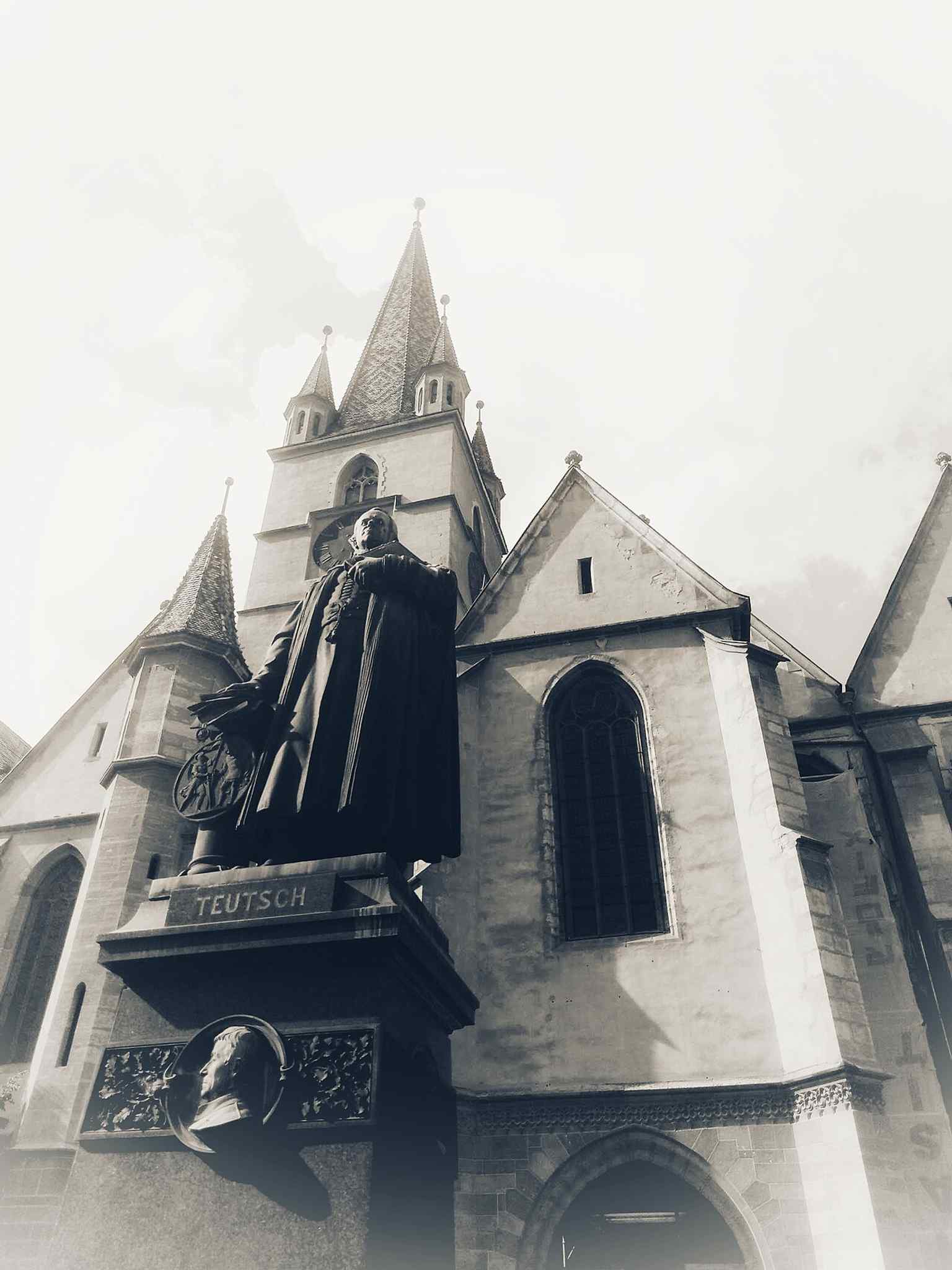
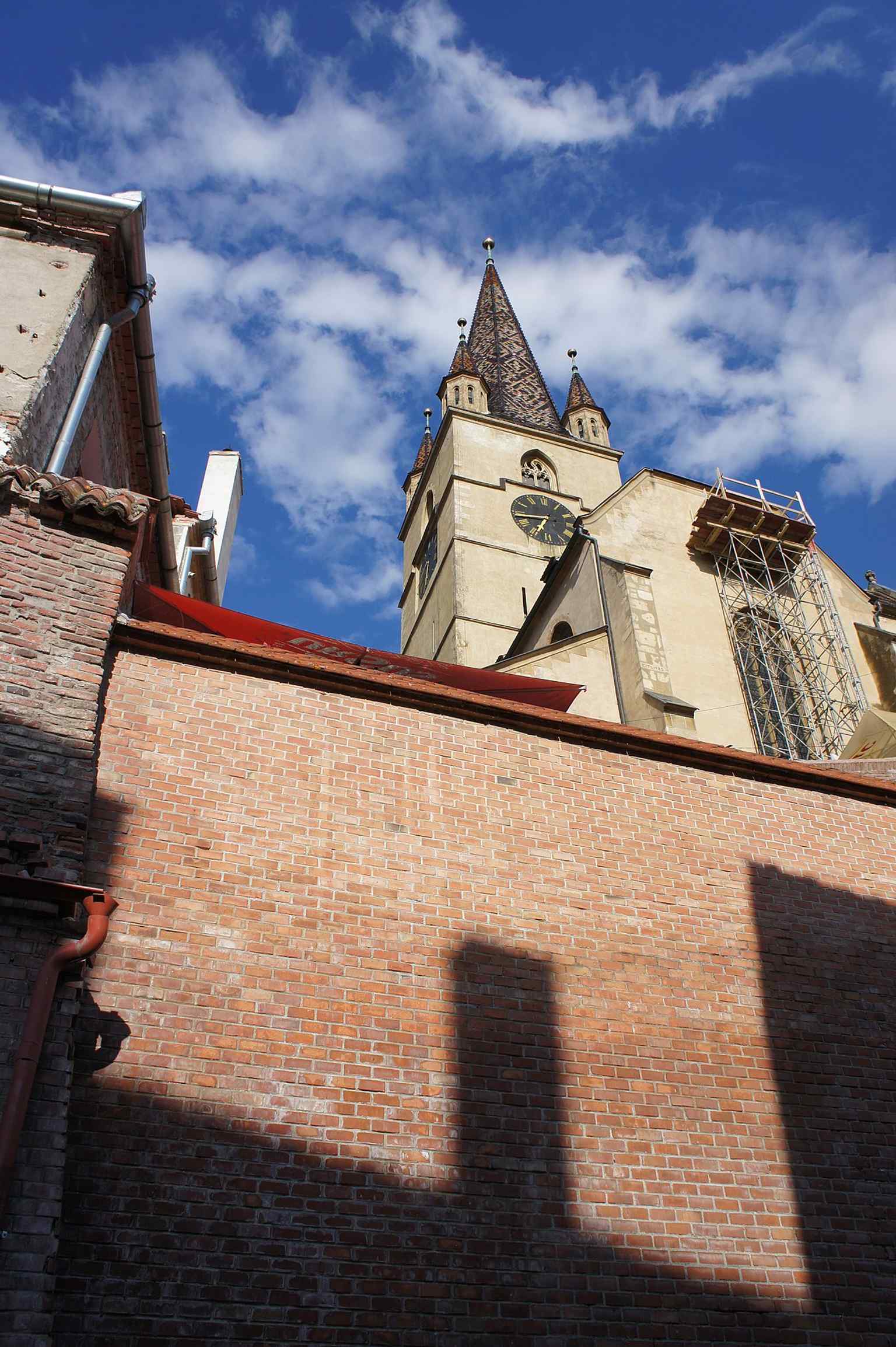
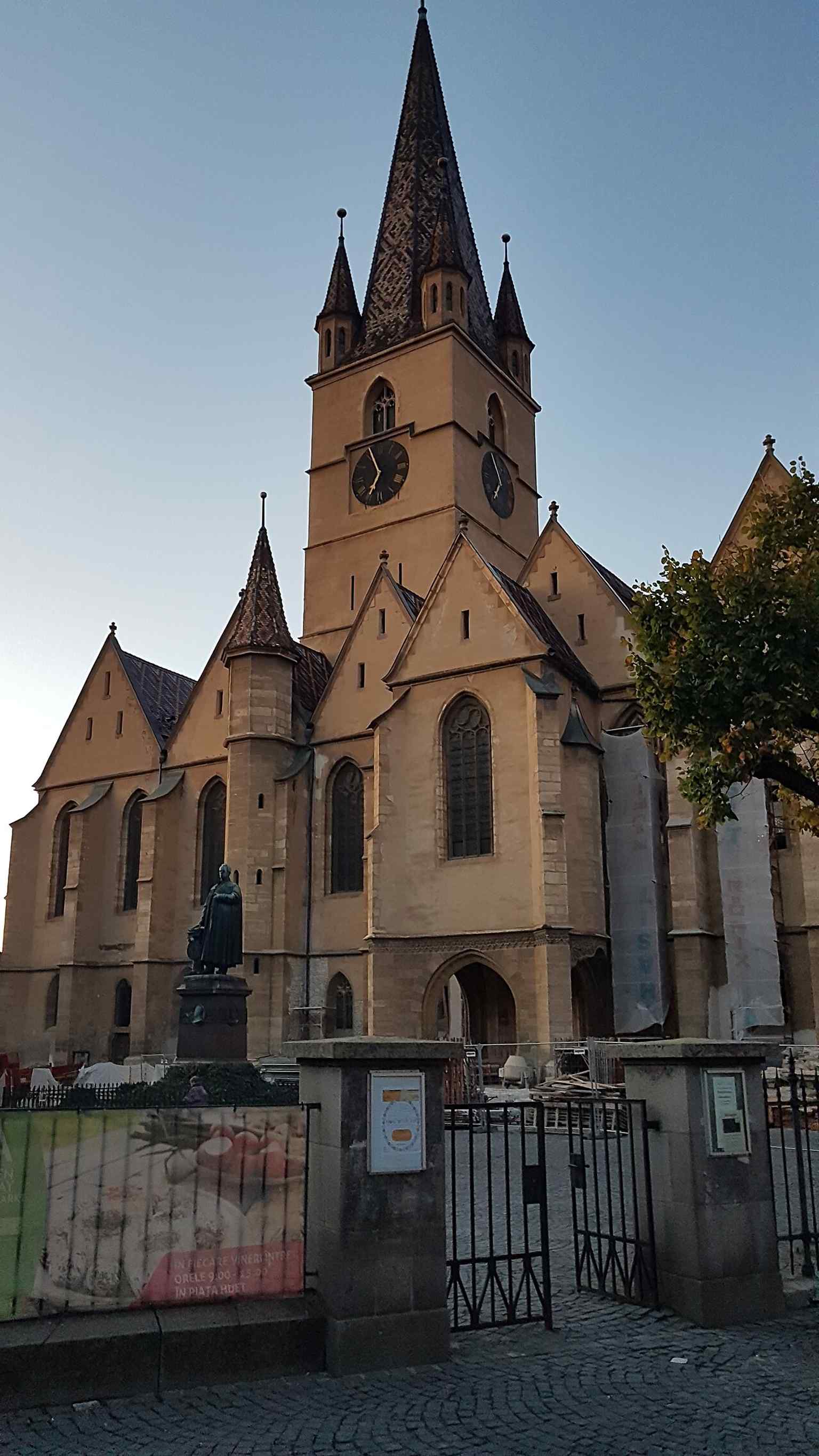
On your right, you will see a striking white stone structure characterized by its pointed Gothic arches and a massive, soaring tower topped with a vibrant, geometric tiled roof.
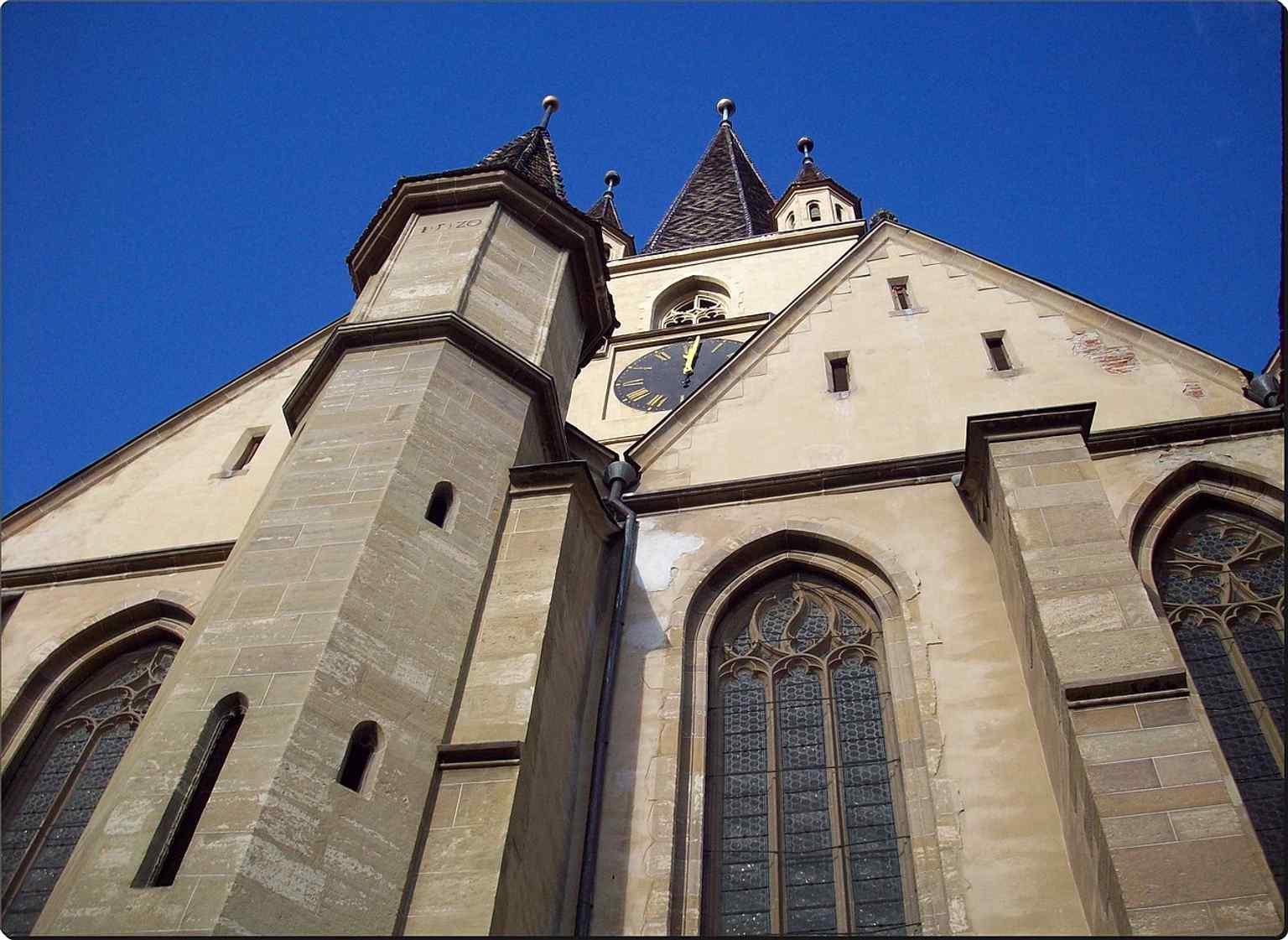
This is the Evangelical Cathedral of Sibiu, one of the most iconic Gothic buildings in Transylvania. Take a look at that massive tower reaching over seventy-three meters into the sky. If you check your screen, you can get a closer look at its impressive seven-level structure, topped with four small turrets. Just like at the Council Tower, those four little corner turrets signaled that the city held the right of the sword, meaning local authorities had the power to sentence people to death. Always a warm welcome for medieval visitors.
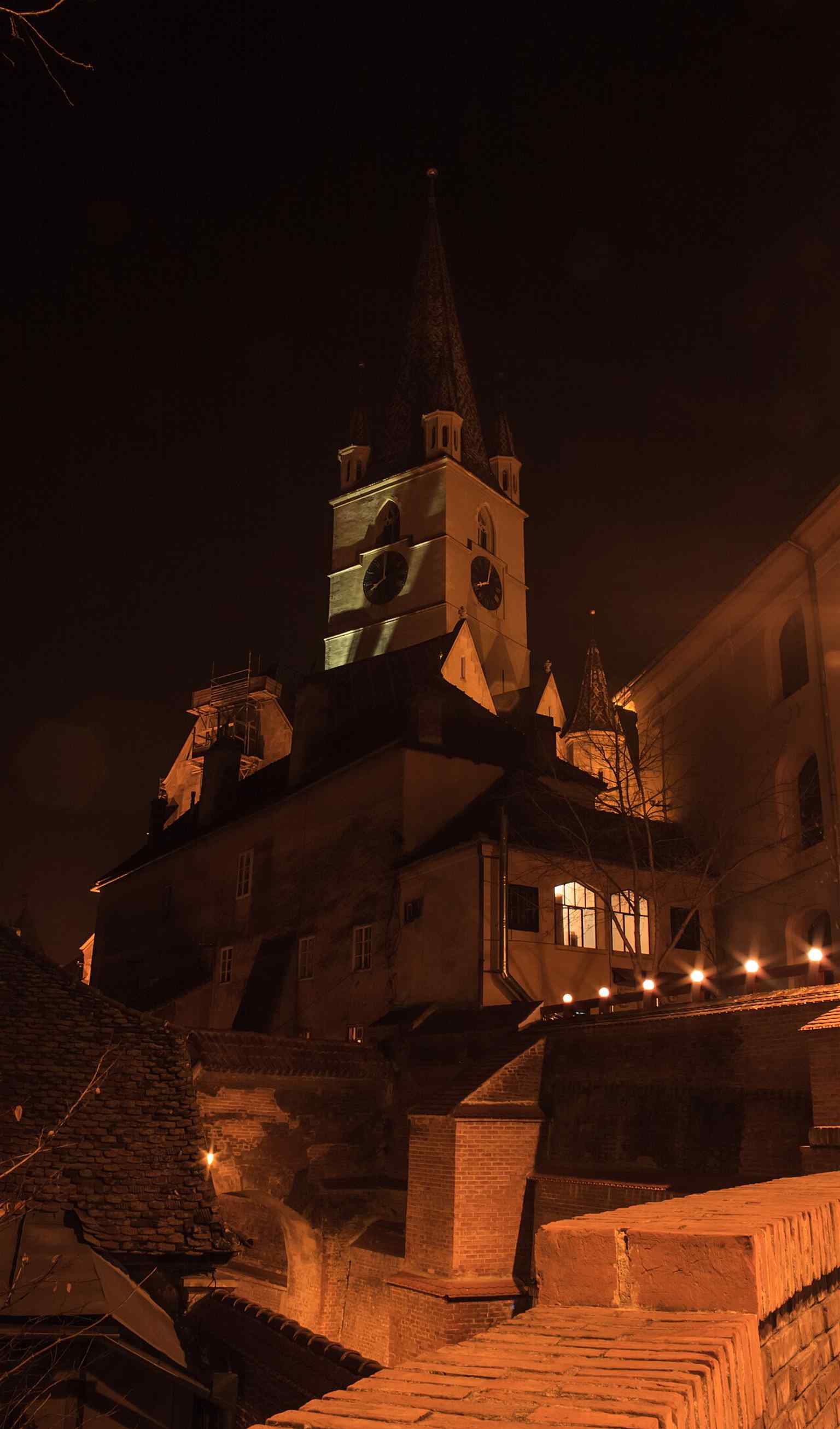
For centuries, the tower served as a fire lookout, which is why today's visitors have to climb one hundred and ninety-two steps to reach the viewing platform. But there is a great local legend about its height. The story goes that the people of Sibiu wanted the absolute tallest tower in Transylvania. So, they sent a team to the rival town of Bistrița to secretly measure their church tower with a rope. After a successful midnight measurement, the Sibiu builders stopped at a tavern to celebrate. The tavern keeper, a Bistrița local, figured out what they were up to. He got them thoroughly drunk, waited until they passed out, and snipped about two meters off their measuring rope. Oblivious, the builders went home and built their tower exactly to the shortened length, falling just short of their rival. Historical documents actually show Sibiu finished their tower in fourteen ninety-four, way before Bistrița, but... the legend is just too good to ignore.
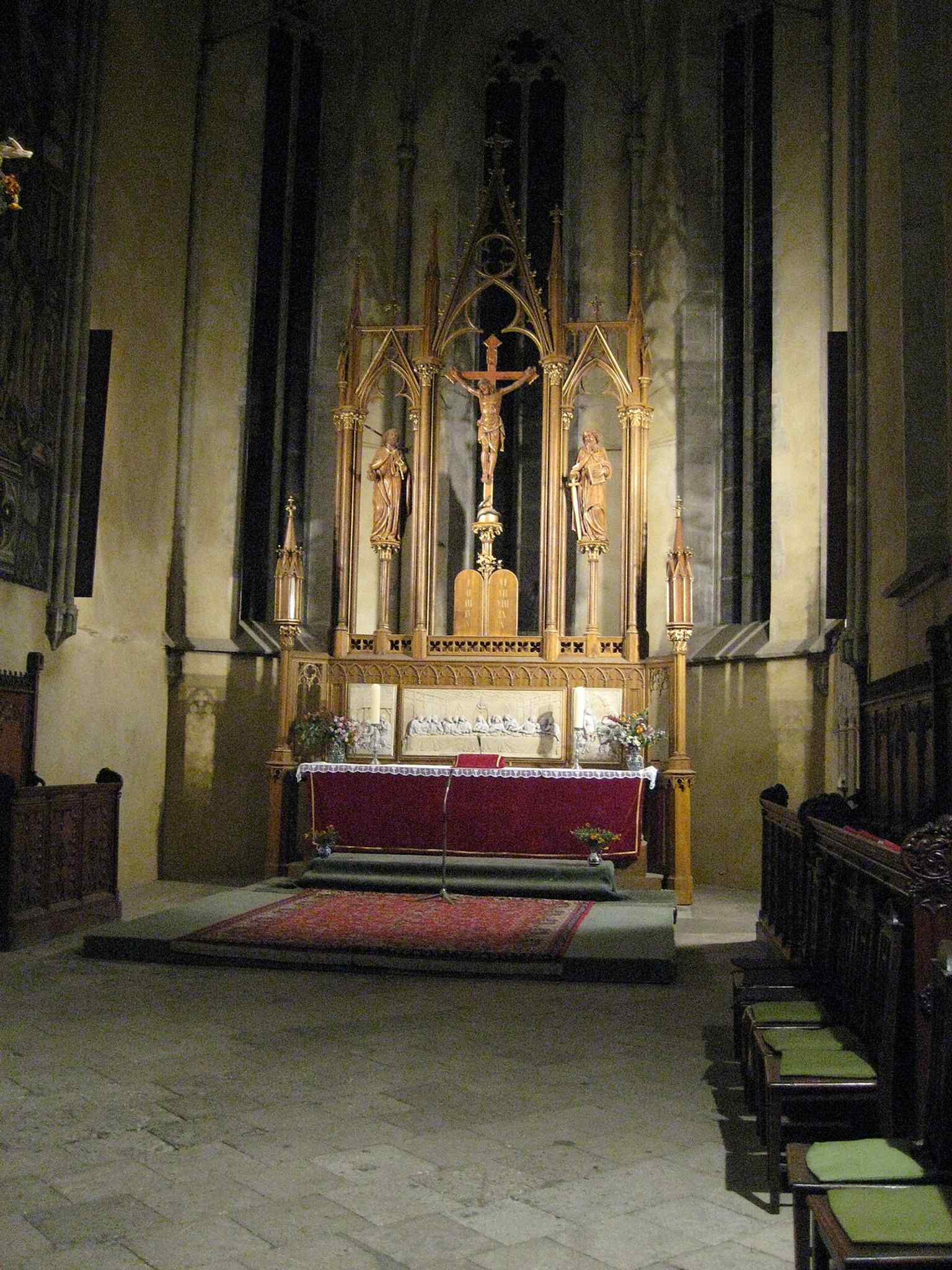
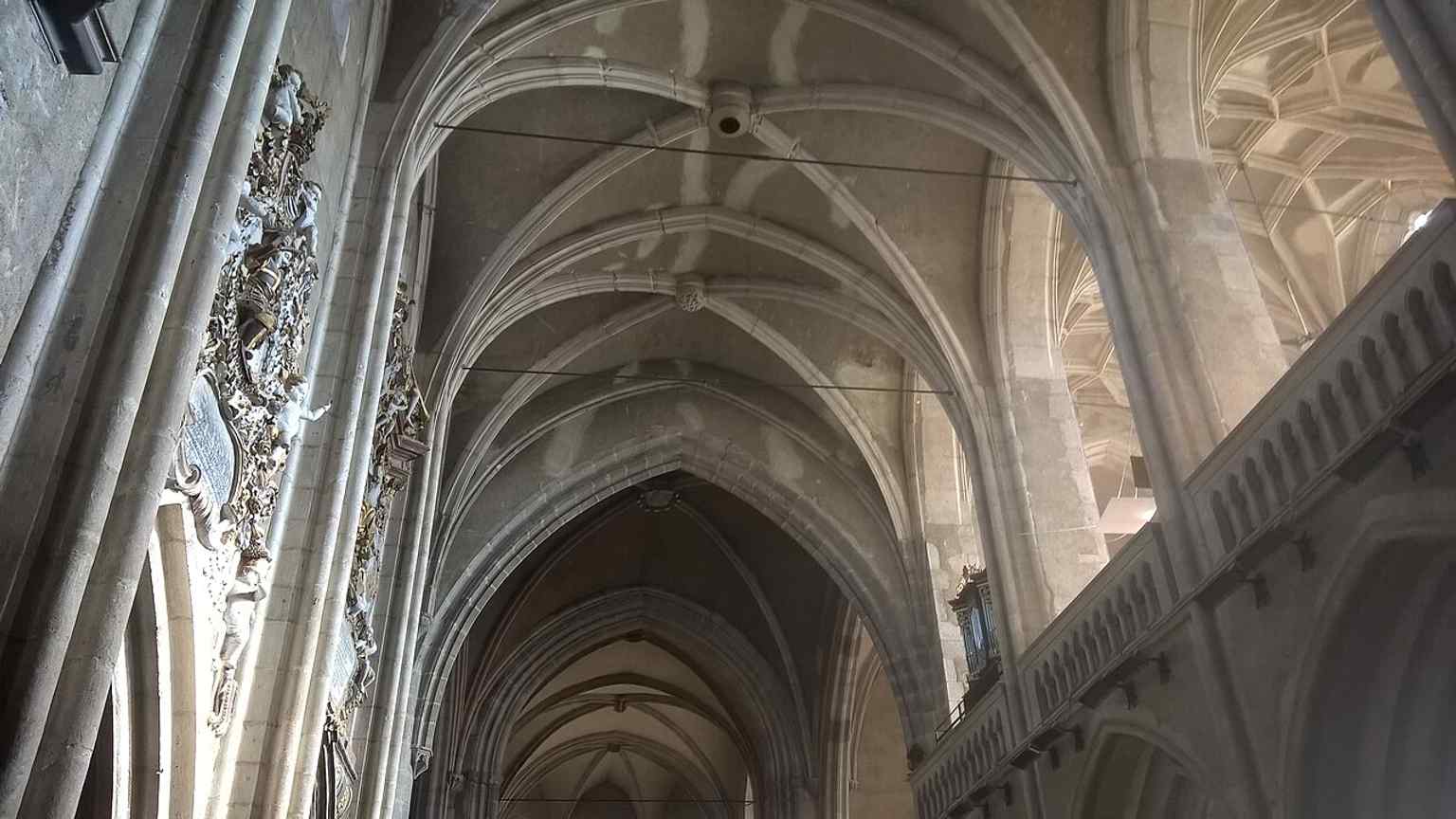
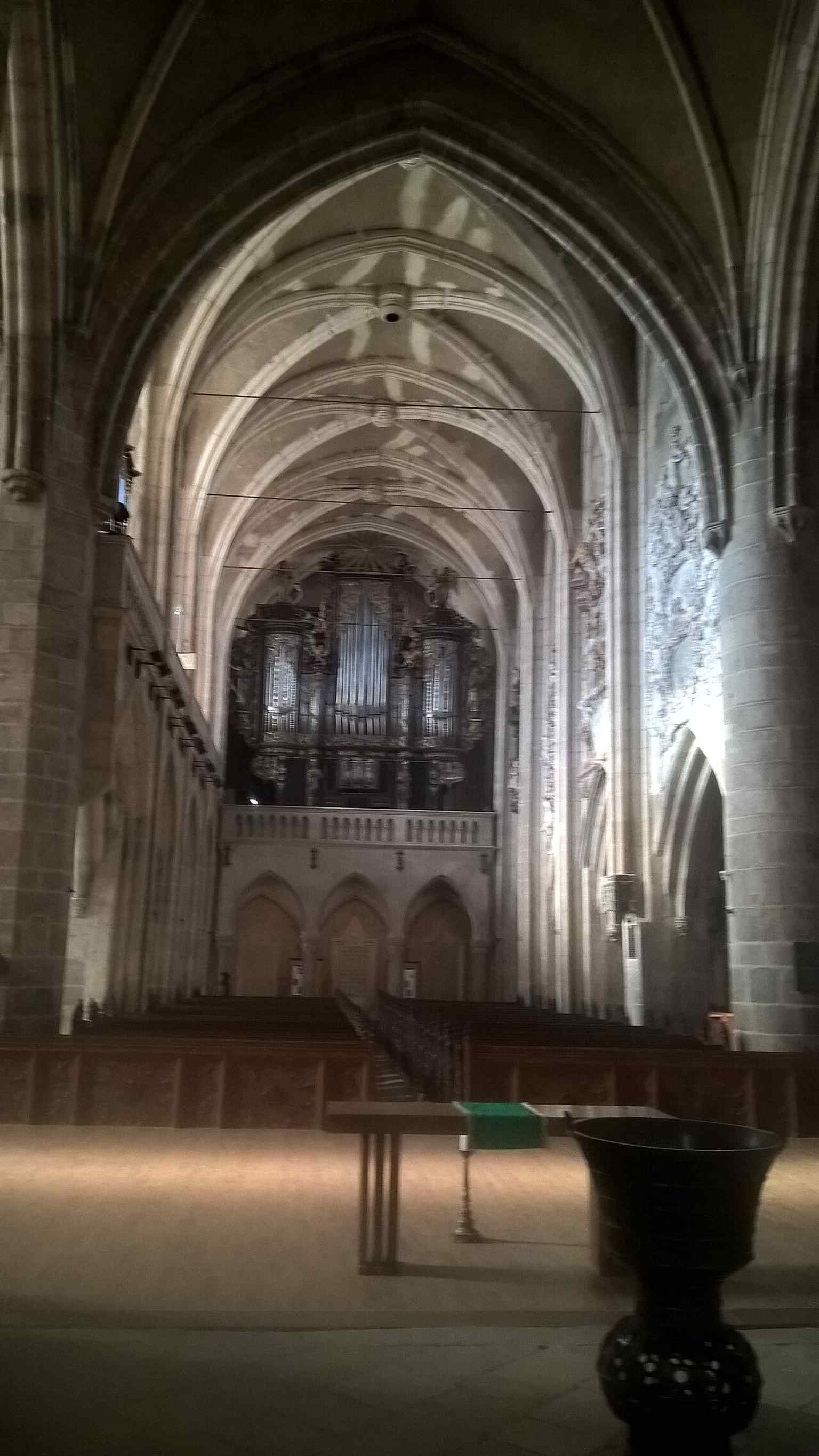
Inside, the cathedral is a soaring Gothic space, complete with ribbed vaults, which are the arched ceiling structures that distribute the weight of the massive stone roof. You can see the grand interior on your app. The western part of the church, an entrance hall called the ferula, holds some much darker history. It contains a gallery of sixty-seven medieval tombstones. One of them belongs to a man named Mihnea the Bad, a Wallachian prince. In March fifteen ten, Mihnea had just attended a church service and stepped out of the northern doors when he was ambushed by rival noblemen. Despite his son's efforts to fight off the attackers, killing two of them on the spot, Mihnea was stabbed to death right outside. He remains the only Romanian prince buried among the Saxon elites here.
Decades later, burials inside the church were banned. The last major exception was made in eighteen oh three for Baron Samuel von Brukenthal, a former governor of Transylvania. His remains were placed under the floor near the pulpit. In twenty twenty-five, a local museum actually asked to open his crypt to study the remains using modern archaeology. The church firmly said no, preferring to let the Baron rest in peace until completely non-invasive methods exist. So, the mystery of the crypt remains.
The cathedral is generally open every day from ten A-M to eight P-M, though it opens a bit later on Fridays and Sundays. Linger as long as you like in the shadow of this magnificent building before continuing on.


.jpg)
.jpg)

