
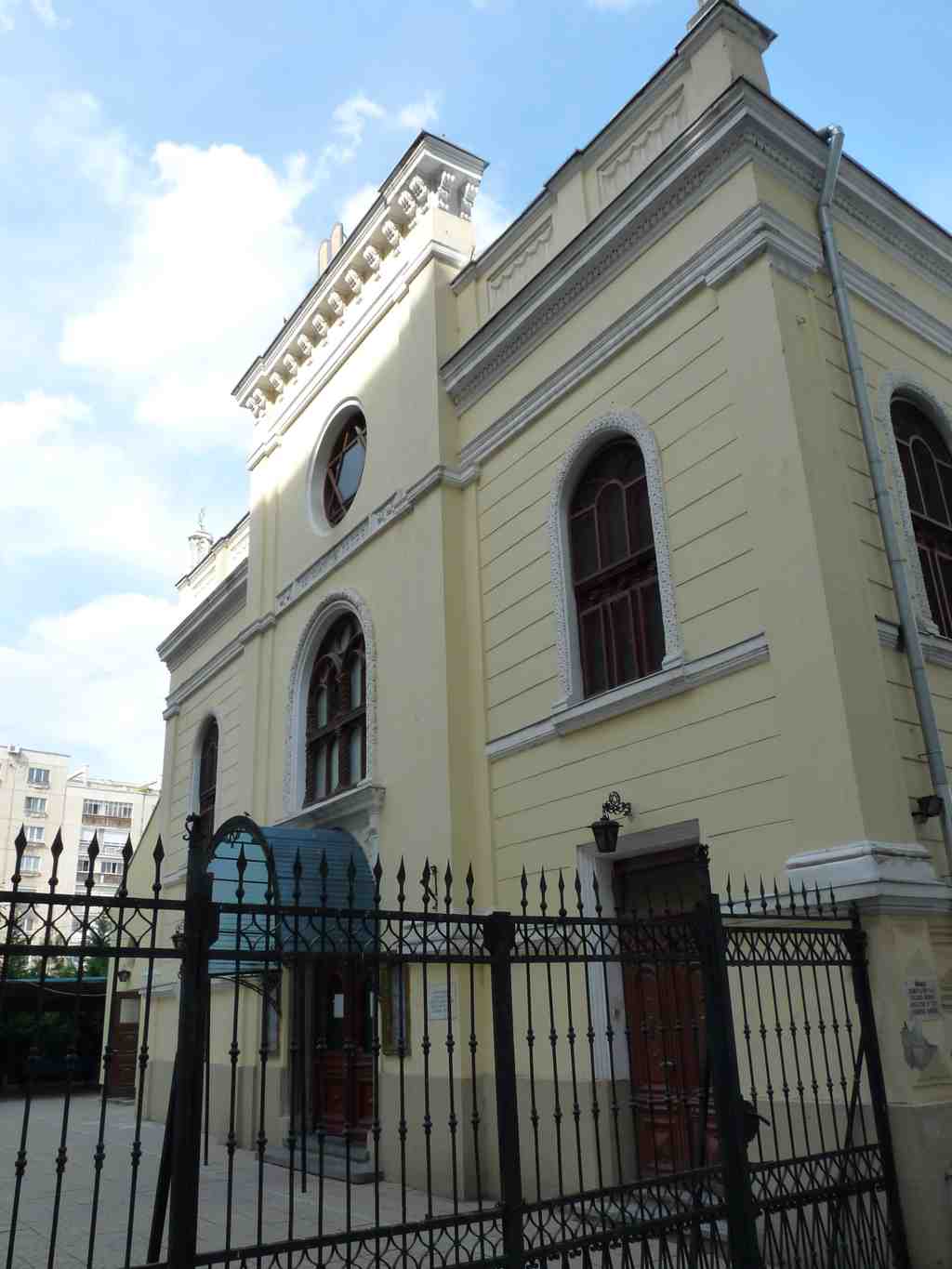
You can spot the Great Synagogue right ahead-a stately, creamy yellow building with tall arched windows and a decorative cornice, standing just behind a classic black iron fence.
Now, as you stand here, imagine the gentle footsteps of Bucharest’s Polish-Jewish community back in 1847, bustling to finish their brand-new synagogue. The air would have been filled with excitement-think of the soft chatter, maybe a sneeze from too much sawdust. Over the years, this building has seen quite a bit! In 1865, the walls echoed with the sounds of hammers and the smell of fresh paint during its first big repair. Then it got a stylish update in 1903, and again in 1909. Picture the Rococo swirls being painted in 1936-each stripe adding a bit more glamour, thanks to Ghershon Horowitz, a man who didn’t know the phrase “too fancy.”
But there’s a twist-after World War II, the synagogue was battered by far-right Legionnaires, and for a while, it lost its voice. Yet, the community refused to let the silence win. Restorers rushed in 1945, dust flying, as they breathed life back into these walls. Today, you might hear the echo of prayers or the hum of curious visitors, since the Great Synagogue now also tells stories as a Jewish museum. So, take a deep breath, feel the spirit of resilience, and-if you listen closely-you might catch the laughter of Dr. Moses Rosen, the beloved rabbi, still mingling in the air.




