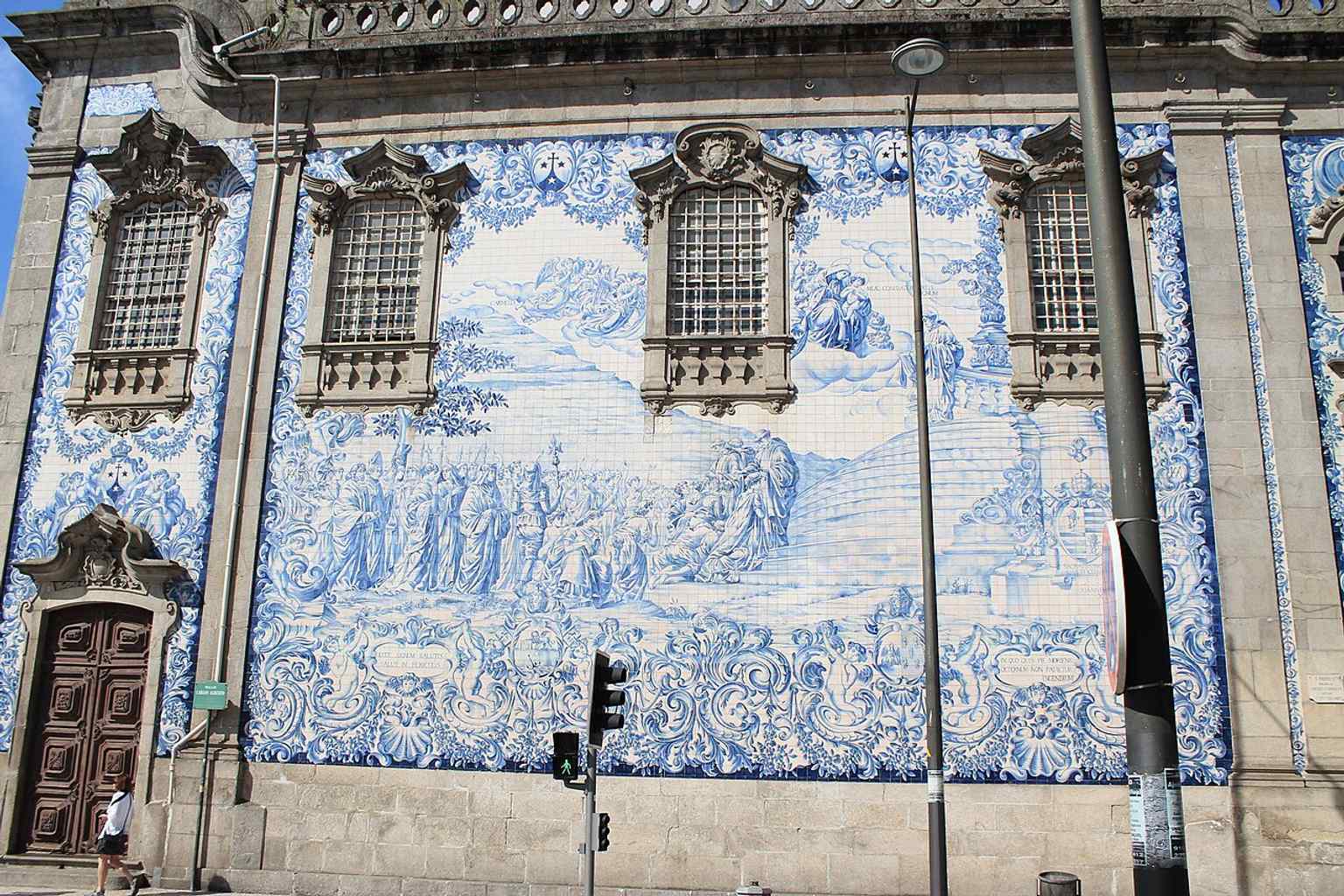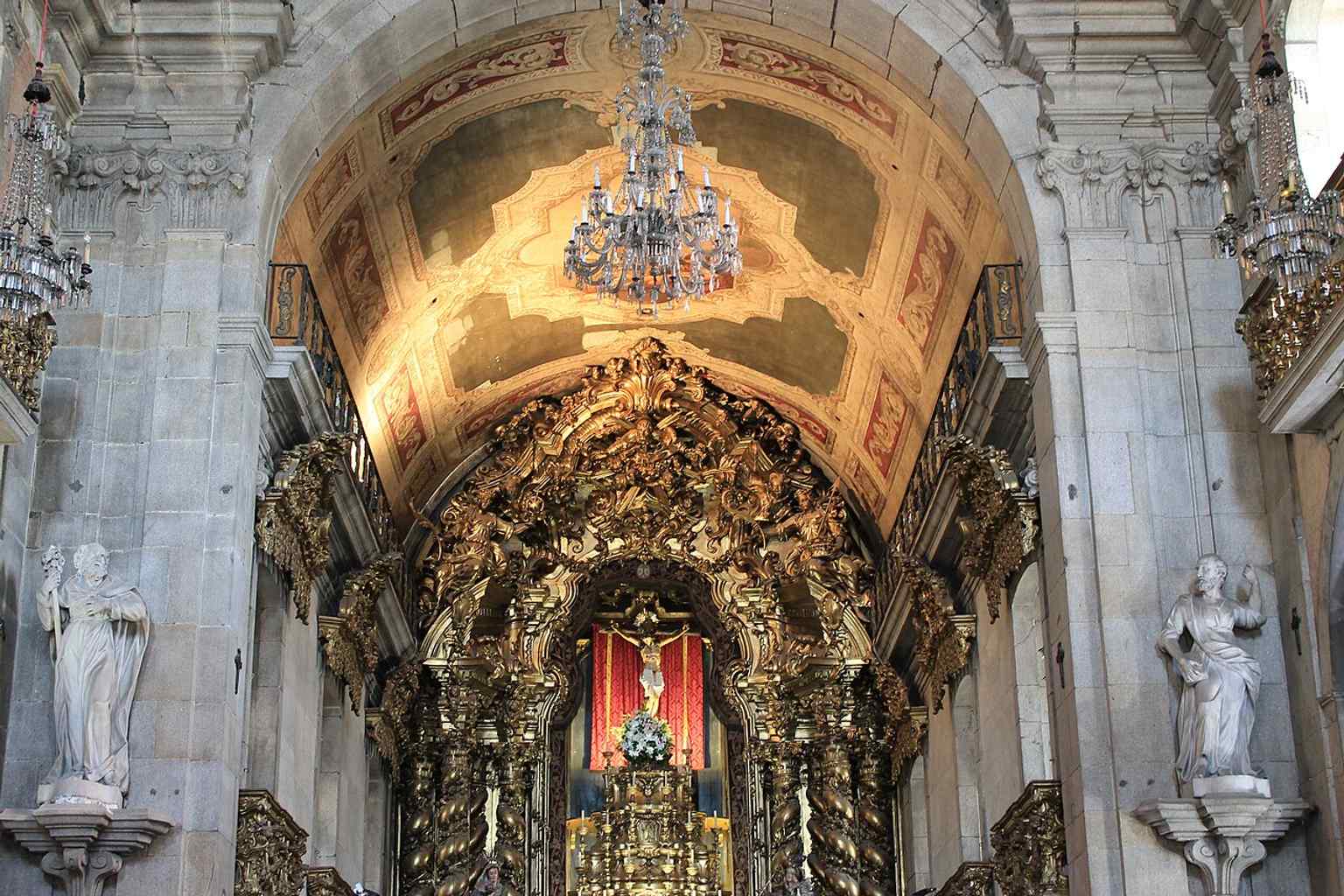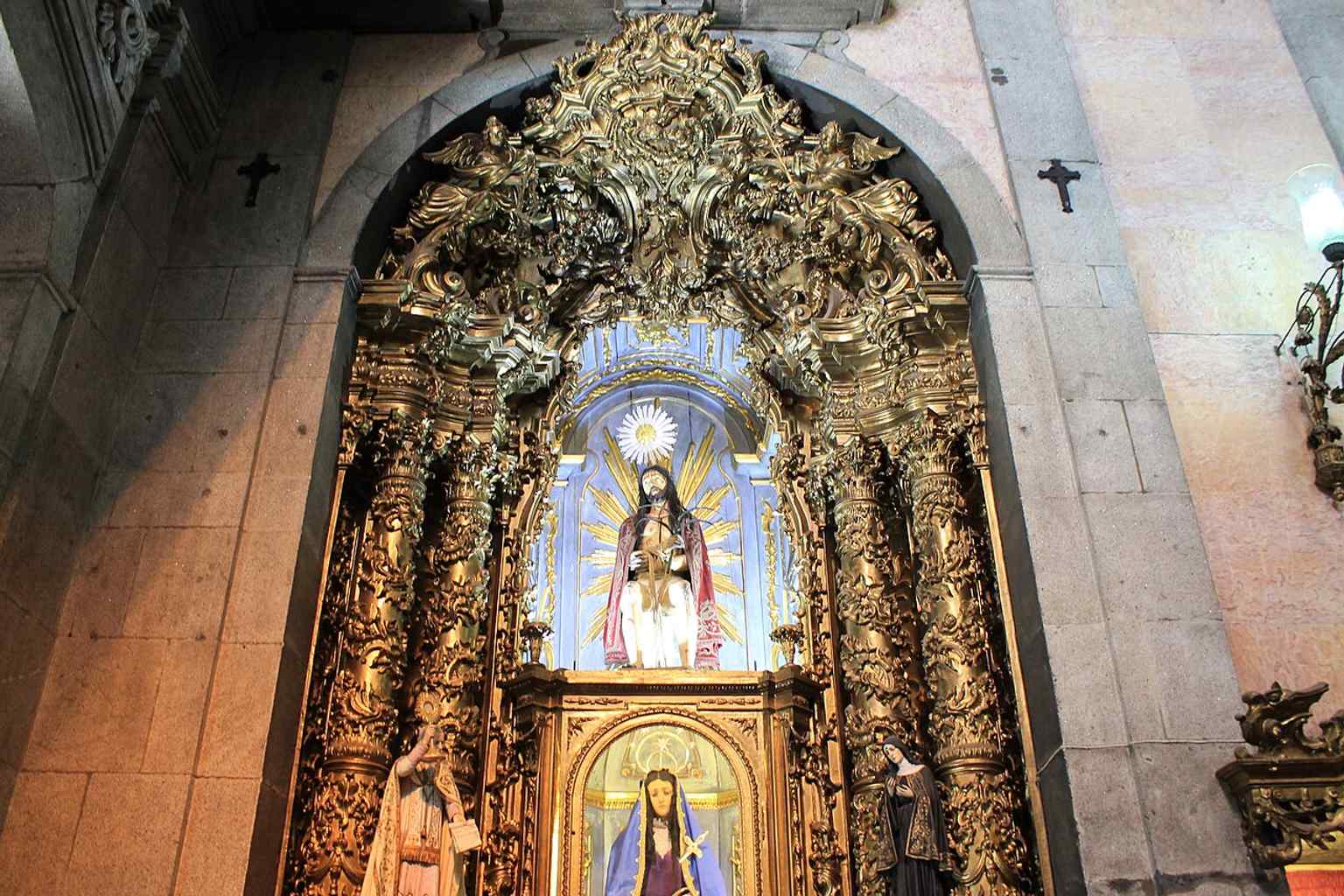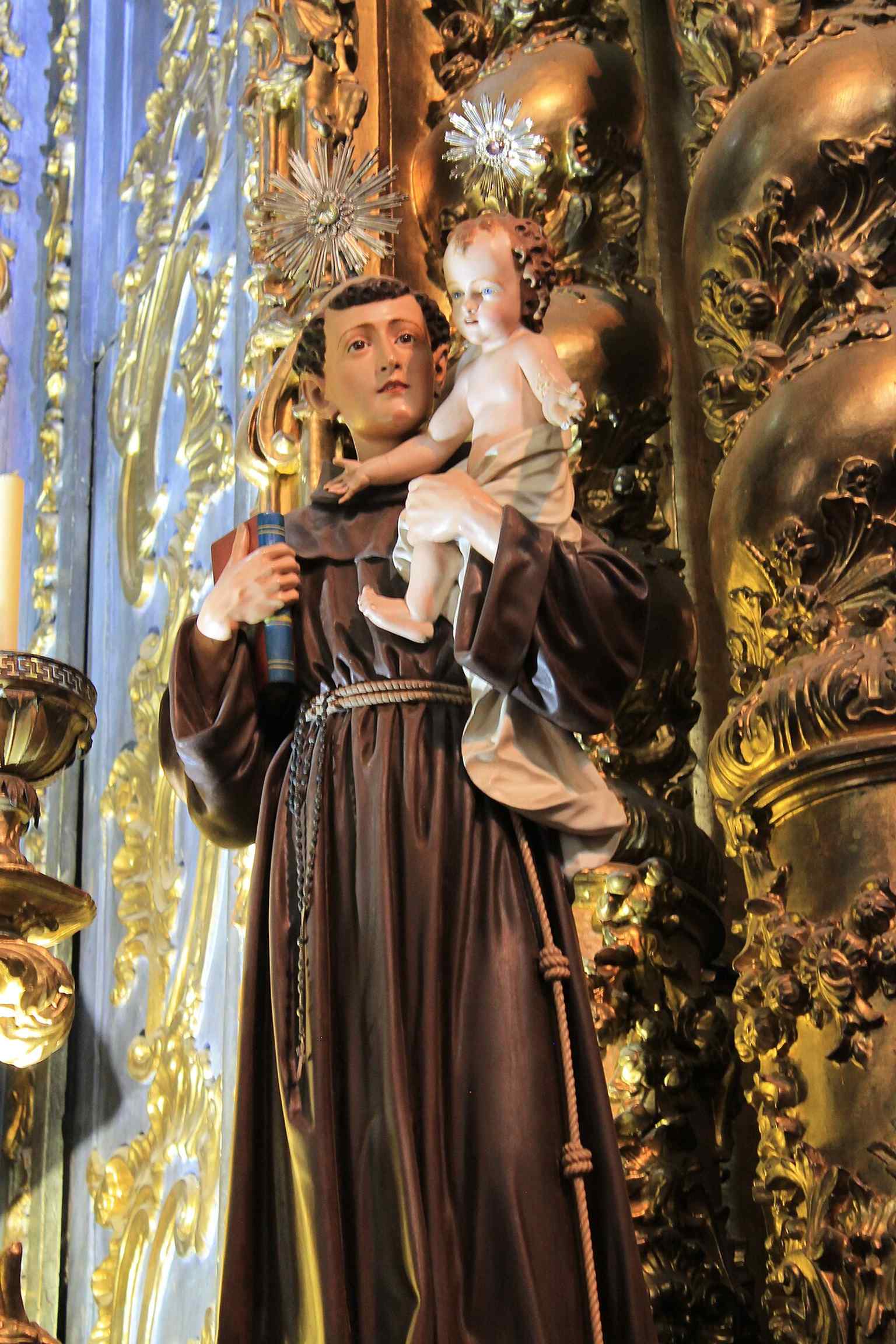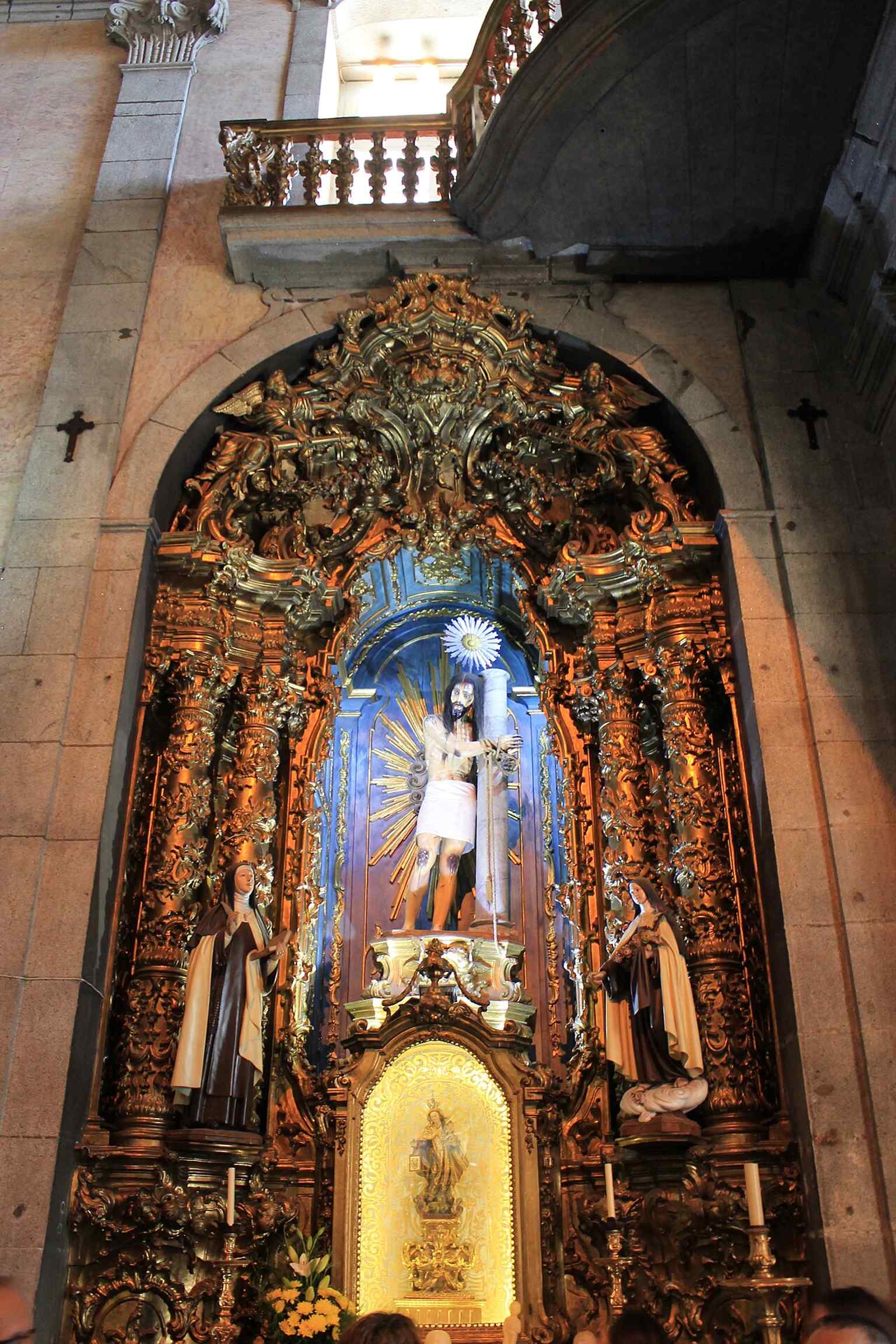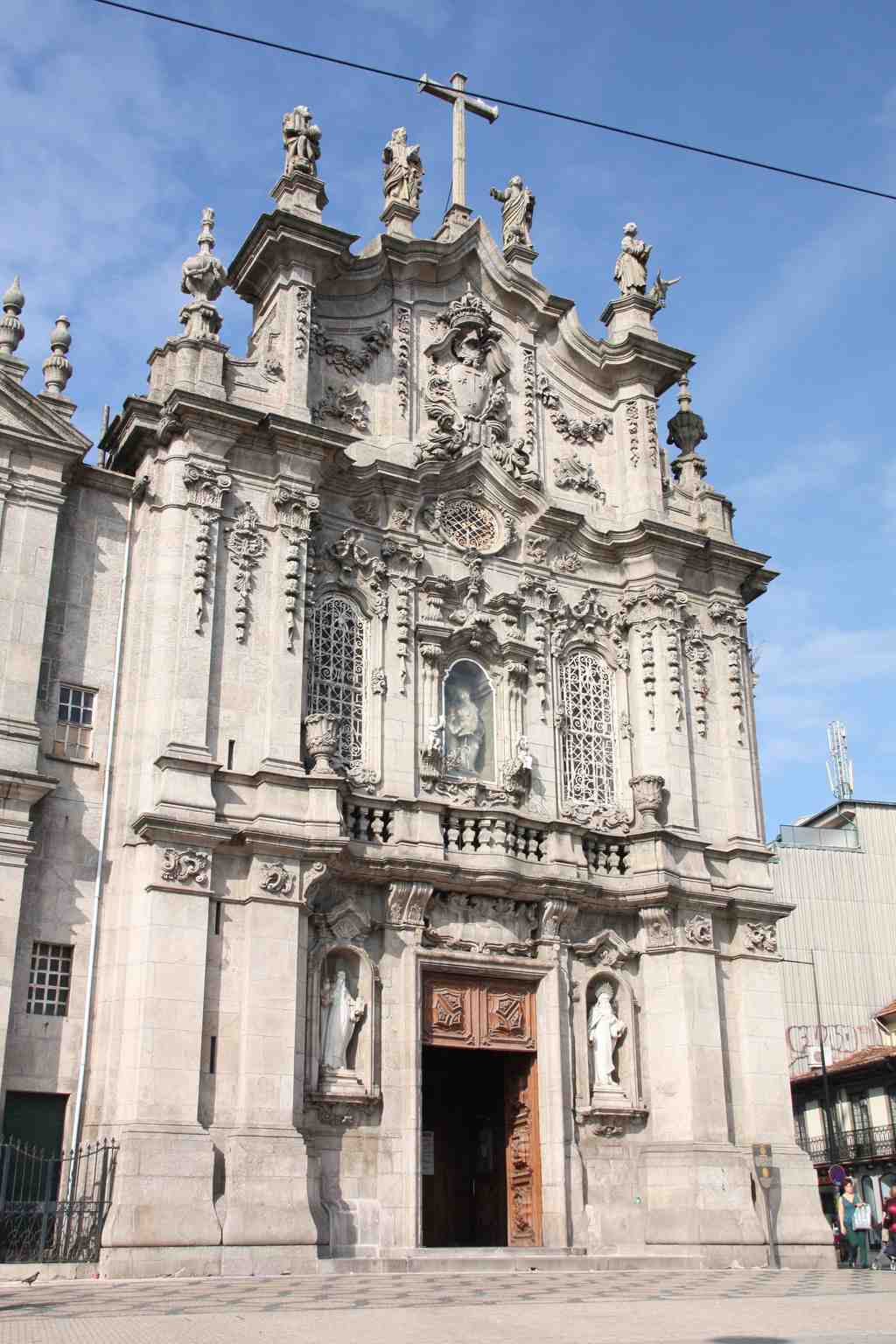
On your left, Carmo Church rises in pale granite with a curving baroque façade, statues along the roofline, and a great blue-and-white tiled wall wrapping its side.
This is one of Porto’s most charming acts of architectural mischief. In the second half of the eighteenth century, the Third Order of Our Lady of Mount Carmel wanted its own grand church here, beside the older Church of the Carmelites. There was, however, a snag: city rules did not allow two churches to stand directly wall to wall. So the architect, José Figueiredo Seixas, did what clever architects do when law blocks the front door. He found a side entrance.
Between the two churches he inserted the Casa Escondida, the Hidden House, a strip of building only a little over one and a half metres wide. It began as a practical workaround, but Porto adopted it with delight. A legal necessity turned into a local curiosity, the sort of thing people pass without noticing, then remember for years once they do.
Before we go further, have a look at the narrow gap between the churches and see if you can spot that improbable little house. So many people admire the grand façades and never realise that the slimmest building here once solved a very stubborn urban problem. If you want a clearer view, glance at the image on your screen.
Seixas built the church between seventeen fifty-six and seventeen sixty-eight, and the Order later added its hospital, finished in eighteen oh one. Over roughly two hundred and fifty years, that tiny hidden house served rather less romantic purposes than legend prefers. Local tradition likes to claim it kept friars and nuns from sharing a wall, or even from exchanging dangerous levels of eye contact. More sober accounts say chaplains lodged there, and at times doctors connected to the Order’s hospital did too. Hidden lives behind façades, once again.
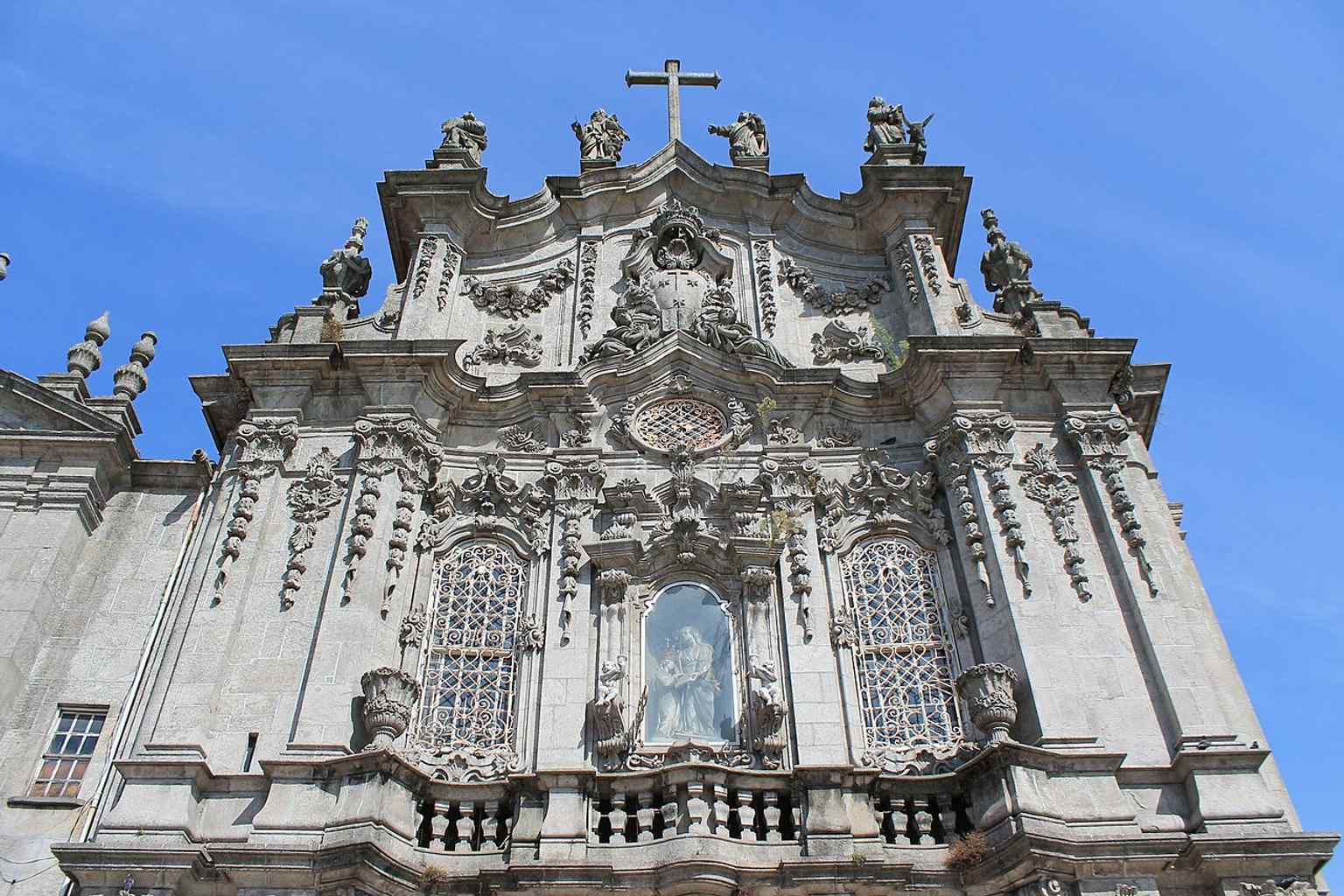
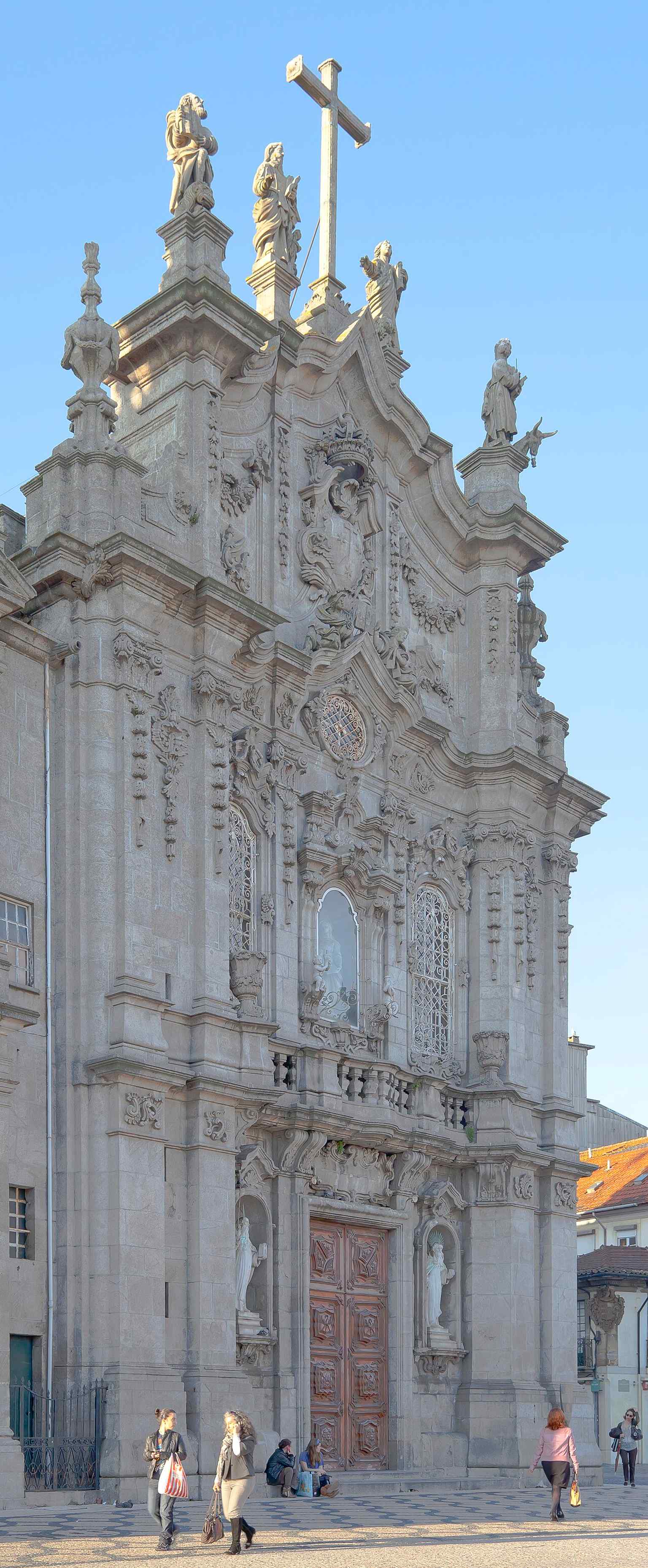
Now lift your eyes to the front. High on the façade stands the church’s patron saint, an emblem of Carmelite devotion. In the niches by the doorway are the prophets Elijah and Elisha, spiritual models for the Carmelites. Above them, the four Evangelists gather among pointed finials and sculpted flourishes that show the influence of the Italianate baroque style associated with Nicolau Nasoni, whose theatrical touch you saw at Clérigos. If you want the details laid out neatly, the façade image is worth a quick look.
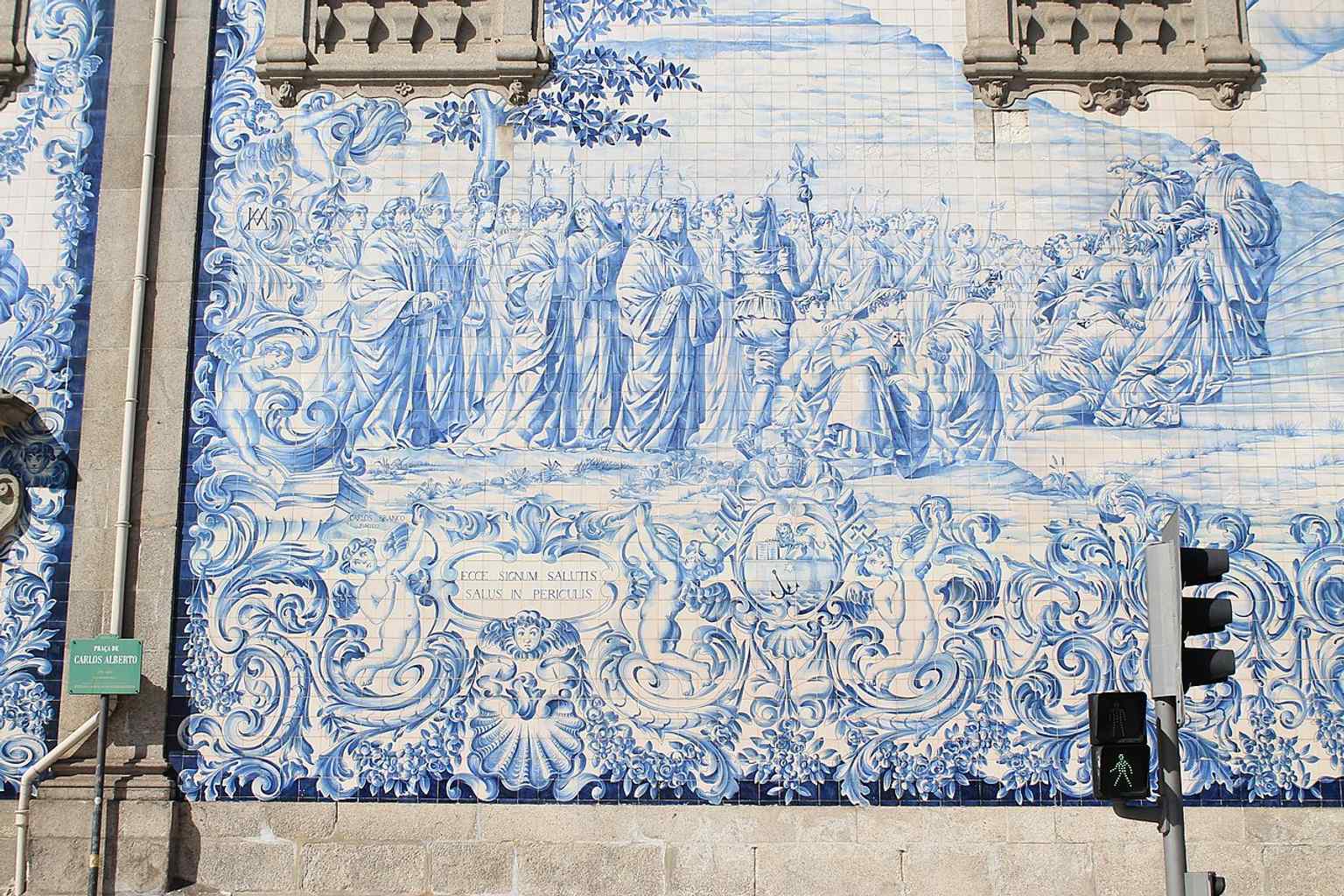
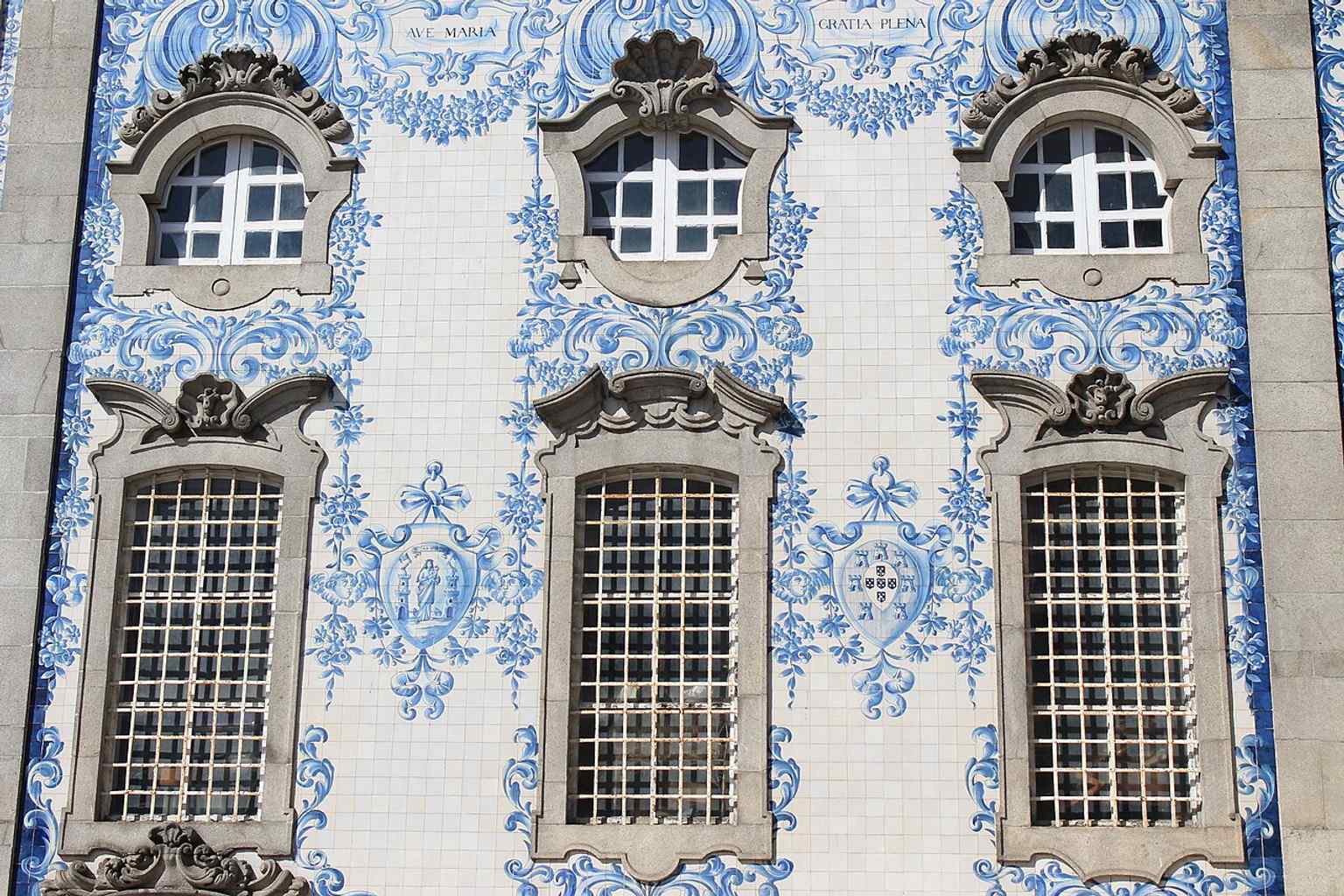
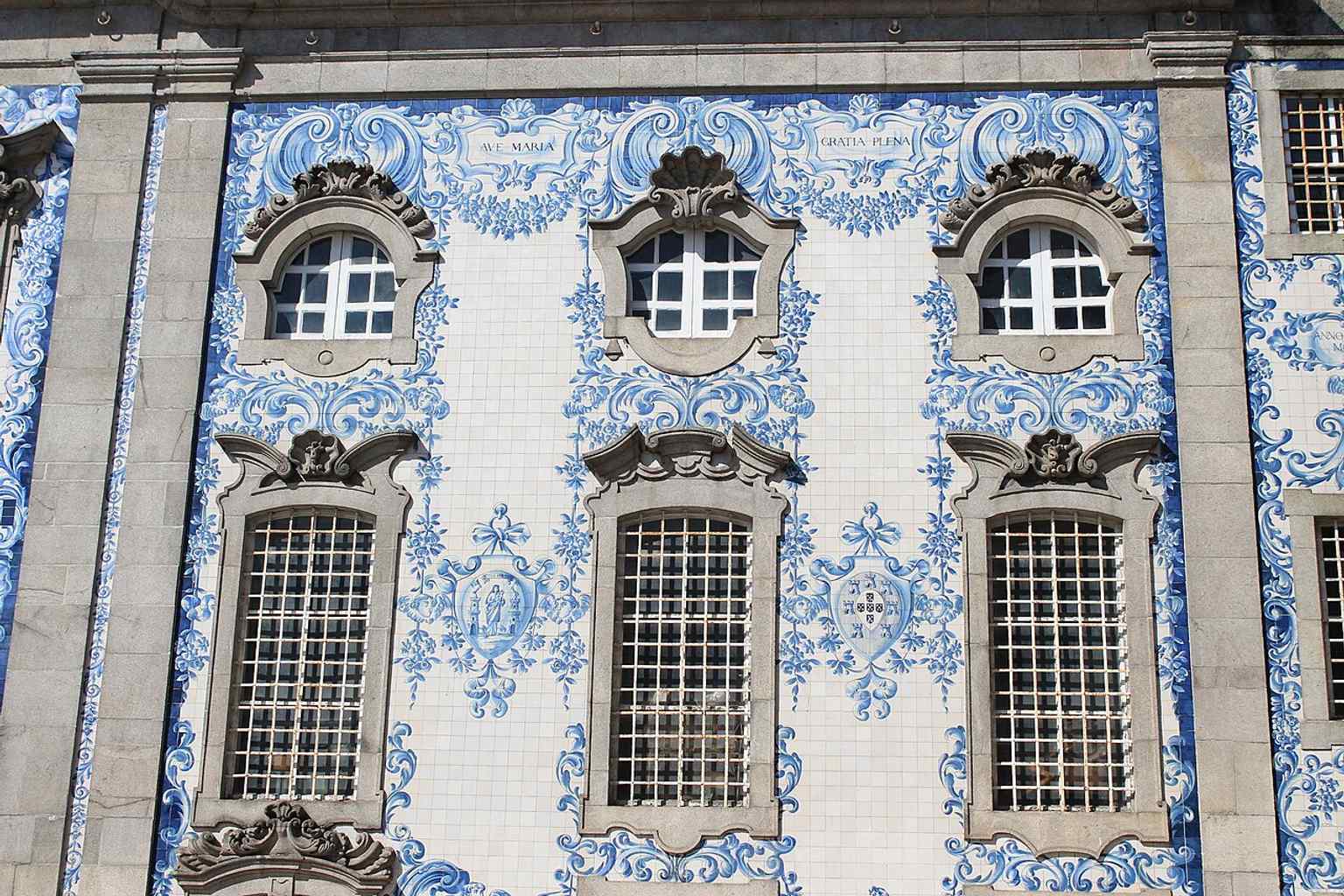
The side wall, though, is the great flourish. In nineteen twelve, artists Silvestre Silvestri and Carlos Branco created the immense tile panel telling stories of the Carmelite order and Mount Carmel. It turns the whole flank of the church into a blue-and-white narrative, less like decoration than a public proclamation in ceramic.
In two thousand and thirteen, Carmo and the adjacent Carmelitas were formally protected together as a National Monument, which feels exactly right. Their odd coexistence is the story. Faith, ambition, regulation, and ingenuity all pressed together until the city produced something no planner would have invented on purpose and no one would now wish away.
If you decide to come back later, the church is generally open daily from half past nine to five, and visits may also include the Hidden House and parts of the Order’s interior circuit.
When you are ready, continue towards Carlos Alberto Square. There the story shifts from ingenious buildings to the drama of a man received here far from home: a king in exile, and a city deciding how to welcome him.