
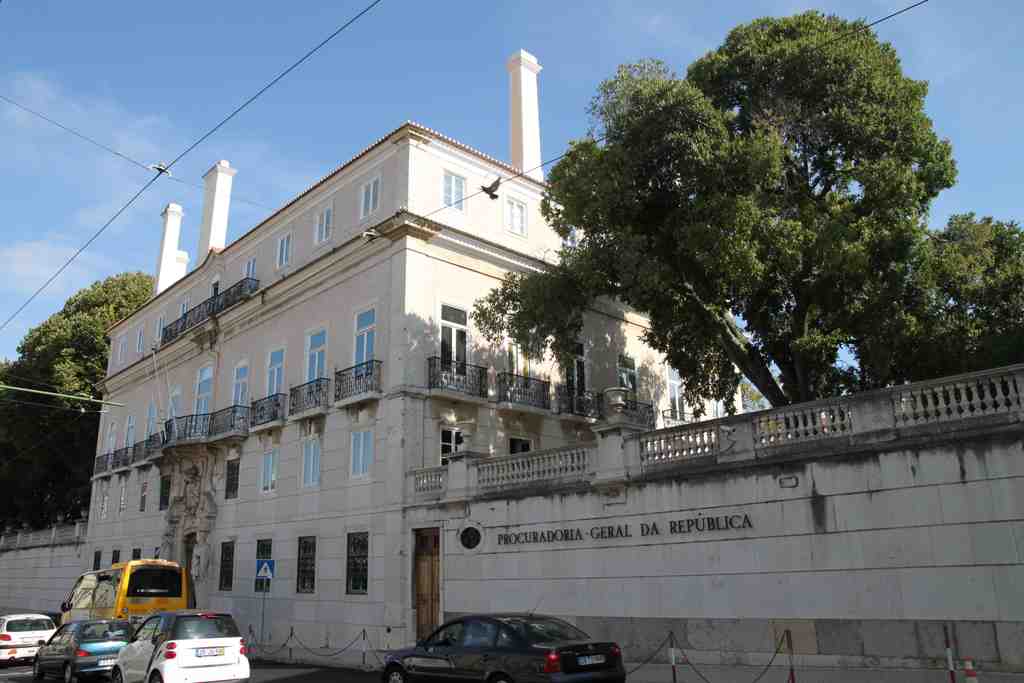
To spot Palmela Palace, just look in front of you for a stately pale building with tall chimneys, elegant rectangular windows, iron balconies, and stone statues flanking a grand entrance gate-its name is written right on the wall.
Now, take a moment to imagine the late 1700s: the air is buzzing with the sound of hammers and laughter as workers rush around the grounds of what would become Palmela Palace, all thanks to an ambitious architect named Manuel Caetano de Sousa. Picture this place not as a serious government building, but as a private family palace, gleaming with new stone, fresh ironwork, and the promise of grand parties. Sousa designed it for himself in 1792, creating a residence so impressive that even royalty took notice! The estate stood on land donated by the crown, a gift that probably had Sousa pinching himself every morning-imagine waking up here with sunlight streaming through these very windows.
But the palace’s story would soon become as twisty as a detective novel. After passing to Sousa’s son, Francisco-the family architect dynasty!-misfortune struck. Francisco was banished, and his treasured palace was seized by the state! Instead of falling silent, this place went to the highest bidder, finding itself in the hands of Henrique Teixeira de Sampaio, the future 1st Count of Póvoa. With this new noble family came exquisite renovations, as if the palace was getting a brand-new wardrobe for the 19th century.
Love stories and royal dramas soon followed. When the heir to Póvoa died young, his sister Maria Luísa inherited the palace, already promised in marriage-by order of the king, no less!-to the heir of the powerful Duke of Palmela. Talk about matchmaking with high stakes. Their union brought the palace under the Palmela family’s name, forever linking this elegant home to one of Portugal’s most illustrious noble houses.
Look closely-you’ll see the palace proudly displays the Palmela coat of arms above the doorway, and next to the entrance can you spot the two stone statues? They symbolize “Strength” and “Work”-a not-so-subtle message from the past: “If you want a palace like this, you’d better get busy!”
In the late 20th century, the drama shifted from dukes to judges. The state bought the palace in 1977, transforming it into the headquarters of Portugal’s Attorney General. But even these dignified walls weren’t safe-just a few years later, a fire ripped through the upper floors, swallowing the old chapel in minutes. Luckily, today if you peek inside, you’ll find a conference room where once only prayers whispered.
So, as you stand here, let your mind wander back across the centuries-between parties, politics, and pyrotechnics, the Palmela Palace has pretty much seen it all!




