
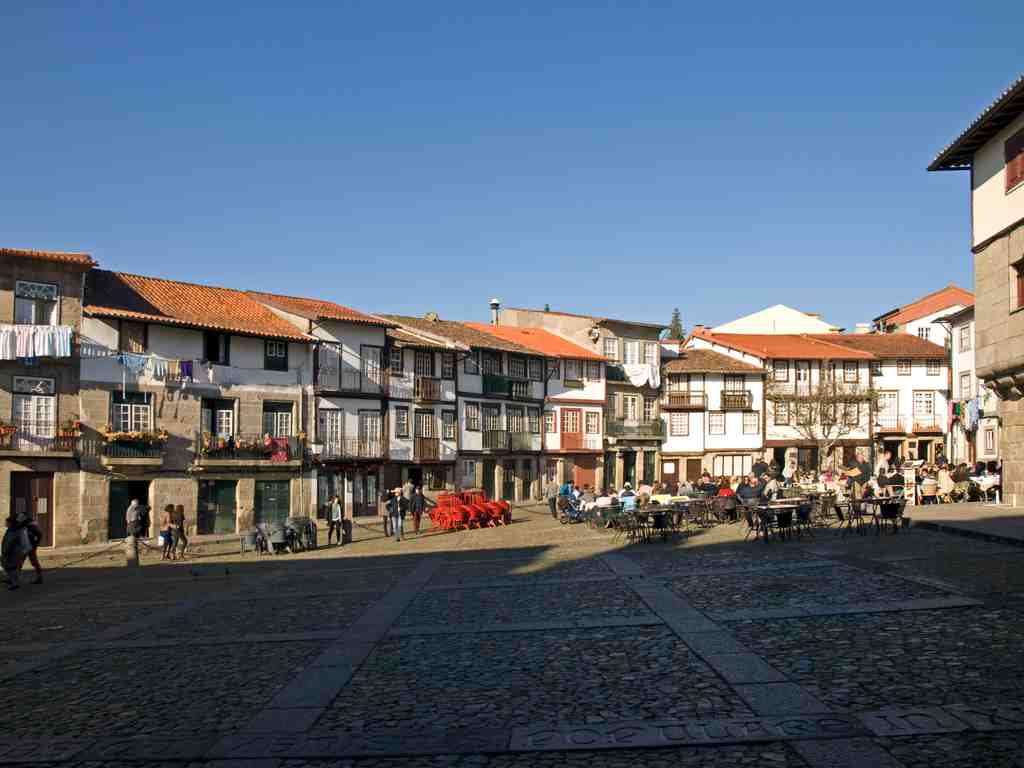
To spot Santiago Square, just look ahead for a wide, cobbled open space surrounded by charming, stacked medieval houses with their wooden balconies and red-tiled roofs; you'll see people gathered at outdoor cafes across the square.
Welcome to Santiago Square, where the cobblestones under your feet have seen more drama than a soap opera marathon! Picture yourself here a thousand years ago: according to local legend, the Apostle St. James-yes, the one from the stories-brought an image of the Virgin Mary all the way to Guimarães, putting it in what was then a pagan temple, right in this square. That’s how it got the name “Santiago” or “São Tiago,” and suddenly, this became more than just another spot in town-it became sacred ground. These quirky houses with their crooked balconies and laundry hanging off the rails might look photogenic now, but back in the day, you wouldn’t want to get too close. Trust me, people actually described this place as dirty, unworthy, and even a “source of infection!” By the nineteenth century, the square’s reputation was so infamous, there were serious debates about bulldozing the entire neighborhood, calling it “a den that tarnishes the air”-and, believe it or not, home to Guimarães’ historic infamous side.
But time has a funny way of turning yesterday’s eyesores into today’s treasures. Where once there was a cramped, “infected alleyway,” now you’ll find lively cafés and the laughter of locals. Even the place where a tiny 17th-century chapel once stood is carefully marked out in the pavement, as if history itself is winking up at you. And if you visit during the Nicolinas festivities, you’ll see teenagers tossing apples for the “Maçãzinhas” right here-a living tradition in a square where every corner has a story to tell. So breathe in that mix of history and roasted coffee beans, and enjoy your moment in a place that’s gone from “unworthy” to UNESCO-worthy!


