
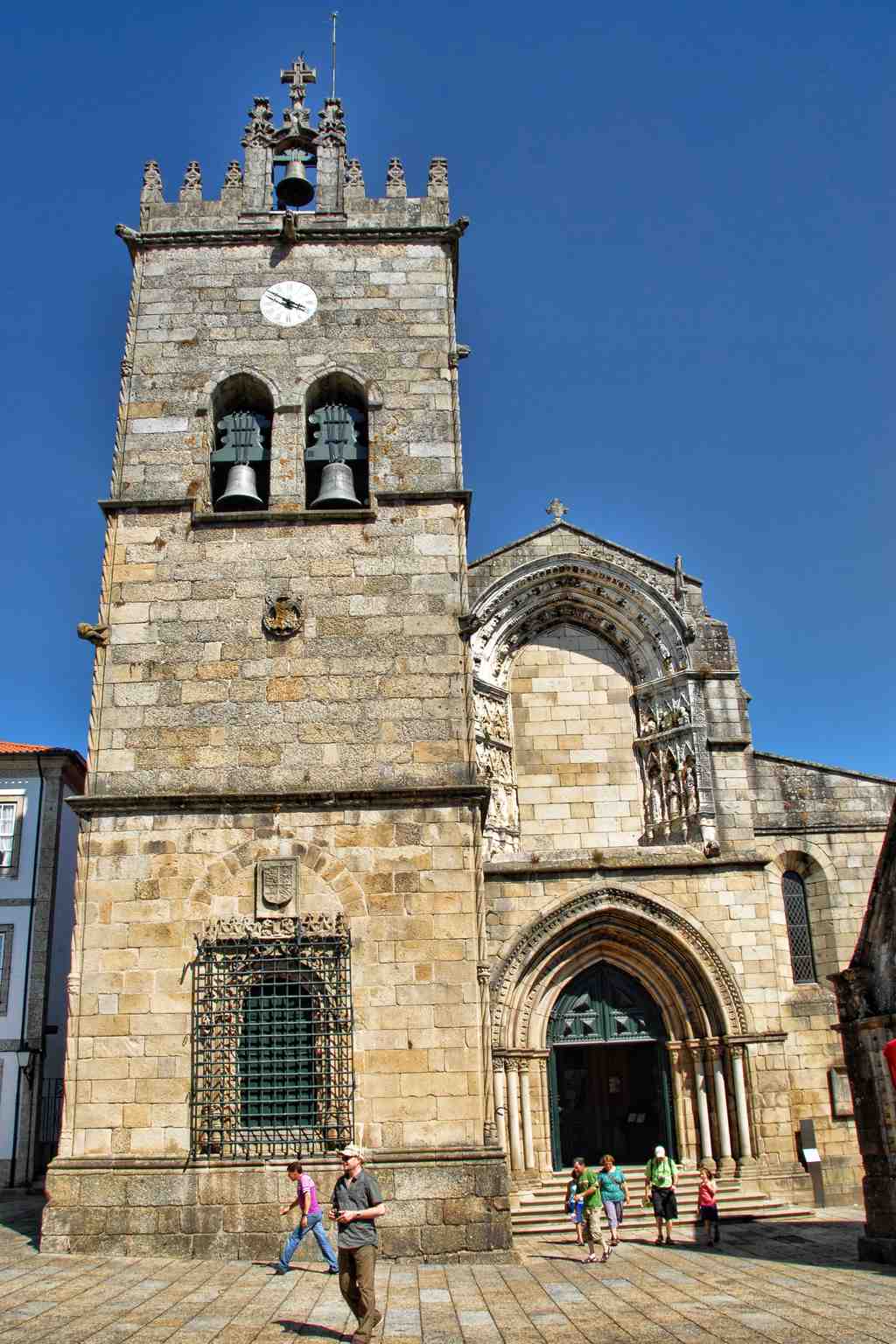
In front of you stands the Church of Our Lady of Oliveira, a proud stone structure with a large square bell tower-just look for the clock and the twin bells above the main arched doorway!
So, here we are, right in front of a church that’s almost like Guimarães’s own version of a medieval celebrity. Picture yourself in the 10th century, when this whole spot buzzed around a small pre-Romanesque monastery founded by the formidable Mumadona Dias-imagine her as Guimarães’s ancient boss lady, who even built a fortress to keep this holy ground safe. That fortress eventually set the scene for the Castle of Guimarães, just in case you thought only Hollywood sequels went on for centuries.
But that’s only the beginning! By the 1100s, the original monastery made way for something much grander-the Collegiate of Santa Maria de Guimarães. Think of it as the Apple headquarters of medieval religious power: wealthy, influential, and drawing crowds from all over. The bits of stone and old columns you might spot around the cloister are like ancient leftovers from that era, stubborn survivors from the Romanesque original, now mixed with Manueline details. Somewhere in there, there’s even an old capital with carvings of the eternal struggle between good and evil. Medieval artists didn’t just paint by numbers-they told stories in stone.
Now, fast-forward to a dramatic moment in the 1300s: the church turns into a major pilgrimage hotspot with people flocking to see the revered image of Saint Mary. On the eve of the famous Battle of Aljubarrota, that very image caught the eye-and the prayers-of João I of Portugal. As thanks, he decided to fund a total makeover for the church. So, if you think home renovations are stressful, imagine doing it with the king’s gold and a deadline of the early 1400s.
Let’s take a closer look at the church’s face-a simple yet elegant structure with three naves and, right above the main portal, a huge stone “window” bursting with gothic art. Known as the Tree of Jesse and the Annunciation, this display unfurls the whole family tree of the Virgin Mary above your head. Nothing says “important heritage” like a gigantic stone family album.
Inside, the golden carvings and spectacular chapels owe a lot to artistic touch-ups from the 1700s-a trendier update thanks to Pedro Alexandrino de Carvalho. The church became a patchwork of old and new, Gothic spires next to golden Baroque flourishes, like someone wearing armor with a sequin cape.
And then there’s the olive tree at the heart of the legend! The story goes that a king named Wamba, fresh from Jerusalem, planted an olive tree here-a tree later believed to have withered away out of sheer drama. That was, until a local trader brought back a cross from Normandy, placed it beside the stump, and-presto!-the olive tree sprouted back to life. Miraculous! Over the years, generations called upon Our Lady of Victory, which is how she became Our Lady of the Olive Tree. Yes, everyone in Guimarães loves a happy ending-so much, in fact, that today there’s still an olive tree in the plaza marking all the legendary dates of this story.
So here it stands: part church, part legend, part medieval superhero headquarters. How’s that for a quirky stop on your journey?
To expand your understanding of the features, toponymy - legend of our lady of the olive tree or the see also, feel free to engage with me in the chat section below.


