
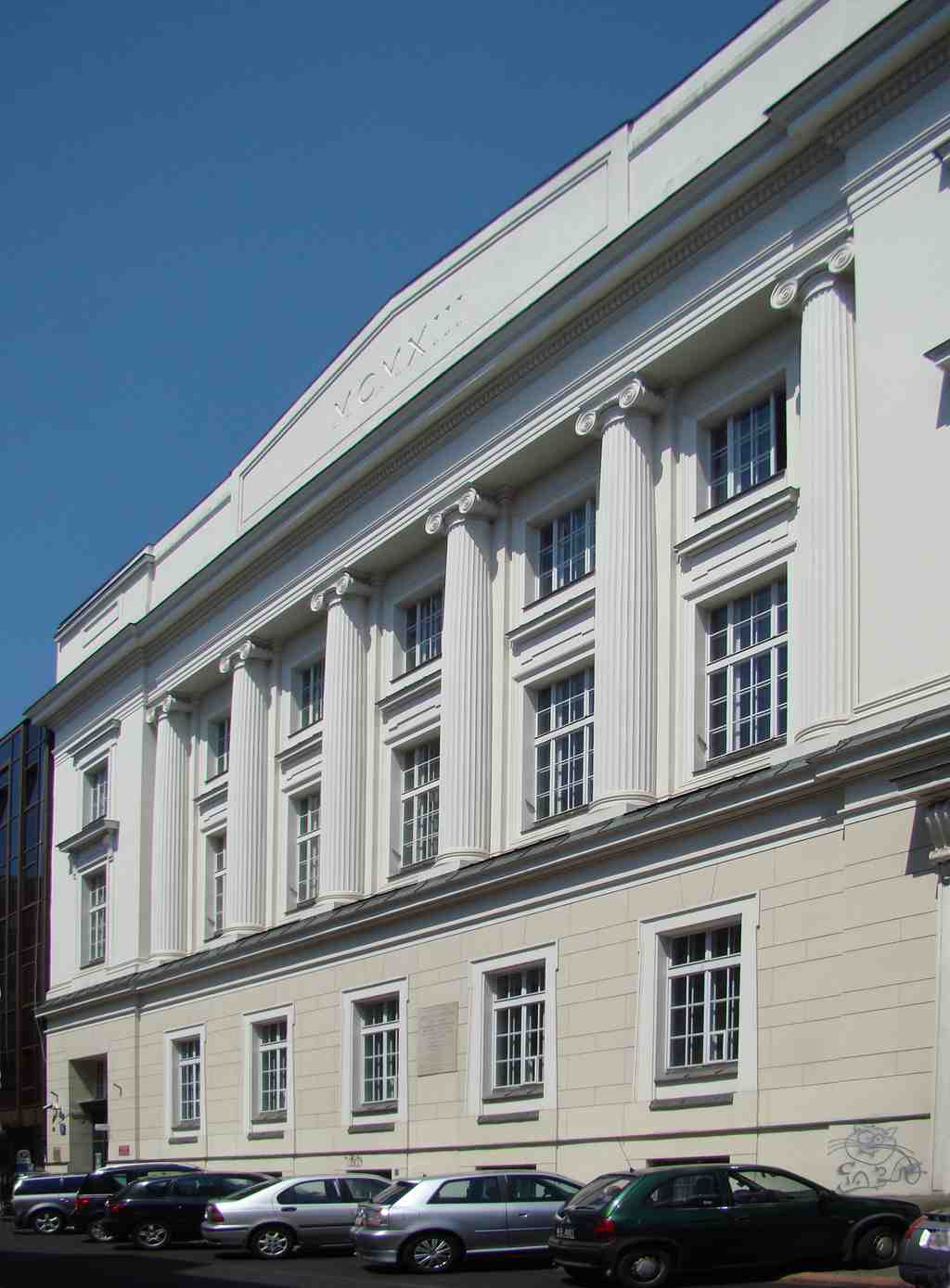
Look for the pale stone and glass library complex with broad rectangular wings, tall grid-like windows, and a recessed modern entrance set into the facade.
This place tells a quieter story of power... not who controls words, but who gets to reach them.
Long before this library formally opened in nineteen oh seven, Warsaw argued itself toward it. A local will tell you the real beginning sits back in the eighteen nineties, when people started insisting that a major city could not live on private collections and elite reading rooms alone. Jadwiga Szczawińska-Dawidowa pushed that argument into public view. In eighteen ninety-seven, she published a pamphlet saying Warsaw urgently needed a true public library, especially for young scholars who could not afford their own books. Very sensible. Also apparently controversial, because even books require lobbying.
The institution finally took shape after the looser association law of nineteen oh six made organizing possible. Its founders included Samuel Dickstein, Ludwik Krzywicki, Stanisław Michalski, and Stefan Żeromski. They wanted a library for science and education, open beyond narrow circles. The first headquarters stood elsewhere, on Rysia Street, now plac Dąbrowskiego, in rented rooms. By nineteen fourteen, the library moved here to Koszykowa, into a purpose-built home funded by Eugenia Kierbedziowa and designed by Jan Heurich the younger.
Inside, the argument continued. Faustyn Czerwijowski, who shaped the library from its earliest years and led it until nineteen thirty-seven, insisted it should serve both scholarship and the wider public. Dickstein leaned more academic. In other words, the classic civic dispute: should knowledge sit on a pedestal, or at a desk where people can actually use it?
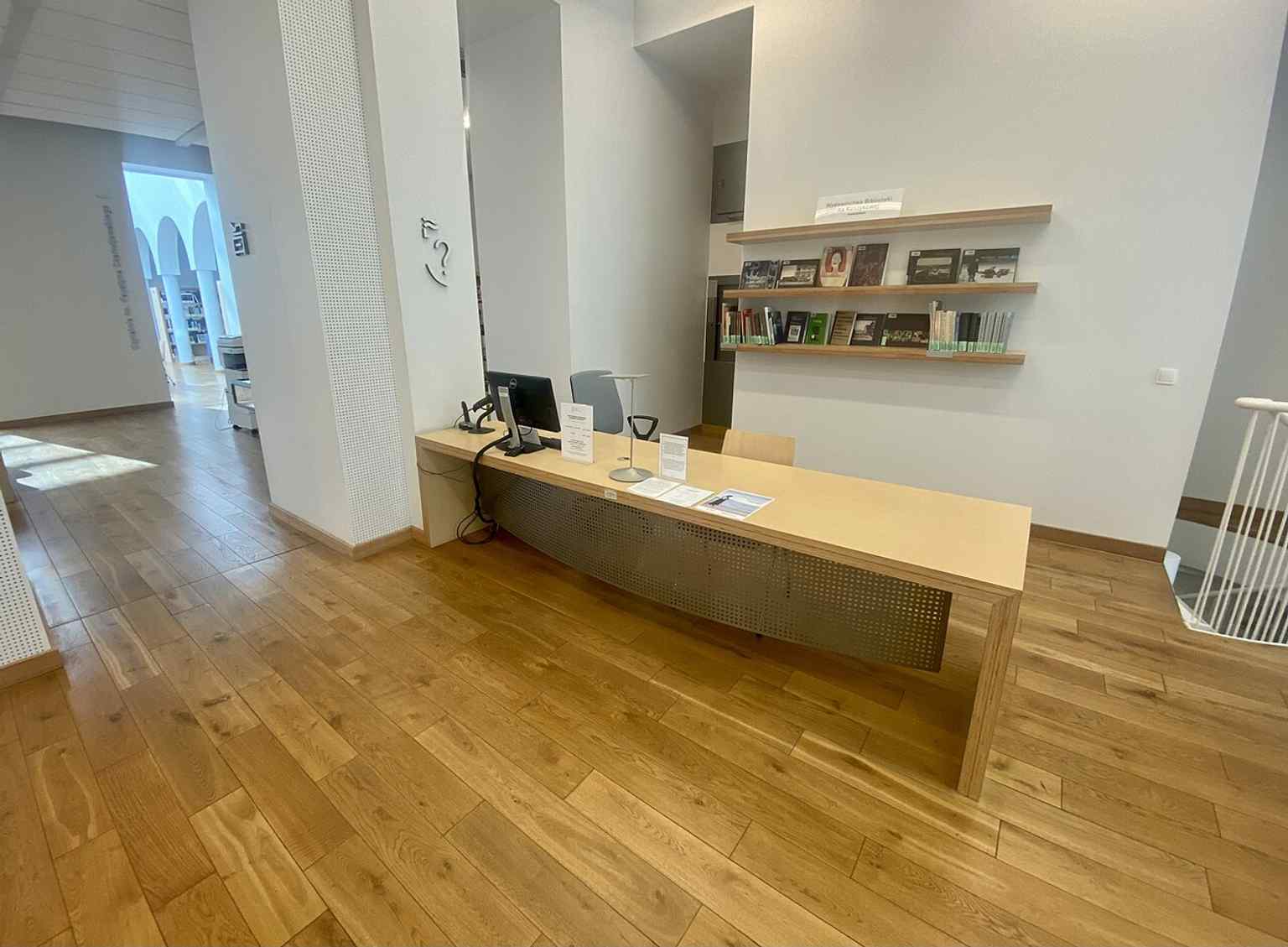
If you check your screen, the modern reading spaces still carry that answer forward. And the information desk in the reading room named for Czerwijowski makes the point nicely: the system matters, but the welcome matters too.
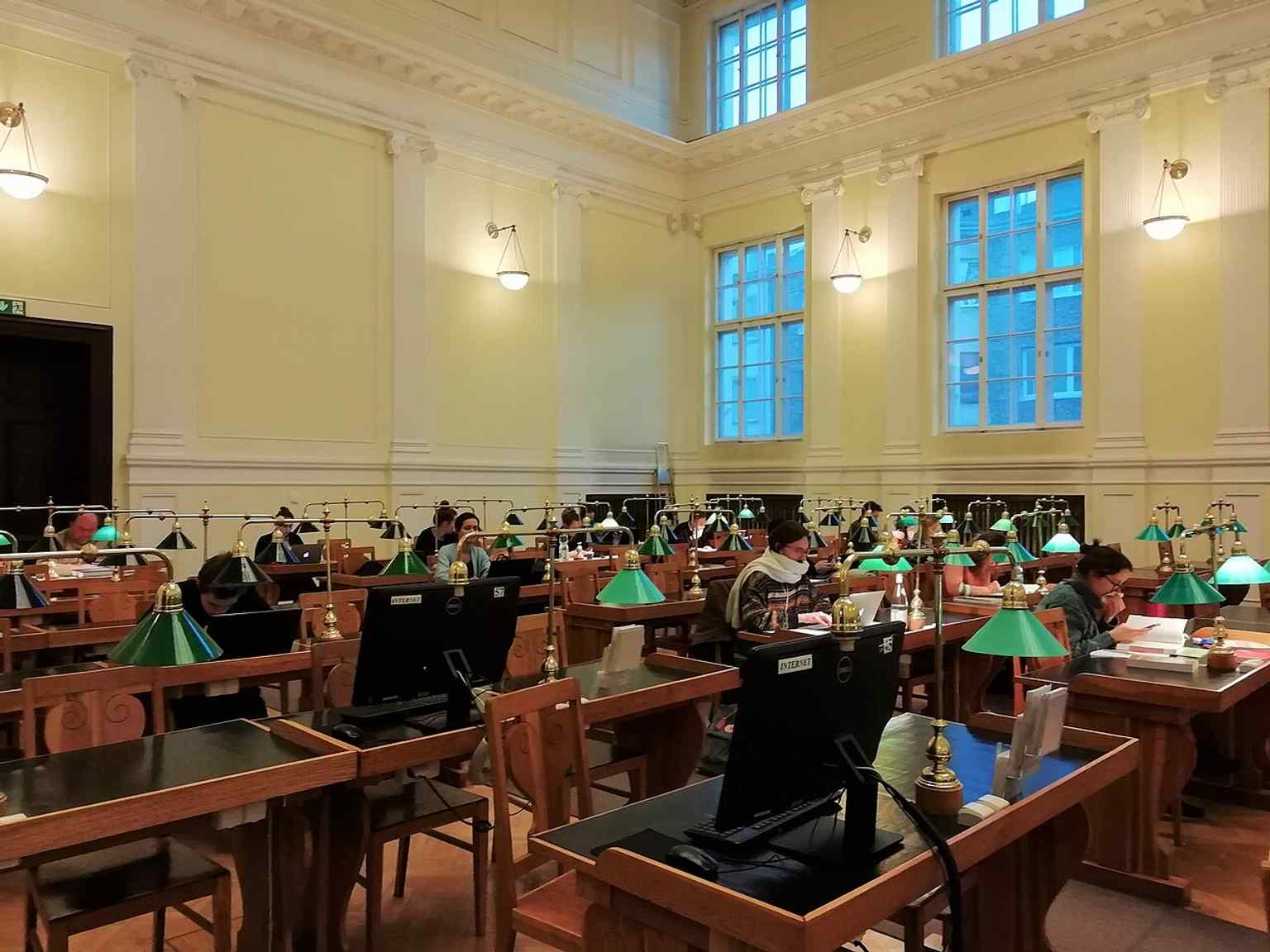
Today the library holds around one and a half million volumes, making it one of the biggest public libraries in Poland. Its shelves grew through donations, legal deposit copies, and stubborn rebuilding after catastrophe. During the war, it lost about eighty-four percent of its holdings. In January nineteen forty-five, retreating German forces set the main building on fire, and returning staff helped save part of it. Librarians with buckets do not usually get statues, which seems unfair.
If Mysia Street once stood for screened and restricted words, this place answers in another register: gather them, preserve them, share them. Cities are defended not only by monuments and protests, but by readers, teachers, and institutions that keep memory within reach.
When you are ready, continue to Mokotowska Street, about a two-minute walk from here. If you want to return inside, the library usually opens from one in the afternoon to eight forty-five in the evening on Monday, from nine in the morning to eight forty-five Tuesday through Friday, ten to four forty-five on Saturday, and ten to one forty-five on Sunday.






.jpg)