AudaTours logoAudaTours

Stop 15 of 16

Mokotowska

headphones 03:47 Buy tour to unlock all 16 tracks
Mokotowska
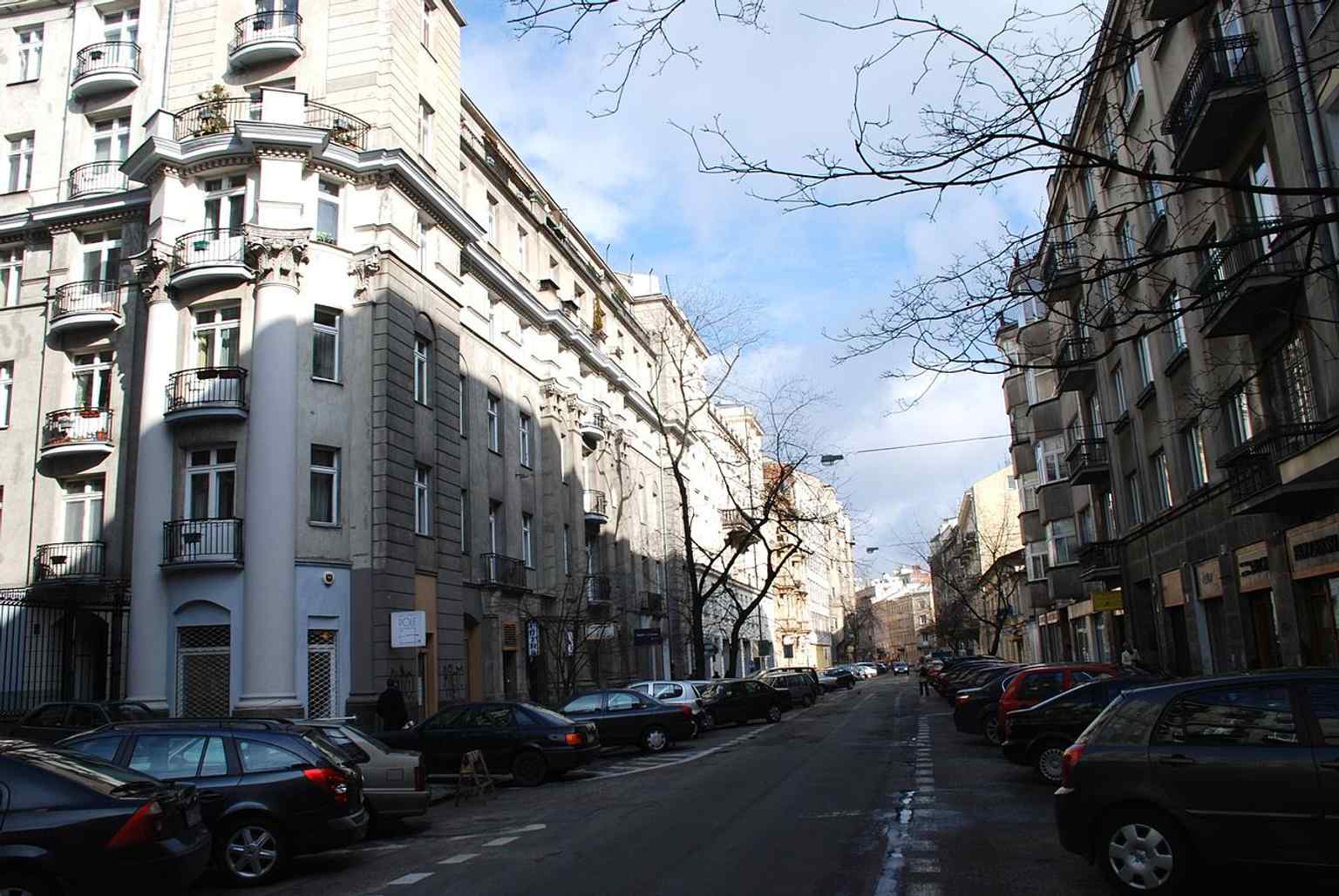
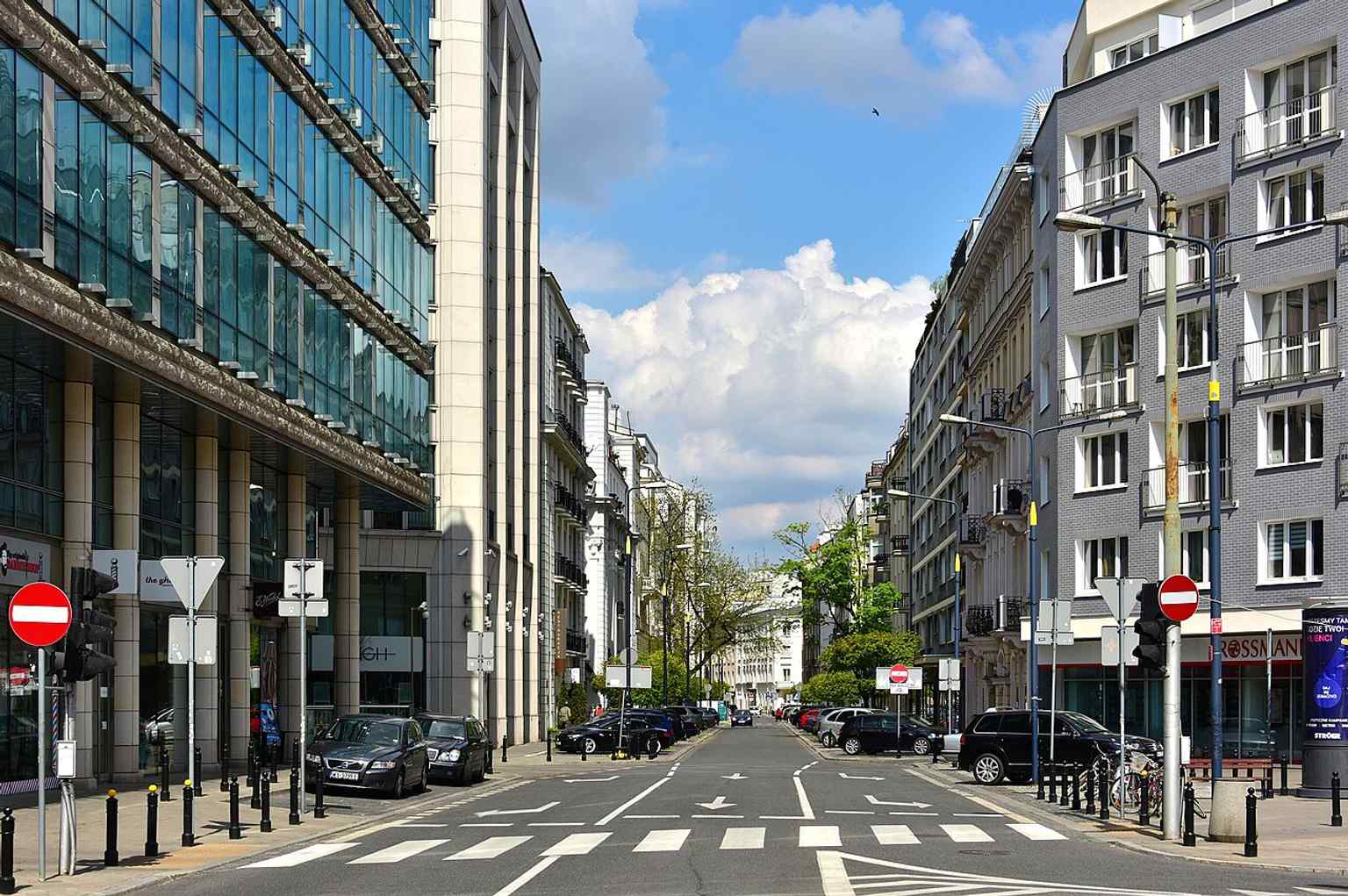
Mokotowska Street in Warsaw
Mokotowska Street in WarsawPhoto: Adrian Grycuk, Wikimedia Commons, CC BY-SA 3.0 PL. Cropped & resized.

This is a long, elegant street corridor lined with stone and stucco tenements, their tall windows and balconies forming a continuous wall of façades, broken here and there by standout corners and ornate entrances.

Mokotowska began with a very practical job: in the fourteenth century it was the road from Warsaw to the village of Mokotowo, part of the route toward Czersk. Then, in seventeen seventy, planners folded it into the Stanisław Axis, straightened it as far as Polna, and planted trees. Warsaw took a country road, gave it geometry, and called that civilization.

At the start of the nineteenth century, this was still loose and semi-rural: wooden houses, orchards, vegetable gardens, even fish ponds. Building stopped around Piękna. Then the city tightened its grip. In the later nineteenth century, rental tenements marched in one after another, and around the turn of the century many arrived in Art Nouveau dress, with the kind of façades that quietly demand better posture.

The street also learned to write. At number forty-eight, in the low one-story house from eighteen sixty, Józef Ignacy Kraszewski lived and sent out his “Letters from Mokotowska Street.” Later, memorial plaques marked both him and Tytus Chałubiński on the façade. So this address became more than an address; it became a point from which Warsaw described itself... and occasionally argued with itself.

Other buildings kept adding chapters. Number twelve, completed in nineteen ten, became the tallest residential building in Warsaw, then served the Methodist community. If you want a look at that former skyscraper of domestic ambition, check the app image. Number thirteen turned from a parish hall into the Współczesny Theatre in nineteen forty-nine, a stage for bold postwar productions. Number twenty-five, the Sugar Producers’ Palace, held not just sugar executives but paintings by Siemiradzki, Brandt, Chełmoński, and even a work from the school of Guido Reni. Apparently even trade associations wanted excellent taste.
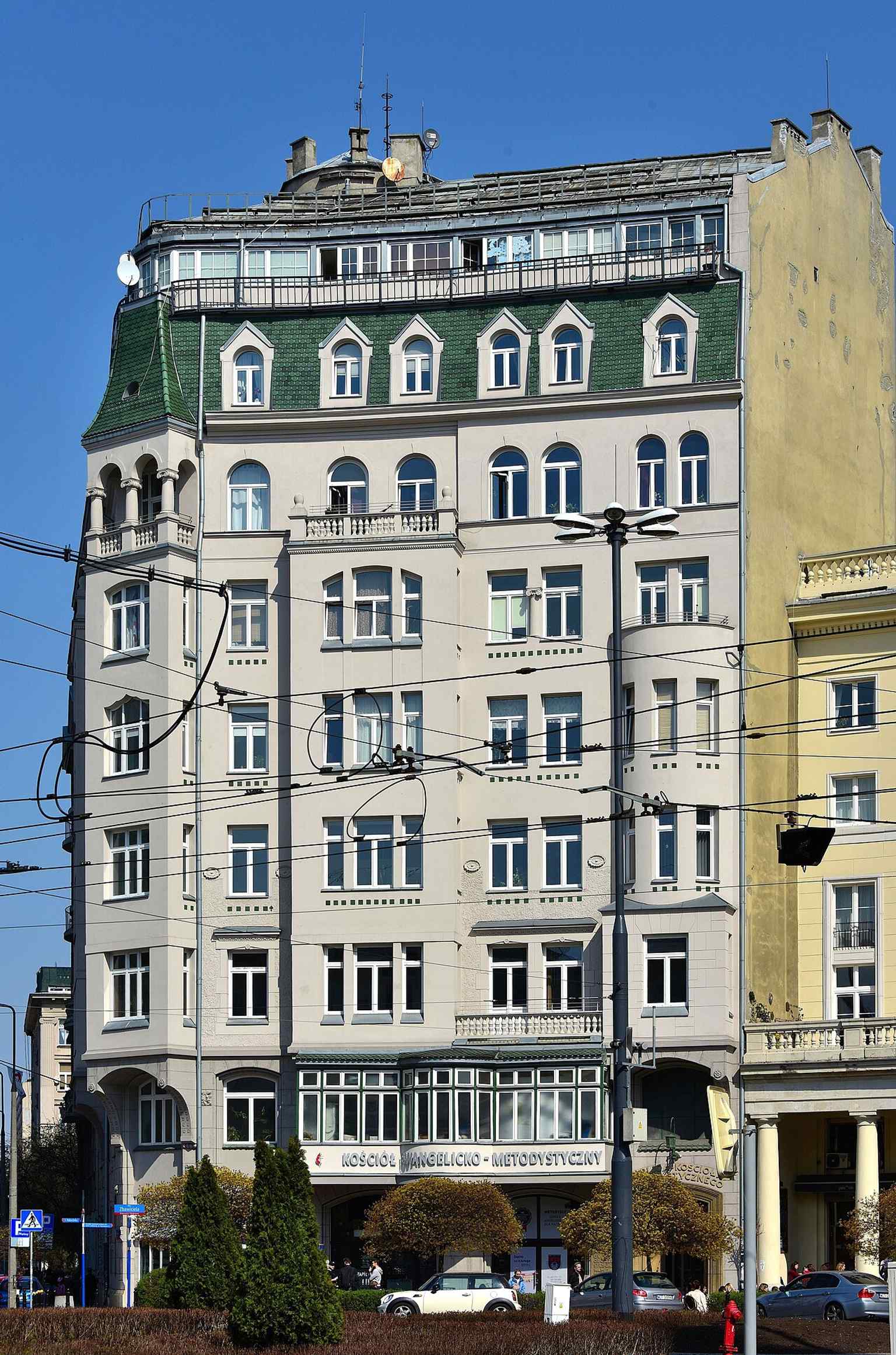
Kamienica at Mokotowska 12, once the tallest residential building in Warsaw, later became a center of the Methodist community.
Kamienica at Mokotowska 12, once the tallest residential building in Warsaw, later became a center of the Methodist community.Photo: Adrian Grycuk, Wikimedia Commons, CC BY-SA 3.0 pl. Cropped & resized.

History kept changing the script. In November nineteen eighteen, Józef Piłsudski stayed at number fifty just after returning from Magdeburg. In nineteen thirty-five, planners imagined extending Mokotowska into a grand representative district; war canceled the performance before the set was built. During the Warsaw Uprising, the Ruczaj Battalion defended this area. And yet, after destruction, the street kept much of its aristocratic bearing.

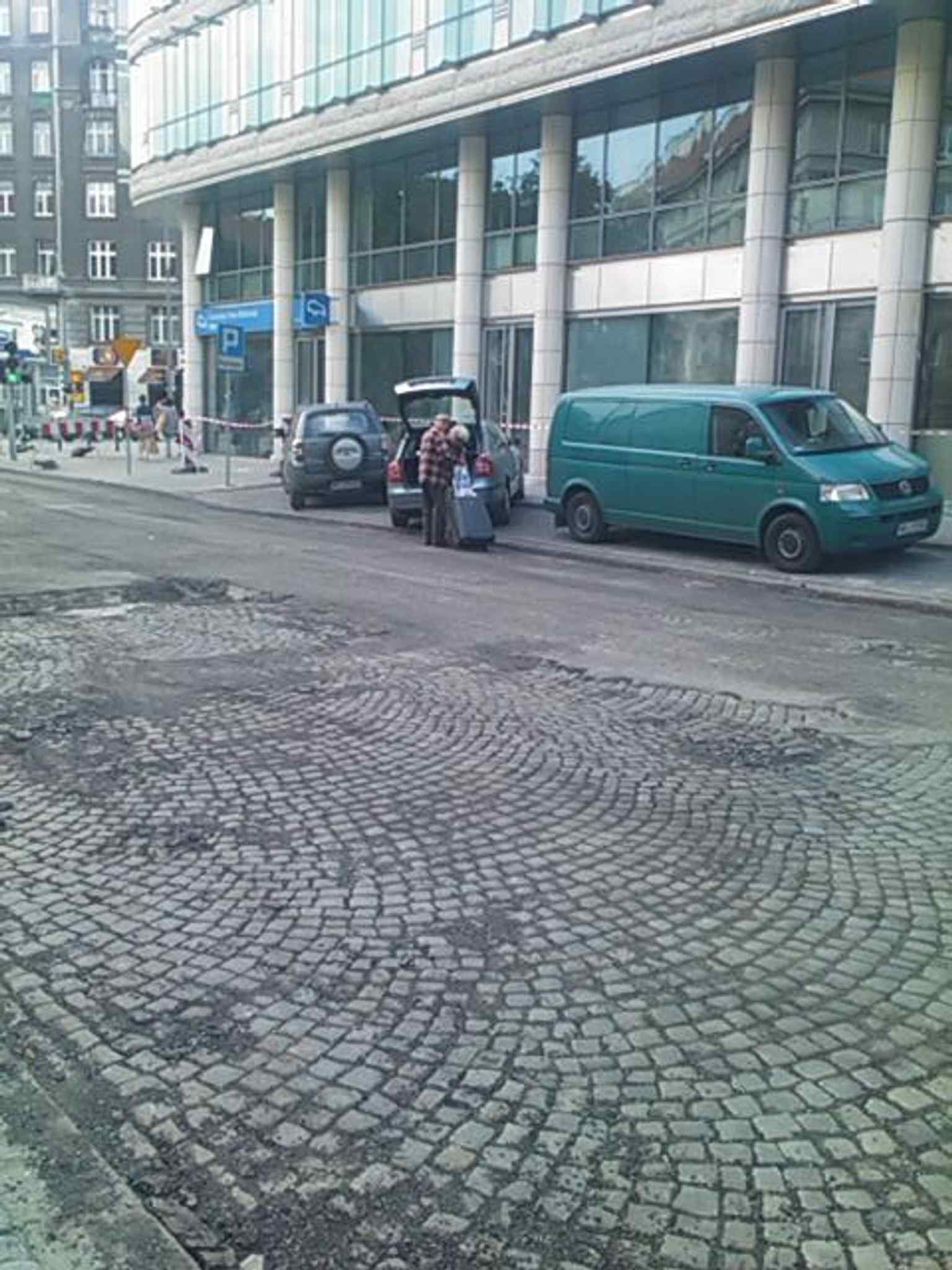
Even the surface has memory. During roadworks in two thousand seven and two thousand ten, crews uncovered prewar basalt blocks long hidden under asphalt; some returned to driveways and parking bays. Have a quick look at the before-and-after image for the Mokotowska and Piękna junction... it shows just how thoroughly the city rewrote the scene without erasing the line of the street.

Now Mokotowska is famous for boutiques and ateliers, but the older street never really left. As you look along the façades, see if you can catch one view where elegance, literature, war, trade, and ordinary errands all occupy the same frame.

We began by looking up at a single façade... and we end by realizing the whole district has been talking the entire time.
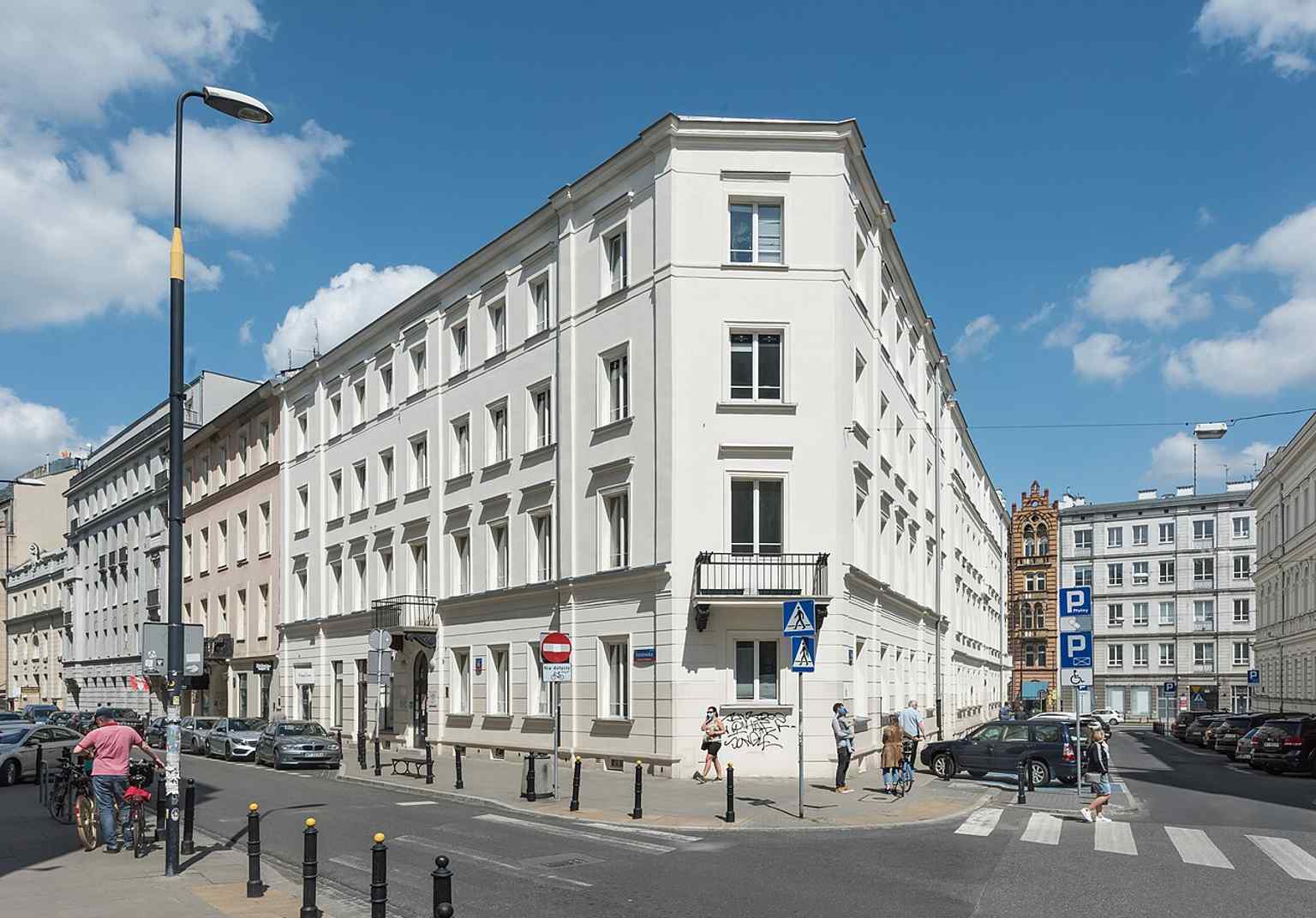
The corner of Mokotowska and Wilcza, a key point on the street where the prewar and modern city meet.
The corner of Mokotowska and Wilcza, a key point on the street where the prewar and modern city meet.Photo: Adrian Grycuk, Wikimedia Commons, CC BY-SA 3.0 pl. Cropped & resized.
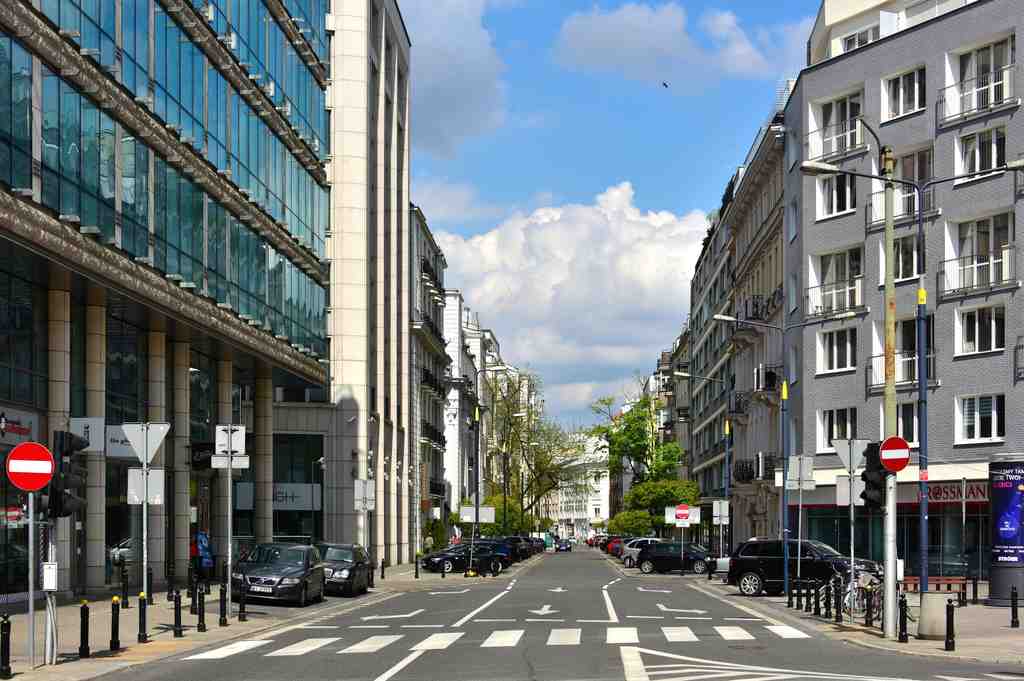
A broad view along Mokotowska near Piękna, matching the street’s elegant central section and restored urban character.
A broad view along Mokotowska near Piękna, matching the street’s elegant central section and restored urban character.Photo: Adrian Grycuk, Wikimedia Commons, CC BY-SA 3.0 pl. Cropped & resized.
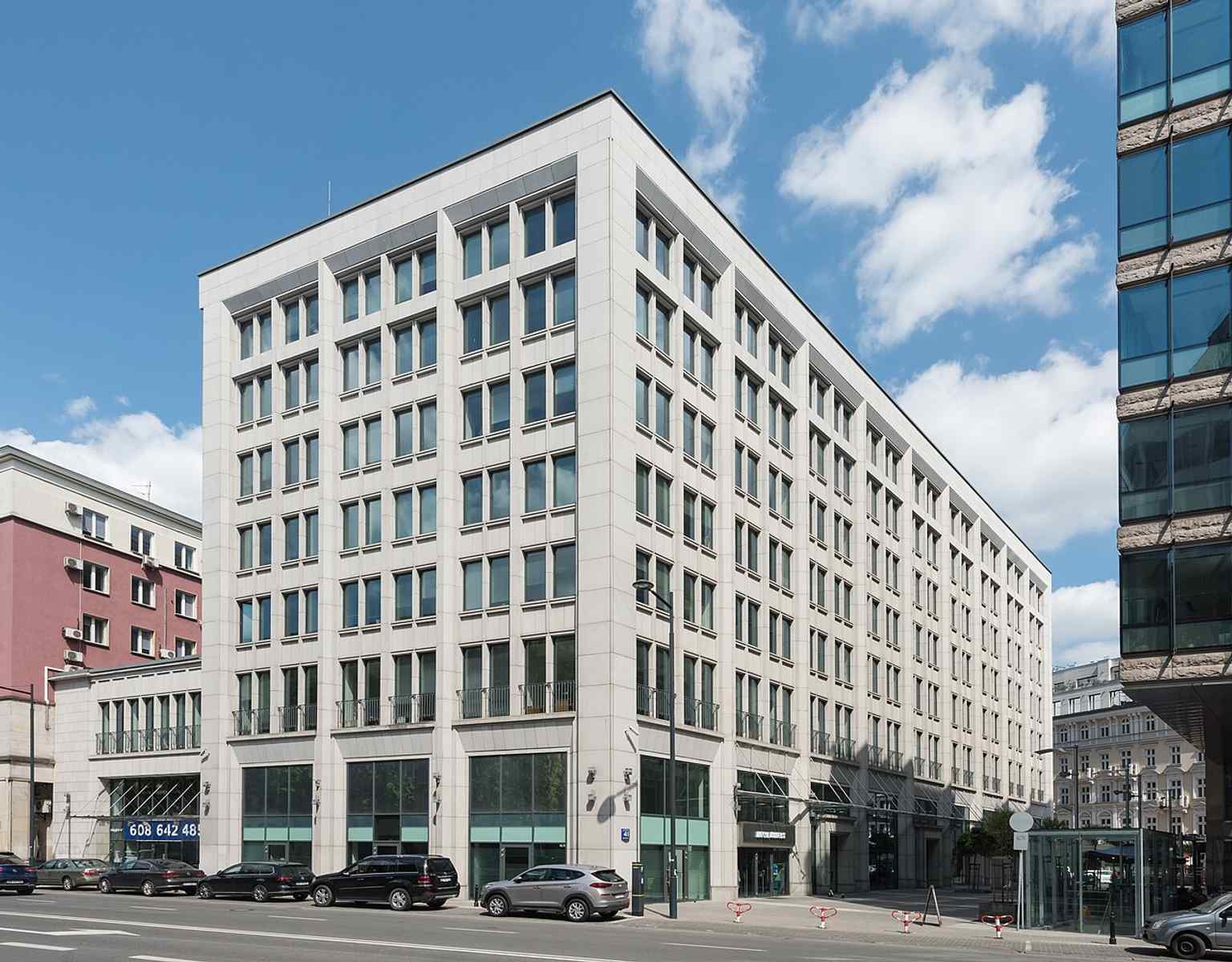
Mokotowska 49, a rebuilt office building that reflects the street’s postwar layer of modern commercial architecture.
Mokotowska 49, a rebuilt office building that reflects the street’s postwar layer of modern commercial architecture.Photo: Adrian Grycuk, Wikimedia Commons, CC BY-SA 3.0 pl. Cropped & resized.
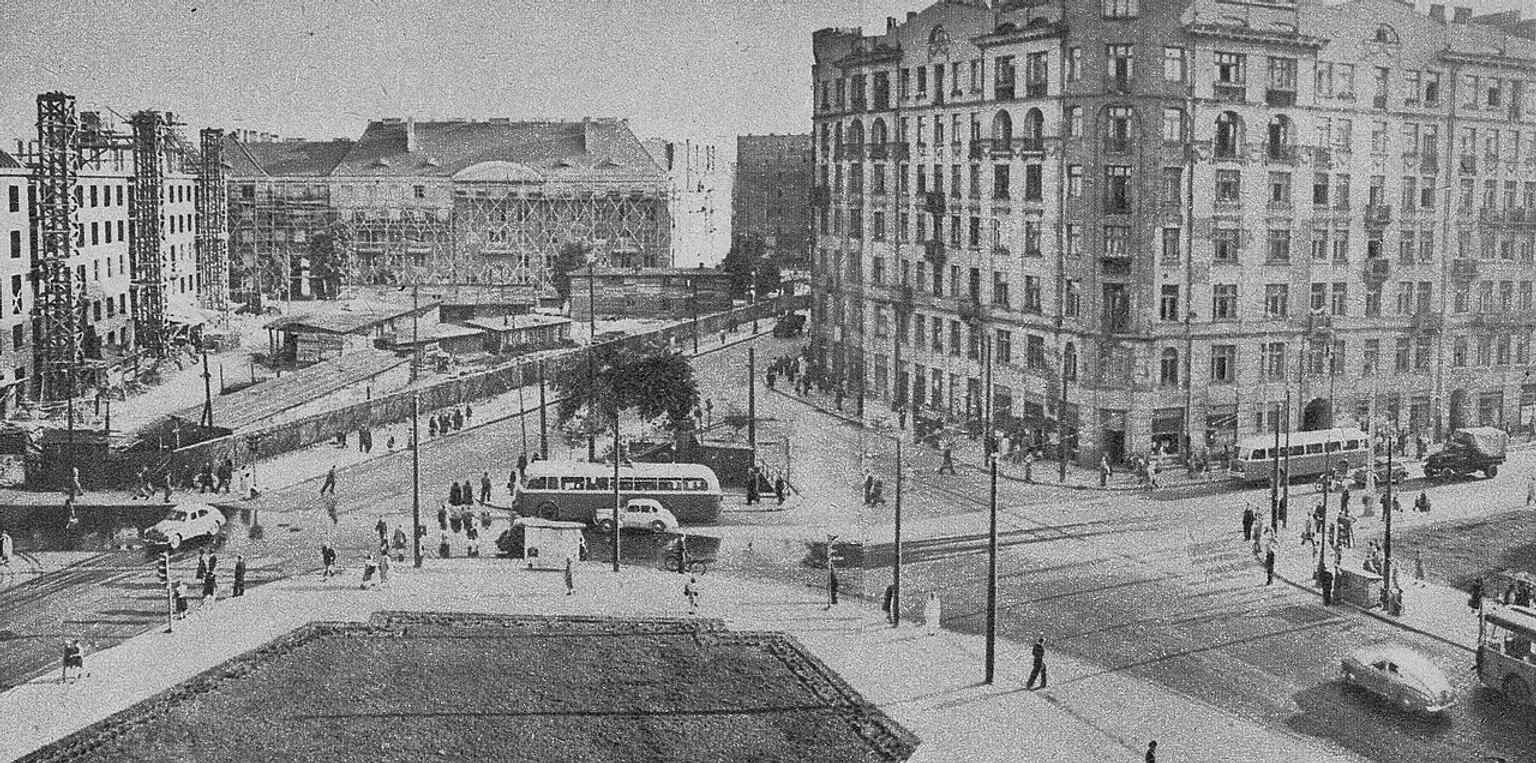
The Mokotowska–Krucza–Piękna junction in 1954, documenting the postwar streetscape after the destruction of World War II.
The Mokotowska–Krucza–Piękna junction in 1954, documenting the postwar streetscape after the destruction of World War II.Photo: nieznany/unkwnon, Wikimedia Commons, Public domain. Cropped & resized.
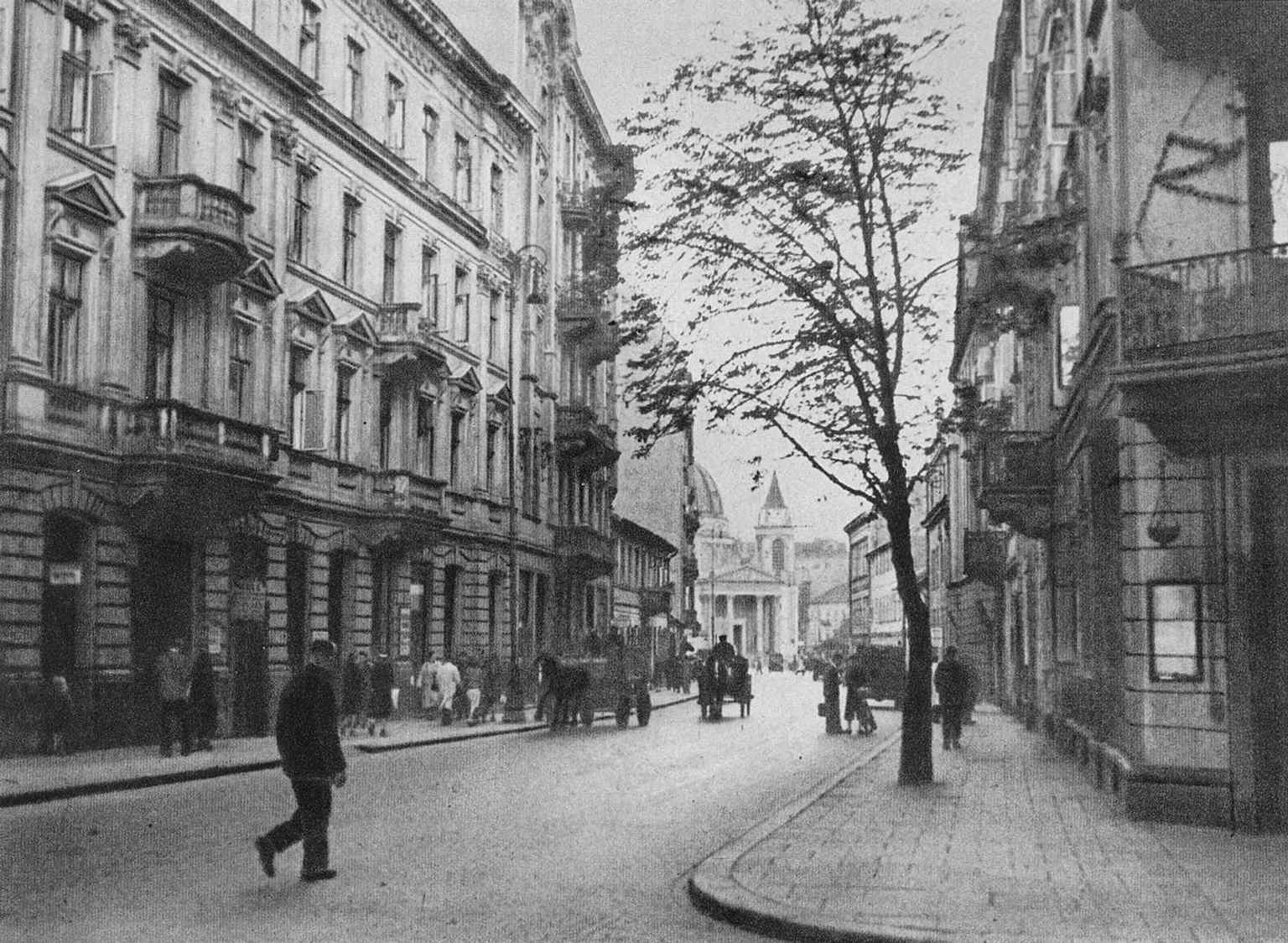
Pre-1939 Mokotowska at Wilcza, showing the street’s elegant prewar frontage near Plac Trzech Krzyży.
Pre-1939 Mokotowska at Wilcza, showing the street’s elegant prewar frontage near Plac Trzech Krzyży.Photo: nieznany/unknown, Wikimedia Commons, Public domain. Cropped & resized.
During the 2010 roadworks, the prewar basalt paving was uncovered and partially reused, revealing the street’s hidden historic surface.
During the 2010 roadworks, the prewar basalt paving was uncovered and partially reused, revealing the street’s hidden historic surface.Photo: Chinique, Wikimedia Commons, CC BY-SA 3.0. Cropped & resized.
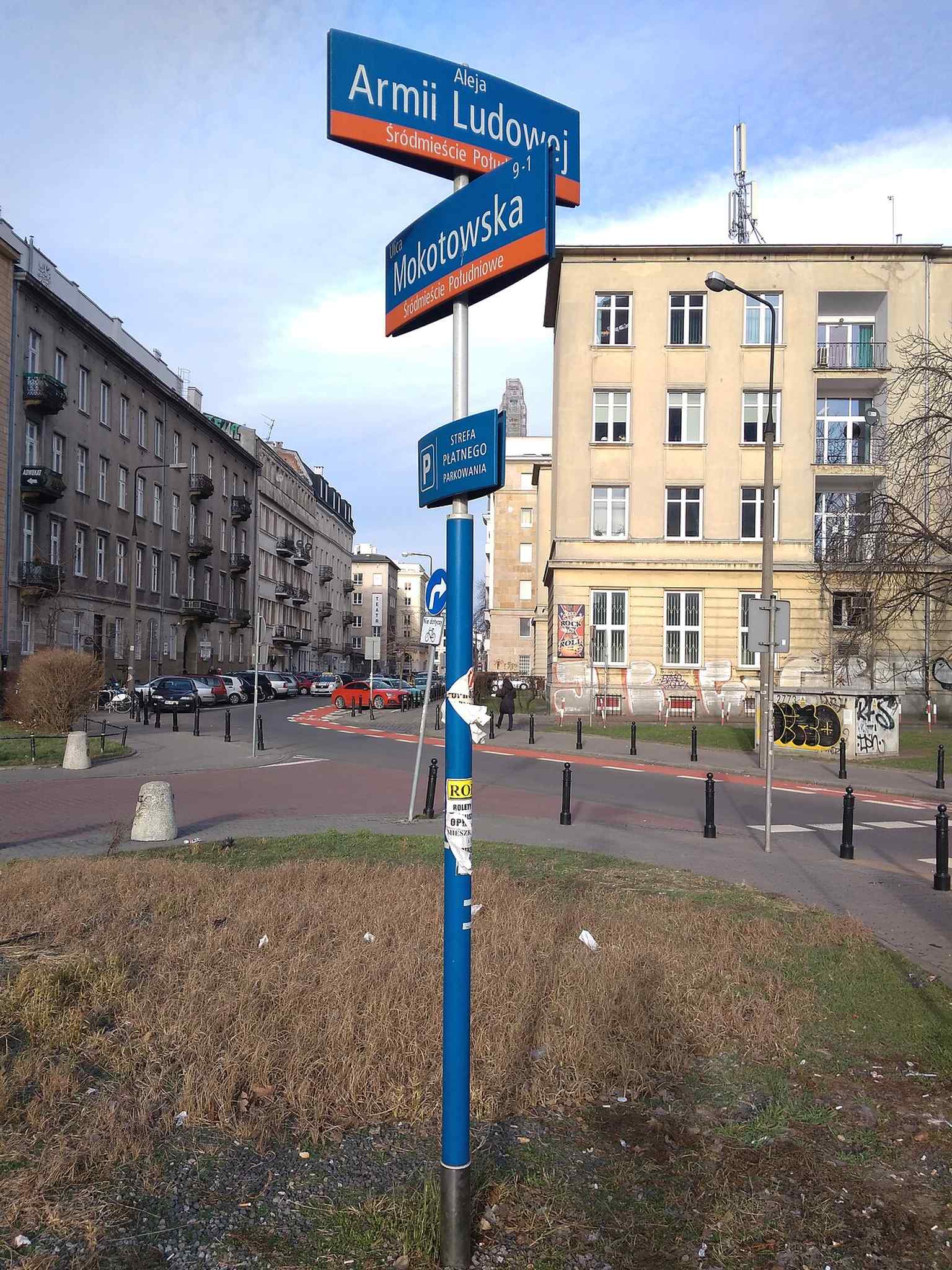
Old street-name plaques at Mokotowska and Armii Ludowej, a small but telling trace of Warsaw’s changing urban history.
Old street-name plaques at Mokotowska and Armii Ludowej, a small but telling trace of Warsaw’s changing urban history.Photo: Cybularny, Wikimedia Commons, CC0. Cropped & resized.
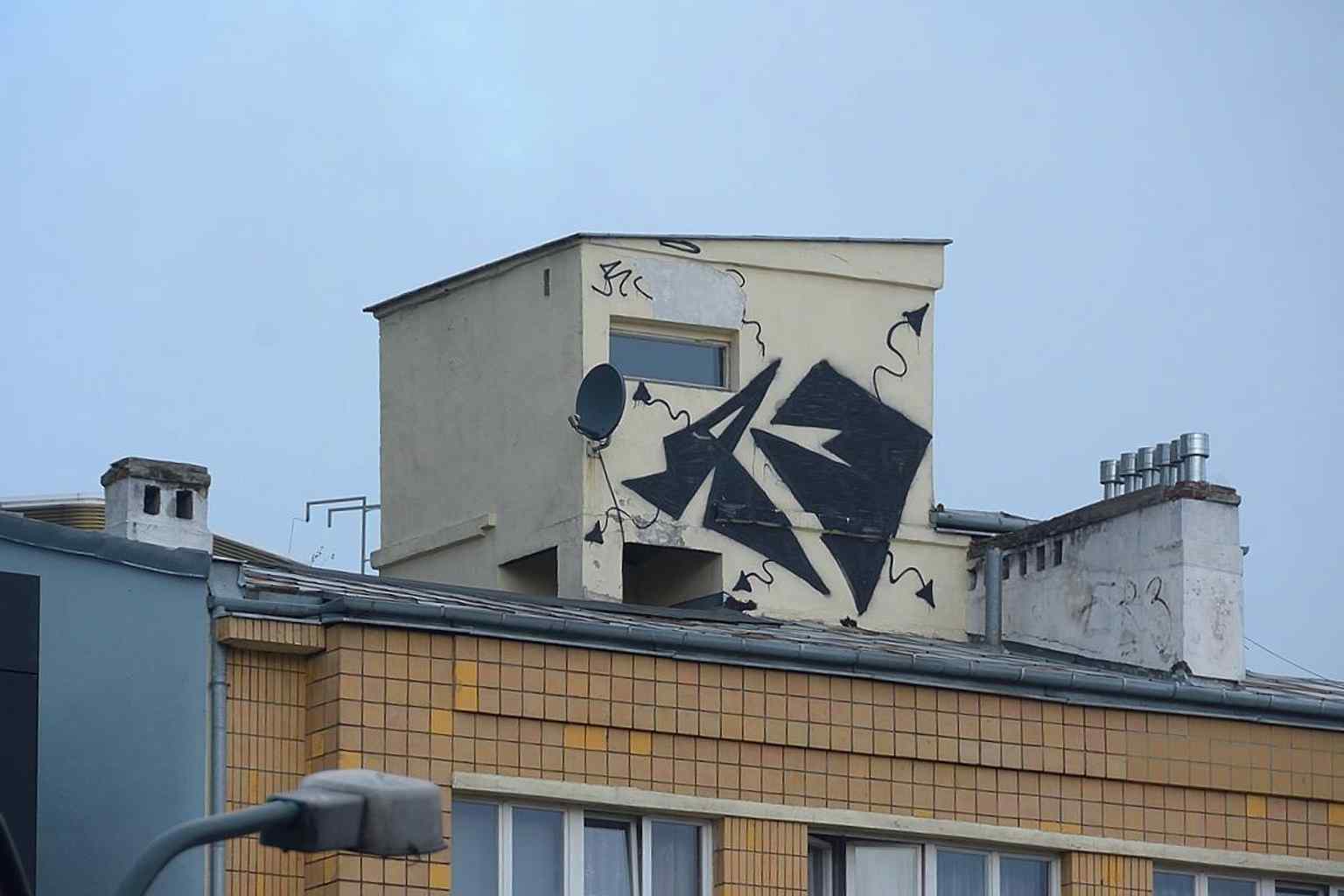
A civil-defense observation tower mounted on a Mokotowska tenement, an unusual reminder of the city’s Cold War layer.
A civil-defense observation tower mounted on a Mokotowska tenement, an unusual reminder of the city’s Cold War layer.Photo: Łukasz Karolewski, Wikimedia Commons, CC BY-SA 4.0. Cropped & resized.
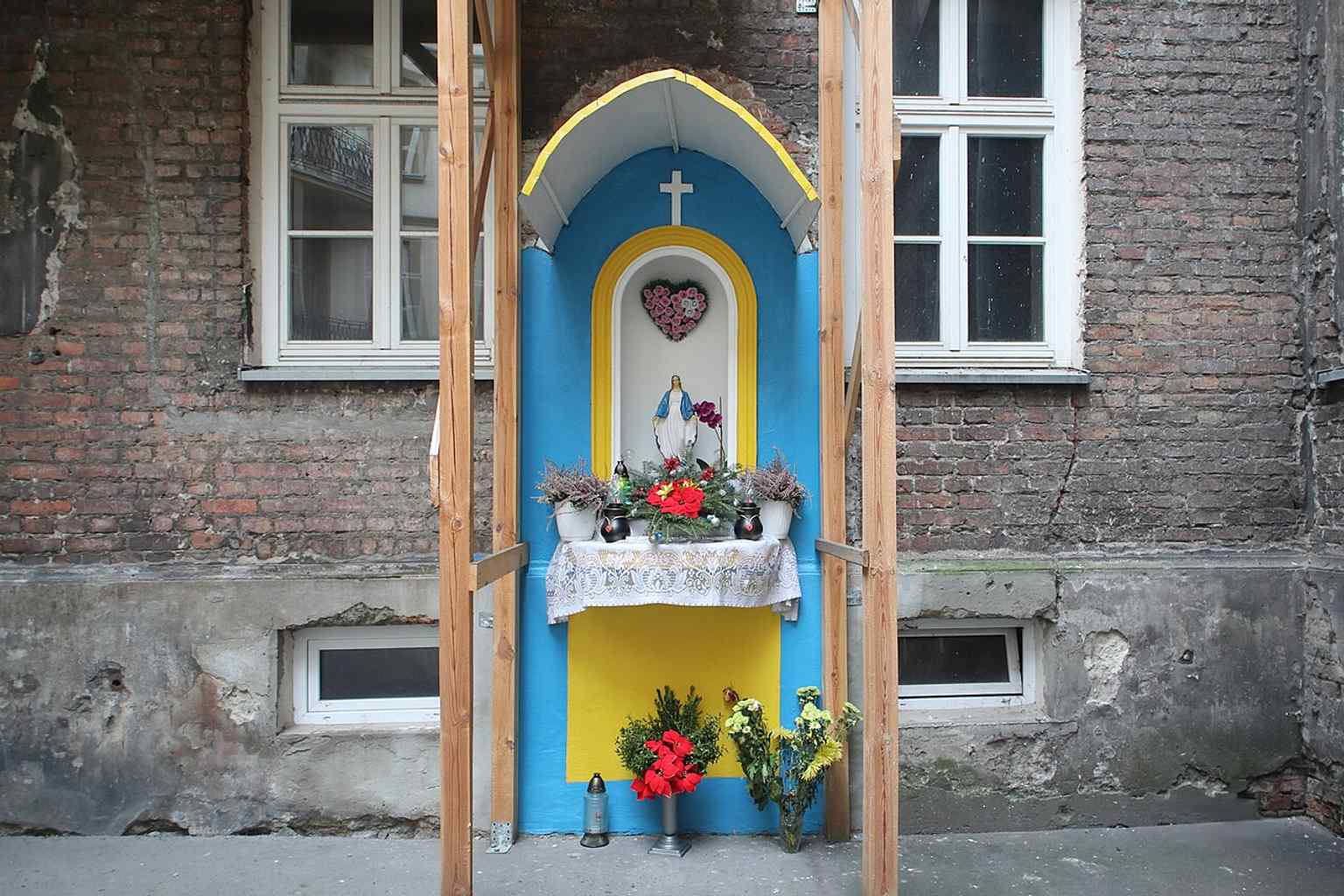
A Marian shrine in the courtyard of Mokotowska 65, showing the quiet everyday traditions that persist behind the façades.
A Marian shrine in the courtyard of Mokotowska 65, showing the quiet everyday traditions that persist behind the façades.Photo: Cybularny, Wikimedia Commons, CC0. Cropped & resized.
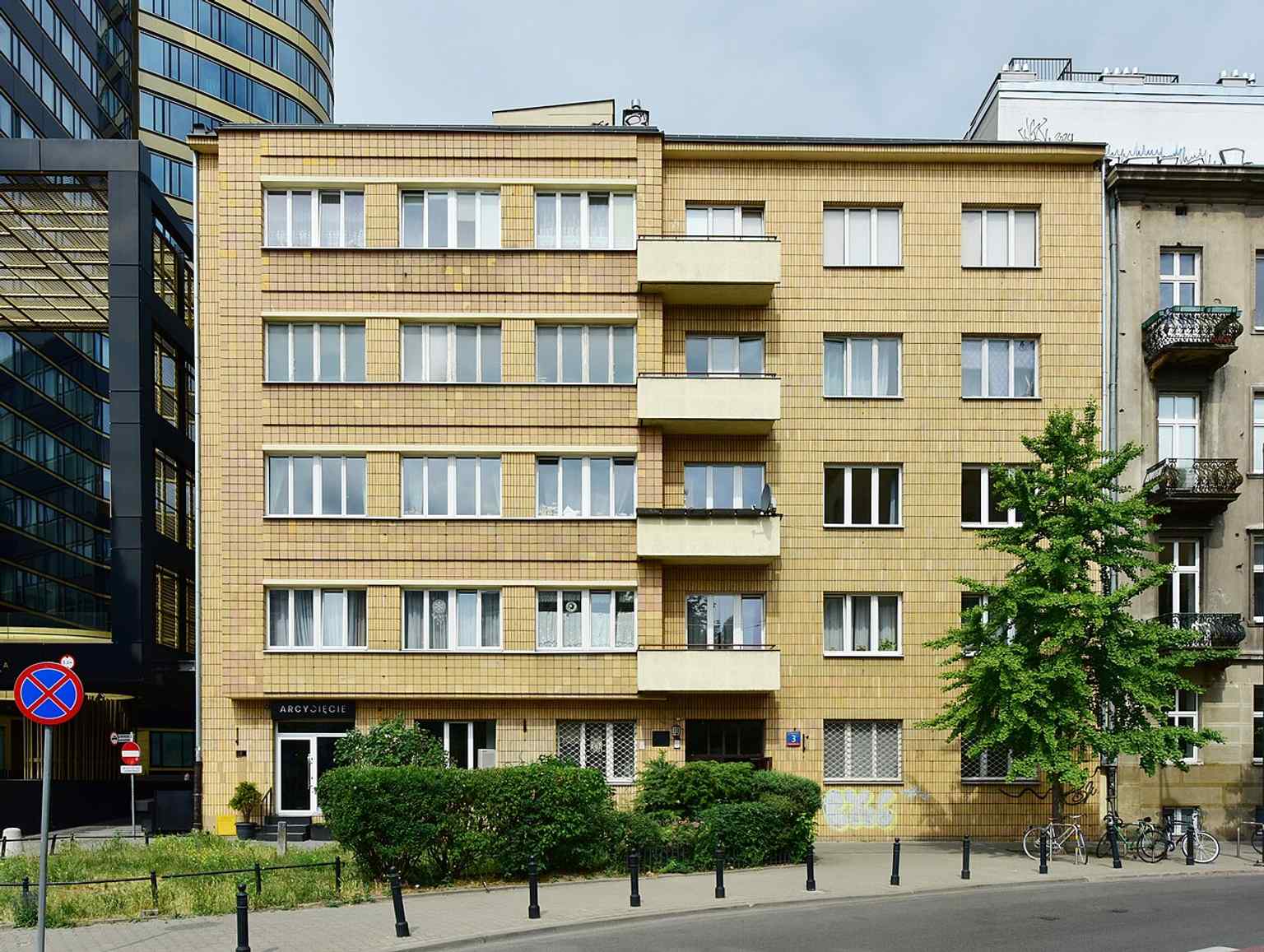
Mokotowska 3, site of an early industrial building once linked to Władysław Gostyński’s ironworks.
Mokotowska 3, site of an early industrial building once linked to Władysław Gostyński’s ironworks.Photo: Adrian Grycuk, Wikimedia Commons, CC BY 3.0 pl. Cropped & resized.
Mokotowska seen from Piękna, a modern streetscape that still follows the historic route toward the former Mokotowo village.
Mokotowska seen from Piękna, a modern streetscape that still follows the historic route toward the former Mokotowo village.Photo: No machine-readable author provided. Zuska assumed (based on copyright claims)., Wikimedia Commons, CC BY-SA 3.0. Cropped & resized.
arrow_back Back to Warsaw Audio Tour: Stories of Squares, Streets, and Silent Symbols

AudaTours: Audio Tours

Entertaining, budget-friendly, self-guided walking tours

Try the app arrow_forward

Loved by travelers worldwide

format_quote This tour was such a great way to see the city. The stories were interesting without feeling too scripted, and I loved being able to explore at my own pace.
Jess
Jess
starstarstarstarstar
Tbilisi Tour arrow_forward
format_quote This was a solid way to get to know Brighton without feeling like a tourist. The narration had depth and context, but didn't overdo it.
Christoph
Christoph
starstarstarstarstar
Brighton Tour arrow_forward
format_quote Started this tour with a croissant in one hand and zero expectations. The app just vibes with you, no pressure, just you, your headphones, and some cool stories.
John
John
starstarstarstarstar
Marseille Tour arrow_forward

Unlimited Audio Tours

Unlock access to EVERY tour worldwide

0 tours·0 cities·0 countries
all_inclusive Explore Unlimited