
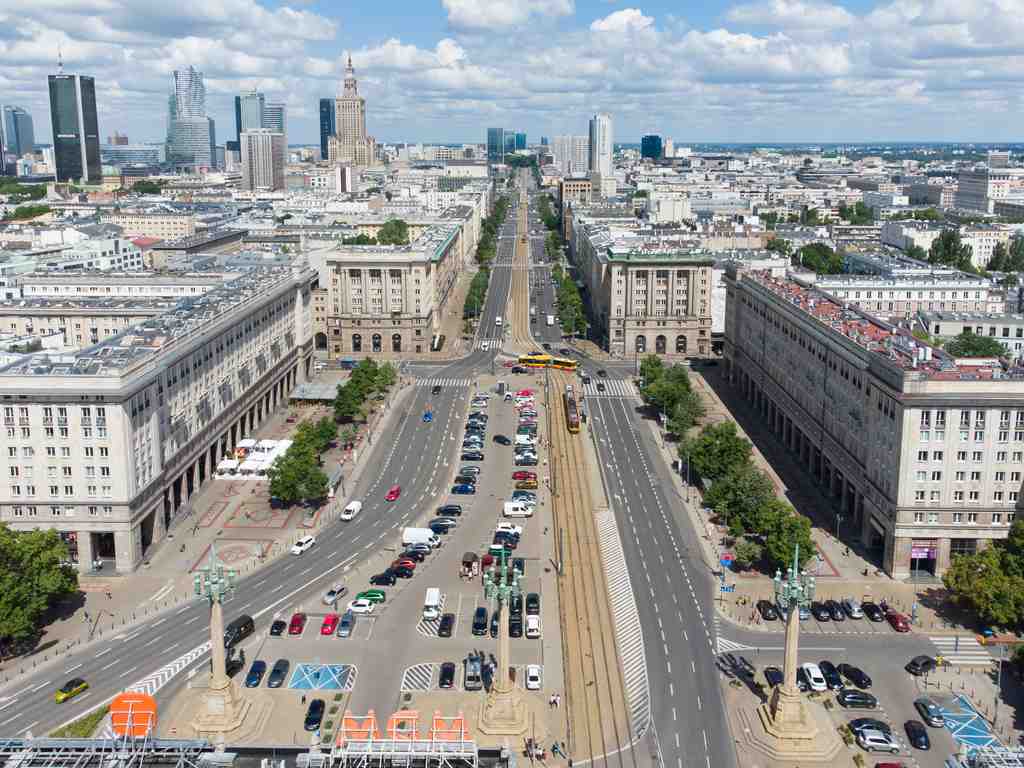
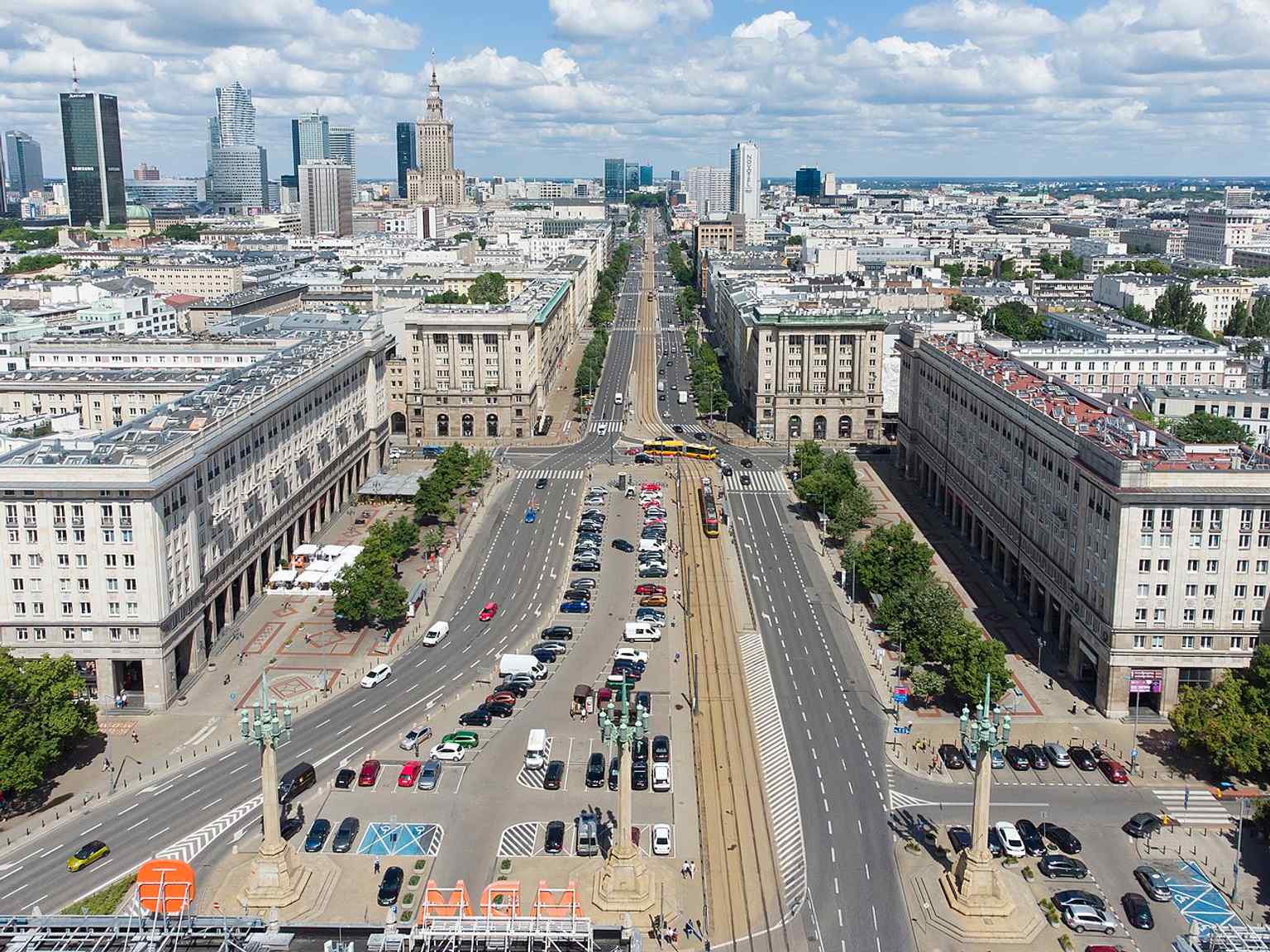
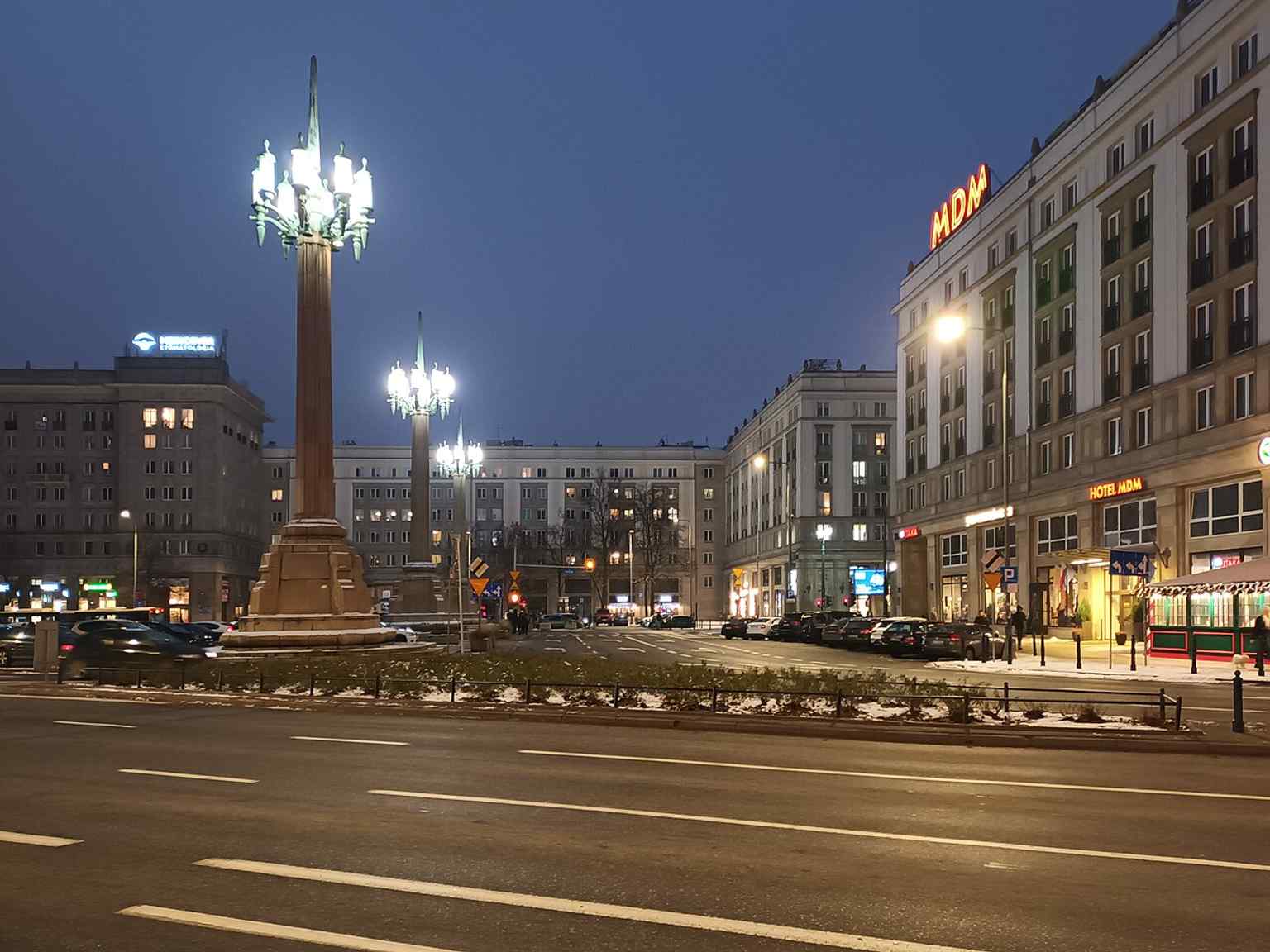
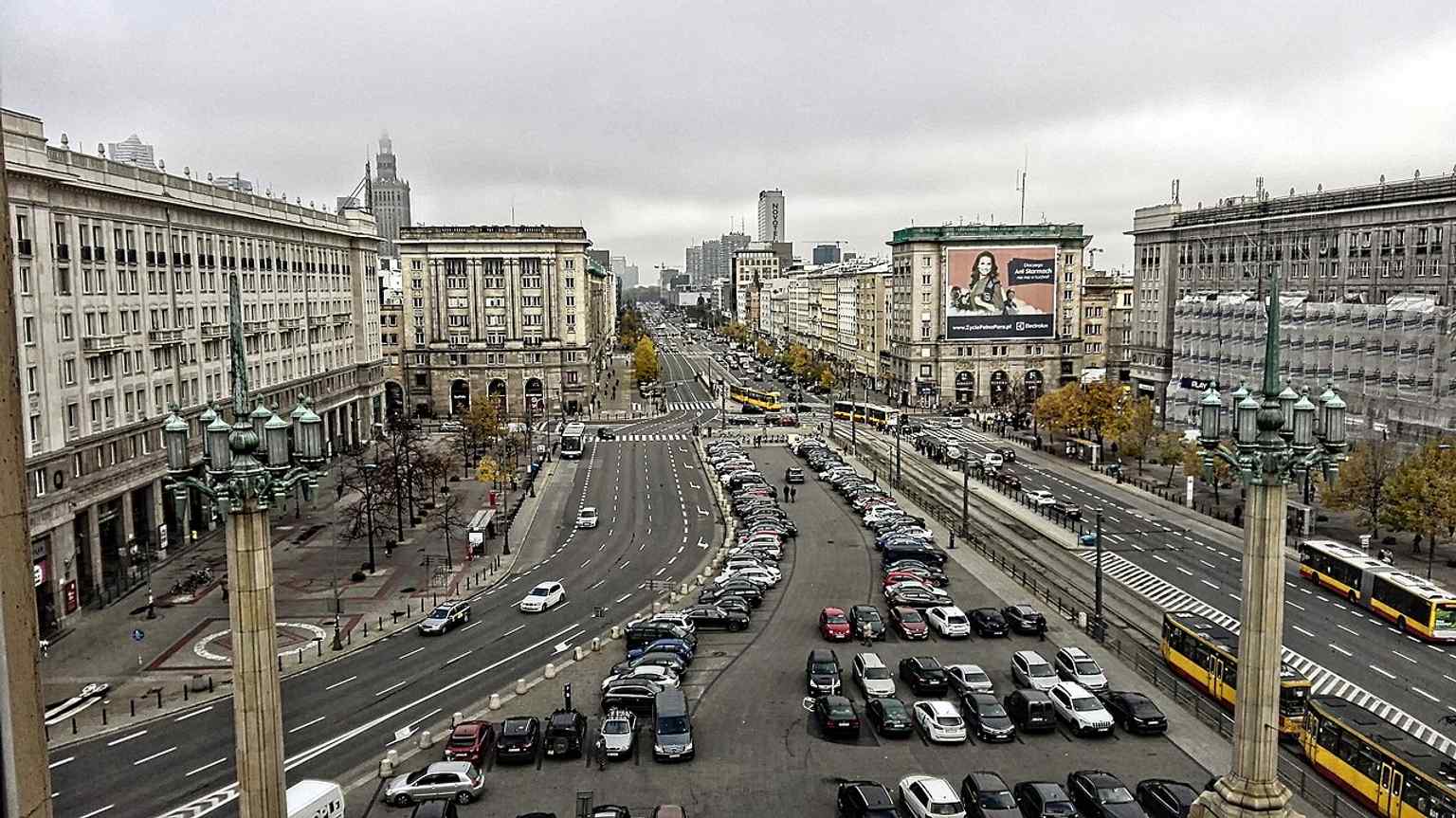
Look for the broad square framed by pale granite arcades and tall, blocky apartment façades, with Hotel M-D-M closing the southern end like a carefully placed stone stopper.
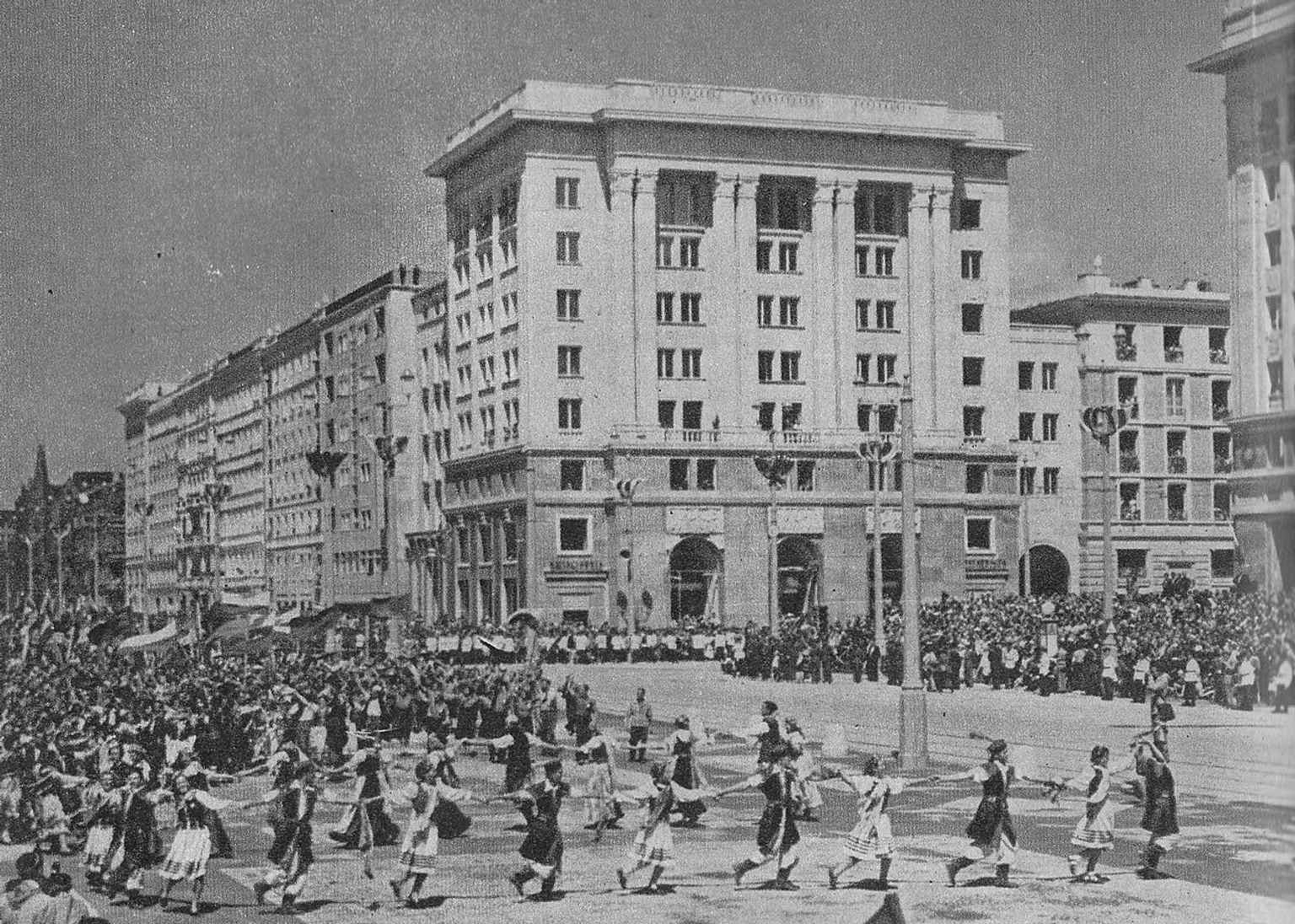
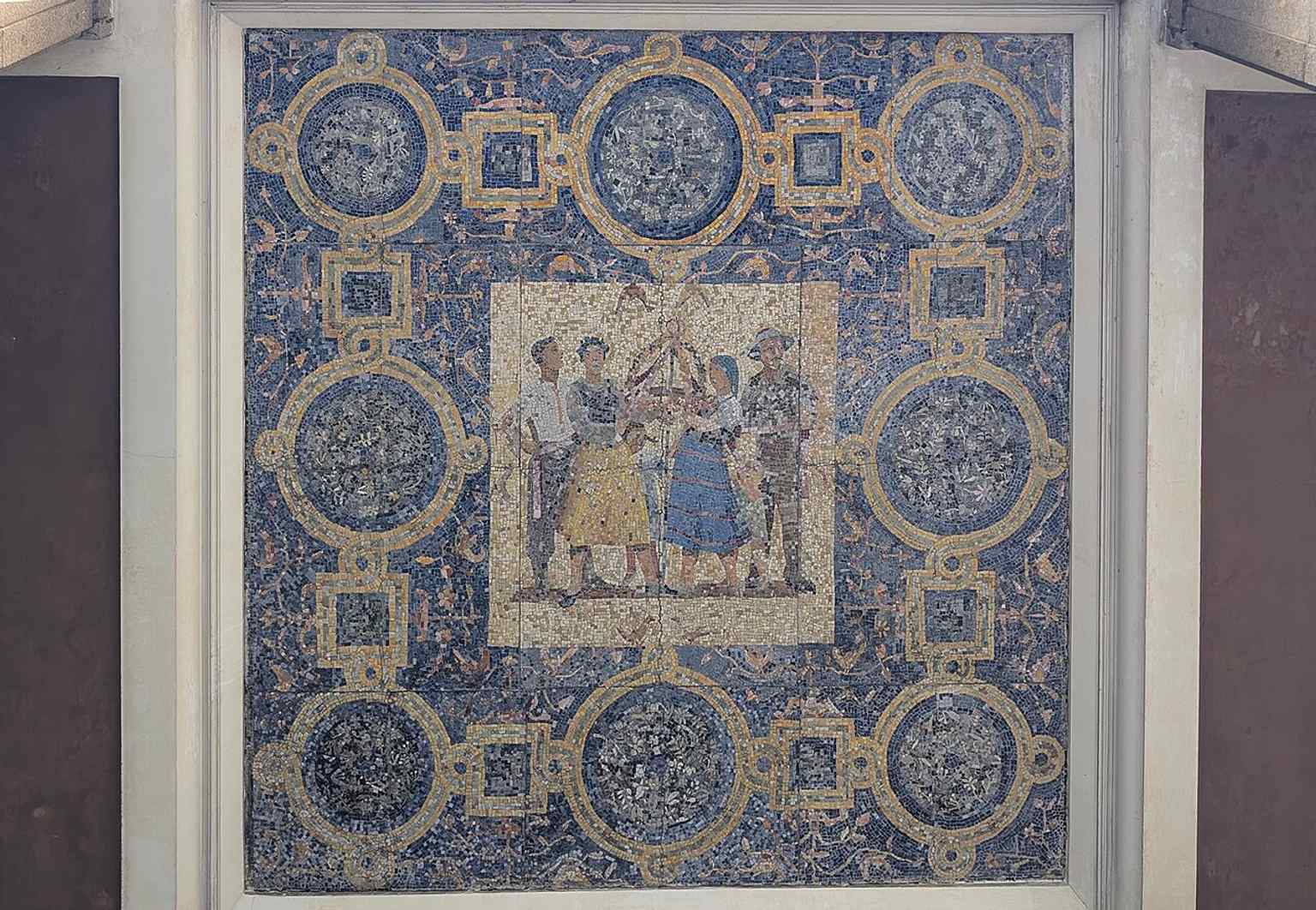
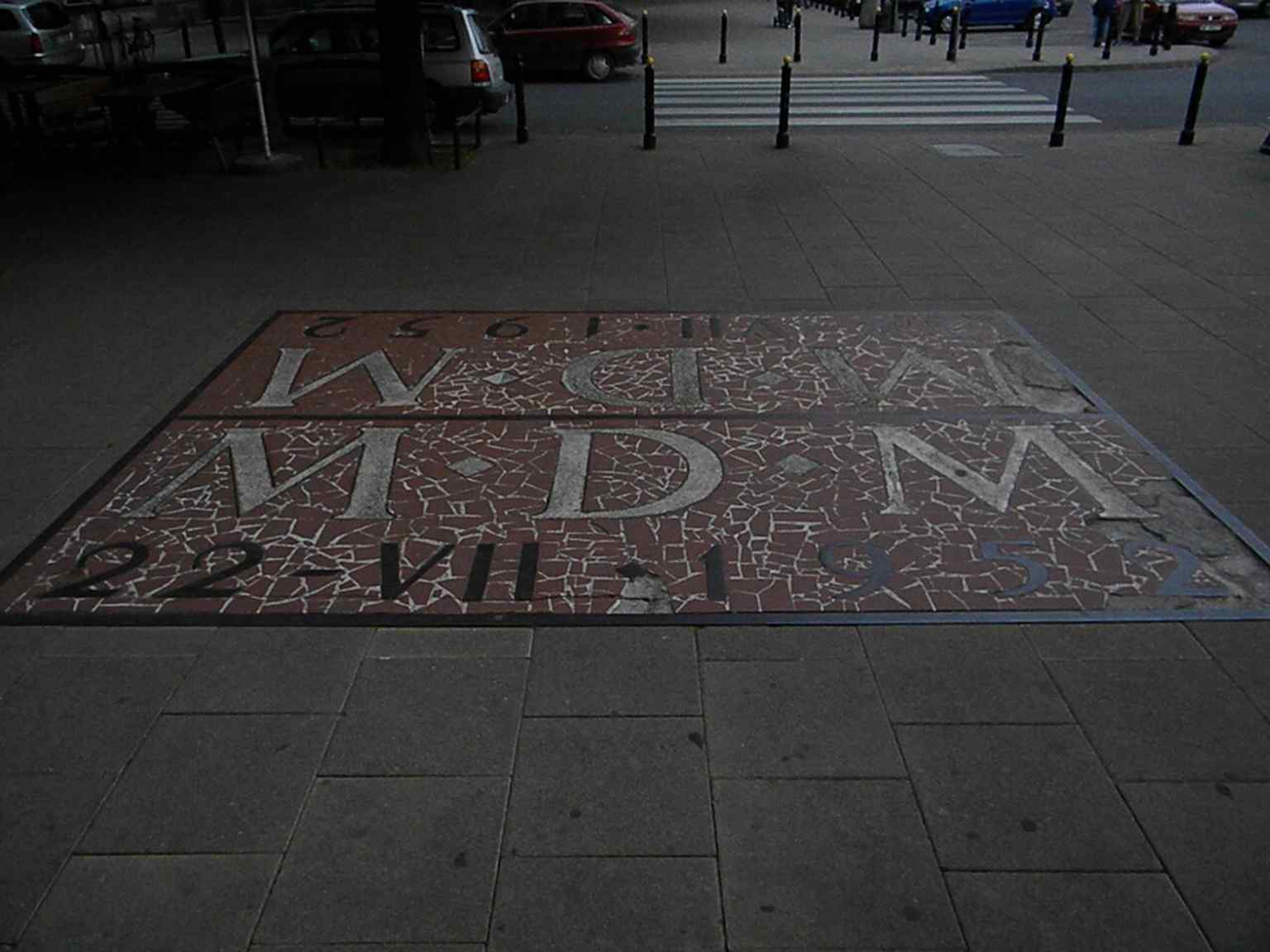
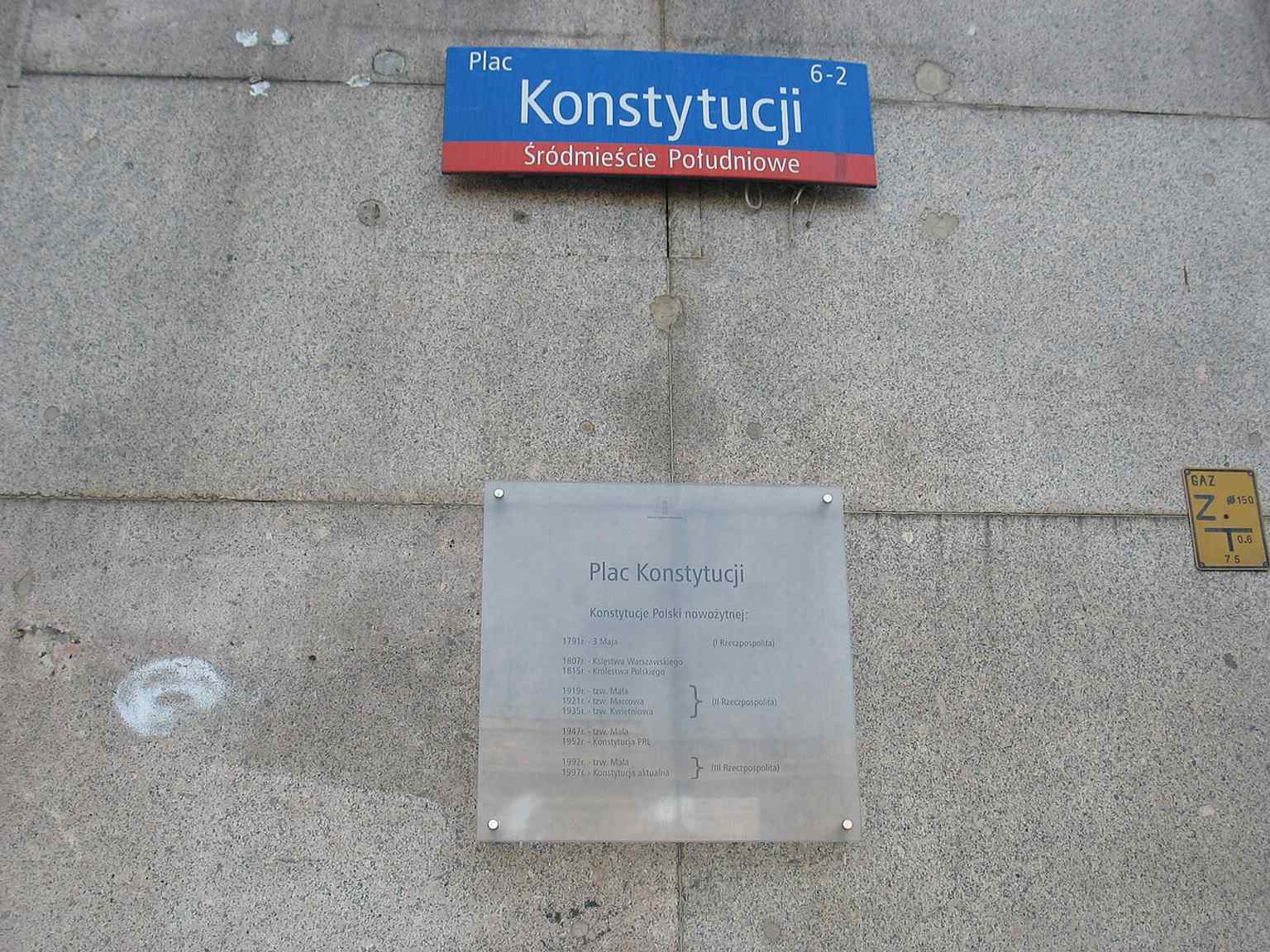
This is Constitution Square, the centerpiece of M-D-M, the Marszałkowska Residential District, opened on the twenty-second of July, nineteen fifty-two, the same day the communist state announced its new constitution. So yes, the square and the regime shared a birthday. Subtlety was not invited.
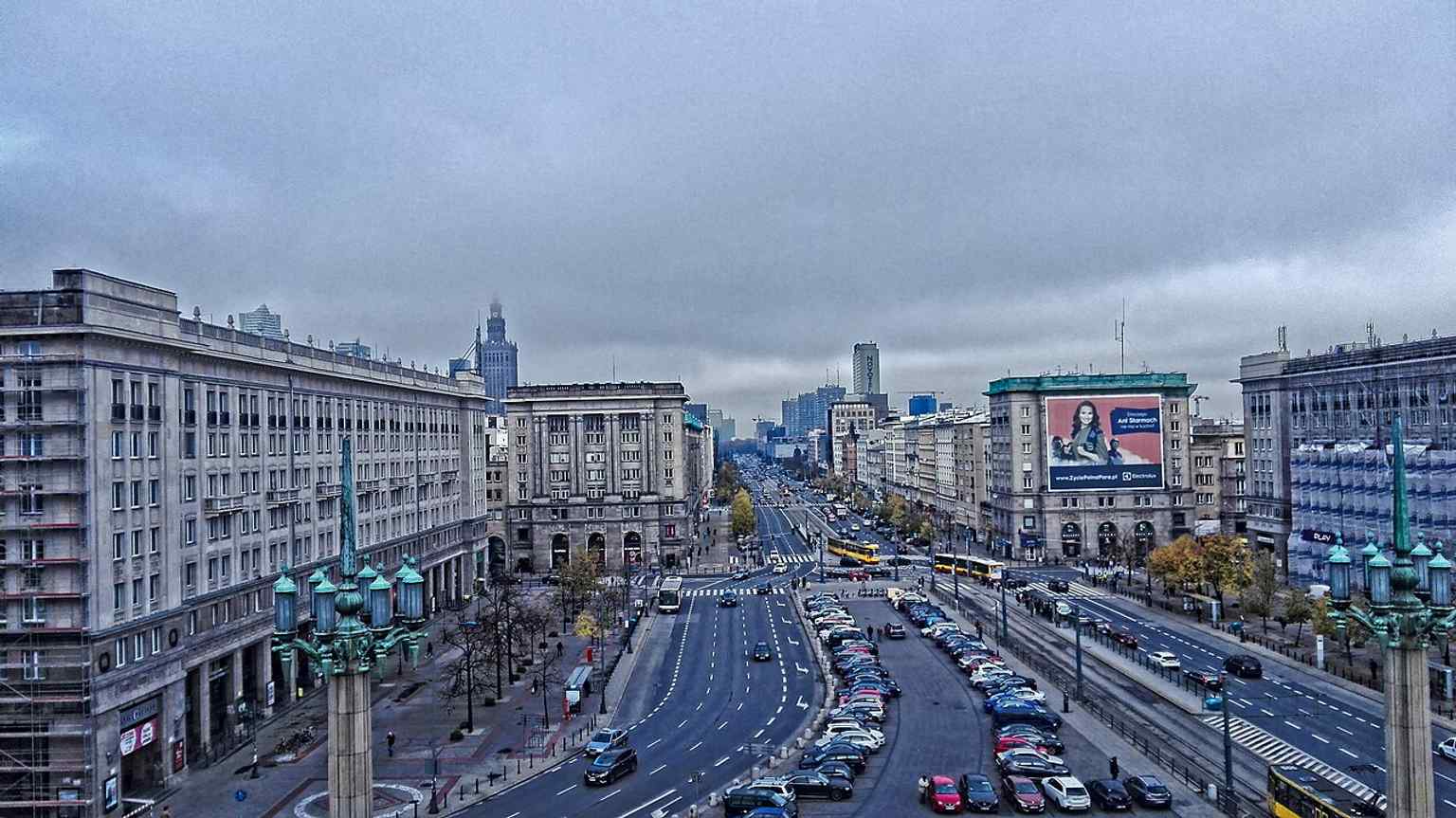
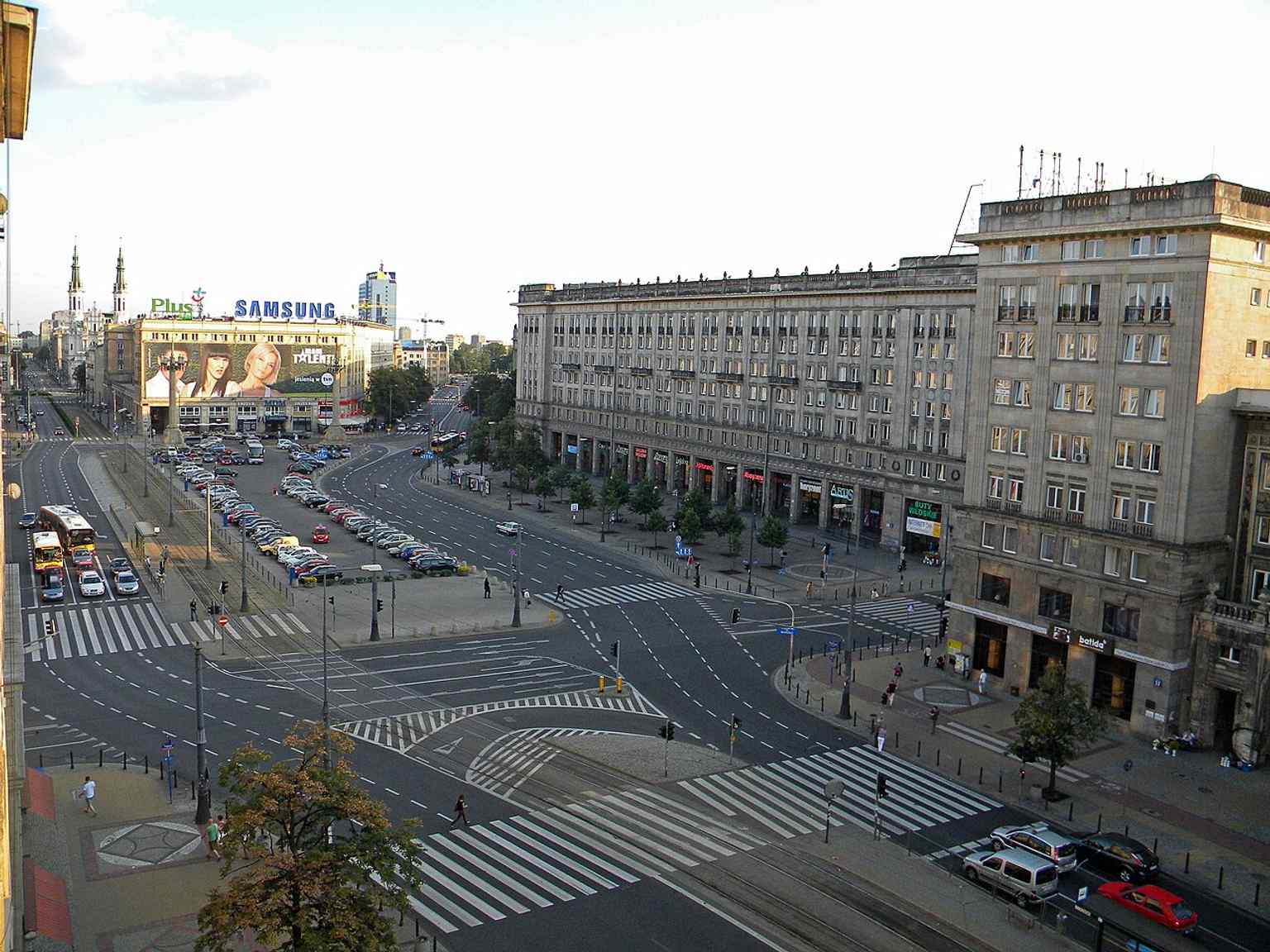
From here, seven streets converge. Marszałkowska cuts straight through with tram tracks, while Piękna, Koszykowa, Śniadeckich, and Waryńskiego feed the flow. It works as a monument, but also as a machine: people crossing, trams grinding past, traffic sorting itself out under all that ideological posture.
And here is the part locals like to mention when the place seems too easy to read. One of the core designers in the tight-knit “Tigers” team was Stanisław Jankowski, known as Agaton - a Warsaw Uprising veteran, a member of the wartime Home Army, and exactly the kind of man the Stalinist system usually distrusted. Yet he helped design one of its flagship spaces, working under chief architect Józef Sigalin despite that political baggage. So the square is not pure doctrine poured neatly into concrete. It also carries compromise, camouflage, and survival.
The materials tell a similarly grim joke. Those pale granite slabs on the ground floors and arcades did not come from an ordinary quarry order. Polish authorities found them in the recovered western territories, where Nazi Germany had stockpiled them for monumental victory memorials. The stone prepared for the Third Reich ended up dressing socialism in Warsaw. A remarkable career change for granite.
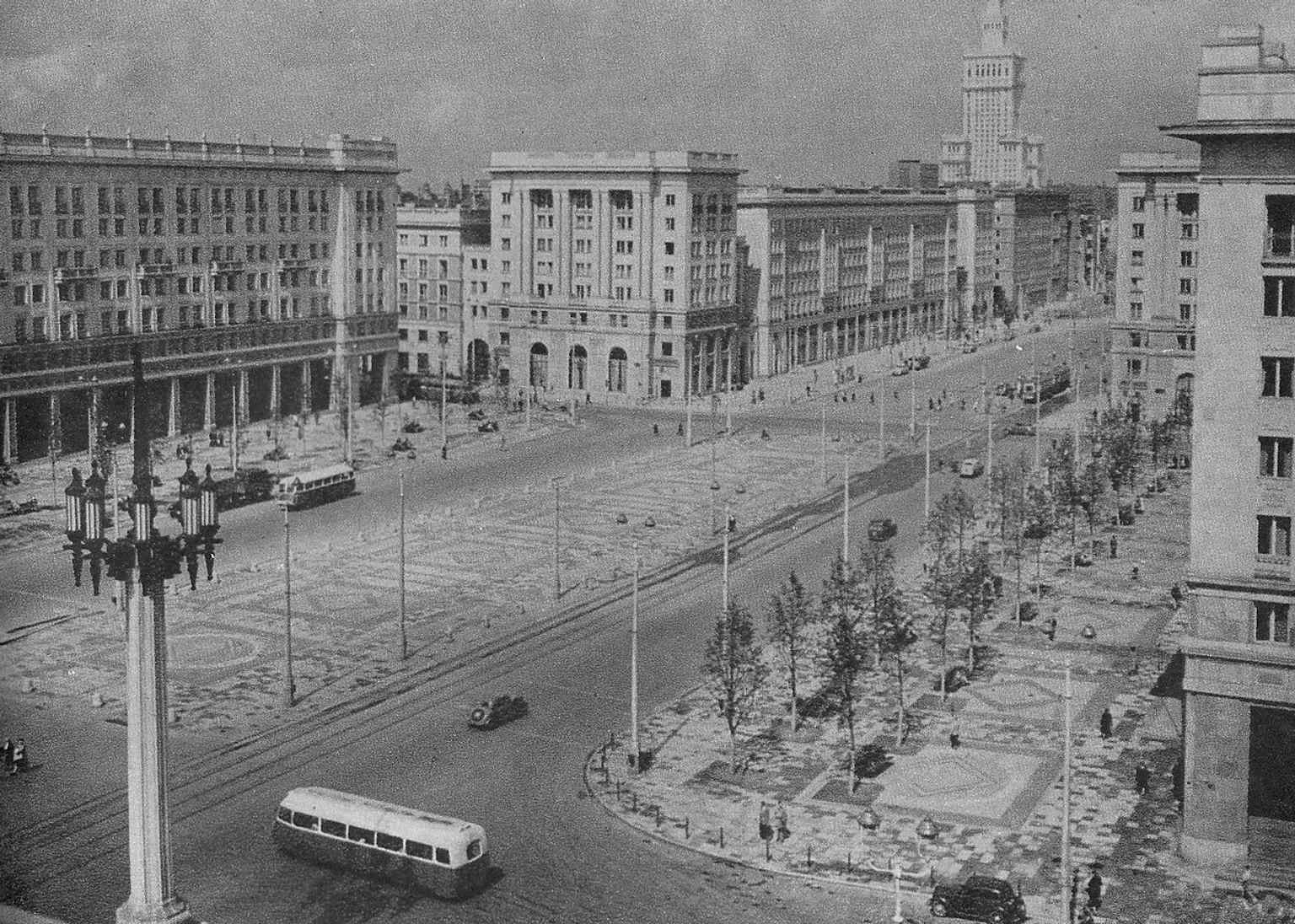
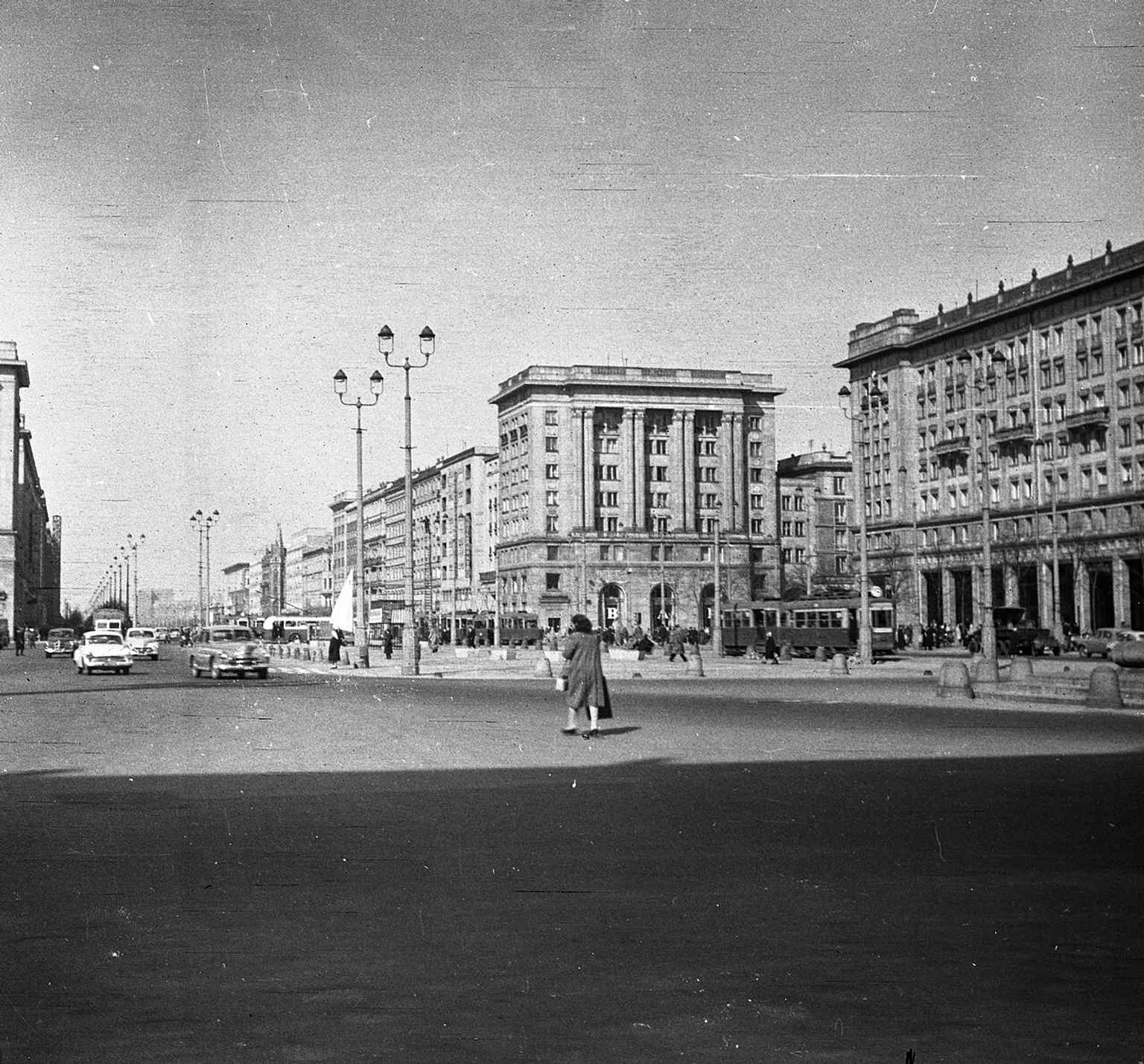
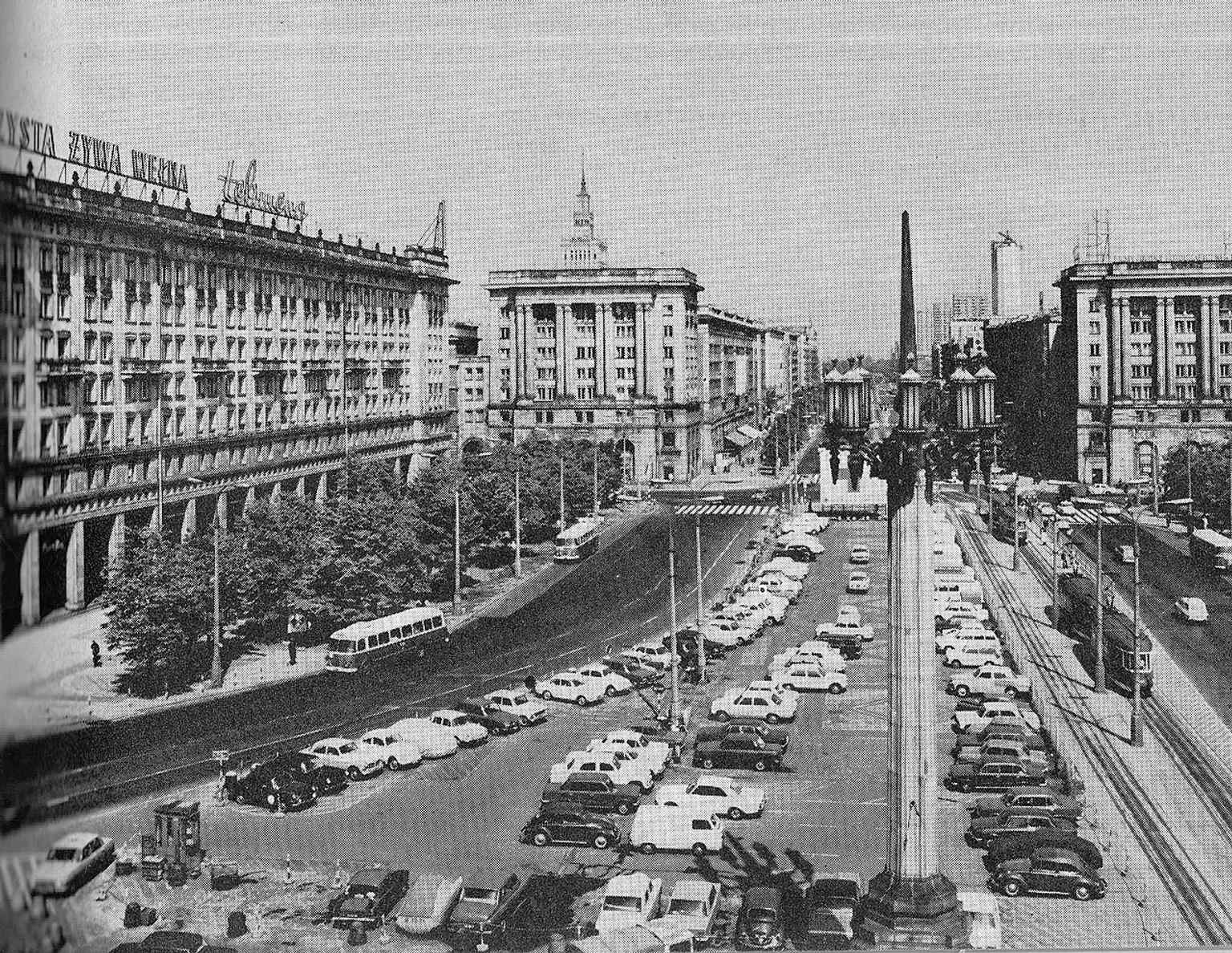
This whole ensemble replaced an older, dense neighborhood. Builders demolished most surviving tenements, broke the old street grid, redirected Piękna and Koszykowa, and pushed out Waryńskiego as a new route. If you glance at the before-and-after image on your screen, you can watch the same symmetry trade parade-era emptiness for the dense, ordinary city of later decades.
Hotel M-D-M, at the south end, was meant to have a taller companion tower and became controversial anyway. By sealing this view, it blocked the old sightline toward Plac Zbawiciela and its church, which many people read as more than an accident. Meanwhile, the center of the square never got the planned fountain. It became a parking area instead... ideology meeting the practical needs of drivers, which is almost touching.
At street level, life kept rewriting the script. Shops filled the arcades. A sports store lit up the famous neon volleyball player. Café Niespodzianka later turned into the Solidarity citizens’ committee in nineteen eighty-nine, with election results posted in the windows while crowds gathered below.
So even here, among the grand facades, certainty faded first at human height: in shopfronts, queues, tram stops, and people simply trying to get somewhere. When you’re ready, head on to the Main Library, about a four-minute walk away.






%20az%20ulica%20Marsza%C5%82kowska%20fel%C3%A9%20n%C3%A9zve.%20Fortepan%2075021.jpg)


%20Hanna%20%C5%BBu%C5%82awska%20Plac%20Konstytucji%20(2).jpg)


