
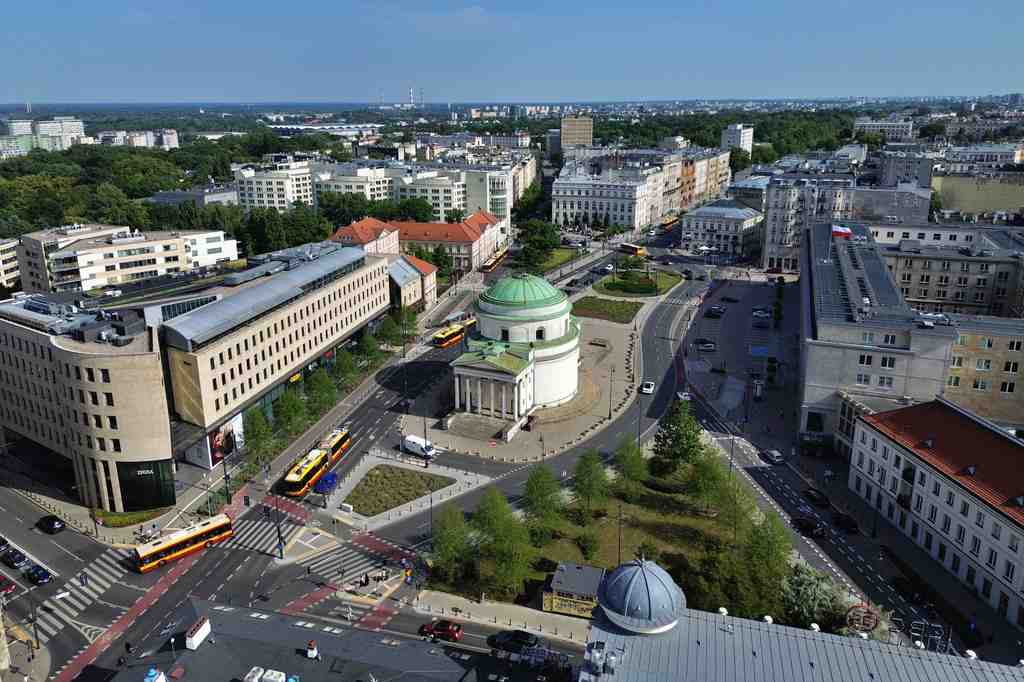
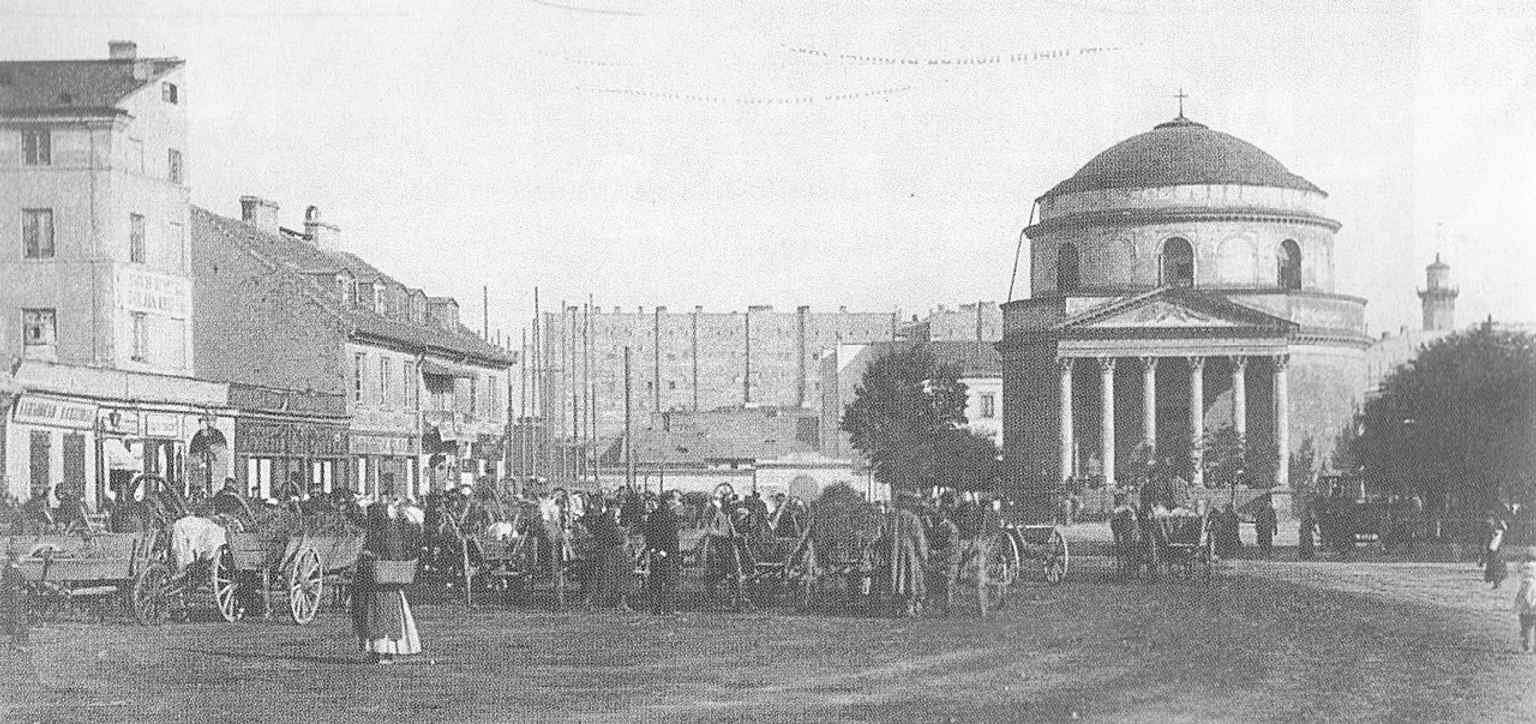
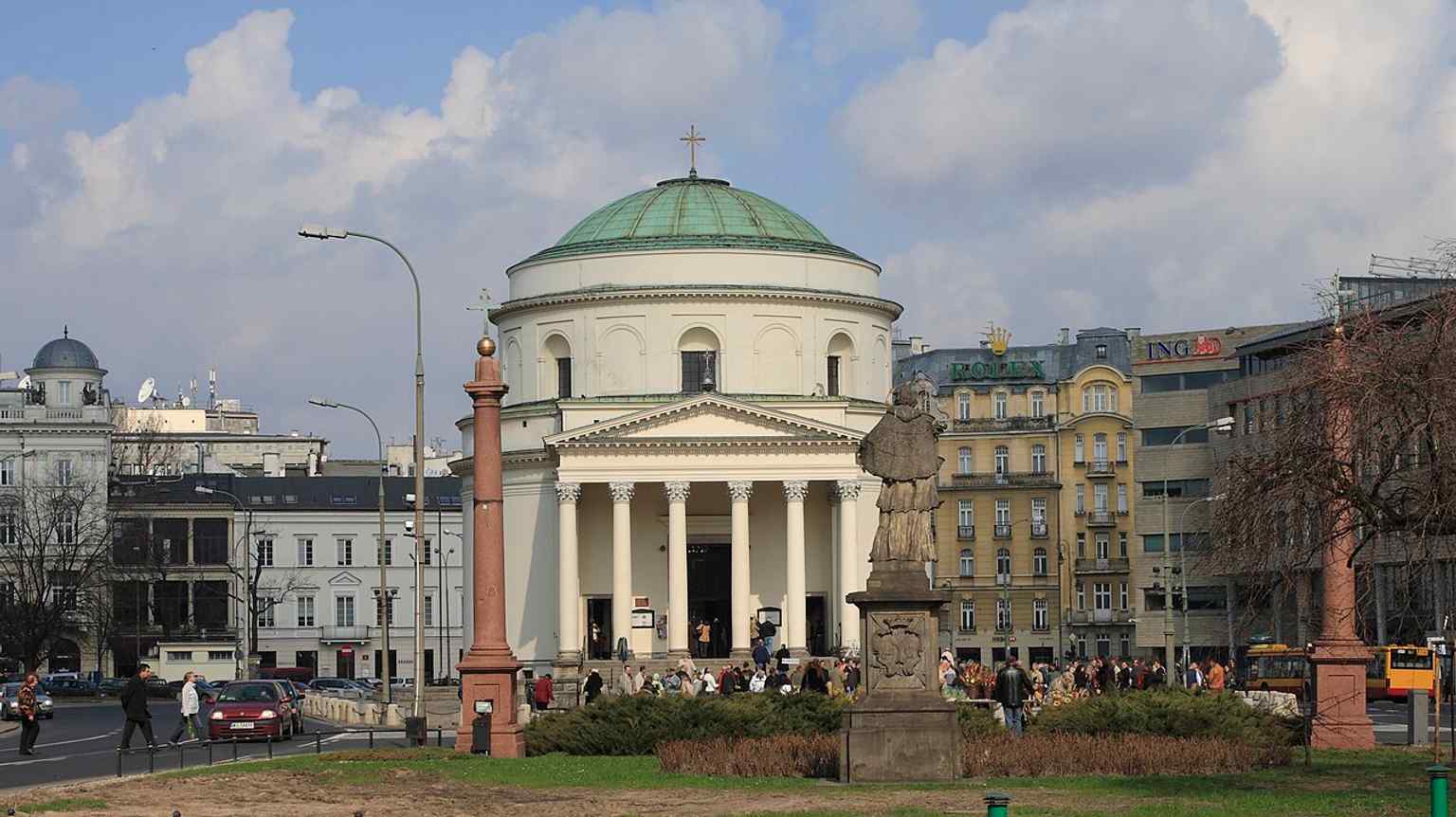
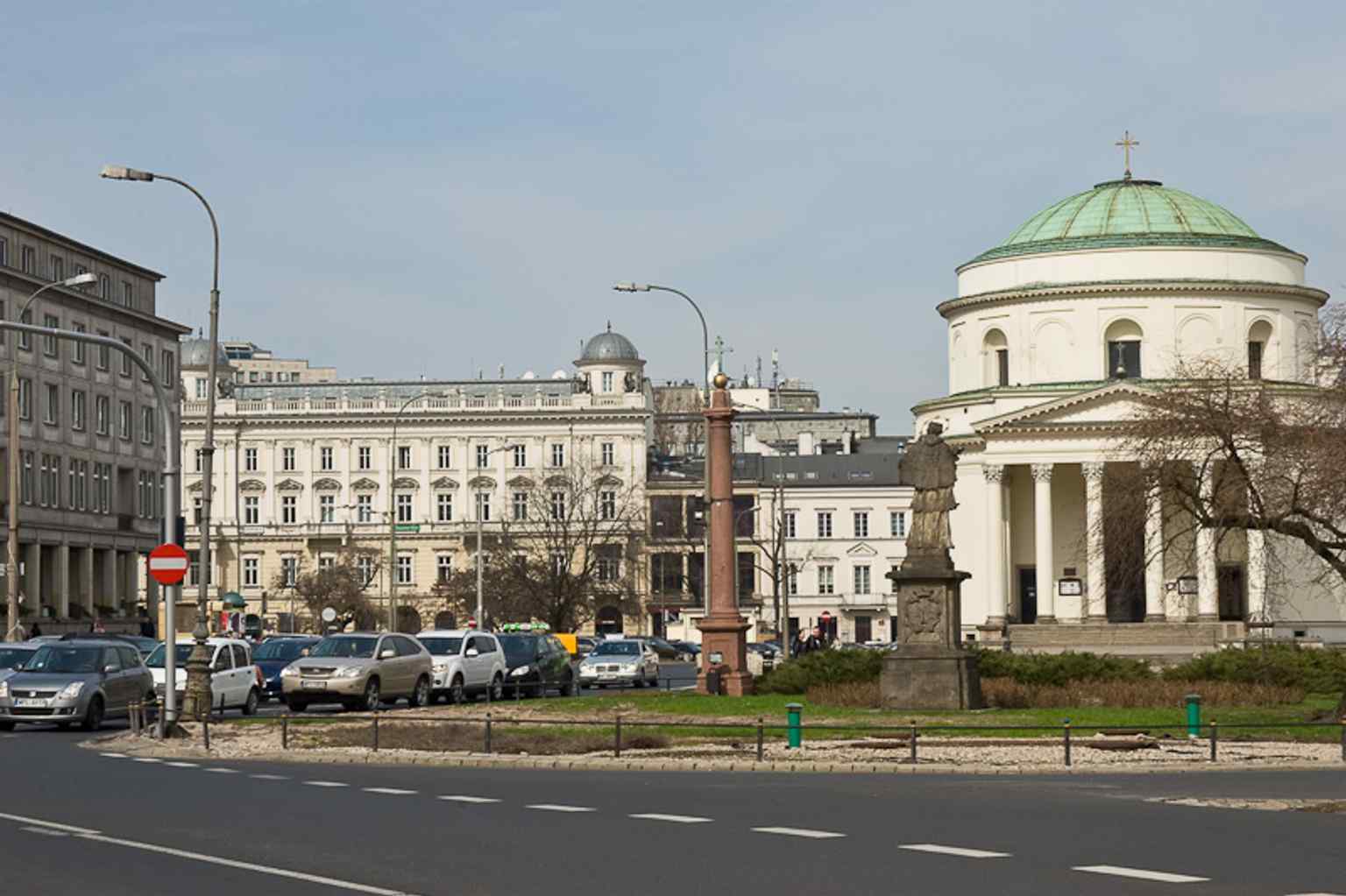
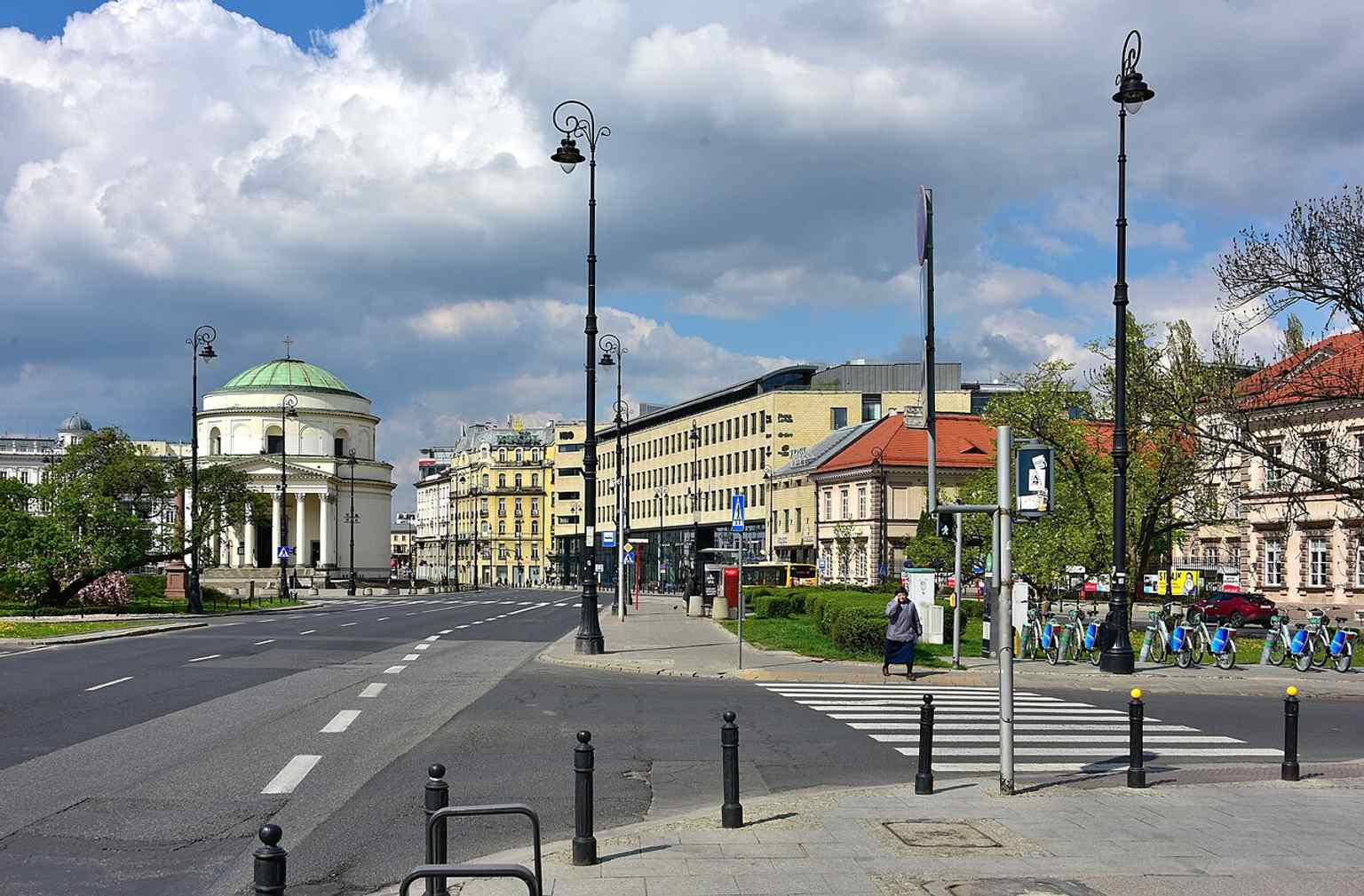
A broad paved crossroads opens around the pale stone rotunda of Saint Alexander’s Church, with radiating streets and the pink granite cross columns that still give the square its name.
Plac Trzech Krzyży is one of Warsaw’s great shape-shifters. The ground stayed put; the job description kept changing. It began as a fork in old roads leading out of the city, then turned into a sacred marker, then a market, then a traffic knot, then a place where politics and war arrived with very little patience.
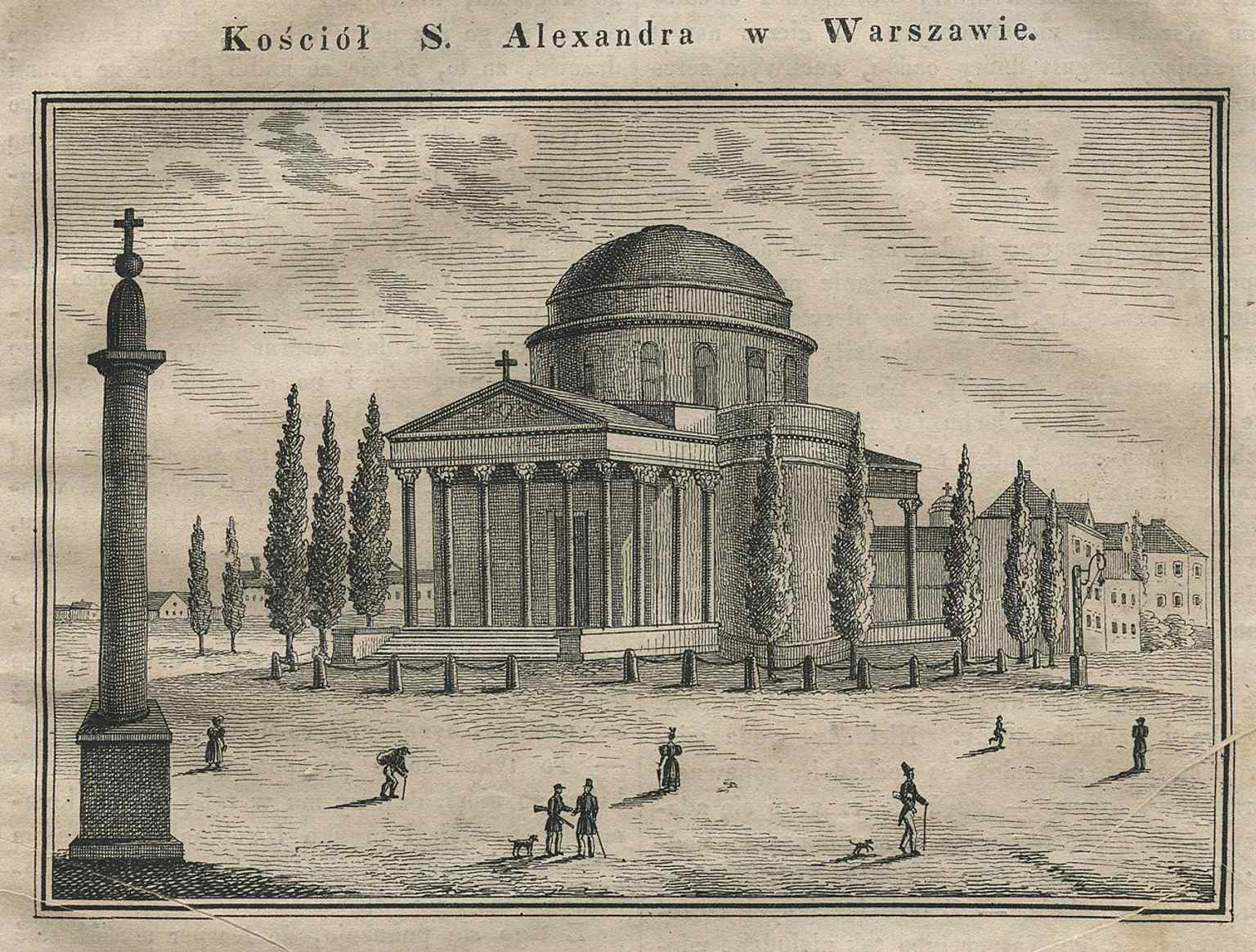
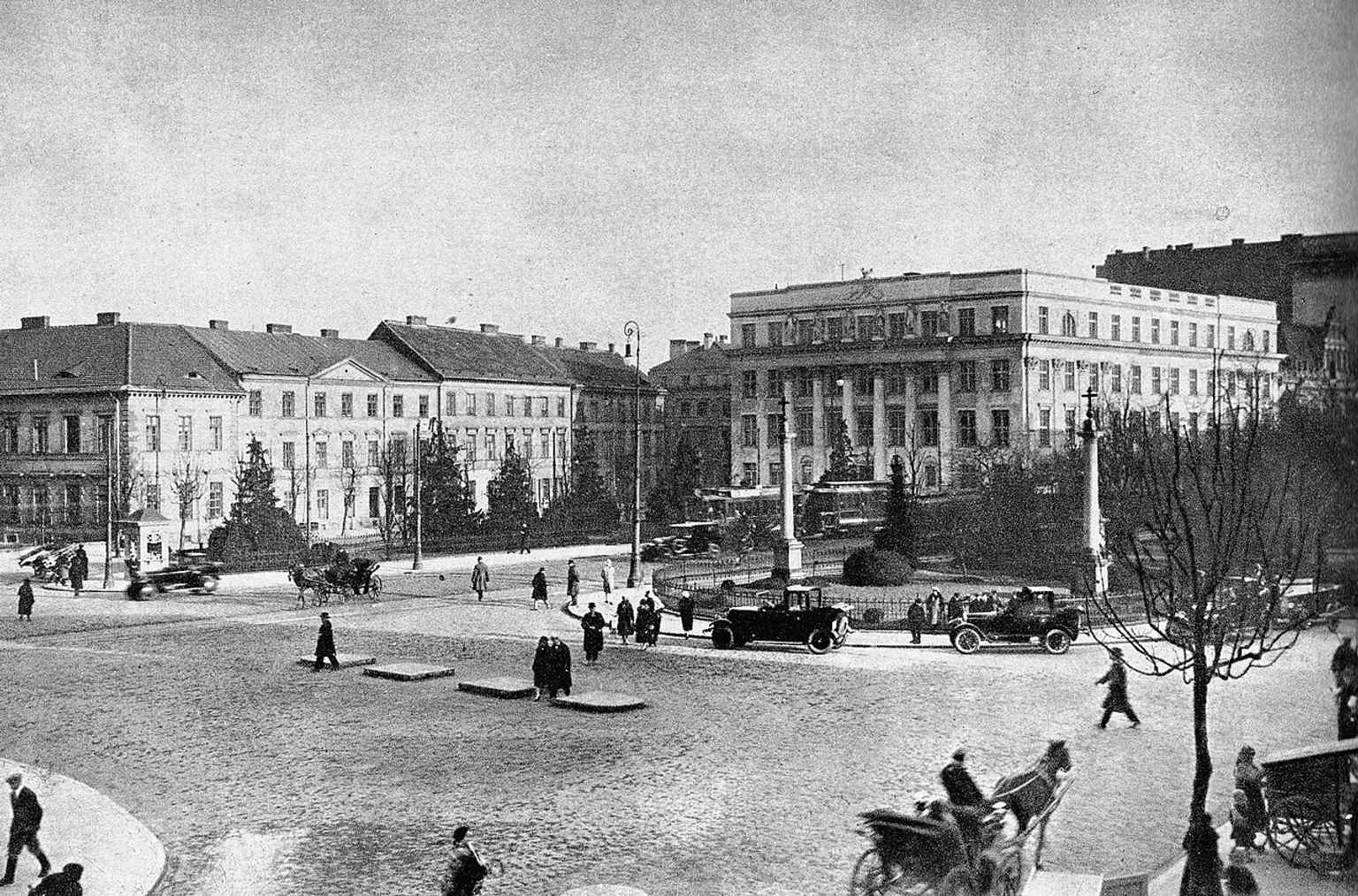
In the early eighteenth century, this was a smaller junction of routes heading toward Solec, Ujazdów, Rakowiec, and Grzybów. Around seventeen twenty-five, King Augustus the Second funded two columns topped with gilded crosses here. They marked the start of the Kalwaria route, a devotional path modeled on the Way of the Cross, leading toward a symbolic Holy Sepulchre near Ujazdów Castle. Then in seventeen fifty-six, the crown marshal Franciszek Bieliński added a statue of Saint John of Nepomuk holding a cross... and that gave the place its third cross.
Here’s the detail locals like: one of those sacred-looking markers also celebrated something gloriously practical. Bieliński set up the saint to mark that Warsaw’s street paving had finally reached this point. A religious symbol, yes... but also a monument to municipal roadwork. Very Warsaw.
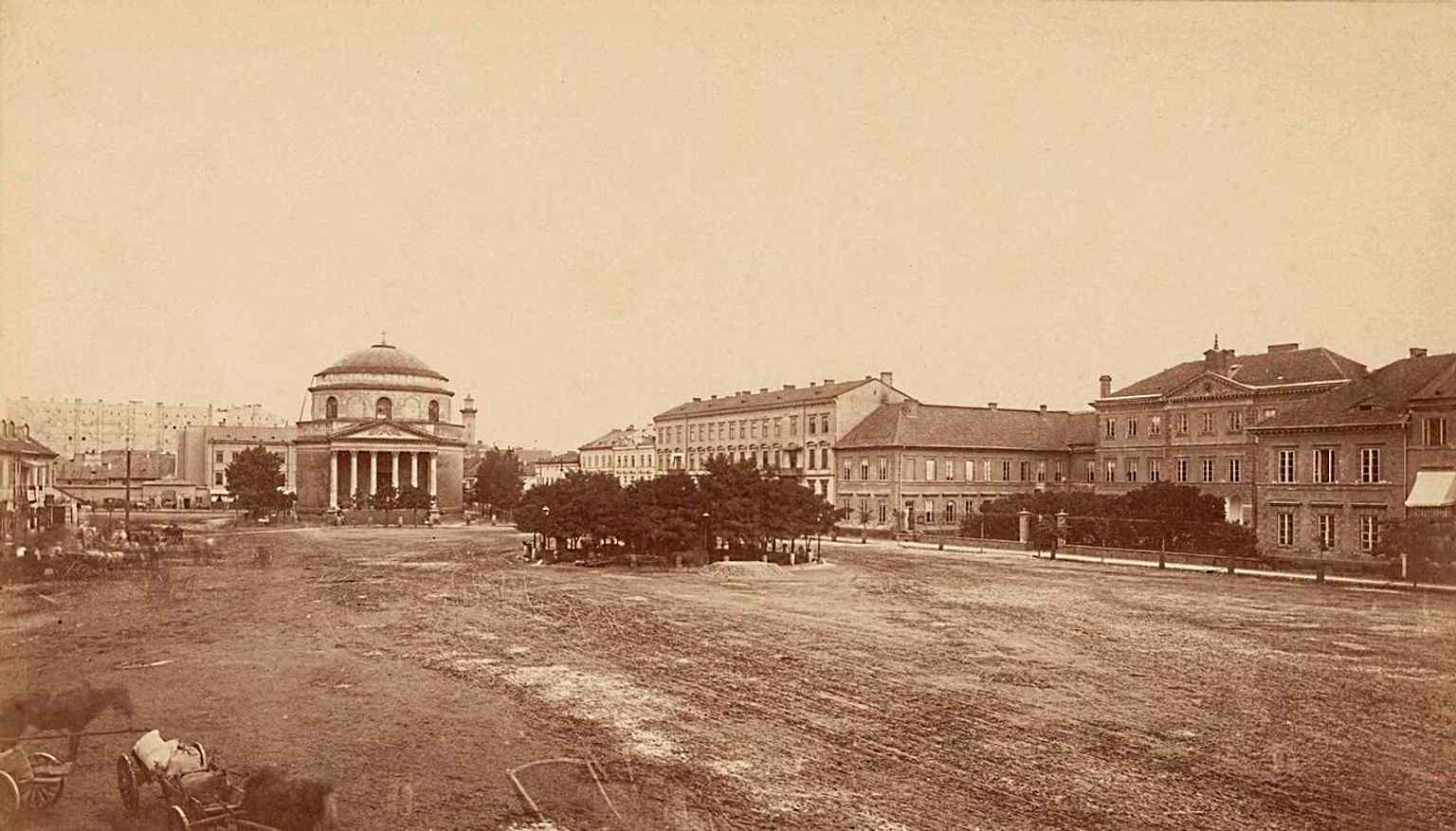
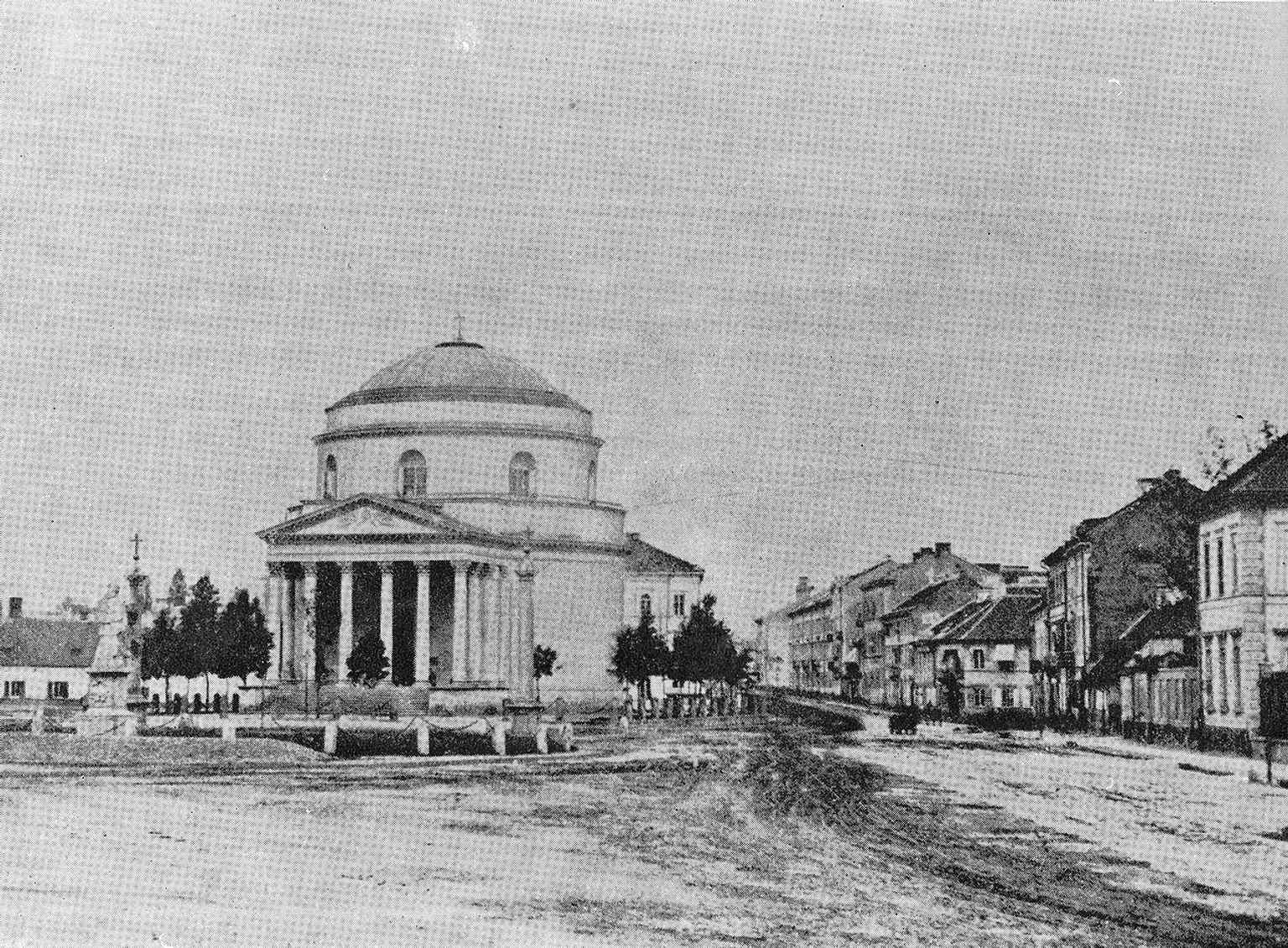
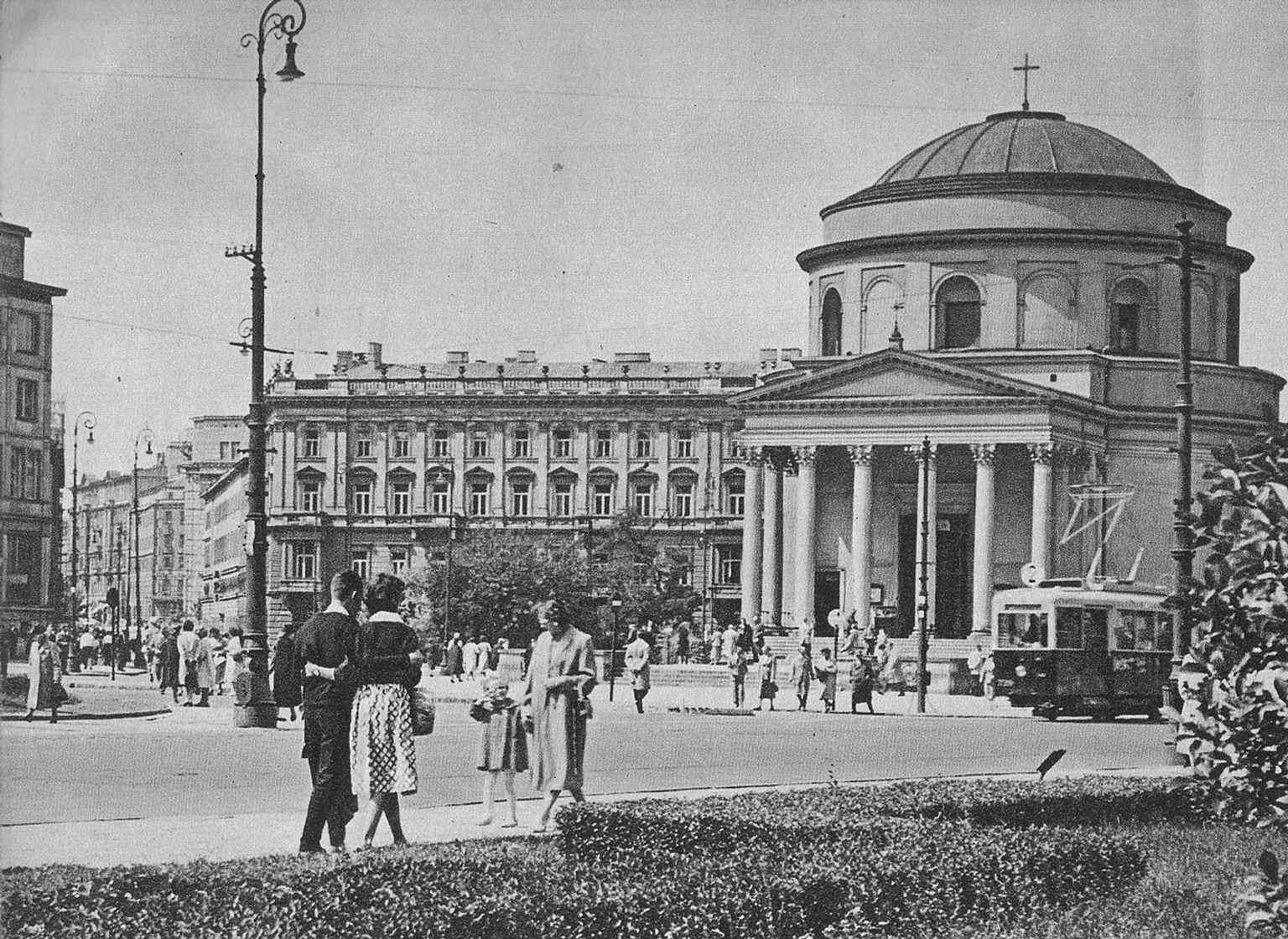
If you glance at the before-and-after image, you can see how the square kept its basic geometry while the city packed itself tighter around it.
In seventeen eighty-seven, traders took over part of the space. By the nineteenth century, the square had gained masonry buildings, then Saint Alexander’s Church between eighteen eighteen and eighteen twenty-five. The church exists because officials and private donors collected money for a triumphal arch honoring Tsar Alexander the First, and then redirected it into a church instead. Bureaucracy occasionally produces theology.
The square kept absorbing new roles. The Institute for the Deaf rose on the east side in eighteen twenty-seven. Horse trams arrived in eighteen eighty-one, electric trams in nineteen oh eight, and the first city bus crossed here in nineteen twenty-one. If you want one image of Warsaw growing up in public, this is it.
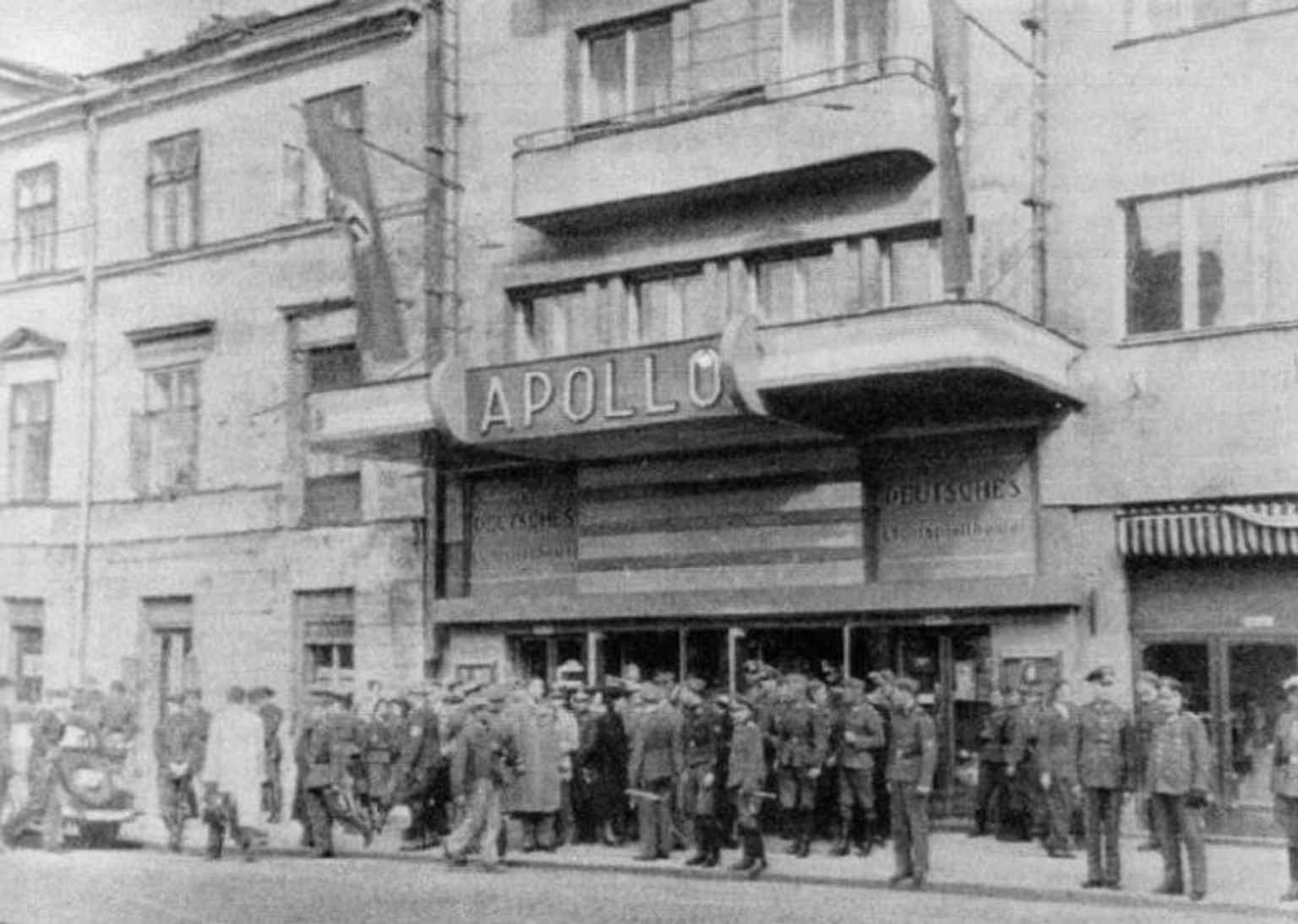
And then the arguments started arriving. In December nineteen twenty-two, supporters and opponents of President Gabriel Narutowicz’s election fought here, leaving more than a dozen people injured. In September nineteen thirty-nine, the green in front of the church became a temporary cemetery for bombing victims. Under German occupation, this lay inside the German district; even the tram line circling through here served occupiers only. During the Warsaw Uprising, barricades sealed the street mouths, and the fiercest fighting hit the eastern side. Luftwaffe bombs tore into the church and nearby buildings in September nineteen forty-four.
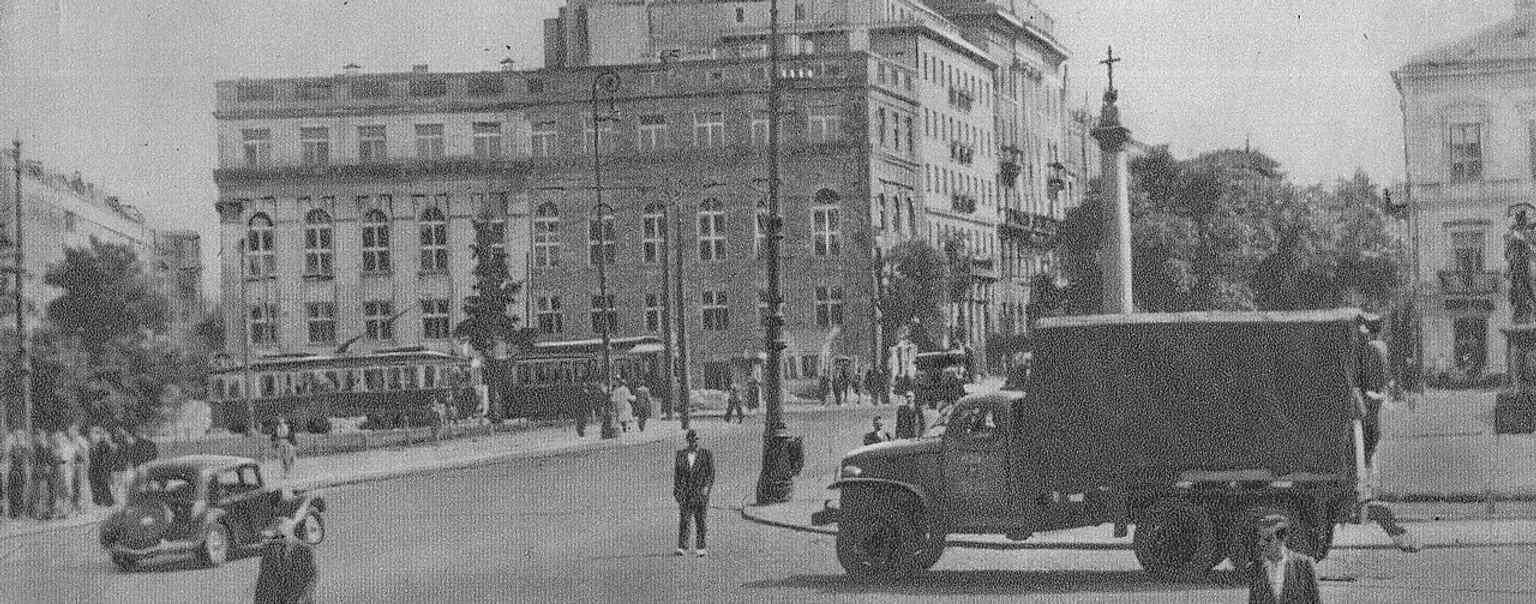
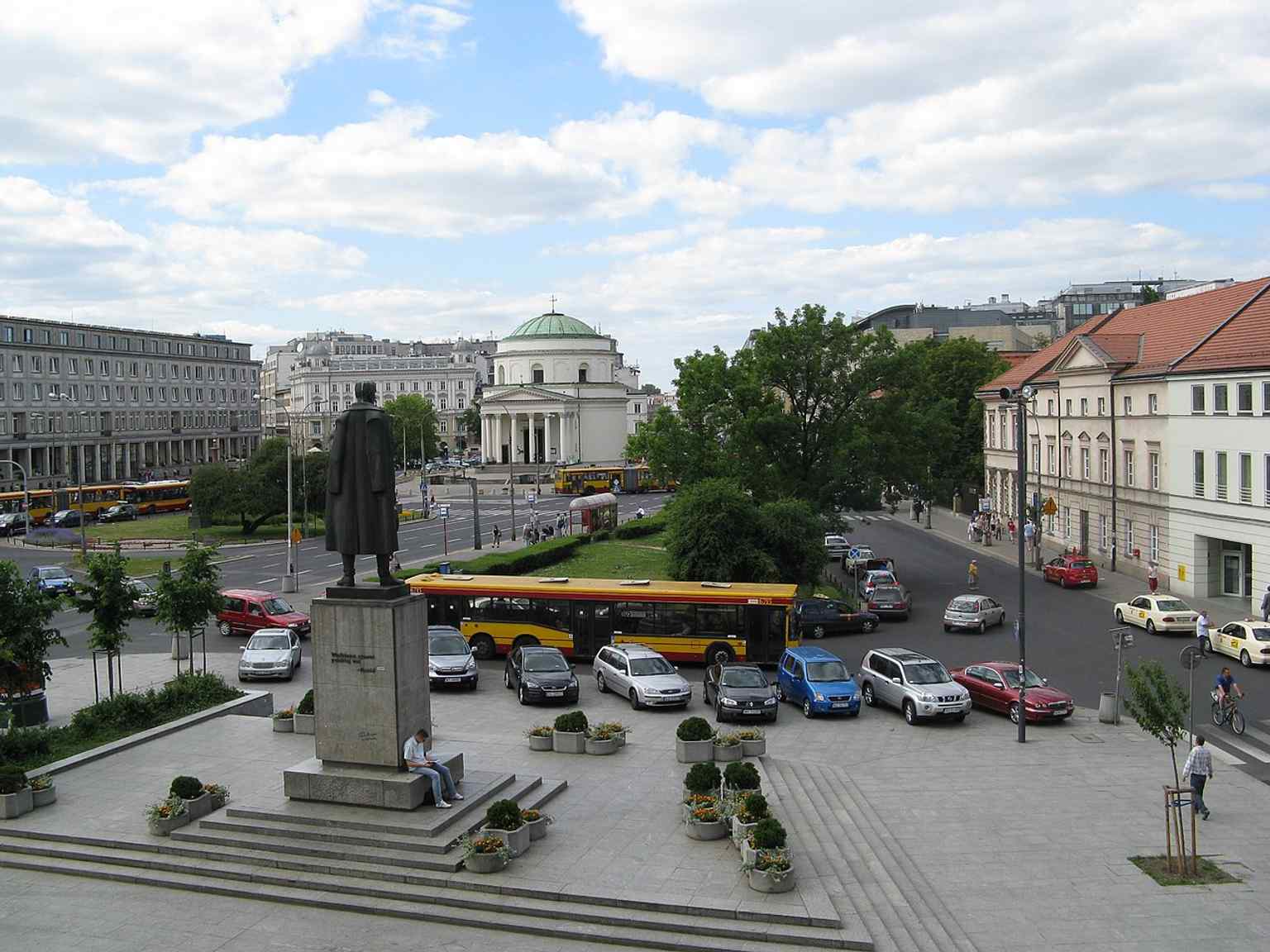
After the war, planners rebuilt and reshaped the square, and in twenty twenty-three old tram tracks and prewar paving were exposed again... another rewrite, never the last one. Once a square takes its name from a symbol, every later era has to bargain with it. When you’re ready, head toward Greetings from Aleje Jerozolimskie, about five minutes away.






.jpg)


