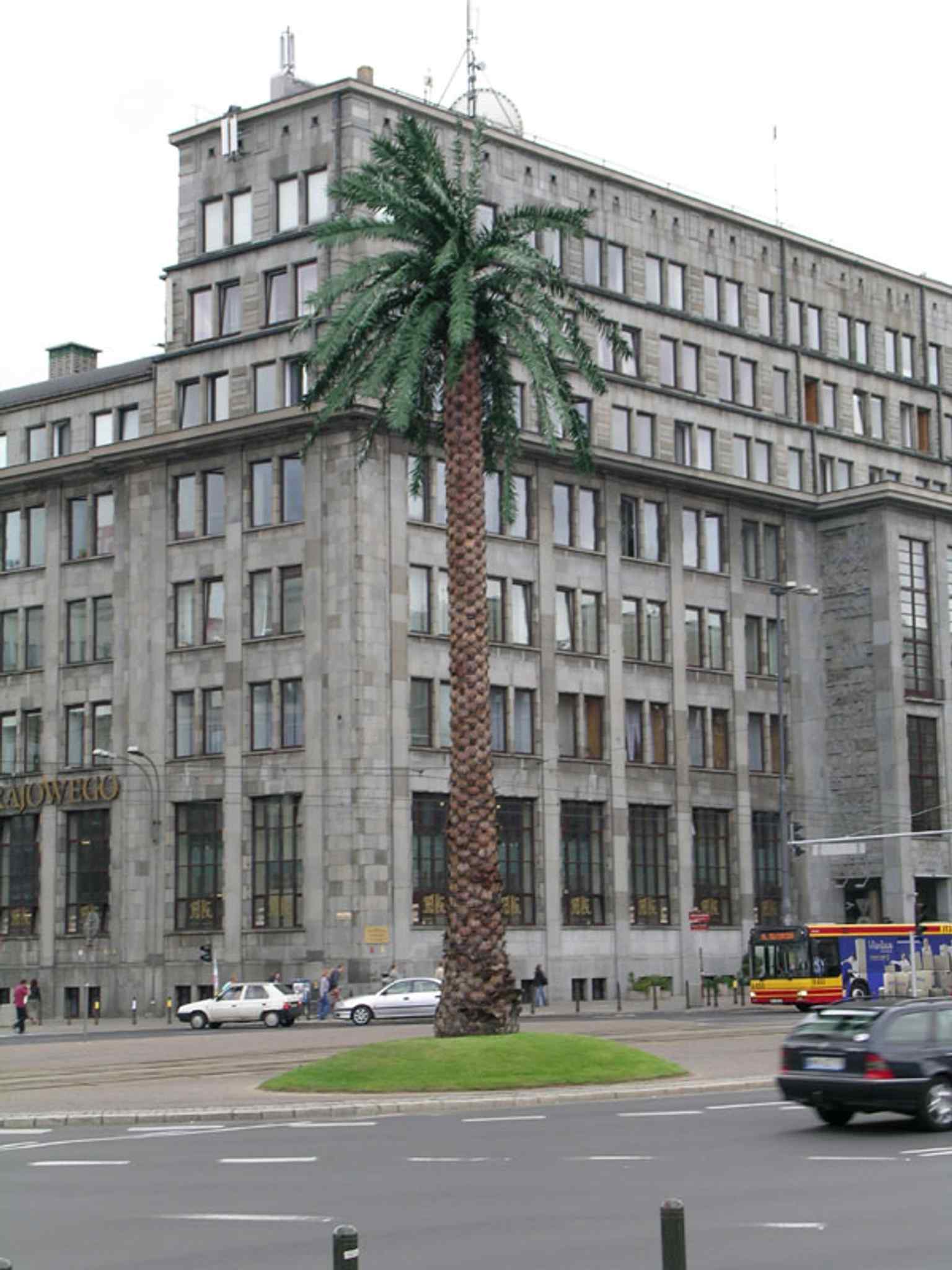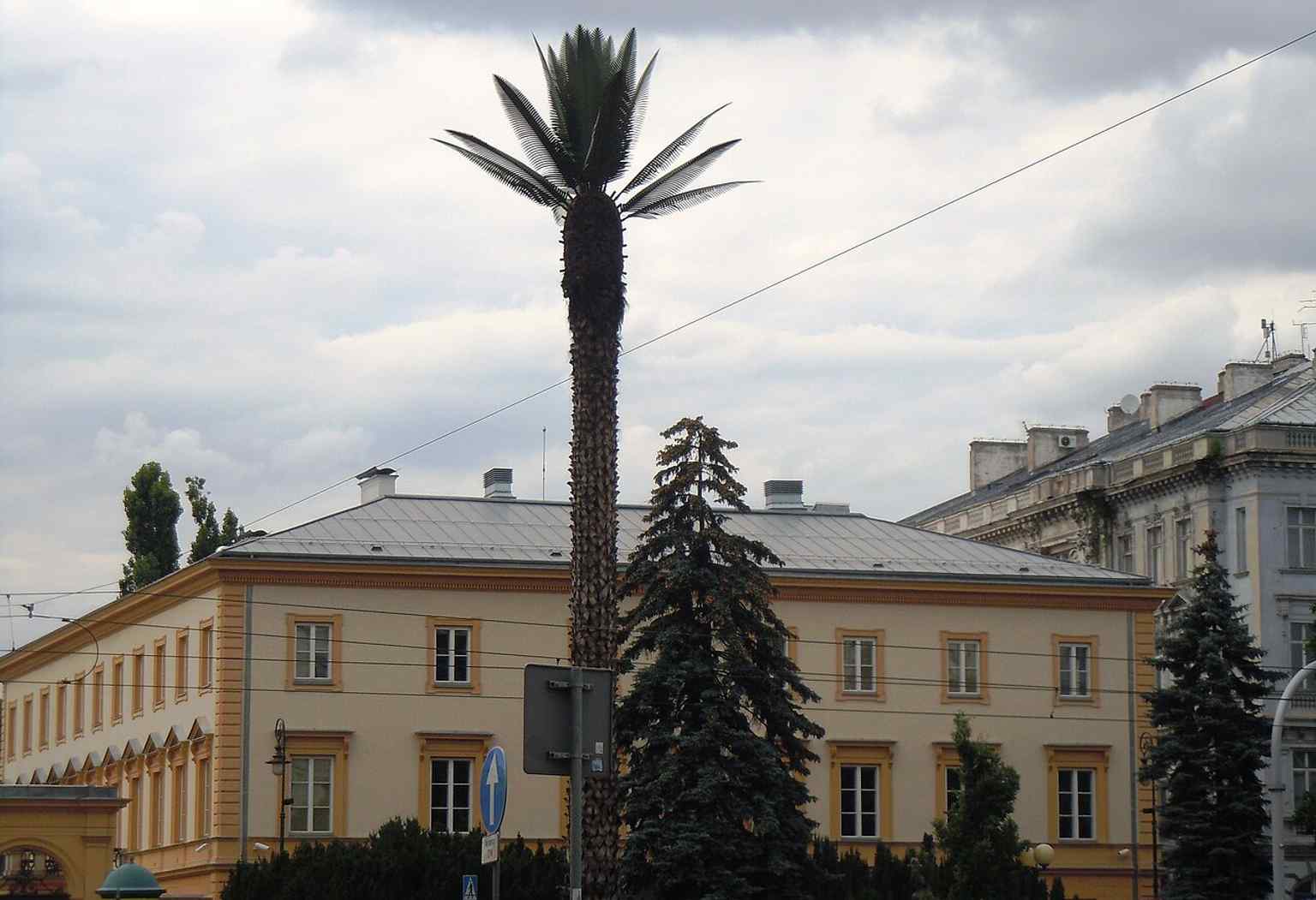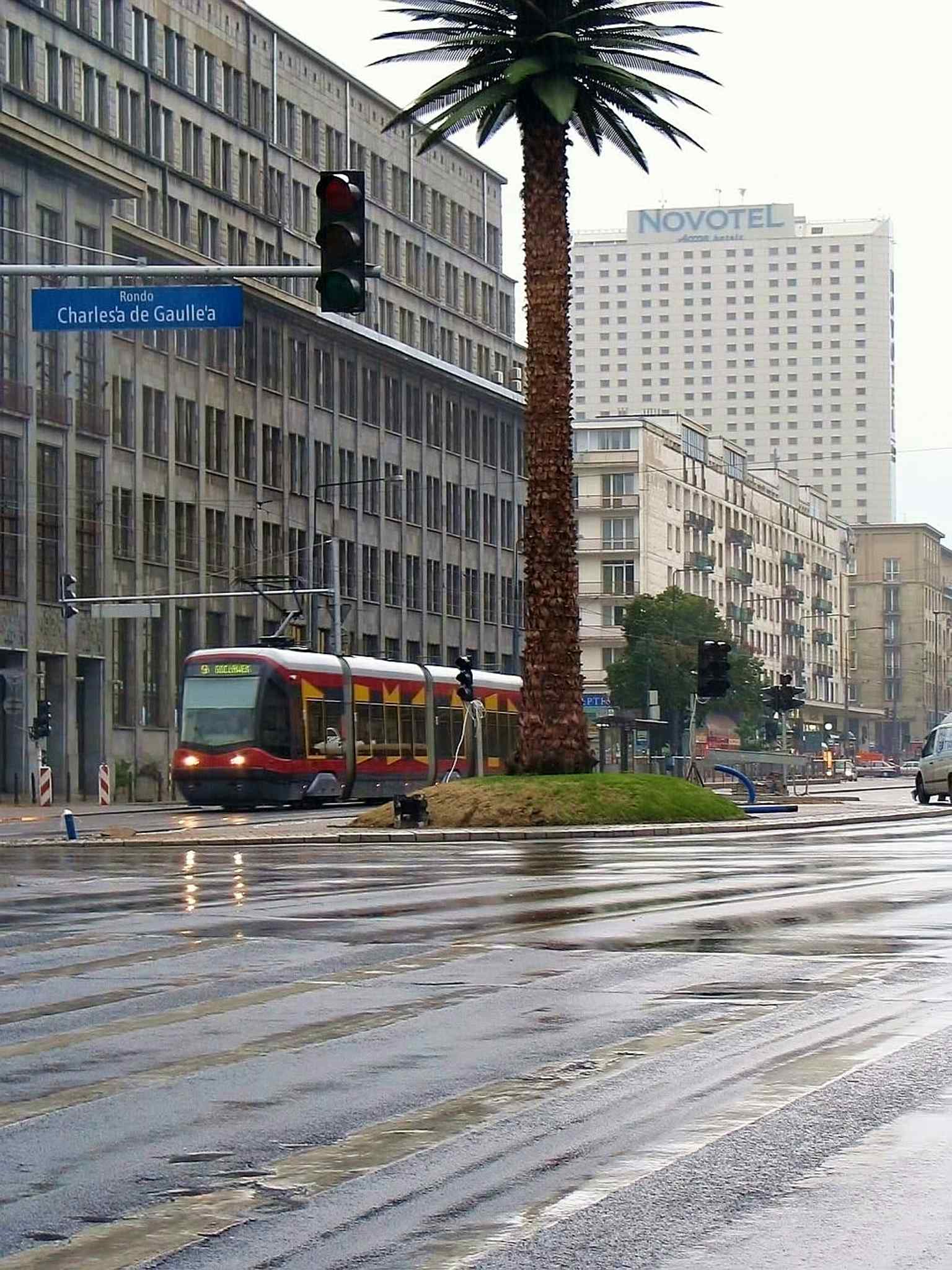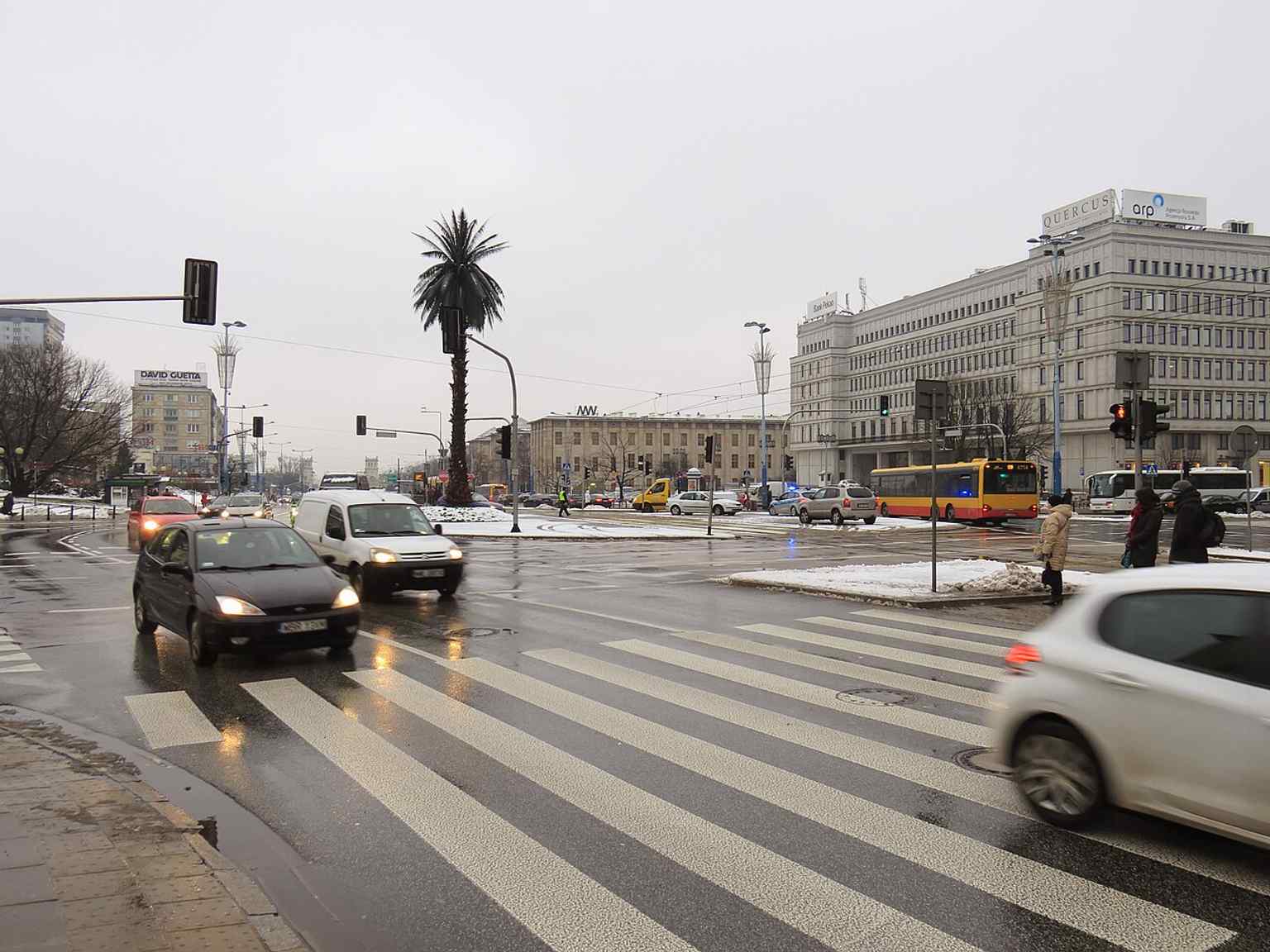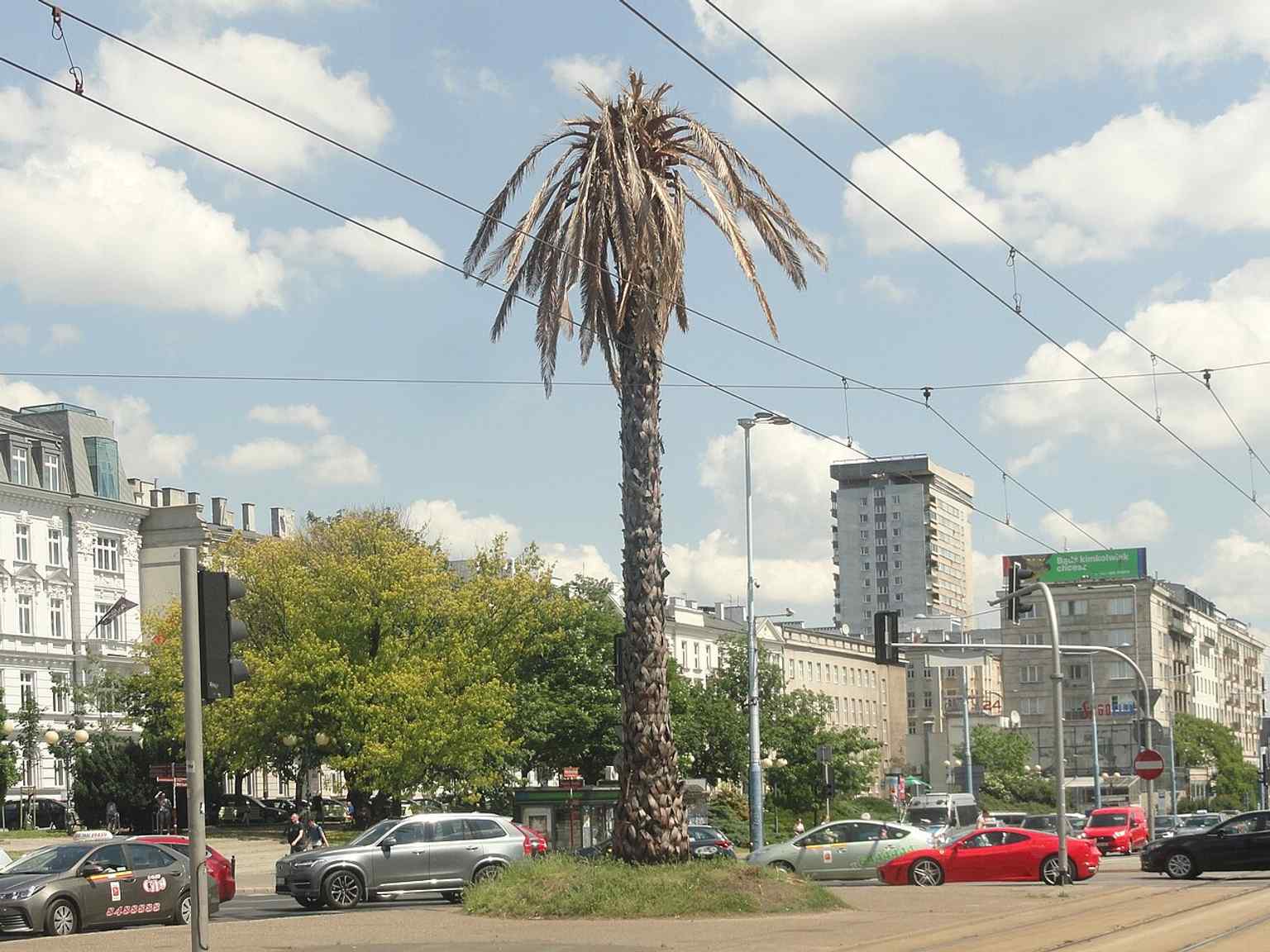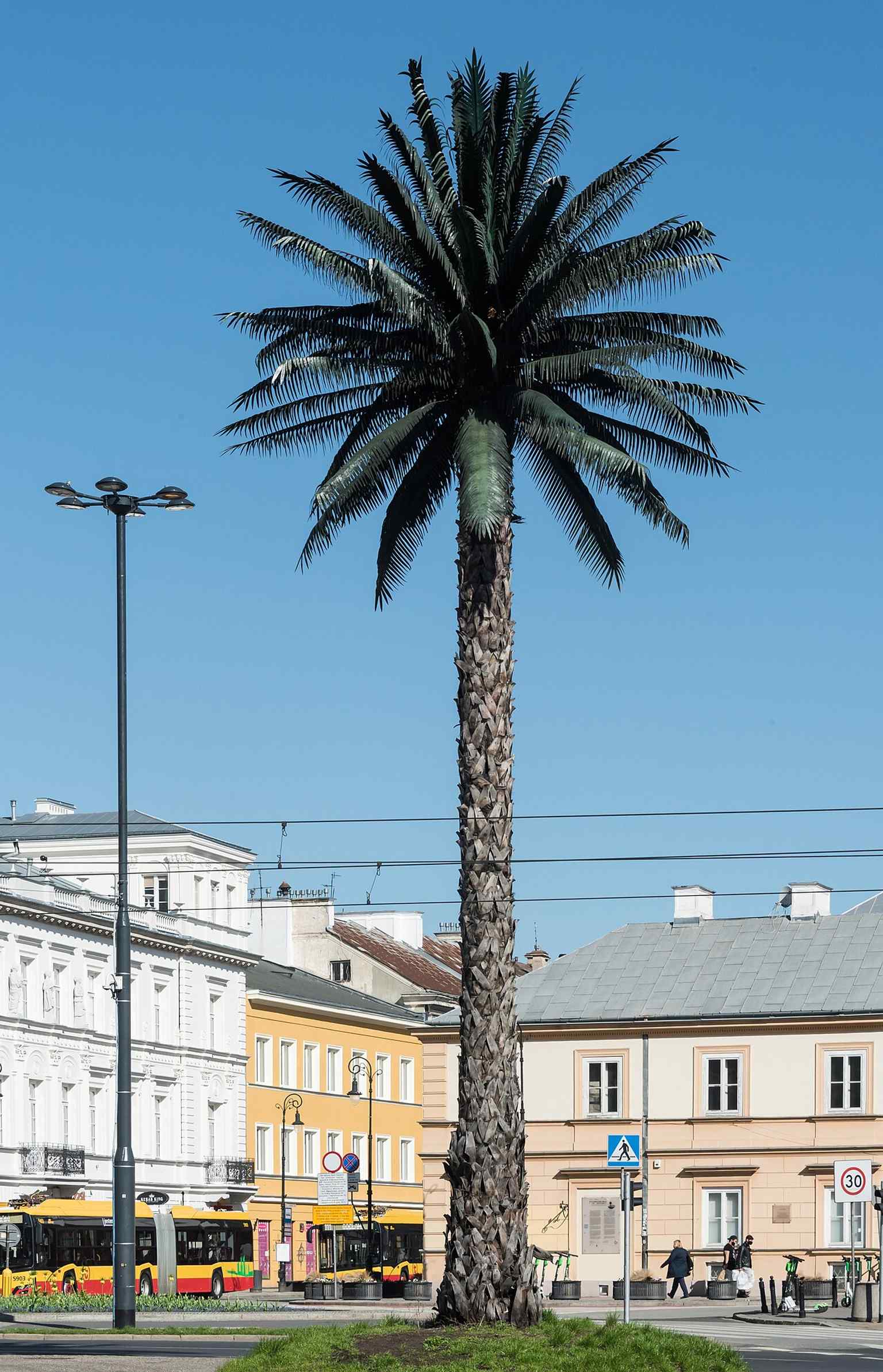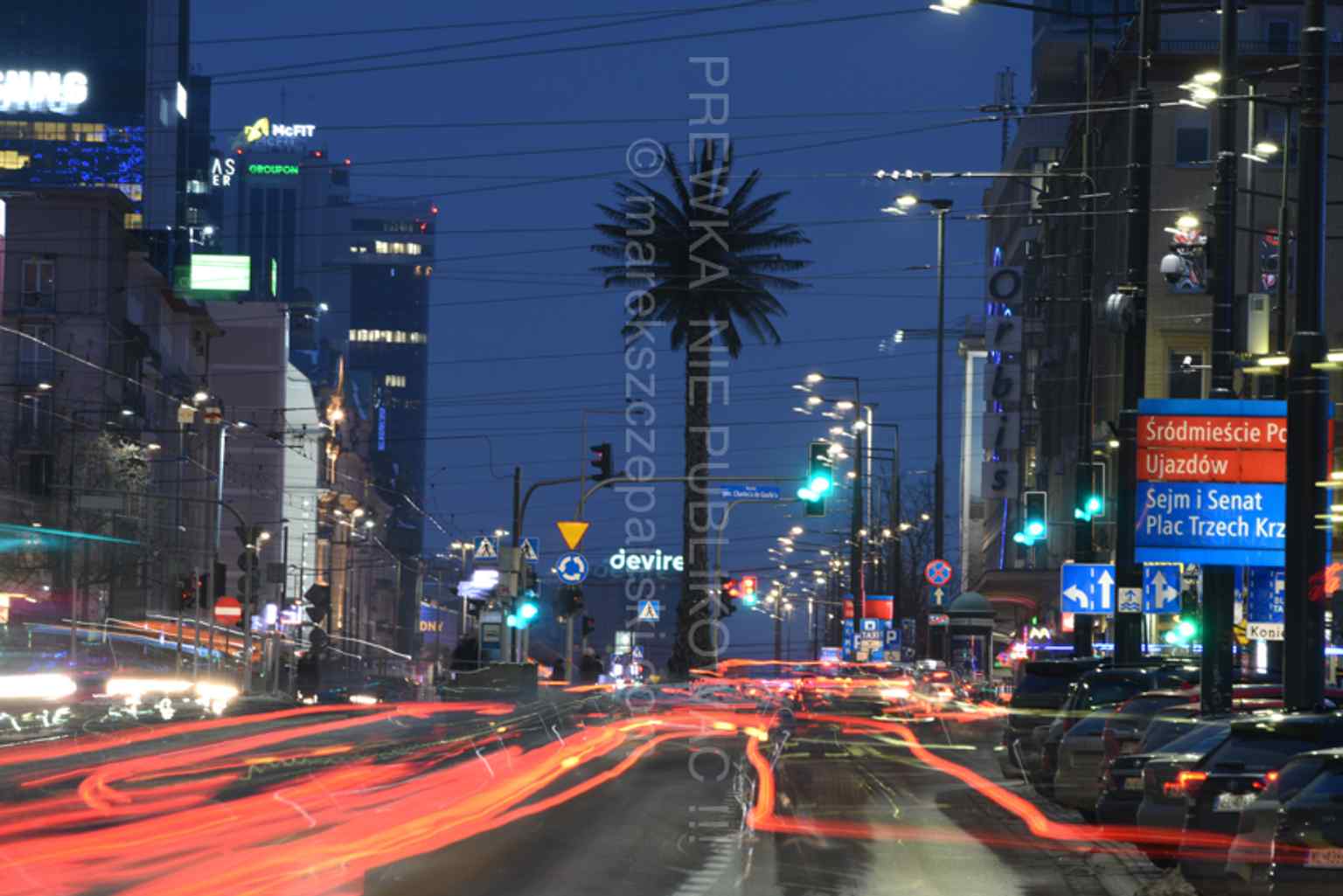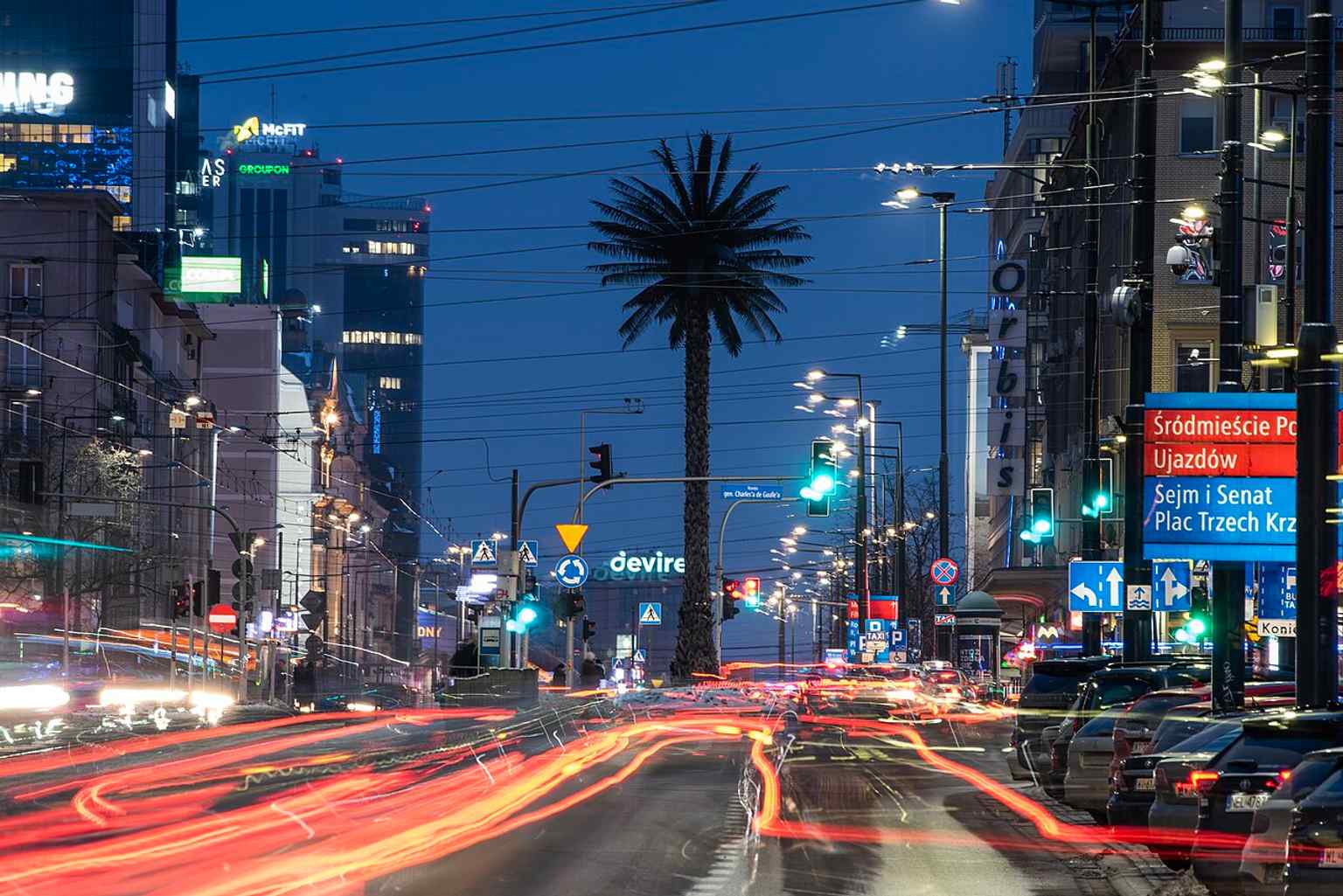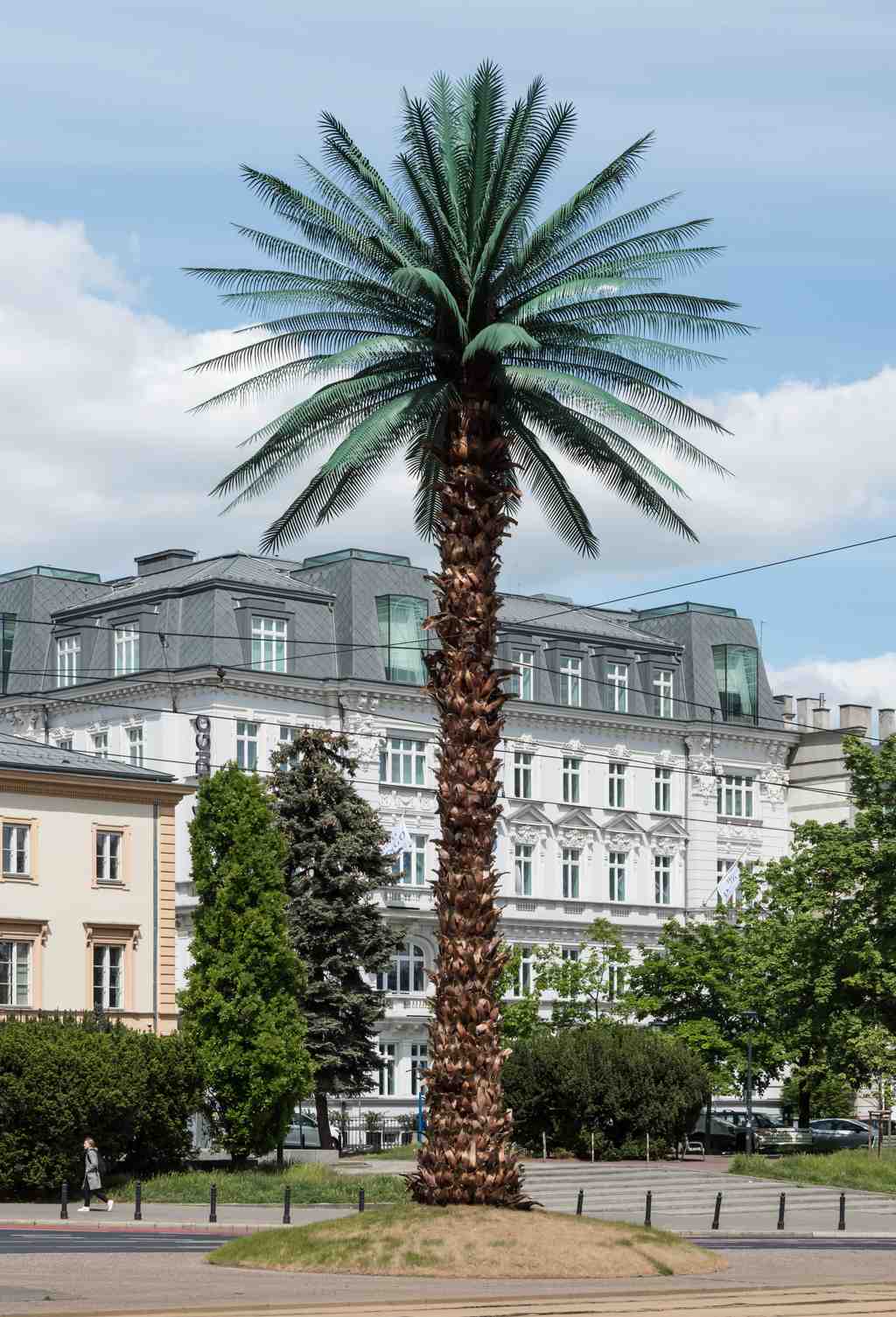
On your right, a tall brown artificial trunk rises from the roundabout into a wide spray of green fronds - a lone date palm made of plastic and natural materials, standing where Warsaw absolutely does not need one.
This is Joanna Rajkowska’s Palm, officially Greetings from Jerusalem Avenue. It is part sculpture, part prank, part civic stress test. Foreign, local, ironic, and somehow beloved... it turned a traffic circle into a stage and gave Warsaw a symbol that behaves less like a monument and more like a question.
Rajkowska got the idea after a trip to Israel in two thousand one with Artur Żmijewski. At first she imagined a whole row of palms. Then she found an old postcard from Hebron showing a bare hill and one scraggly palm, with the kind of awkward charm familiar from Polish postcards of the nineteen eighties. That changed everything. One strange tree would do more damage to normal expectations than a whole tropical boulevard.
The palm appeared here on the twelfth of December, two thousand two. It stands about fifteen meters high, waterproof, fixed to a metal structure weighted with concrete. If you check the close-up in the app, you can see the handmade artificiality up close - bark, joints, engineering, and the whole beautiful fake.
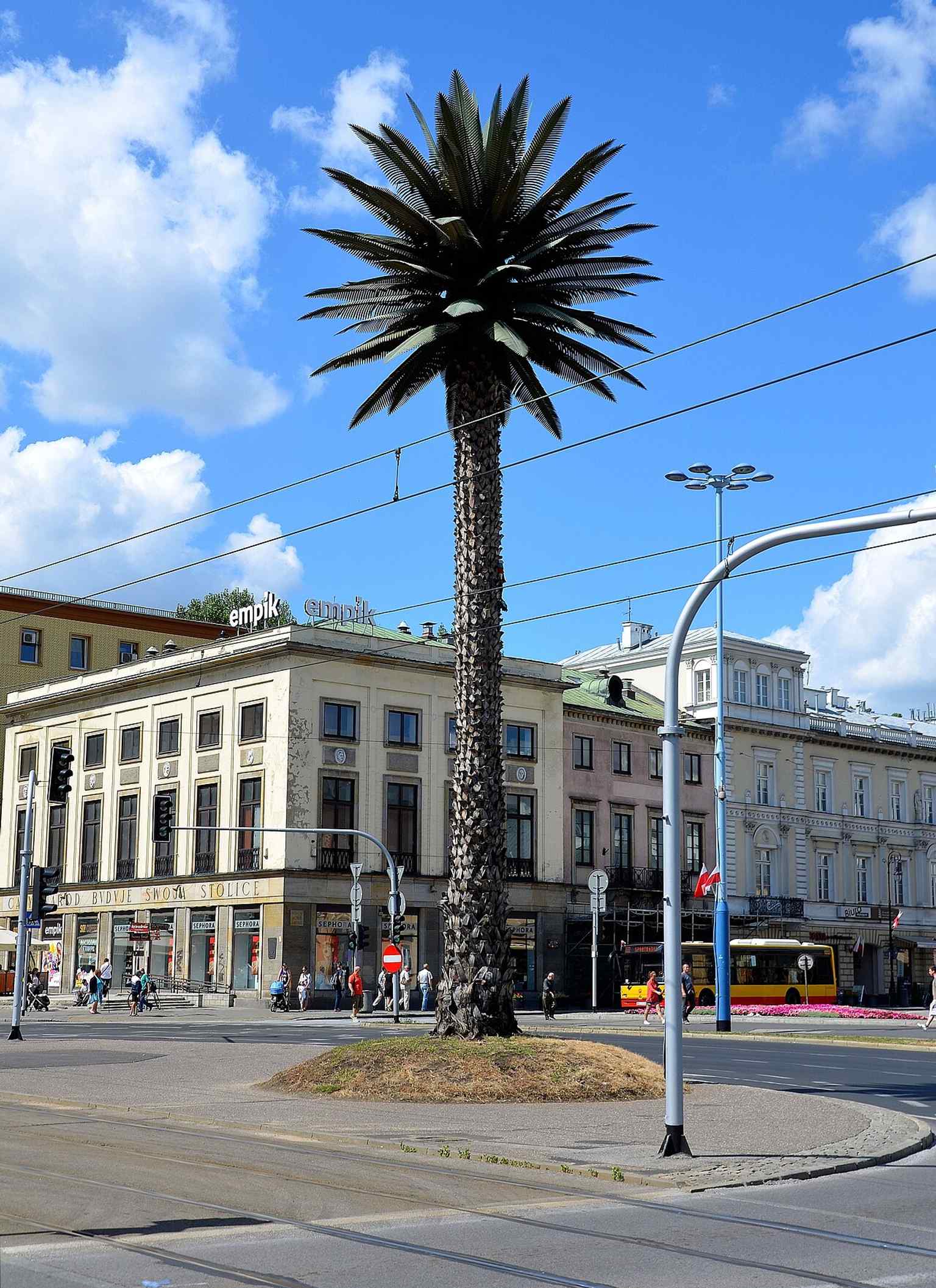
And yes, the location matters. Aleje Jerozolimskie means Jerusalem Avenue. So Rajkowska planted a palm in the middle of it and let people reveal themselves. Some tram passengers reportedly muttered that Jews had put it here because it was “their avenue.” Which is not a great review of public memory, but it was exactly the point. She wanted the work to test tolerance, prejudice, and the way history lingers in ordinary street names.
The city argued over everything: how long it should stay, who should pay for repairs, who controlled its image, whether it was art or nonsense. It had a permit for only one year. But Warsaw adopted it with suspicious enthusiasm. A poll in two thousand three found that seventy-five percent of residents wanted it to stay. A citizens’ Committee for the Defense of the Palm even staged a protest in swimwear and Hawaiian shirts. Police at the roundabout earned the nickname “Miami cops.” Very dignified.
After that, the palm became a public noticeboard for serious things: a giant nurse’s cap during the nurses’ protest in two thousand seven, a Palestinian scarf in two thousand eleven, a Ukrainian flag in two thousand fourteen, and “Constitution” banners during protests in two thousand twenty. This is not really a tree. It is a public question mark.
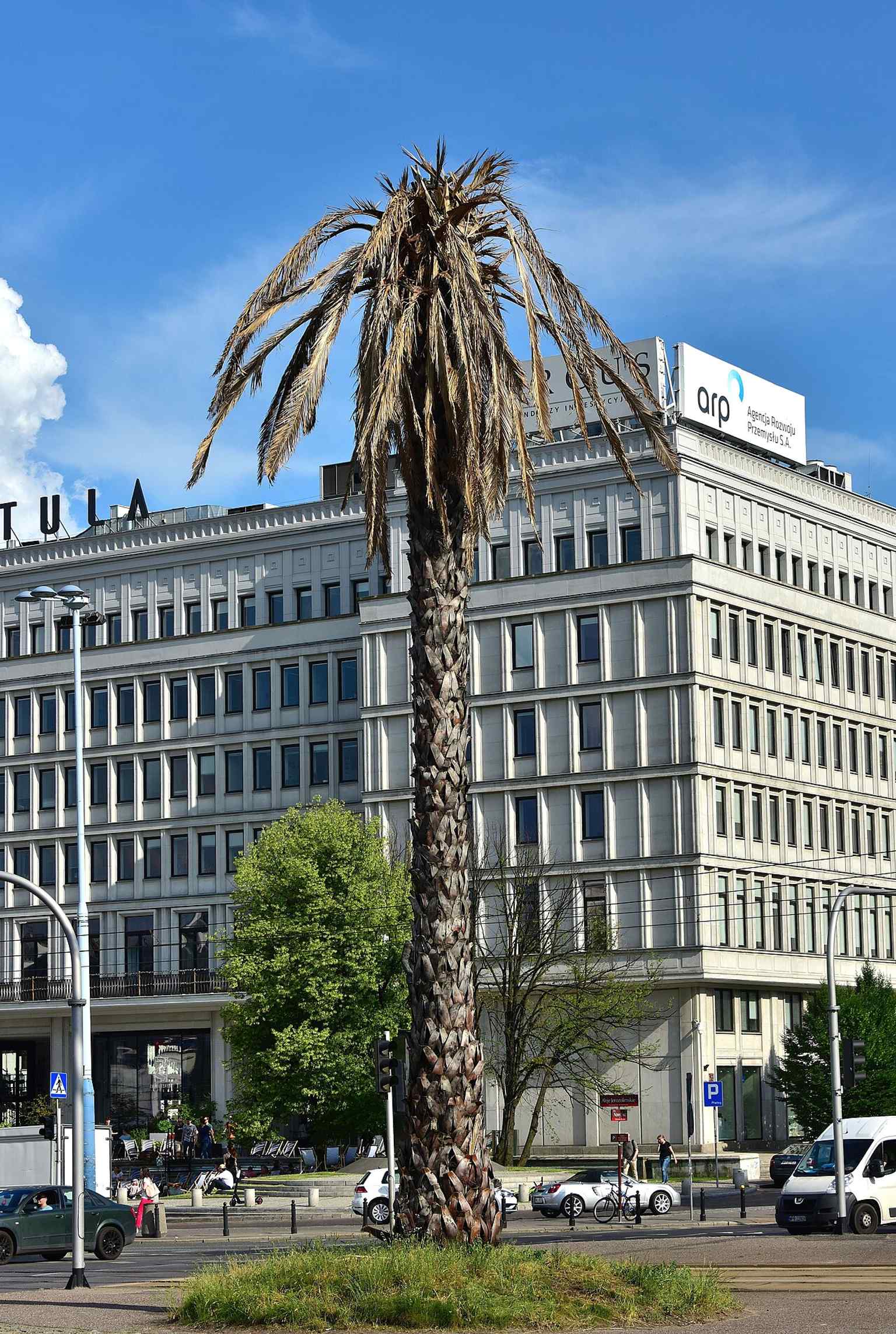
In two thousand nineteen, the green fronds were replaced with dead real leaves to warn about ecological collapse. If you want, compare the before and after image in the app - the same joke suddenly looks like a funeral.
In two thousand twenty-four, Rajkowska donated the work to Warsaw’s Museum of Modern Art, and engineers helped restore it with seventy-four new leaves cut by high-pressure water jet for better durability. Even absurdity needs maintenance.
When you’re ready, continue two minutes to the Free Word Memorial, where public space asks a different, and sharper, question. The museum connected to this work generally opens from late morning into early evening, shortens hours on Saturday, and closes on Sunday.