
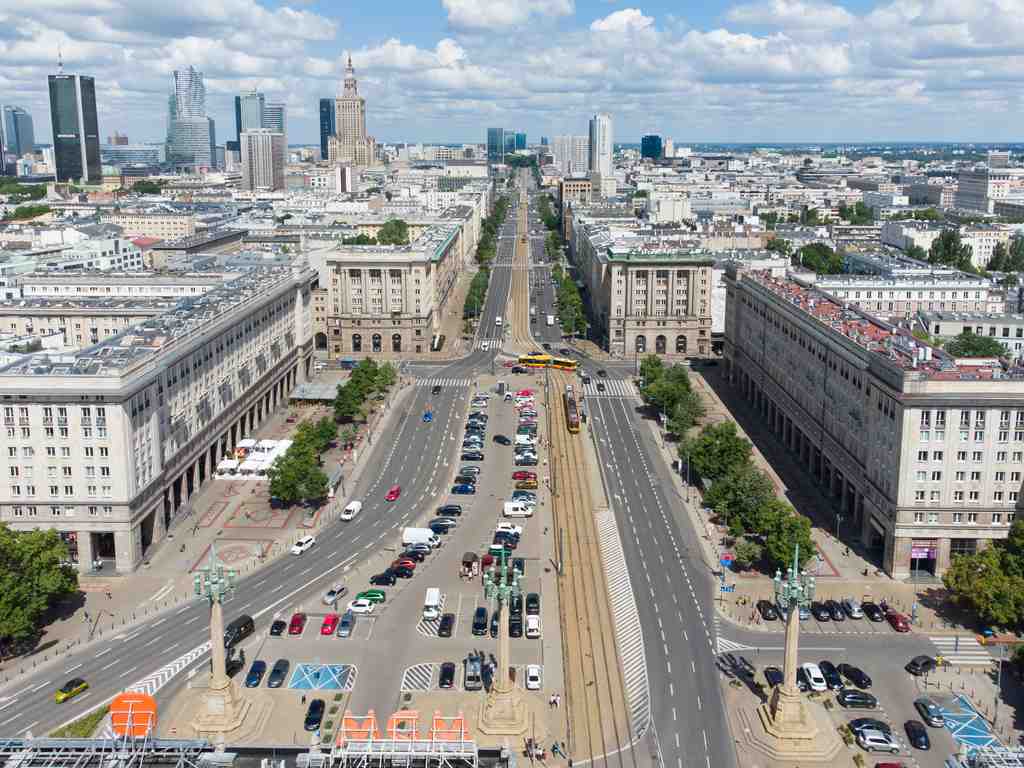
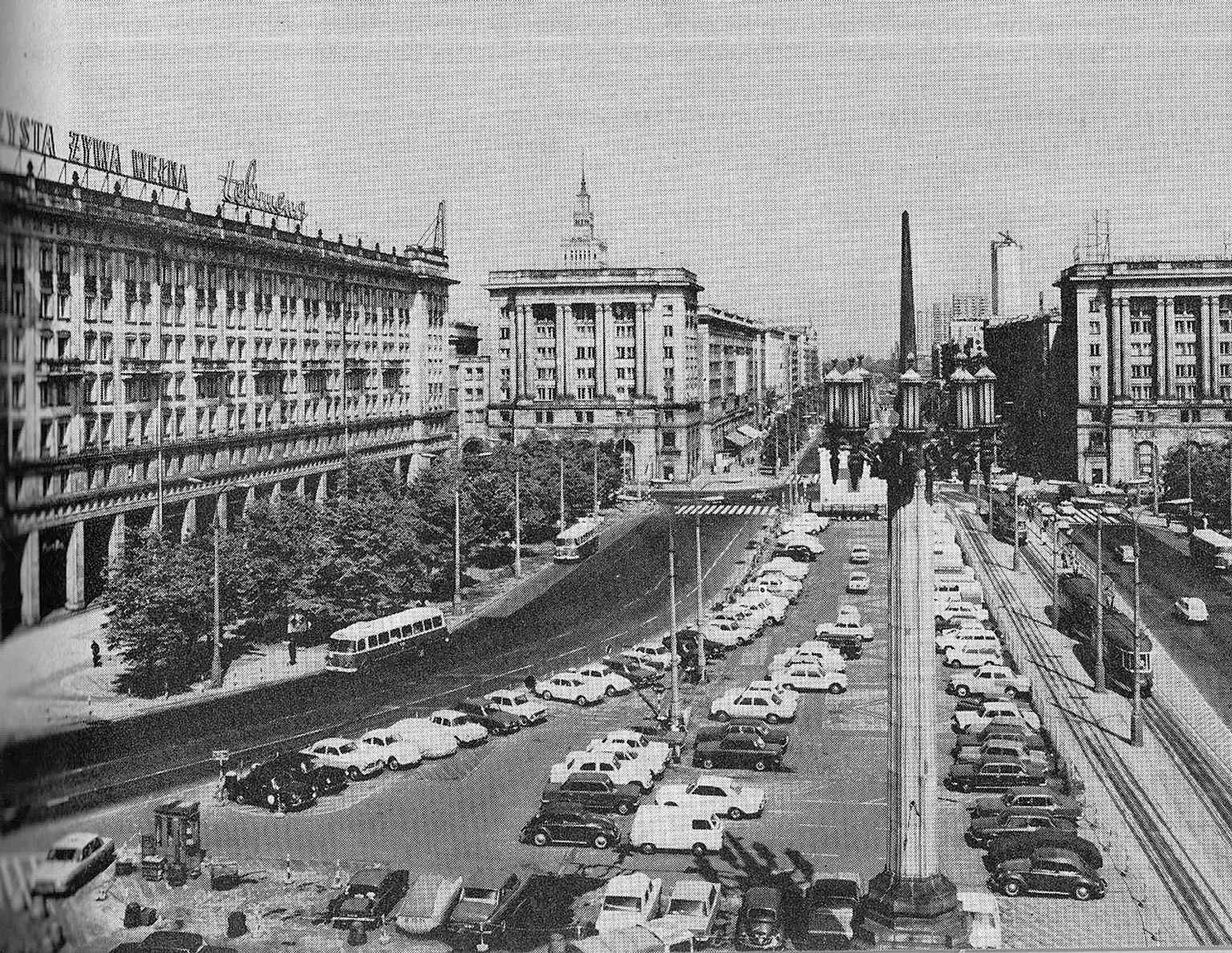
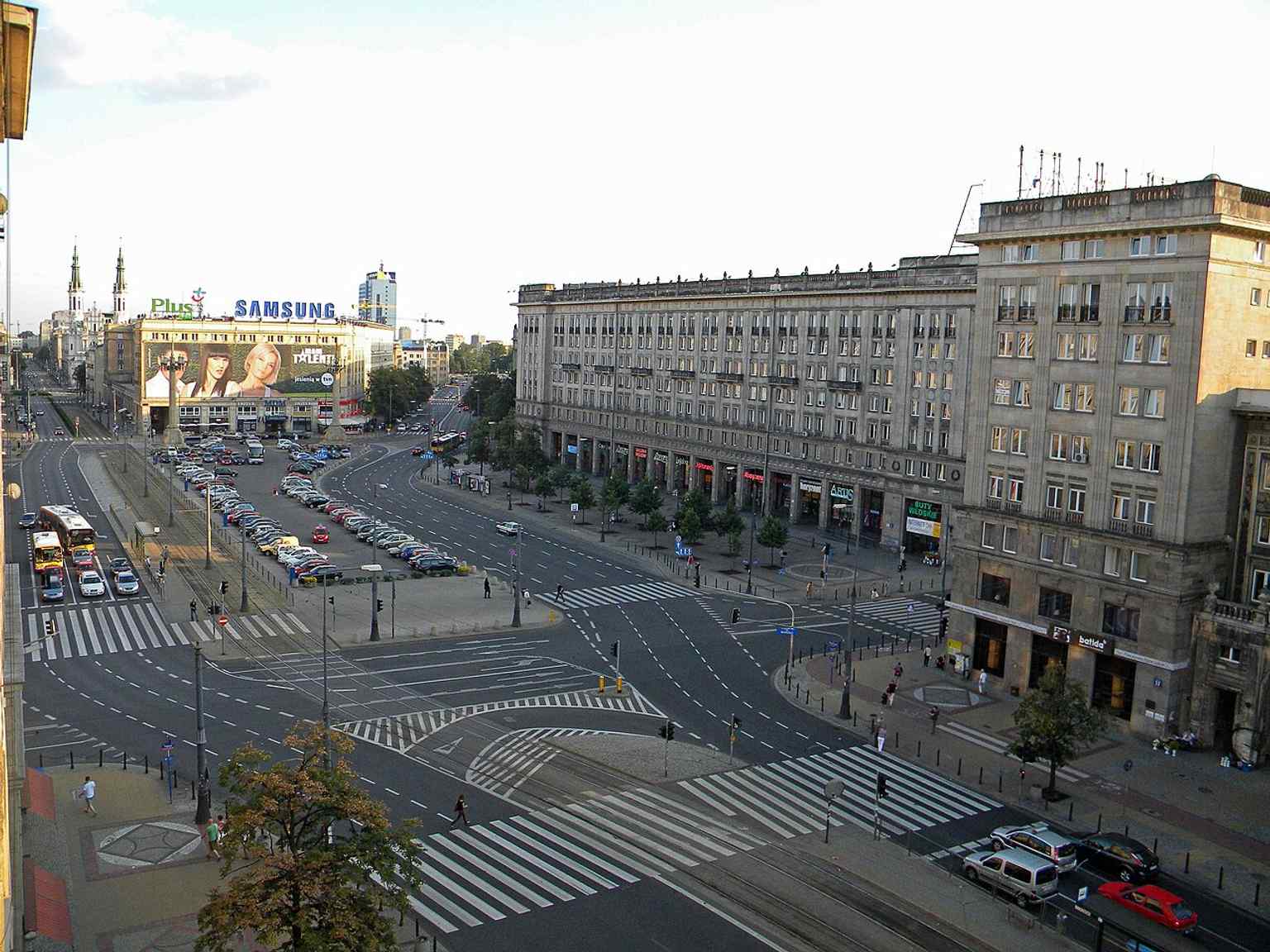
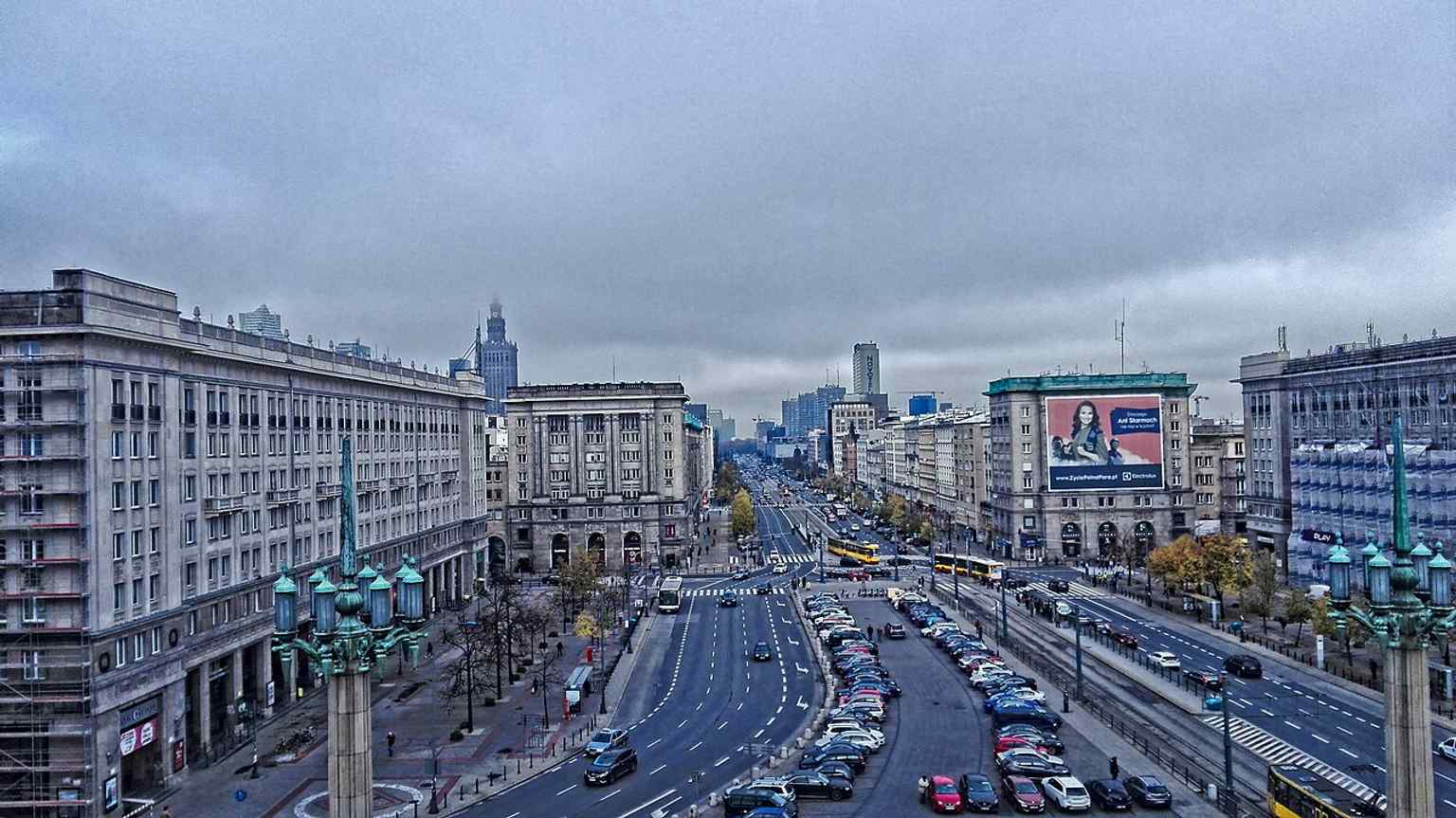
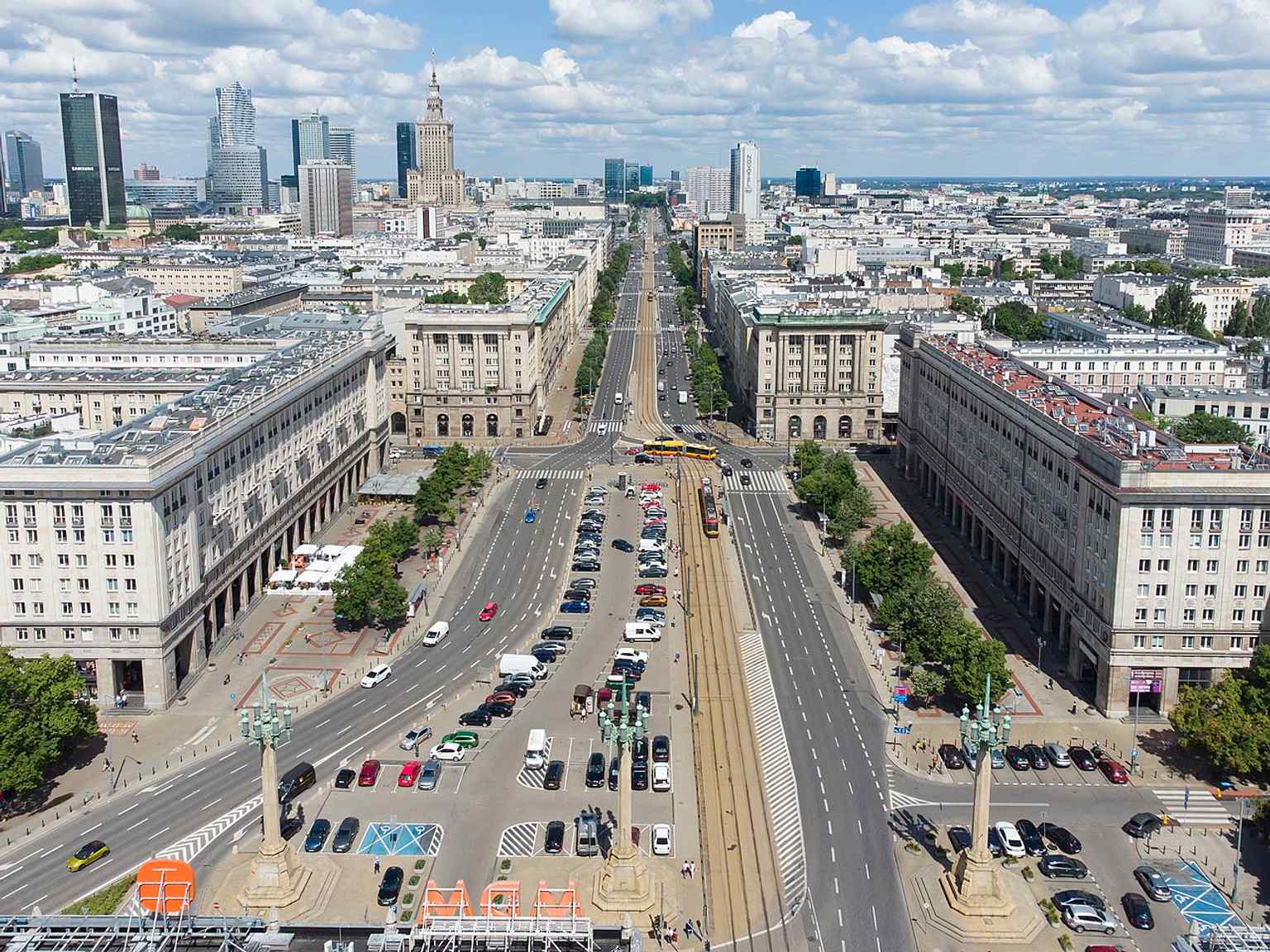
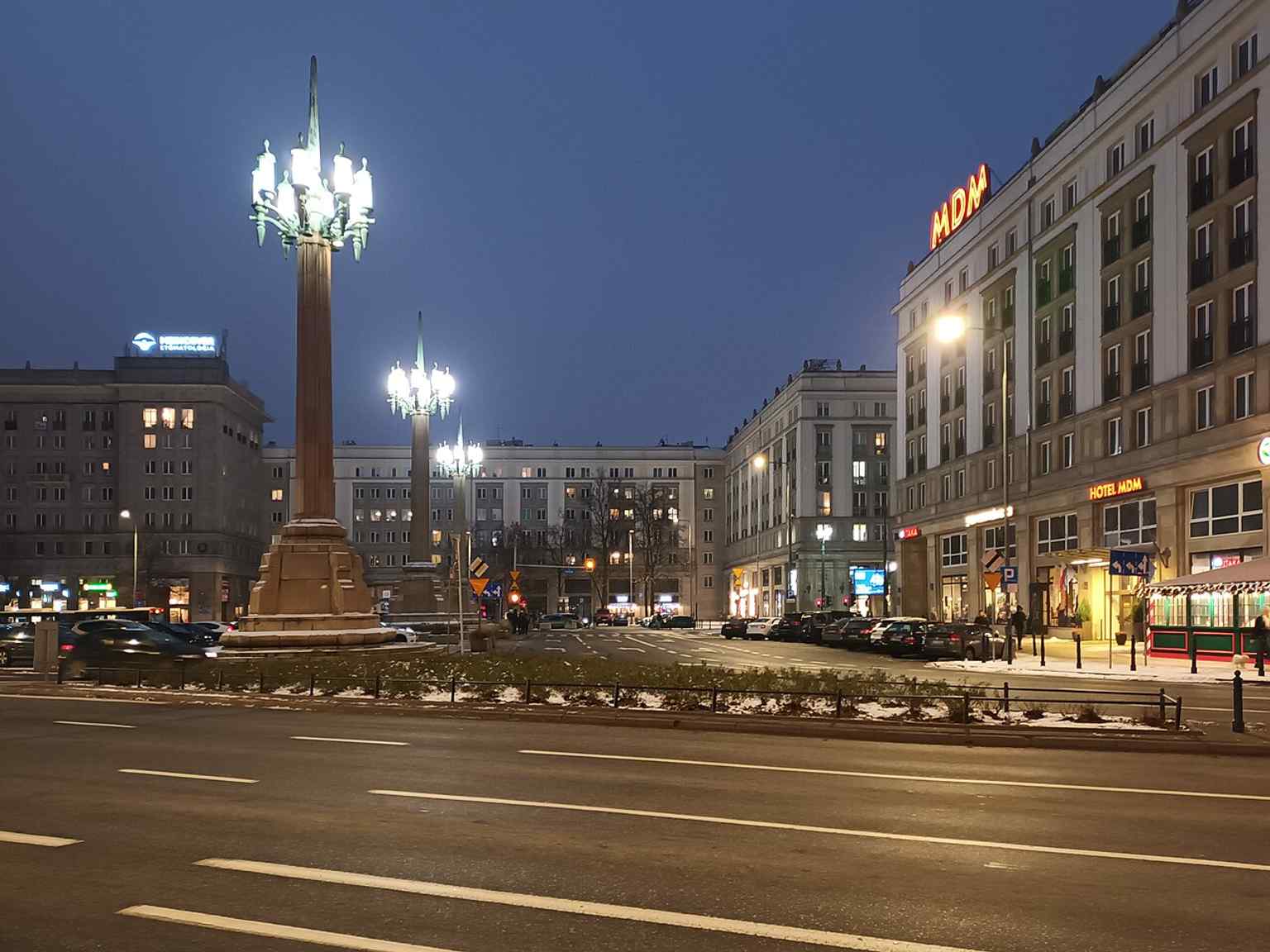
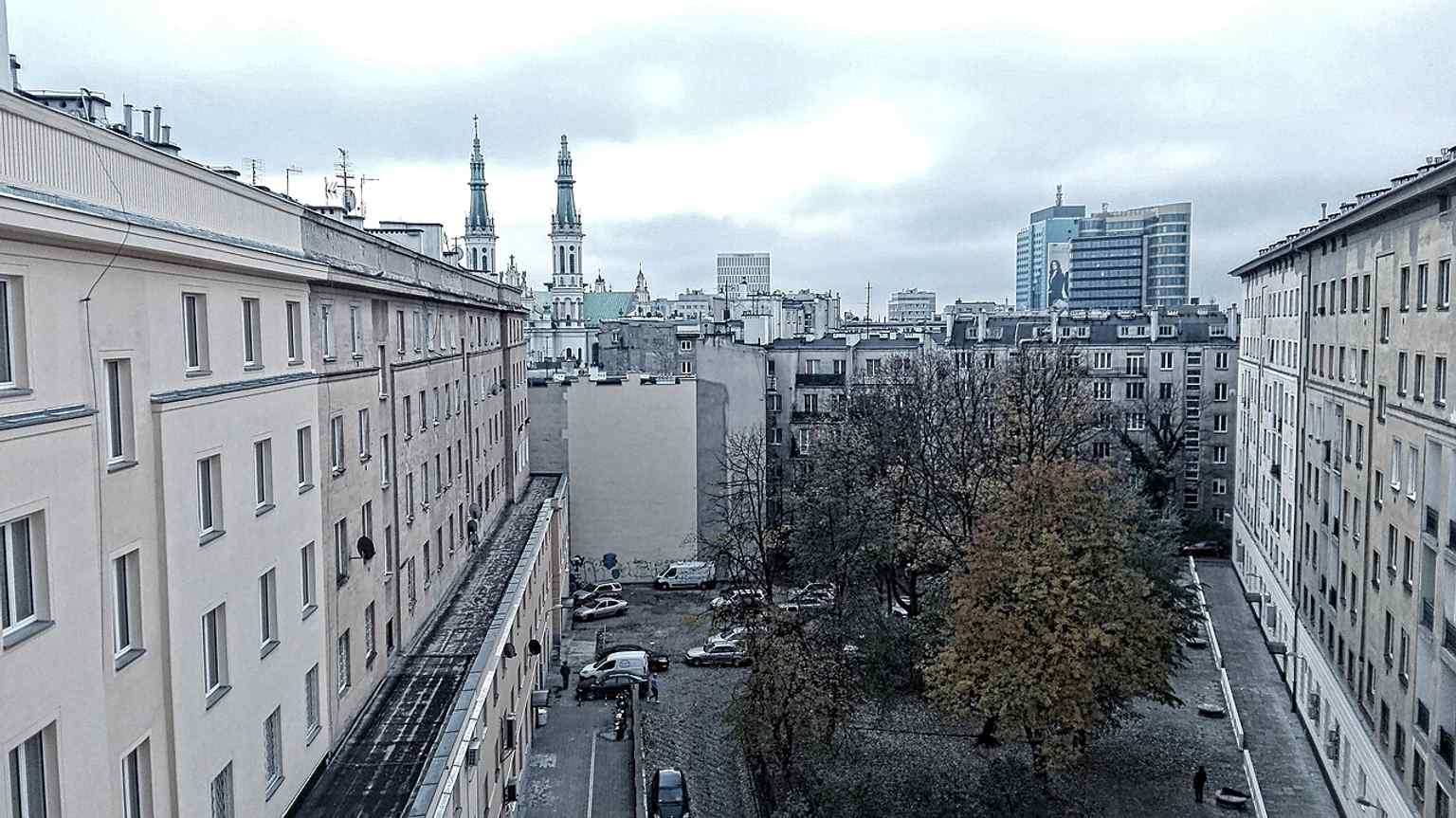
Ahead of you is a broad stone-and-plaster square framed by six- and seven-story blocky façades, with the Hotel M-D-M anchoring one edge and three tall candelabra-like lamp pillars marking the open space.
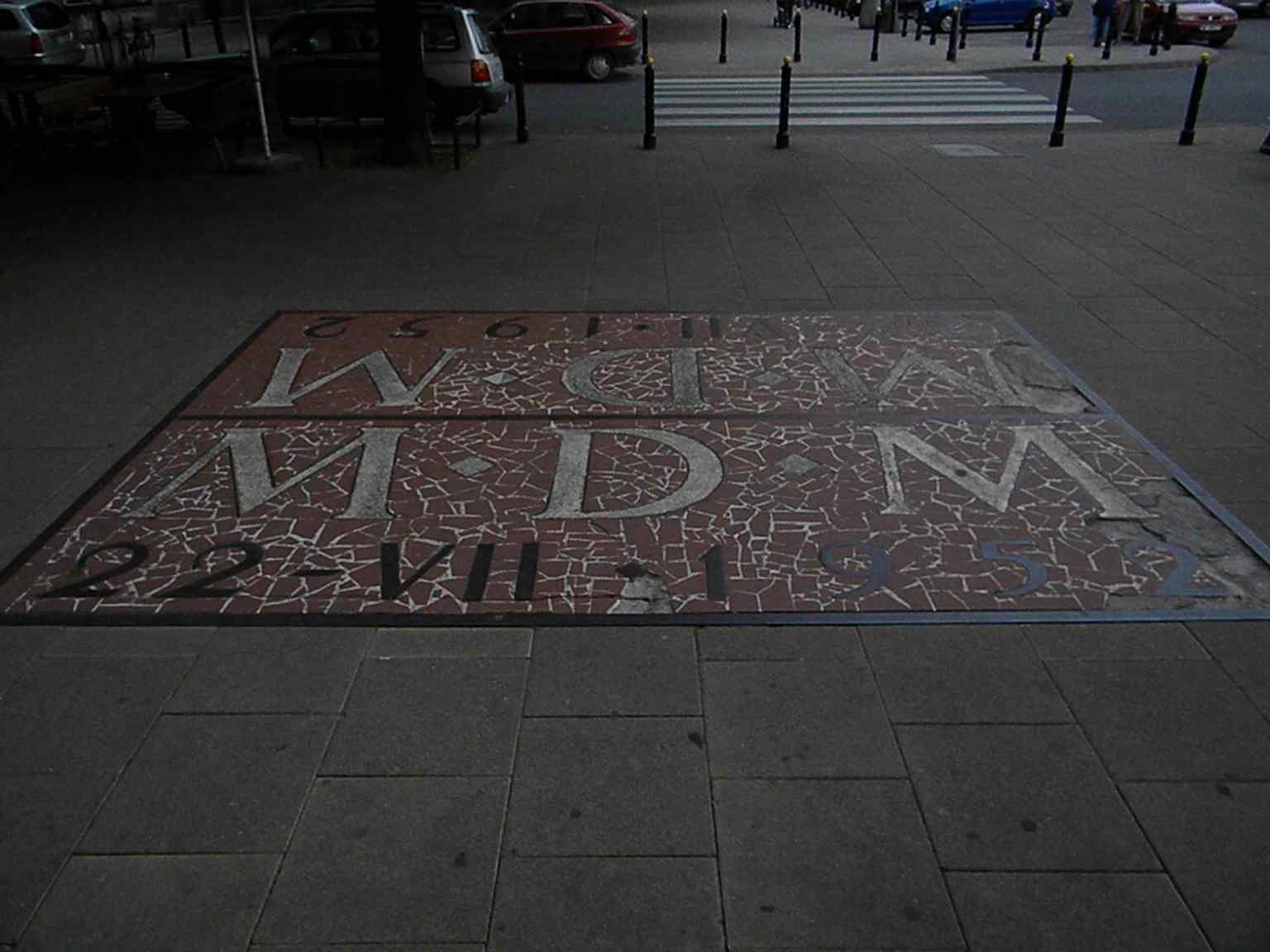
Constitution Square is socialist realism at urban scale: not just housing, but choreography. The whole M-D-M ensemble, the Marszałkowska Residential District, opened in nineteen fifty-two to organize how people lived, moved, shopped, and looked in public. In other words, it was a neighborhood designed to perform certainty... which is a very ambitious job for masonry.
Planners cut this square into the axis of Marszałkowska Street after the war, sweeping away the older street grid and even demolishing surviving buildings to remake the area from scratch. They shifted Piękna and Koszykowa Streets, added Waryńskiego, and turned this junction into a giant ideological hinge. Contemporary plans imagined housing for about forty-five thousand workers and their families, with shops, cafés, restaurants, travel agencies, and Orbis tourist offices at ground level, so the district could function almost like a self-contained city.
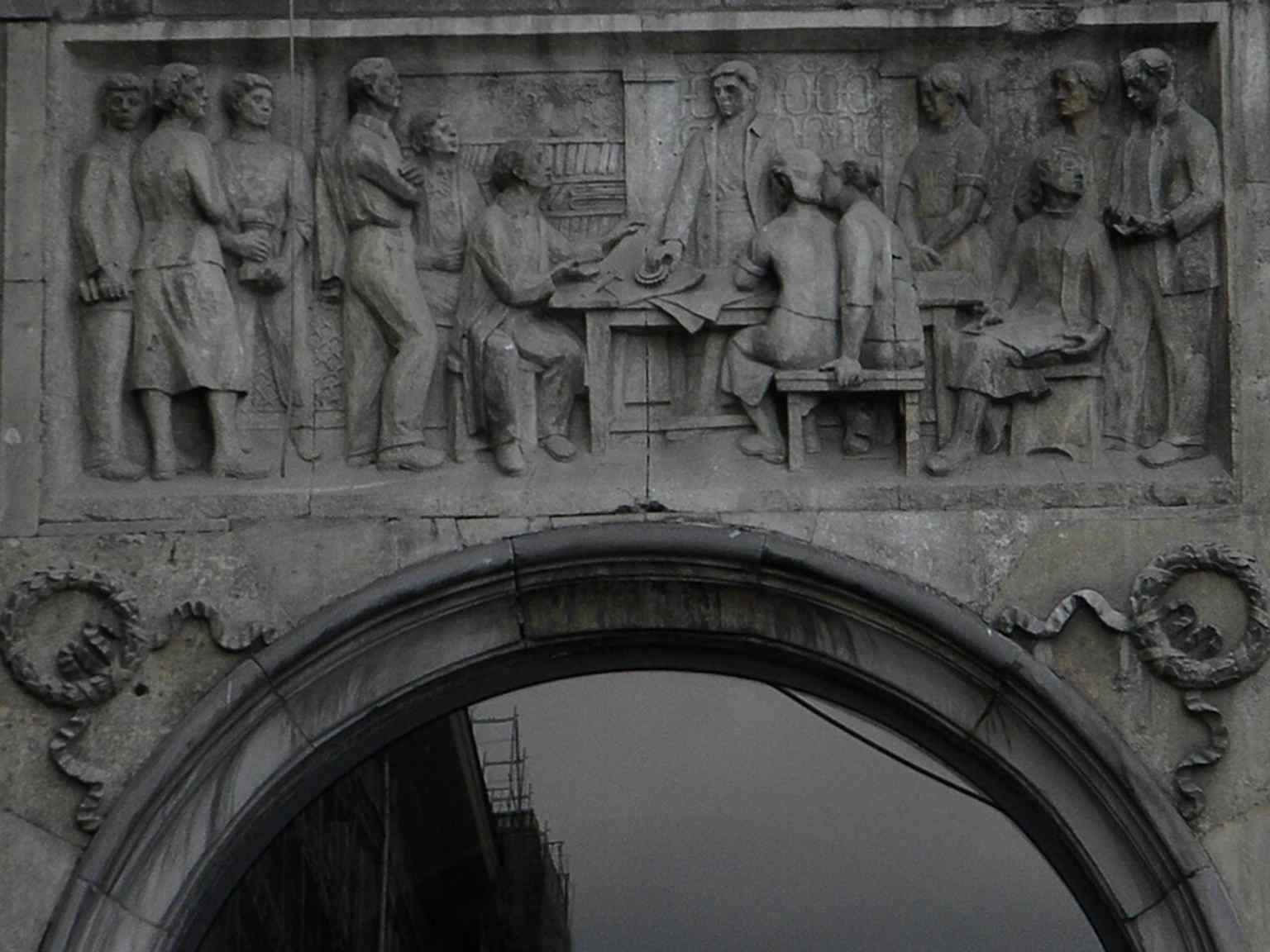
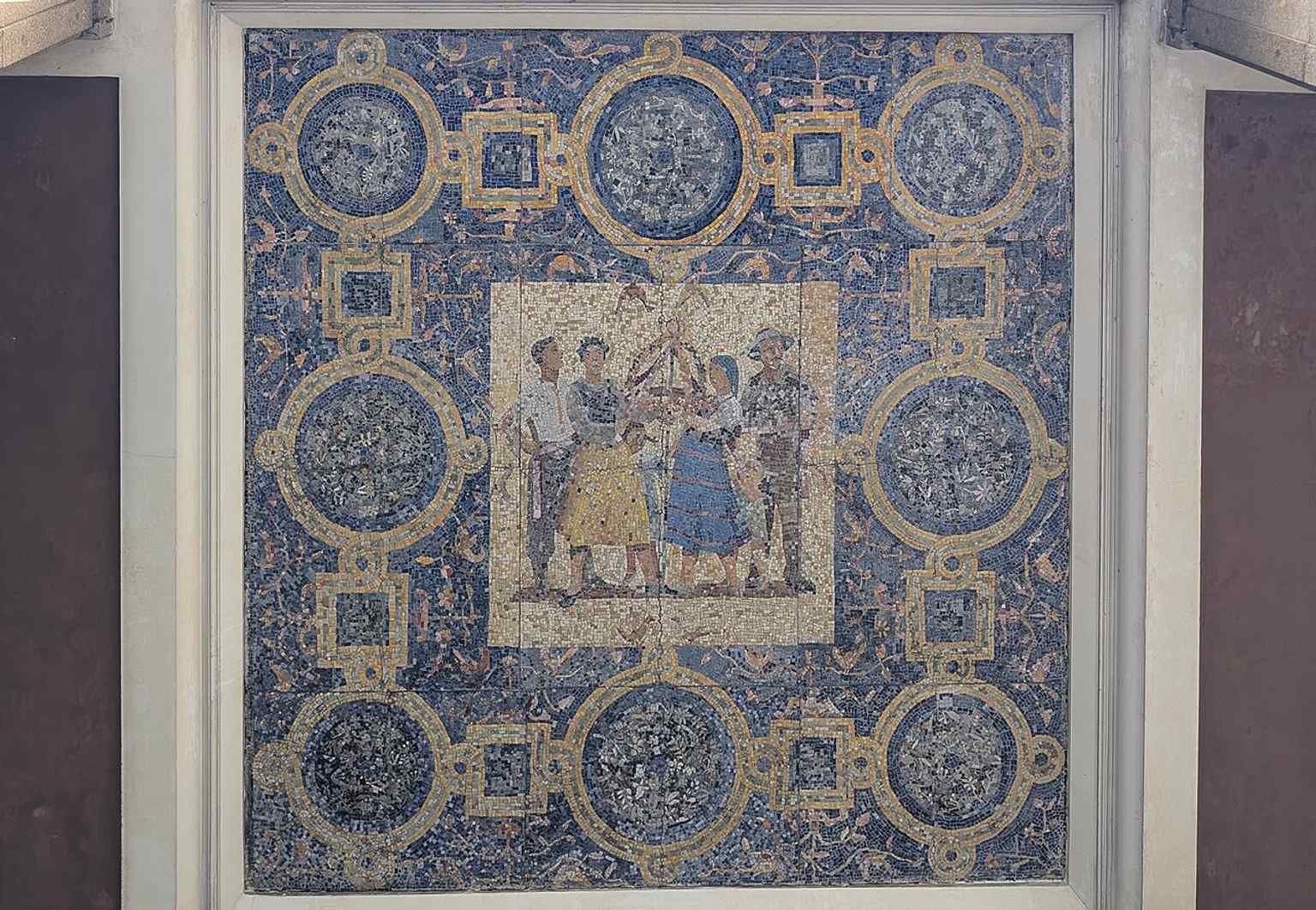
The style mattered. Socialist realism meant symmetry, heavy façades, and heroic decoration that made the state look permanent. But the architects also borrowed from the earlier work of Jan Heurich Junior, so the square nodded to older Warsaw while advertising a new political order. Rewritten space, very literally.
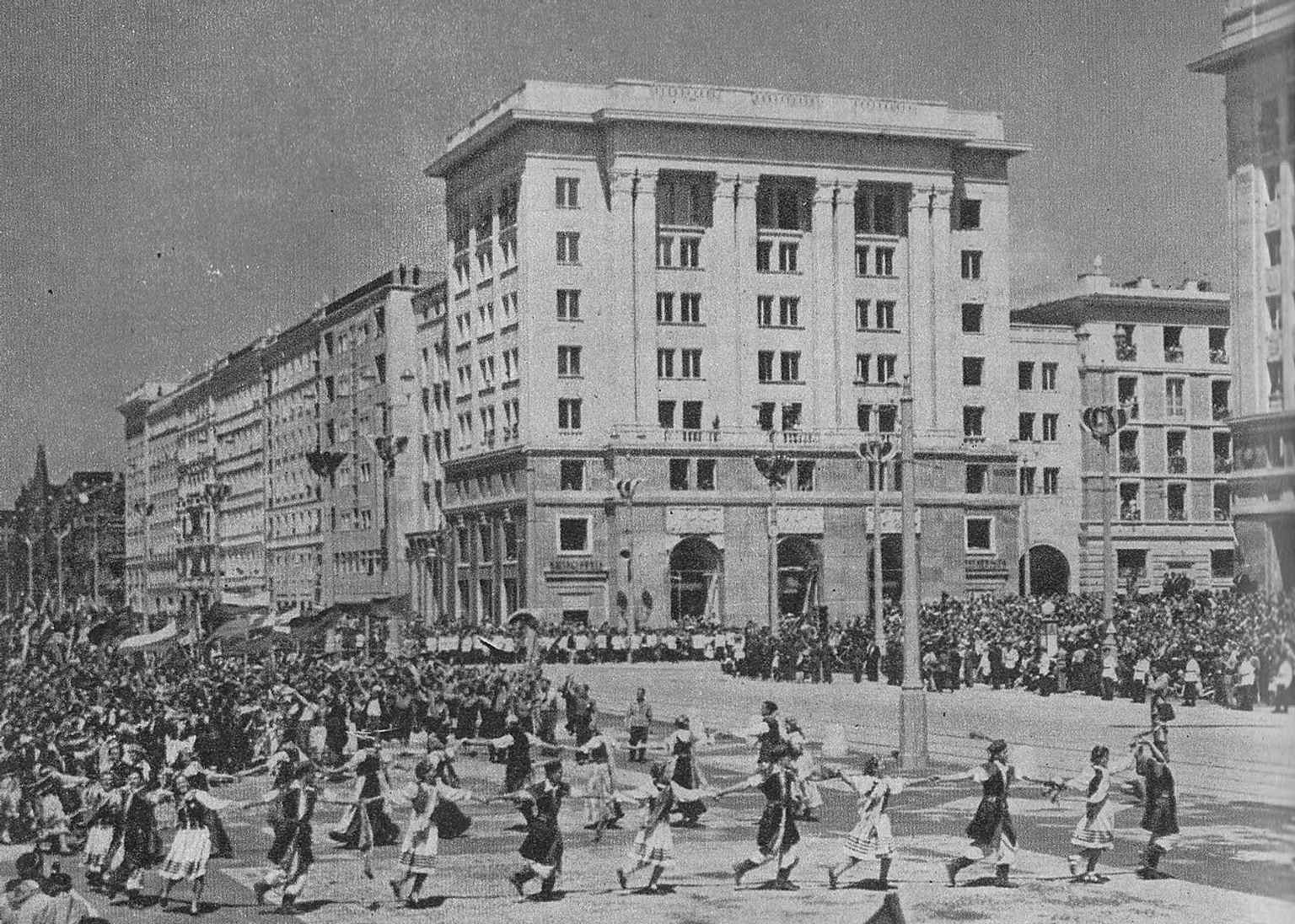
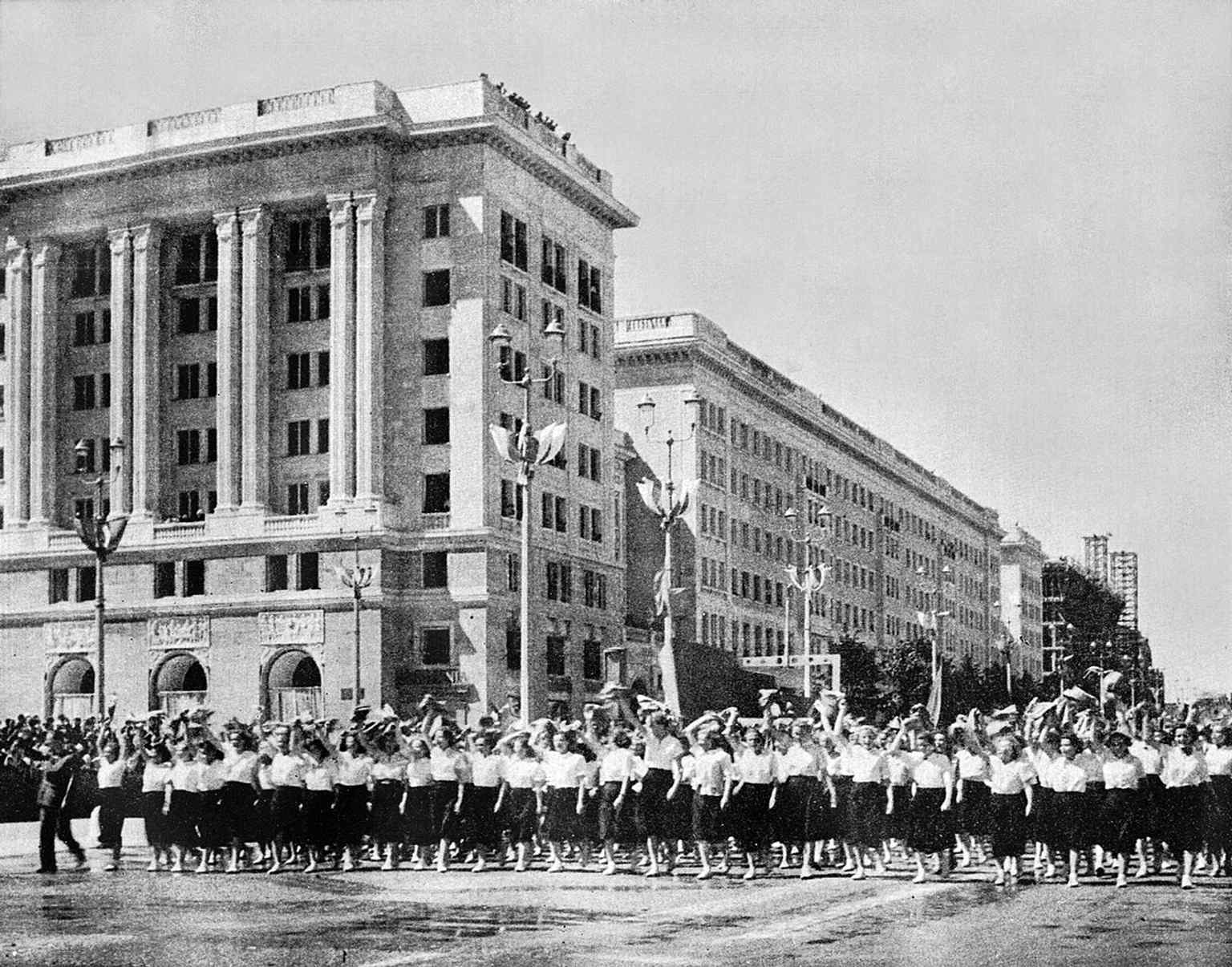
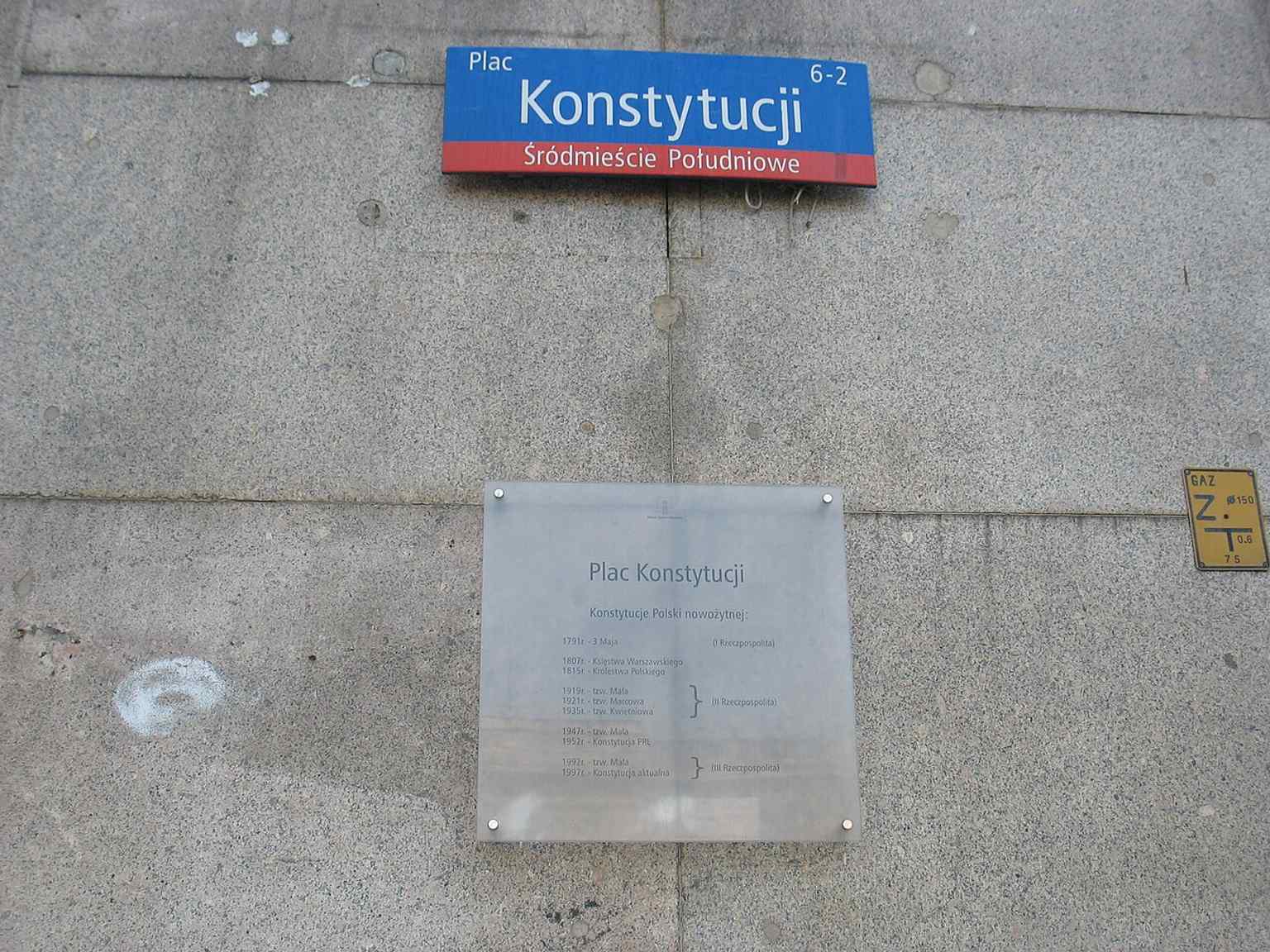
Its name came first from politics, too. Authorities named the square on the nineteenth of July, nineteen fifty-two, after the Constitution of the Polish People’s Republic, which they ratified three days later, on the very day the square opened. The ceremony was pure stagecraft: delegations from China and the Soviet Union marched here with Polish children before party leader Bolesław Bierut, and the route led down Marszałkowska toward the great parade grounds farther north. If you want the official mood, have a quick look at the opening-day photo in the app.
Yet daily life kept spoiling the script. The square’s center was supposed to hold a grand fountain; instead it became a car park. One corner later took the name Pakulski Brothers Alley, recalling prewar grocers whose shop once stood here. At number six, the café Niespodzianka served as headquarters for Warsaw’s Solidarity Citizens’ Committee during the nineteen eighty-nine election campaign. A former communist showpiece helping organize democracy... Warsaw does enjoy irony.
In nineteen ninety-nine, officials even tried to rename the square after Ronald Reagan. The campaign failed, so the old communist-era name stayed put, one of the last of its kind in the city. Meanwhile, the planned metro station began in the nineteen eighties, stalled in nineteen eighty-nine, and only much later crawled back to life. Grand plans, interrupted by reality. Again.
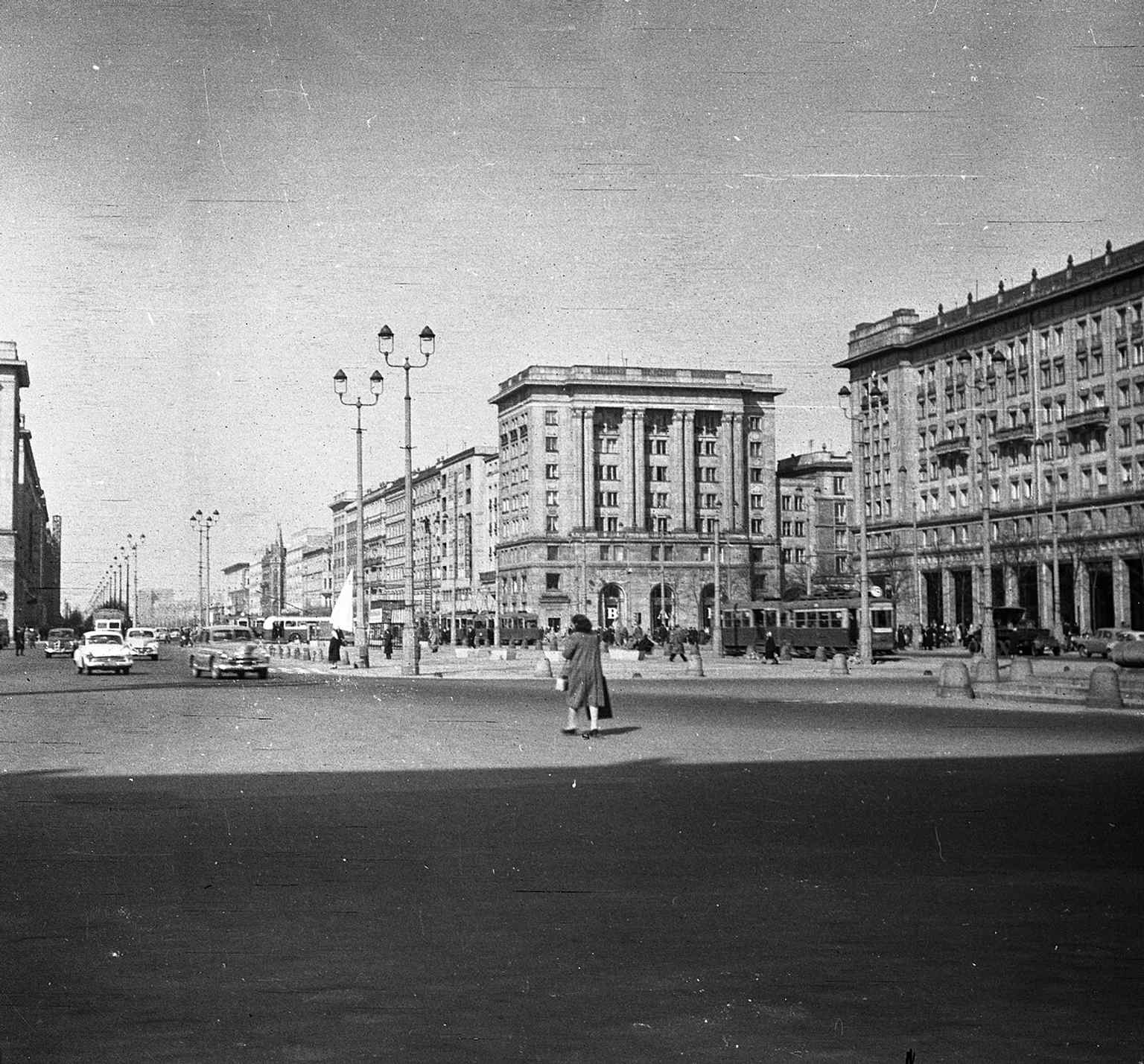
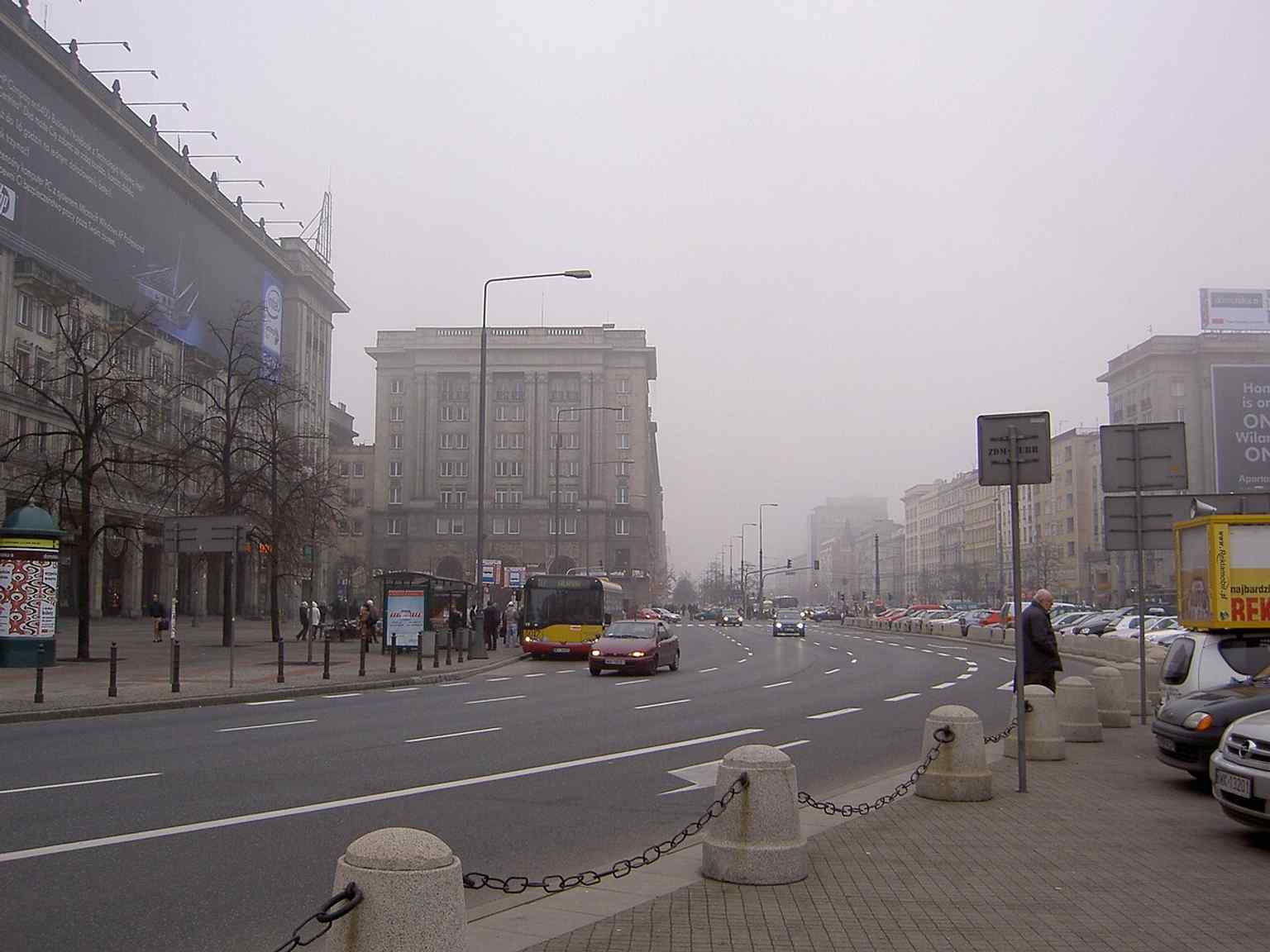
If you check the before-and-after view, you’ll see the traffic thicken and the city speed up, while the postwar geometry barely blinks.
So this place lives a double life: a fossil of propaganda, and a working city room full of errands, trams, memories, and stubborn reuse. Stay right here... next we’ll look even closer at Constitution Square in Warsaw.






%20az%20ulica%20Marsza%C5%82kowska%20fel%C3%A9%20n%C3%A9zve.%20Fortepan%2075021.jpg)


%20Hanna%20%C5%BBu%C5%82awska%20Plac%20Konstytucji%20(2).jpg)
