Krakow Audio Tour: Riddles, Art and Treasures of the Medieval Heart
A dragon once haunted these cobbled streets and under every archway, Kraków’s secrets still echo. This self-guided audio tour leads straight into the tangled legends and living history that most wanderers overlook. What priceless artwork vanished from the Musée Czartoryski during wartime chaos and almost never returned? Who was the mysterious trumpeter whose song still breaks off mid-note from the heights of St. Mary's Basilica each hour? Was there truly a tremor so strong it crumbled a medieval church in one terrifying night? Step through a city shaped by grand dynasties, rebellion, loss and dazzling resurrection. Each alley vibrates with drama. Follow twisting clues through palaces, sacred halls and shadowy corners as Kraków reveals itself in full technicolor, unexpected and alive. Trace the dragon’s path. Begin the adventure—and let Kraków whisper its secrets directly to you.
Tour preview
About this tour
- scheduleDuration 40–60 minsGo at your own pace
- straighten2.5 km walking routeFollow the guided path
- location_on
- wifi_offWorks offlineDownload once, use anywhere
- all_inclusiveLifetime accessReplay anytime, forever
- location_onStarts at Gołębia Street in Krakow
Stops on this tour
You’ve made it to the grand finale of our Kraków adventure-Gołębia Street! Look around you: history practically oozes from these cobblestones, and if these buildings could talk,…Read moreShow less
You’ve made it to the grand finale of our Kraków adventure-Gołębia Street! Look around you: history practically oozes from these cobblestones, and if these buildings could talk, oh, the stories they would whisper-or maybe shout, depending on whether it’s exam season at the Jagiellonian University just next door. Feel that breeze? Imagine it’s carrying the voices of professors and students from centuries past, as Gołębia Street is home to some of Jagiellonian University’s most iconic halls, including Collegium Novum and Collegium Witkowskiego. If you listen closely, you might just hear the shuffle of book-laden scholars and the distant jingle of a professor’s bicycle bell. In 1830, Gołębia gleamed with a new kind of magic-gas lamps! It was the very first street in Kraków, and all of Poland, to be lit by gas, thanks to the fantastic experiments of professor Karol Mohr. Imagine the gas hissing through pipes, the street flickering into a gentle, golden glow-no more tripping over pigeons in the dark! Yes, “gołębia” means “pigeon,” so keep an eye out, they may have academic ambitions too! And what about building number one? That’s the legendary Kamienica Niderlandowska, once belonging to the Ankwicz family, with a marble coat of arms to greet you. Here’s a heart-tugger: Adam Mickiewicz, Poland’s superstar poet, fell hopelessly in love with Henrietta Ewa Ankwiczówna. But her father thought Mickiewicz was more ‘starving artist’ than ‘eligible bachelor’ and whisked her away to Kraków from Rome. She inspired not just poems, but heartbreak, scandals, and, reportedly, some legendary shopping sprees. Gołębia Street has seen student riots, bookbinders like Robert Jahoda meticulously crafting covers, and even a house burned down after a theological debate got… let’s say, out of hand. Who knew academia could be so dramatic? So as you stroll, remember: every stone could tell a story-of romance, revolution, or just a really good university prank. Kraków never runs out of tales, and neither does Gołębia Street.
Open dedicated page →Directly ahead, Bracka Street winds gracefully away from the Main Square, lively with pedestrians and colorful flags, nestled between elegant cream-colored townhouses and crowned…Read moreShow less
Directly ahead, Bracka Street winds gracefully away from the Main Square, lively with pedestrians and colorful flags, nestled between elegant cream-colored townhouses and crowned in the distance by a clocktower. Welcome to Bracka Street-a street with more than a few stories up its sleeve! While most streets shooting out from the Main Square go as straight as a ruler, Bracka takes a charming turn, curving just slightly as if it’s in on a secret from the past. This twist isn’t an accident-long before Kraków’s city planners got to work in 1257, there were already buildings here, and the new map-makers had to work around them. Every cobblestone here has a tale to tell, so let’s wander with our ears and eyes wide open. Feel the air shift every June-Bracka Street hosts its own celebration along with neighboring Gołębia. Locals spill out into the street, laughter bounces off old stone walls, and poetry seems to float right above the crowd. Speaking of poetry, Bracka gained modern fame from a beloved song by Grzegorz Turnau. Don’t be surprised if you leave humming its melody! The houses here are like a greatest hits album from Kraków’s past. Number 1 sheltered the much-admired poet Władysław Orkan from the Tatra Mountains for over fifty years. Artists and dreamers once gathered at the “Bodega” wine bar here, perched on barrels instead of chairs-no surprise laughter sometimes burst louder than the popping of corks. Keep your eyes peeled for number 3-5-behind these walls stands a haunted remnant of the 13th century: a stone tower, built by Henryk, who had a knack for brotherly mischief (he was the brother of the city’s own chief). Over the centuries, the tower transformed, eventually becoming a dormitory for Hungarian students-imagine young scholars, their heads bowed over textbooks, mischief and ambition coiling in the air. On the façade, you’ll see a granite plaque in Polish and Hungarian, a reminder that this was home to generations of students traveling far from home to the great Jagiellonian University. But Bracka’s pleasures are not just visual. Pause at the “Nowa Prowincja” café and spot something magical: a poetry intercom installed at the entrance. Press a button and-poof!-the voices of Poland’s greatest poets play just for you: Wisława Szymborska, Czesław Miłosz, and more. Kraków is a UNESCO City of Literature, and Bracka Street is its lively living room. Keep exploring: at number 6, the old “House Under the White Head” stares back at you-a Medusa head, carved in the 17th century, twined with snakes, glowers imperiously over the door. A little drama for your wanderings! And there’s romance, too-at number 7, a grand house with a black marble family crest, where legend says poet Adam Mickiewicz once lost his heart to Henrietta Ewa Ankwiczówna. Sadly, her formidable father packed her off before any epic ballads could be written here, but the love story lives on in Polish literature. Trade glistens through Bracka’s past as well. Old-time goldsmiths and blacksmiths once hammered away in number 8; at number 9, socialite Florian Straszewski hosted soirées that surely left as many headaches as happy memories. Past fires and bombs, rebuilding and rebirth-the street wears its scars and triumphs like medals. Today, Bracka is home to university offices, artist's studios, and cheerful cafes
Open dedicated page →Look straight ahead for a tall, sturdy tower made of brick and stone with a clock face on either side and a graceful dark spire rising above the Main Market Square - it leans just…Read moreShow less
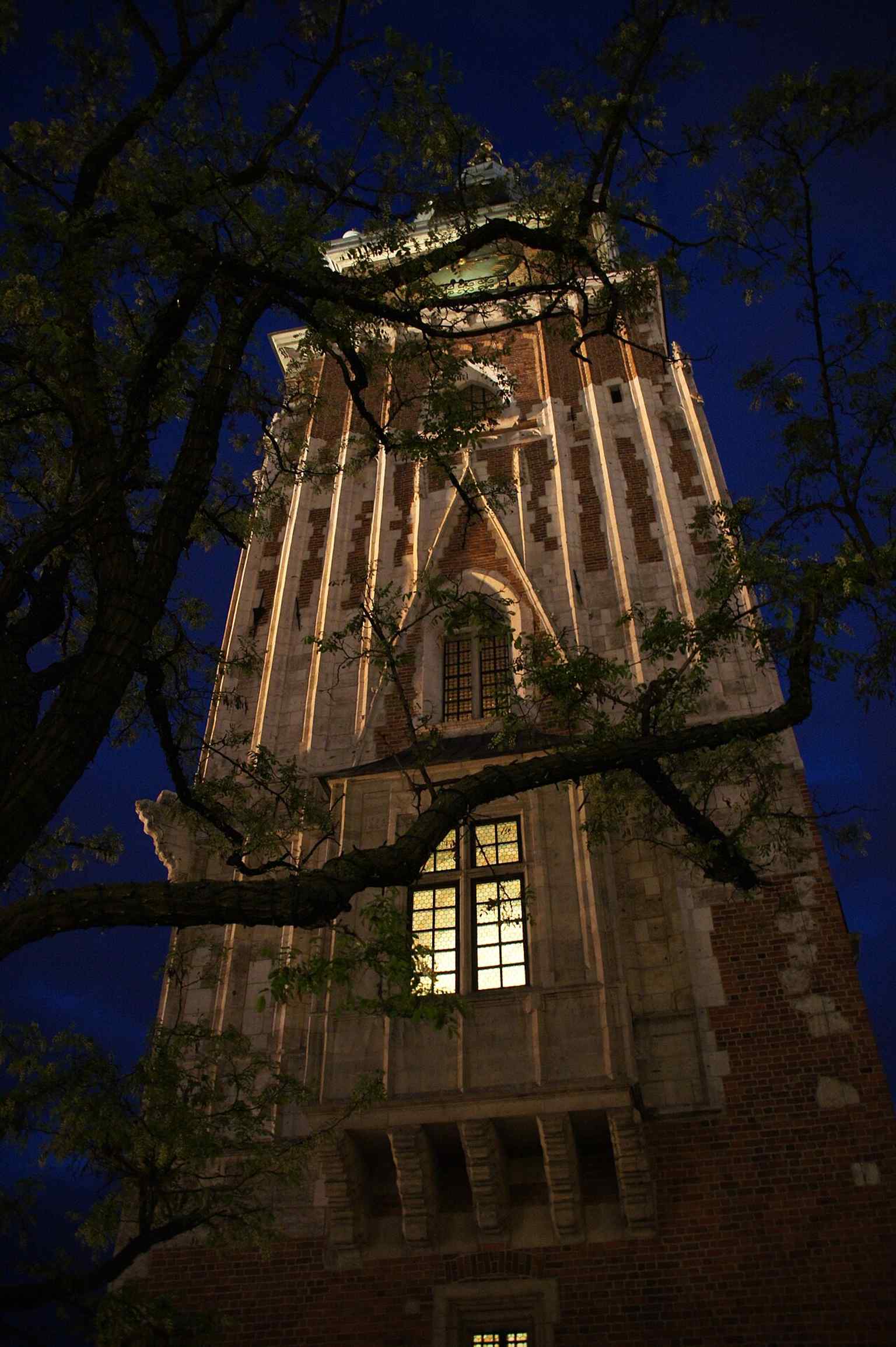
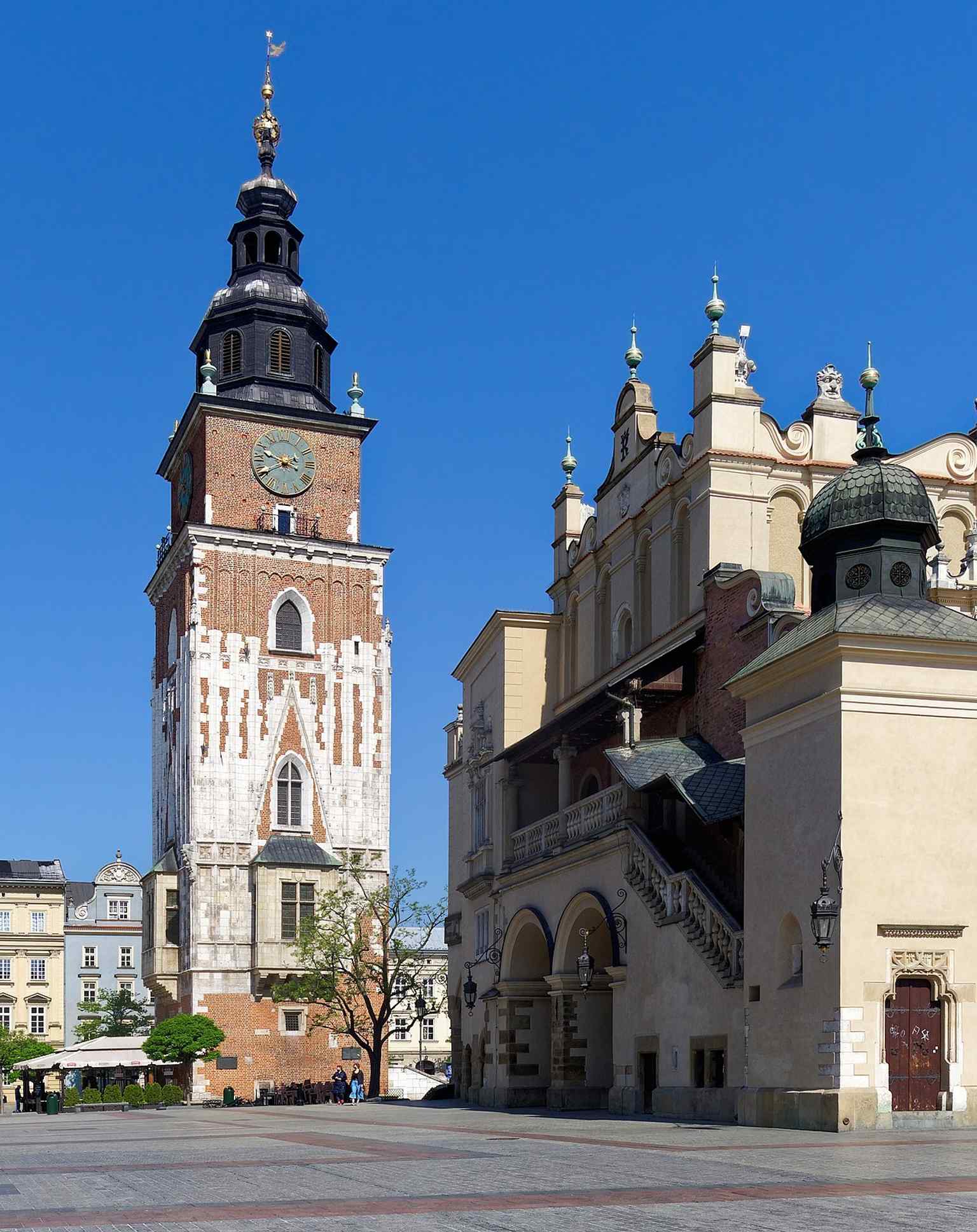
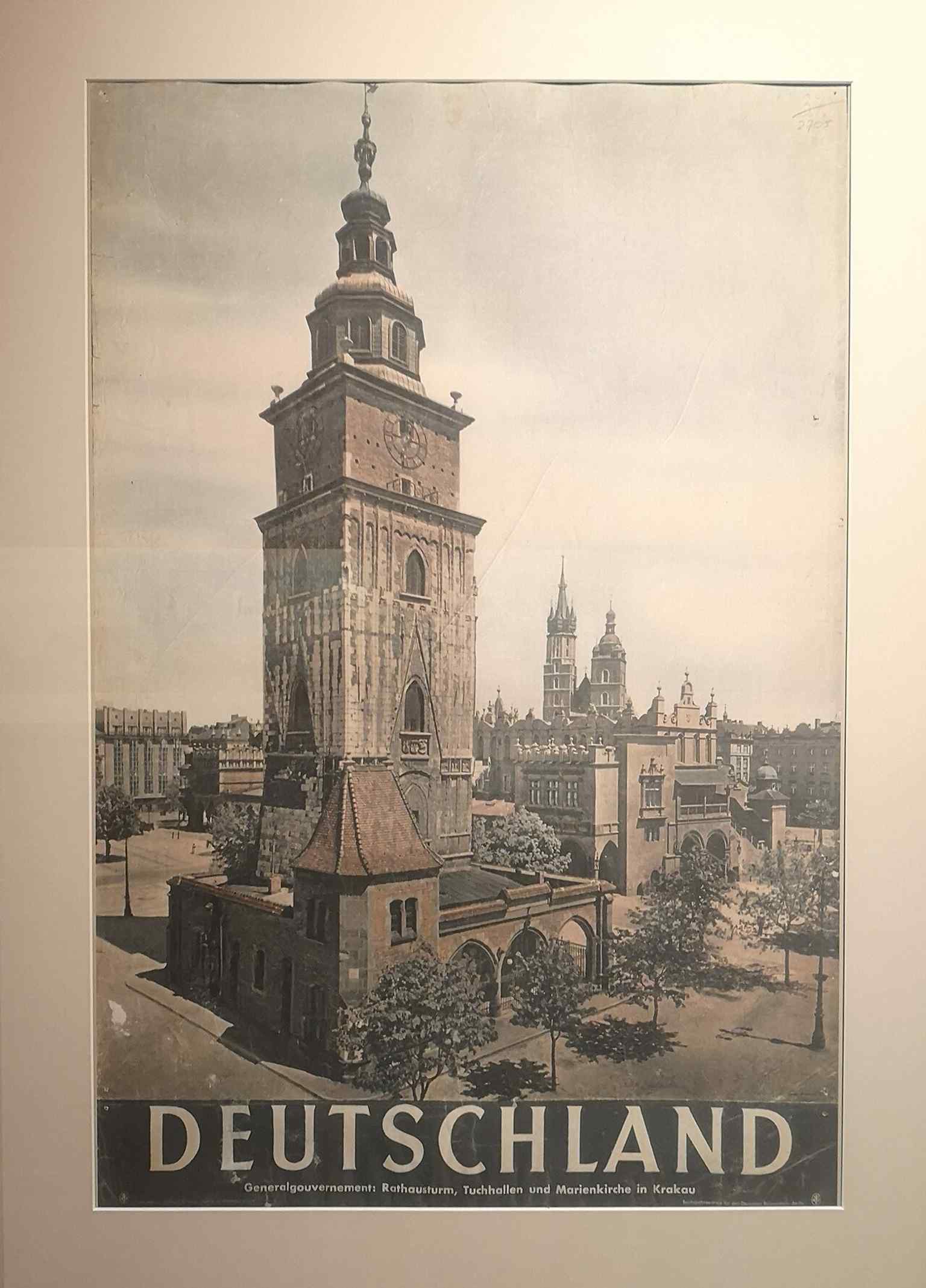
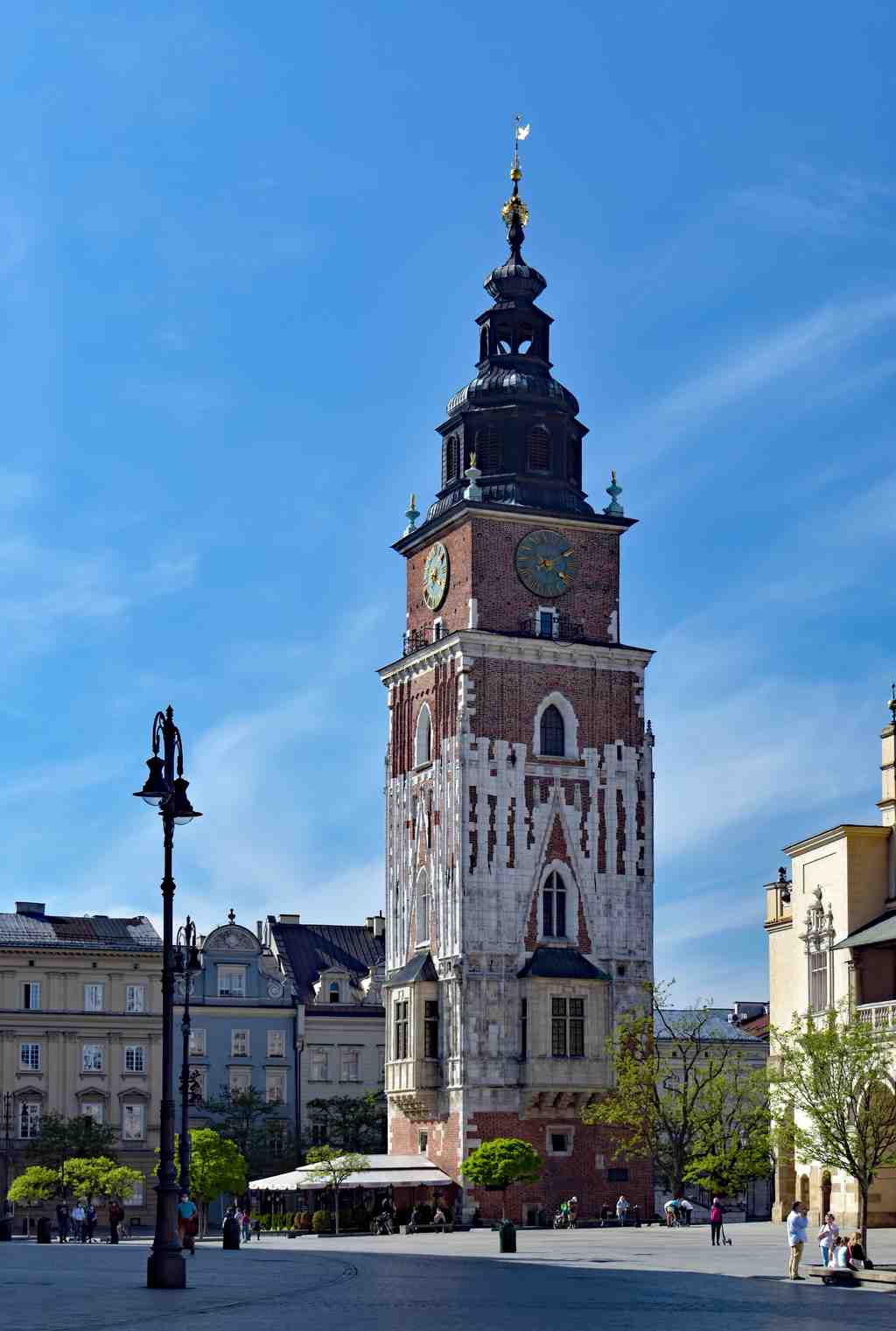
Look straight ahead for a tall, sturdy tower made of brick and stone with a clock face on either side and a graceful dark spire rising above the Main Market Square - it leans just a bit, but don’t worry, it’s not going anywhere! Now, imagine yourself back in the heart of medieval Kraków: the echo of horses’ hooves on cobblestones, merchants shouting their wares, and this mighty Town Hall Tower rising up above the bustling market. Built in the 14th century, it’s the last lonely survivor of Kraków’s old Town Hall, which was torn down in 1820 so the square could open up and party a little more. But this tower refused to leave the dance floor! Over the centuries, it’s seen all sorts of drama. Its cellars once housed not just city records and treasures, but also prisoners who met some rather uncomfortable torture devices-let’s just say you wouldn’t want to be in the “VIP section” down there. Standing 70 meters tall, the tower leans slightly thanks to a wild storm in 1703. Kraków’s answer to Pisa, maybe? It’s had its share of fashion crises, too: originally topped by a beautiful Gothic helmet, which went up in flames in 1680, it was later crowned with a flashy Baroque top by a famous royal architect. But that, too, eventually crumbled away, replaced by today’s simpler crown, a gift from an archbishop with a sense of style (and, I suppose, a smaller budget). Keep an eye out for the stone lions guarding the entrance-they look serious, but I think they secretly enjoy all the selfies. And above the doors you’ll spot the city’s coat-of-arms, a badge of civic pride. Fancy a panorama? Climb up for stunning views and check out the clever old clock, always ticking with atomic precision. These days, instead of tortures, the basement hosts performances that only torture you with laughter. When you stand before this tower, you’re looking at centuries of Kraków’s stories, mysteries, and a little bit of Gothic swagger.
Open dedicated page →
Show 10 more stopsShow fewer stopsexpand_moreexpand_less
Take a good look at the little stone church in front of you-this is the Church of St. Adalbert, or as locals call it, St. Wojciech. Hard to believe you’re facing one of the oldest…Read moreShow less
Take a good look at the little stone church in front of you-this is the Church of St. Adalbert, or as locals call it, St. Wojciech. Hard to believe you’re facing one of the oldest stone churches in Poland, right? Give or take a few centuries, we're talking about nearly *one thousand years* of history. Picture the square around you, not as it is now bustling with tourists and pigeons, but as it might have been in the 11th century: no pavement, no cafés-just muddy paths, merchants from across Europe with their noisy carts, and travelers stopping at this very church for a moment of rest (or maybe a prayer to sell those turnips at a good price). But let’s rewind further. Imagine a wooden chapel here at the end of the 10th century, so old they probably hadn't even invented the word "parking ticket." Soon after, the stone church you see took shape, its thick Romanesque walls standing strong while the rest of Kraków was still dreaming up its grand market square. In fact, this church was *already here* before the square existed-talk about being early to the party! Now, a quirky detail: the church floor stands below today’s street level. If you take a step inside, you’ll go *down*-that’s because centuries of new paving raised the square higher and higher, but the church preferred to keep its feet on the original ground. No, it’s not sinking. It just stayed put while the world piled up around it. St. Adalbert himself, the namesake, is the stuff of legend. He supposedly consecrated this church in 997 and gave powerful sermons right where you’re standing-before heading off to Prussia, where he paid the ultimate price for his faith. Rumor has it, when they got his body back, the Poles paid for it in gold-talk about expensive funerals! Over the centuries, this church has played host to citizens and nobility, witnessed wild market days, and survived remodels, most noticeably the Baroque facelift it got in the 17th century: taller walls, a dome, and some stylish stucco. It even served as the University Presbytery, where priests would deliver sermons that might make your old school lectures look positively exciting. For all its ancient mystique, these walls have more stories than a library. Inside, you’ll find the crypt turned museum, dedicated to the long, bustling history of this square. So, next time you hear the doors creak open, just imagine all the footsteps that have come before you. Standing out here, you’re part of Kraków’s living history-so don’t forget to say hi to St. Adalbert for me!
Open dedicated page →To spot the Church of the Assumption of the Blessed Virgin Mary, or St. Mary's Church, look for the towering red-brick building with two staggered, ornate towers right ahead,…Read moreShow less
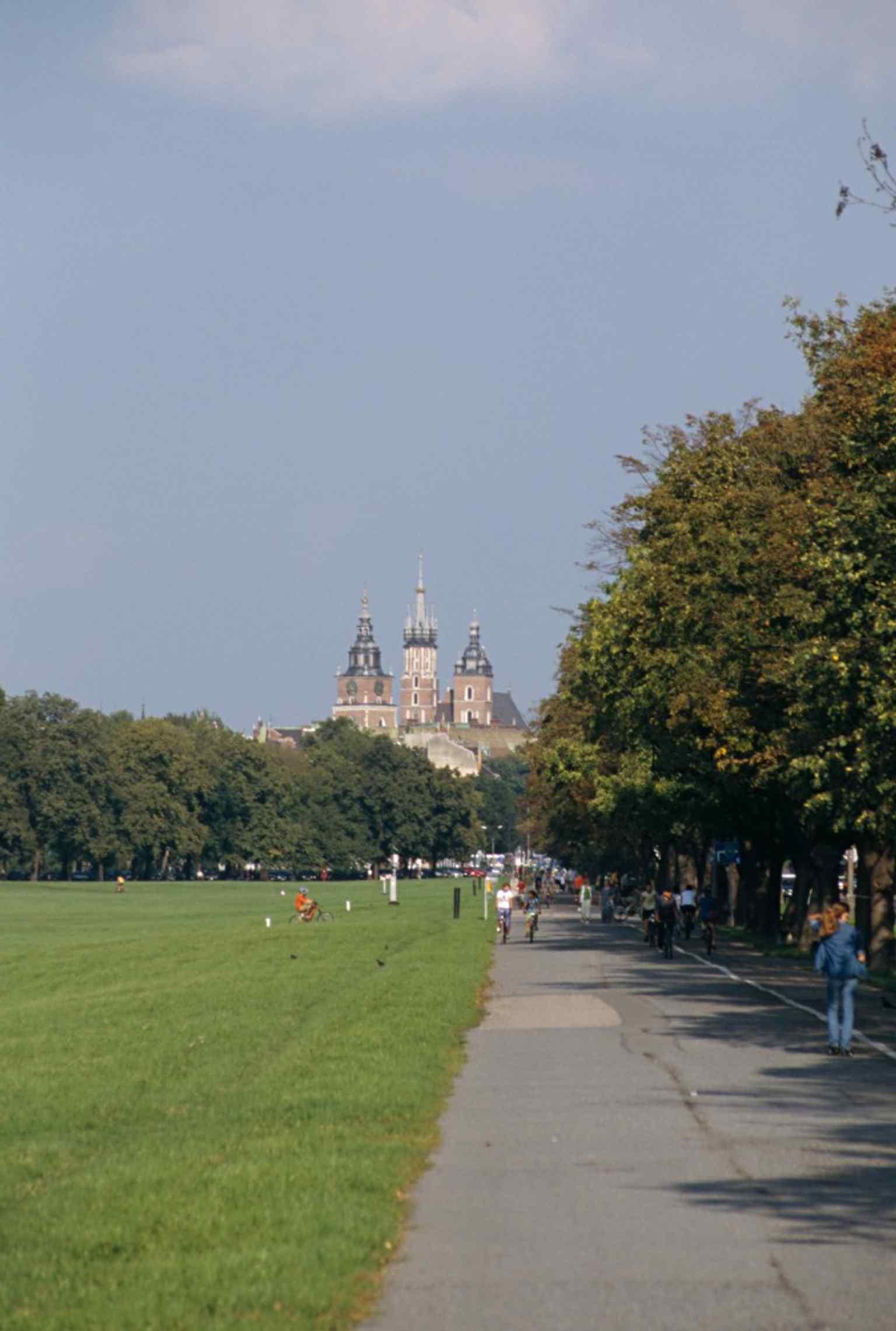
To spot the Church of the Assumption of the Blessed Virgin Mary, or St. Mary's Church, look for the towering red-brick building with two staggered, ornate towers right ahead, standing proudly at the north-eastern corner of Kraków’s Main Market Square. Imagine standing here in the shadow of those dramatic towers, with sunlight flickering on uneven medieval bricks, and the sound of footsteps echoing across the market square. This church has been through more plot twists than a soap opera! Its roots reach all the way back to 1221, when Bishop Iwo Odrowąż first founded it. But the peace didn’t last-just a few decades later, thundering hooves announced a Mongol invasion, and the building was destroyed. Kraków doesn’t give up easily, though! By 1300, locals laid new foundations and began constructing the early Gothic church you see now. As you gaze up, notice the northern tower-it’s taller, and a bit of a show-off, capped with a gilded crown that’s gleamed since 1666. Here’s something special: every single hour, day and night, a trumpet call, called the Hejnał, bursts from that very top window, only to cut off in mid-melody. Legend says the tune stops short because, back in the 13th century, a brave trumpeter was sounding the alarm during another Mongol raid when-yikes!-he was shot mid-note. If you time your visit just right, you’ll hear this bugle call, echoing across Poland, even broadcast around the world on national radio. Let’s step inside the Middle Ages. Imagine the faint scent of old wood and wax drifting from the pews, the light filtering through brilliant stained glass made by Stanisław Wyspiański and Józef Mehoffer. If you had sharp eyes in the 15th century, you might have noticed master craftsman Veit Stoss painstakingly carving the jaw-dropping wooden altarpiece, a marvel that still draws art lovers today. There’s drama even in the architecture: in 1442, the vault over the presbytery collapsed, possibly thanks to an earthquake-something Kraków has not seen before or since. Luckily, no one tried blaming it on the trumpet player! Through the centuries, the church has chameleoned its way through styles. In the 18th century, under a vicar who wanted a fresh look, Italian craftsman Francesco Placidi coated the interior in sumptuous late Baroque design. Venetian painter Pittoni, probably dreaming of gondolas, painted five altarpieces for the side naves. And in the 19th century, that old cemetery by the church was turned into the public Marian Square you stand on now-a solution to the age-old problem of too many bodies and not enough room. Hey, that's urban planning! This basilica’s influence travels far. Its Gothic look inspired churches as far away as Chicago, built by homesick Polish immigrants missing their Kraków skyline. And if you’re a fan of classic tales, you might recognize this spot from the beloved book "The Trumpeter of Krakow," which brought the legend of that ill-fated trumpet even to English-speaking children. Today, this church is much more than a relic-it's a symbol, a watchtower, and, let’s be honest, the best place in Kraków to hear an unexpected trumpet solo.
Open dedicated page →If you stood here two centuries ago, you’d find yourself surrounded by the pulsing energy of about 95,000 locals-mostly Polish-speaking Catholics, along with a vibrant Jewish…Read moreShow less
If you stood here two centuries ago, you’d find yourself surrounded by the pulsing energy of about 95,000 locals-mostly Polish-speaking Catholics, along with a vibrant Jewish community and a few other folks hoping things would remain peaceful. Back then, Cracow wasn’t just famous for its churches and squares; it was a duty-free haven! Traders bustled in from all directions, their wagons laden not with holiday gifts, but with textiles, contraband, and a healthy sense of entrepreneurial mischief. Ever wonder what happens when three empires can’t agree on who gets the last piece of cake? Here’s your answer. Russia, Prussia, and Austria hovered over Cracow’s every move, each keeping a close eye on their little “project.” The three powers granted Cracow its first republican constitution-yes, the first true republic in Polish history! Official documents were in Polish, and the law was inspired by Napoleon’s own code. If only the city could have kept the hats and left the armies at home. Now, the Free City wasn’t just about trading wool and weaving laws. It was a hotbed of revolutionary dreams. The Jagiellonian University-one of Europe’s oldest-opened its doors to young Poles from all the lands their country had been parted into, lighting a fire of hope for independence. Smugglers hissed passwords and passed crates of weapons, slipping them through the city’s arteries to the Kingdom of Poland where uprisings against the Russian Empire raged. But let’s not romanticize life too much! There was plenty of tension. After 1831’s failed November Uprising, those grumpy empires clipped the city’s wings. Austria’s police took over. The president of the city needed three “yes” votes to start work-and you know how group projects usually go. The free press? Think more “pamphlet patrol” than poetry. By 1846, after an uprising fizzled rather than flared, Austria swept in and shut down the independence experiment for good. Still, the Free City of Cracow burned bright while it lasted. It grew from 95,000 to 146,000 people in just a few decades, and after annexation, its Jewish community flourished, growing to almost 40 percent of the population. The memory of that little city-state-a republic between empires-still lingers here, blending hope, commerce, and a pinch of good old Polish mischief.
Open dedicated page →Directly ahead, you’ll spot the Krzysztofory Palace-a stately, white baroque building trimmed in sunshine-yellow with a statue in the center above the entry, standing proudly on…Read moreShow less
Directly ahead, you’ll spot the Krzysztofory Palace-a stately, white baroque building trimmed in sunshine-yellow with a statue in the center above the entry, standing proudly on Kraków’s main square. Imagine it’s the 1640s, and Adam Kazanowski, a powerful Crown Court Marshal, struts onto this spot dreaming big-so big that three narrow, gothic homes are stitched together just to form his fancy new palace. Today, that palace is your gateway into centuries of Kraków’s story, but long ago this very stonework hummed with whispers of royal ambitions, bustling merchants, and maybe even a few ghostly rumors (those medieval nights were long and full of secrets!). As the centuries rolled by, architect Jakub Solari jazzed things up with a full renovation in the 1680s, while Italian artist Baldassare Fontana splashed the walls with gorgeous stucco-try to spot the details, they’re like icing on a cake only Kraków could bake. Skip ahead, and by the 19th century, the smell of fine food wafts from “Pod Palmą,” the ground-floor restaurant by Antoni Hawełka, who just so happened to supply delicacies to the emperor himself. These days, the palace houses the Historical Museum of Kraków, where you’ll find treasures like life-size nativity scenes, the Lajkonik’s legendary costume, even the silver rooster of the ancient Fowler Brotherhood. The exhibition “Krakow from the beginning, to no end.”, changes right along with the city-so what you see today will be different if you return after the next big celebration. Just think, all those stories-mythical kings, renowned painters, even mayoral rings and scepters-are now under one ever-evolving roof, brought to you with the help of European funding and a passion for keeping Kraków’s wild spirit alive. So, take a moment-in a place where baroque style and city memory meet, every day brings a new twist to Kraków’s tale!
Open dedicated page →Look for a large, peach-colored building with a rounded corner and rows of big, modern windows, standing boldly on the corner of the Main Market Square next to St. John…Read moreShow less
Look for a large, peach-colored building with a rounded corner and rows of big, modern windows, standing boldly on the corner of the Main Market Square next to St. John Street-just follow the glow of sunlight on its unique facade! Now, let’s fire up your imagination-welcome to the Phoenix Building! Right now, you’re standing where centuries of Kraków’s history have played out, including a medieval drama, a touch of insurance business, and even a sprinkle of chocolate. This spot once held three ancient tenement houses-demolished in 1914. One belonged to the famous mathematician and astronomer Jan Śniadecki. When the old buildings were torn down, workers found a mysterious stone statue of St. Christopher, which was carted off to the National Museum. People hoped for a fancy hotel here, but-plot twist!-World War I erupted. All they managed to build were the foundations before the site was left as a fenced-off, empty lot. Kraków locals put this fence to use as the city's boldest “news feed,” scrawling protest slogans and cartoons mocking Austrians and Prussians while lighting candles in defiance. Fast forward to 1928, when the Vienna Insurance Company “Phoenix” rose to the challenge and tapped architect Adolf Szyszko-Bohusz. By 1932, the breathtaking Art Deco Phoenix Building soared up, its modern style causing quite a stir-conservative Kraków wasn’t sure if it loved or hated this newcomer. Even the President of Poland stepped in to defend the design! Locals nicknamed it “The House with Chimneys”-though, sadly, those decorative chimneys have since disappeared. Spot the corner sculpture: that’s Hygieia, guardian of health, in aluminum. And for decades, this building housed Kraków’s favorite chocolate shop, E. Wedel, with the original mosaic floor still waiting at your feet. The Phoenix also holds the record for being Kraków’s first building with air-conditioned apartments-chilly comfort long before it was cool! And if you sniff the air, you might just catch a ghostly hint of coffee and cocoa. Today, the café Rio continues the tradition of good company inside, while history lingers outside.
Open dedicated page →Right in front of you, you’ll spot a tall, cream-colored building with grand columns running up its front, peeking through the trees-just look for the impressive pillars and rows…Read moreShow less
Right in front of you, you’ll spot a tall, cream-colored building with grand columns running up its front, peeking through the trees-just look for the impressive pillars and rows of windows shining in the sunlight! Now, let me take you on a musical journey! Imagine Krzysztof Penderecki himself, the modern composer who once led this academy, striding through these doors with his wild ideas and dramatic eyebrows. This is no ordinary college-this is the Krzysztof Penderecki Academy of Music in Kraków, where legends are born alongside legendary soundtracks (and the occasional wrong note echoing down the hallway). Founded way back in 1888-yes, that’s before sliced bread!-it first opened thanks to Władysław Żeleński and a piano-loving princess, Marcelina Czartoryska, who used to learn from Chopin himself. That’s not just history; that’s musical royalty! Picture Kraków in the late 1800s: horse-drawn trams, the distant clang of church bells, and young musicians nervously clutching sheet music as they cross the street, worried about impressing scary Viennese inspectors from the Austrian Empire. Well, they must’ve played in tune, because the conservatory got glowing reviews and quickly turned into a hub of melody and ambition. Whispers of brilliant students and daring teachers filled these walls for decades-through world wars, peace, and turbulent times. During World War II, Nazis closed the school down, but Kraków’s musicians wouldn’t give up. Secret, underground classes kept music alive-imagine students huddled in candle-lit basements, risking everything just to keep practicing their scales. When peace returned, the academy flung its doors open once again, growing into the leading music school you see today. Walk a little closer, and you might sense musical spirits lurking in the corridors-brilliant pianists like Halina Czerny-Stefańska and Adam Harasiewicz, both Chopin Competition winners, once played right here. Jazz cats, gospel choirs, and even film composers like Abel Korzeniowski have all left their mark. There’s no shortage of star power; it’s a place that attracts not just talent, but heart and resilience. And if you listen closely, you might catch a few wrong notes from nervous students... but hey, every maestro starts somewhere! So, take a breath. You’re standing outside a place where courage, rebellion, and artistry have played together in harmony-for more than 130 years! Now, let’s keep walking; the next movement of our tour is about to begin.
Open dedicated page →Look for a huge circular brick fortress with seven tall, green-roofed turrets-right across the tram tracks and just inside the park, it almost looks like a fairy tale castle…Read moreShow less
Look for a huge circular brick fortress with seven tall, green-roofed turrets-right across the tram tracks and just inside the park, it almost looks like a fairy tale castle that’s guarding the entrance to the city. Welcome to the mighty Kraków Barbican! Right in front of you stands one of Europe’s best-preserved fortified gateways-built over 500 years ago, when even knights wouldn’t get in without an invite. Imagine the late 1400s: Kraków was trembling after hearing that the Ottomans and their allies were storming across the land, so the city built this defense fortress with real urgency. The Barbican looks round and solid for good reason: the brick walls are three meters thick, with 130 little openings for archers and gunners. Back then, it was surrounded by a wide, deep moat-no swimming allowed, unless you fancied armor as swimwear! Just picture a gloomy, foggy morning in 1498. The threat of invasion is thick in the air, and the city’s guards move silently along the ramparts, crossbows ready. Suddenly--the great wooden drawbridge is raised, cutting off the passage from St. Florian’s Gate. Everyone coming into town passed under these arches; imagine a parade of horses, merchants, travelers, even kings making their way through, checked by suspicious guards for any hint of trouble. The Barbican was designed as a show of both strength and style. Unlike most outposts, its moat and round shape follow Arabic military ideas-quite exotic for Poland! It watched over Kraków during multiple sieges: in 1587, Austrian armies tried their best, but the Barbican held strong. During one famous defense in the 1700s, legend says the local hero Marcin Oracewicz ran out of bullets and fired a button from his coat instead-hitting a Russian colonel right between the eyes. Talk about dressing for battle! By the 1800s, fashion was changing; people thought maybe the old fortress was out of style and nearly knocked it down. Luckily two senators begged to save it, and now we get to admire this chunky red-brick hero instead of a parking lot. Today, it’s part of the city museum, full of hidden stairways, echoing towers, and tales of smoky battles. So step up close, take a good look at the arrow slits, and, just for fun, imagine you’re the city’s last hope before the gates swing shut with a thunderous clang--and the defenders take their secret positions overhead! Yearning to grasp further insights on the design, features or the gallery? Dive into the chat section below and ask away.
Open dedicated page →Look straight ahead for a tall, rectangular stone tower with red bricks at the top and a greenish, onion-shaped cap; in the center, there’s a colorful image of a saint set into…Read moreShow less
Look straight ahead for a tall, rectangular stone tower with red bricks at the top and a greenish, onion-shaped cap; in the center, there’s a colorful image of a saint set into the wall, marking the unmistakable silhouette of St. Florian’s Gate right in front of you. Now take a moment and imagine yourself way back in the 14th century. You’re standing before the very same structure, built from wild stone, as solid and proud as ever. The air buzzes with the tension of old days-Kraków’s citizens on high alert, eyes to the east, ever watchful for another Mongol attack. The ground beneath your feet might once have trembled with approaching horse-hooves, while new city walls sprang up thanks to the clever orders of Prince Leszek II the Black, who decided enough was enough after the city was nearly wiped out by invaders in 1241. “Build it bigger, build it stronger!” he must have said, and so they did-this gate became the armor for the Old Town. If you listen closely, you might hear the echo of guildsmen from the Kraków Furriers Guild, proudly manning the gate and making sure only the bravest or the most fashionable entered. By the late 1400s, there were 17 towers like this; a century later, Kraków could boast 33 of these tough guardians, and at the city’s mighty peak, there were 47 grim watchtowers and eight grand gates forming a fearsome line. St. Florian’s Gate wasn’t just a doorway-it was Kraków’s welcome mat and shield, linked to the circular Barbican by a long bridge over the now-vanished moat. Gaze up-the Baroque metal “helmet” up top was added in 1660, giving an extra meter and a royal flourish. But there’s more: on the south side, there’s an 18th-century bas-relief of St. Florian, and the north face is watched over by an eagle, both guardian and symbol, carved in 1882 by a determined artist, Zygmunt Langman. Kings, queens, and foreign envoys once passed beneath your feet, parading along the Royal Road all the way to the castle. Nearly demolished in the 19th century by city “modernizers”-not fans of medieval style, apparently-St. Florian’s Gate survived, holding on through the passion of history-lovers and the wise words of a professor who convinced the powers-that-be to keep Kraków’s guardian standing tall. And so here it towers, proud and strong, a medieval survivor in a modern city.
Open dedicated page →To spot the Princes Czartoryski Museum, look for a light yellow, palatial building with striking decorative battlements along its rooftop and brick details framing the lower…Read moreShow less
To spot the Princes Czartoryski Museum, look for a light yellow, palatial building with striking decorative battlements along its rooftop and brick details framing the lower windows-it sits right on the street corner, so you can’t miss its grand, eye-catching entrance. Now, step closer and let me take you on a journey through time-and what a journey it is! Imagine yourself in the late 1700s. The air smells of old parchment and wax, as Princess Izabela Czartoryska, a woman with a nose for adventure and a heart full of patriotism, collects treasures to “preserve the past for the future.” She creates her own “Temple of Memory” in Puławy, and fills it with heroic trophies-like glittering spoils from the Battle of Vienna, where the Polish cavalry once thundered to victory. Each piece in her collection has its own tale: imagine seeing Shakespeare’s wooden chair, ashes of the legendary El Cid, or even relics from Romeo and Juliet’s rumored tomb! It’s like the world’s coolest attic, jam-packed with drama and mystery. But Polish history likes a good plot twist. After a failed uprising in 1830, much was lost, yet the bold Czartoryskis whisked their treasures off to Paris, where, hidden in the Hôtel Lambert, they became a living museum of exiled dreams. Picture secretive hands passing crates in candle-lit corridors, determined to keep Poland’s heritage alive, while the city bustles outside with whispers of revolution and uncertainty. Enter Prince Władysław Czartoryski: a true collector with the passion of a child at a flea market and the wallet of a king. He buys Roman and Egyptian artifacts, Greek vases, weapons, and tapestries-anything dazzling or historic. Soon, the collection becomes too grand for Parisian rooms, and after the chaos of the Franco-Prussian War, it’s Kraków’s turn. Imagine wooden crates rattling as they arrive by train in 1876, the crowd gathering as the arsenal in the Old Wall is transformed into this splendid museum standing before you. But the Czartoryski Museum isn’t done dodging danger yet! When World War I comes, the family spirit stays strong: priceless works are whisked to Dresden for safekeeping, where they cause a stir and even get their own exhibition days. After the war, there are debates, negotiations, anxious nights-will the treasures return? Then, with a triumphant rustle of paperwork, the masterpieces come back to Kraków, richer in stories than ever. Between the world wars, the museum still gathers treasures, including a carpet so grand it’s practically the Taj Mahal of rugs. But the darkest chapter looms as World War II erupts. Picture crates hurriedly hidden in cellars, Germans thumping boots on wooden floors, desperate family members watching as art is loaded and sent off to Dresden or vanishes forever. Some works are rescued after the war, though the famous Raphael is still missing-so if you find it in your attic, let Kraków know! Through communism, the collections struggle on, guarded by dedicated souls like Professor Rostworoski. At last, in 1991, the museum is handed back to the Czartoryski family. The treasures tour the world, dazzling audiences, while at home, Kraków’s air buzzes with the clink of restoration tools as workers breathe fresh life into these storied halls. Finally, after a huge renovation and a gift of all treasures to the Polish nation, the museum reopens in 2019-brighter, prouder, and still full of secrets and wonder. Today, standing here, you’re about to enter a trove where every painting, tapestry, and dusty book whispers tales of kings, rebels, and lost loves-a “Temple of Memory” still very much alive in the heart of Kraków. If a painting starts winking at you, don’t worry, that’s just the Czartoryski spirit saying: welcome to a story that never truly ends! Wondering about the royal collections, move to kraków or the dresden and back? Feel free to discuss it further in the chat section below.
Open dedicated page →But history isn’t always kind, and after the failed November Uprising, the library’s treasures went on a little adventure-scattered across Sieniawa, Paris, Kraków, and more. If…Read moreShow less
But history isn’t always kind, and after the failed November Uprising, the library’s treasures went on a little adventure-scattered across Sieniawa, Paris, Kraków, and more. If books could talk, they’d have some “you won’t believe what happened next” stories. Luckily, Władysław Czartoryski heroically reunited the collection by the late 1800s, settling it right here in Kraków’s old Municipal Arsenal. The Second World War brought more drama-books stolen, the library closed, but Polish scholars secretly kept the flame alive, sneaking peeks at precious tomes. Some priceless volumes were lost, but many survived and found a new safe haven after the war, eventually joining the National Museum. Today, this incredible collection holds more than 245,000 items: illuminated manuscripts smelling faintly of leather and candle smoke, medieval maps, the original privilege granted by King Louis in 1374, and even Beethoven’s handwritten notes. There are autographs from Copernicus, Martin Luther, and the first US presidents-Benjamin Franklin probably didn’t sign with a quill dipped in coffee, but you get the idea. So as you stand here, imagine the whispers of a thousand minds arguing, dreaming, and recording history inside these walls. Step in and maybe, just maybe, you’ll find the next secret waiting for you between the pages.
Open dedicated page →
Frequently asked questions
How do I start the tour?
After purchase, download the AudaTours app and enter your redemption code. The tour will be ready to start immediately - just tap play and follow the GPS-guided route.
Do I need internet during the tour?
No! Download the tour before you start and enjoy it fully offline. Only the chat feature requires internet. We recommend downloading on WiFi to save mobile data.
Is this a guided group tour?
No - this is a self-guided audio tour. You explore independently at your own pace, with audio narration playing through your phone. No tour guide, no group, no schedule.
How long does the tour take?
Most tours take 60–90 minutes to complete, but you control the pace entirely. Pause, skip stops, or take breaks whenever you want.
What if I can't finish the tour today?
No problem! Tours have lifetime access. Pause and resume whenever you like - tomorrow, next week, or next year. Your progress is saved.
What languages are available?
All tours are available in 50+ languages. Select your preferred language when redeeming your code. Note: language cannot be changed after tour generation.
Where do I access the tour after purchase?
Download the free AudaTours app from the App Store or Google Play. Enter your redemption code (sent via email) and the tour will appear in your library, ready to download and start.
If you don't enjoy the tour, we'll refund your purchase. Contact us at [email protected]
Checkout securely with