
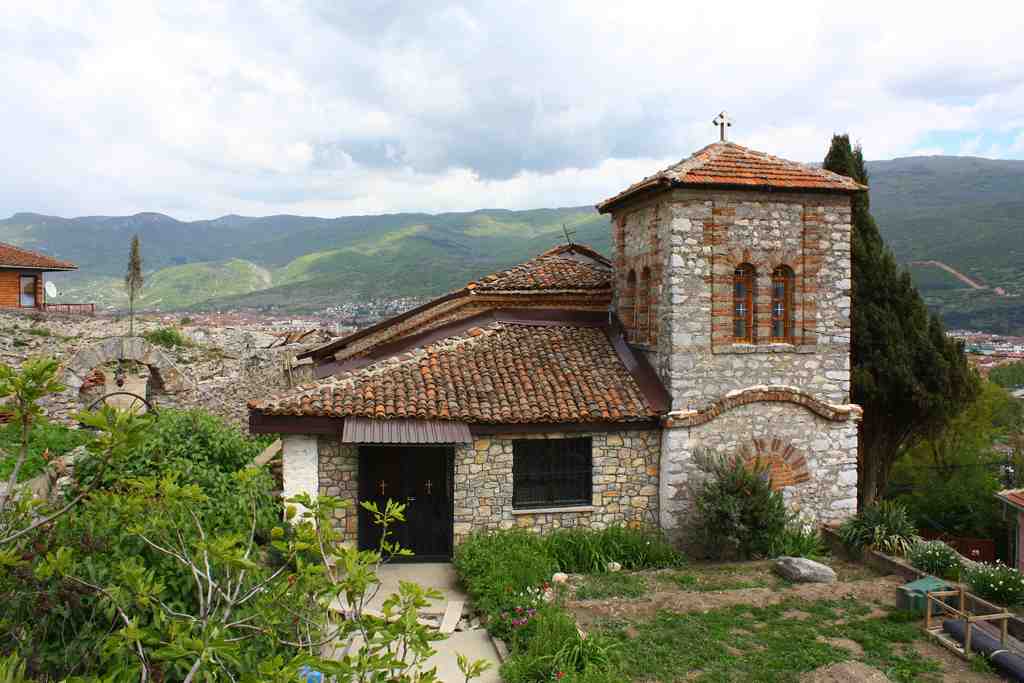
Look to your left for a striking stone building with a rustic terracotta tiled roof, featuring a square bell tower built from layered stone and red brick with narrow arched windows. It is wild how a simple blocked up archway can prove that local legends have the power to permanently reshape a city's physical architecture. For centuries, the shift from Byzantine Christian rule to the Ottoman Empire meant a constant, uneasy dance of clash and coexistence. The old Christian locals and the new Ottoman rulers lived side by side, but power dynamics were always bubbling just under the surface. You can feel that tension right here where the church leans against the old city walls.
There used to be a gate right here called the Chelna gate. It had a deep unwritten rule. An icon of the Virgin Mary and Jesus hung above the entrance, and anyone passing through had to dismount their horse and take off their hat out of respect. Well, one day a high ranking Ottoman official, a pasha, rode up. He was not about to bow to a Christian image. He stubbornly tried to ride his horse right through. But the animal inexplicably panicked, reared up on its hind legs, and threw the proud pasha right into the dirt. Humiliated and furious, the pasha took a petty revenge. He ordered the gate to be bricked up solid forever. That single tantrum split the local neighborhoods apart, completely ruining the easiest walking route through the city. Turkish guards were posted here, stopping regular church services for a long time.
But the sacred space endured. The church itself, known as Virgin Mary Chelnitsa, is completely unique in Macedonia because of its two naves, which are the main central halls where the congregation gathers. The second nave and that bell tower were added in the nineteenth century, when the famous painter Dicho Zograf left his mark with a grand fresco. But beneath your feet is a hidden early Christian crypt, proving people have prayed against these walls for centuries before the medieval church was even built. As we head toward our next stop, the Kara Bey Taushanli Mosque, which is about an eighteen minute walk from here, think about all those buried layers of imperial influence shifting beneath your feet.




