
Zaltbommel Audio Tour: Legends and Landmarks of Vergt & Beyond
A castle tower rises above Zaltbommel’s ancient skyline while echoes of midnight bells drift from the Grote of Sint-Maartenskerk. Beyond the well-worn market stalls and quiet cobblestone lanes, hidden stories are waiting to be uncovered. This is your self-guided audio tour through Zaltbommel, unlocking secrets and overlooked corners most travelers miss. Listen closely and watch the city transform beneath your feet. What riotous scandal once disturbed the peace in City Castle Zaltbommel? Why was a mysterious symbol carved into the stones of Sint-Maartenskerk? Who smuggled forbidden letters beneath the market’s bustling crowd? Move through centuries of drama and intrigue, where every narrow street holds a clue and every shadow hints at the city’s forgotten power struggles. Feel tension breathe from the stones and savor the thrill of seeing Zaltbommel with new eyes. Uncover what the bells have tried to warn you about. Your adventure starts now.
Tour preview
About this tour
- scheduleDuration 40–60 minsGo at your own pace
- straighten3.1 km walking routeFollow the guided path
- location_onLocationZaltbommel, Netherlands
- wifi_offWorks offlineDownload once, use anywhere
- all_inclusiveLifetime accessReplay anytime, forever
- location_onStarts at Grote of Sint-Maartenskerk
Stops on this tour
If you’re looking for the Grote of Sint-Maartenskerk, just glance above the rooftops for the enormous stone church with a mighty Gothic tower-you can’t miss it, it practically…Read moreShow less
If you’re looking for the Grote of Sint-Maartenskerk, just glance above the rooftops for the enormous stone church with a mighty Gothic tower-you can’t miss it, it practically rules the skyline! Now, imagine yourself standing right where generations have stood before, the wind brushing past as you take in this grand basilica, a shining example of Lower Rhine Gothic. The story of this church is almost as big as its famous tower-ready for a time-traveling adventure? Picture the year 1000. Instead of this stony giant, there was a humble Romanesque church built by Bishop Bernold-its foundation stones still secretly snooze beneath your feet. Fast forward to the 14th century: the priest’s choir was built with a style all its own, lower and different from the newer, towering nave. In 1303, the site got an upgrade and became a chapter church, with the famous choir and the so-called Varkenstoren as the only survivors from that era. For the next 200 years, builders and townsfolk watched as the cathedral as you see it slowly rose from the earth. By 1500, it was finished-a stone marvel stretching toward the clouds. But Mother Nature might have a grudge against tall things: in 1538, lightning struck its spire, setting it ablaze. Not to be outdone, a new spire was built, but fire claimed it, too! They started another one, but it remains unfinished-giving the tower its blocky, gutsy look today. Big drama swept through in 1572 when the Watergeuzen-Dutch rebels with a name that sounds like it belongs to a rock band-took Zaltbommel, kicked out the church chapter, and turned Sint-Maartenskerk into a Protestant monument. Inside, music lovers, listen up! There’s an organ that’s outlasted nearly everything except your curiosity. Built by Andries Wolfferts with pipework older than grandma’s stories, it was tweaked and re-tweaked-sometimes for better, sometimes...not so much. During World War II, it was taken apart for safe keeping when word got out the Germans might blow up the tower. After the war, it was put back together, but let’s say its “bright new sound” fell flat. Thankfully, by the 1980s, it got proper TLC-restored almost to its original glory, pipes and all! In a twist fit for a legend, painted Gregorian music-hidden for centuries beneath chalk-was discovered during restorations, a secret melody waiting quietly to be heard again. And in 1985, none other than Prince Claus reopened the church, giving it a royal seal of renewal. So, while you gaze up at this mighty church, just remember: it has seen lightning, fire, music, war, and even a royal hug. And they say stones don’t talk!
Open dedicated page →To spot Kerkstraat, look ahead for a gently curving cobbled street lined with charming red-brick buildings, old-style lanterns, and sloping orange-tiled roofs. Welcome to…Read moreShow less
To spot Kerkstraat, look ahead for a gently curving cobbled street lined with charming red-brick buildings, old-style lanterns, and sloping orange-tiled roofs. Welcome to Kerkstraat, the historic heart of Zaltbommel-stretching a cozy 240 meters, this is no ordinary street! Imagine centuries-old footsteps echoing off these sturdy brick walls, with stories wafting from every window. To your left and right stand national monuments, each with their own secret; just think, the backs of these proud buildings have watched passersby for generations. Narrow side streets like Vismarkt and Ruiterstraat tempt you to wander off, but there’s more! At number 2 once sat a branch of the Jeroen Bosch Hospital. You could say this street has seen its share of drama and perhaps a few scraped knees! The Gasthuiskapel’s rear is tucked just beside you, keeping watch like an old friend. If you crane your neck toward the Kerkplein, you’ll spot the mighty silhouette of Sint-Maartenskerk quietly guarding the end of the street. Take in the mellow glow of the lanterns, the gentle hum of old stories, and feel the magic of a street where past and present walk hand-in-hand-just watch for ghosts, though; they say they love the charming view here!
Open dedicated page →To spot the Old Water Tower, just look above the trees-it's the tall, round, red-brick structure with castle-like battlements peeking out from the greenery across the water. Ah,…Read moreShow less
To spot the Old Water Tower, just look above the trees-it's the tall, round, red-brick structure with castle-like battlements peeking out from the greenery across the water. Ah, here we are in front of the marvelous Old Water Tower of Zaltbommel! Picture yourself in 1905, when Jan Schotel designed this striking 21-meter tower, rising above the river’s mist like a red-brick guardian. Back then, it was a vital part of the city, holding 50 cubic meters of fresh water in its tank and a deep chamber six meters underground-imagine those pipes humming as water rushed through! For decades, it stood proud, until 1960, when it retired from active duty and its enormous water tank was hauled away in the swinging sixties-no more splashy business upstairs! But wait, our story doesn’t end there. In the 1980s, this old giant became a quirky weekend retreat-imagine telling your friends you’re off to spend the night in a medieval-looking tower! By 1996, the top was carefully taken off and rebuilt, brick by brick, earning a special prize from the Dutch Water Tower Foundation-talk about winning a “head-turning” award! These days, it’s a real home, filled with everyday life. So next time you pass, wave hello-there just might be someone having breakfast high above the trees, in Zaltbommel’s most unique house!
Open dedicated page →
Show 9 more stopsShow fewer stopsexpand_moreexpand_less
To spot the Waalkade, look ahead toward the riverside where the street runs along the Waal with a row of grand historic buildings and views of the water stretching into the…Read moreShow less
To spot the Waalkade, look ahead toward the riverside where the street runs along the Waal with a row of grand historic buildings and views of the water stretching into the distance. Now, step right up to the Waalkade, the lifeline of Zaltbommel, where city meets river in a dance that’s been going on for centuries. Stand still for a moment-can you feel the breeze from the river Waal? This street stretches about 410 meters from the Stadsdijk to where it morphs into Veerweg, hugging the river the entire way. If you had walked here in 1995, you might have needed your rain boots-the whole area was redesigned that year because the water levels rose so high! Alongside you, there are fragments of Zaltbommel’s old city wall, ingeniously woven right into the modern buildings. Check out Grand Café "de Verdraagzaamheid," a gentlemen’s society that first opened its doors in 1803, but only got its elegant name-meaning "Tolerance"-in 1928. Imagine men in top hats, sipping coffee and debating the latest news, all while keeping an eye on the river traffic outside. Some of the buildings you see are national monuments, preserving stories and secrets from every brick. As you let your eyes wander to the outer meadows just past the Waalkade, picture the hustle and bustle of markets, ferries arriving, and the lively chatter of townsfolk over the centuries. Not just a beautiful view, but a living piece of history!
Open dedicated page →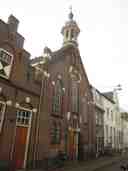 5
5Eben-Haëzer Church
Buy tour to unlock all 16 tracksTo spot the Eben-Haëzer Church, look straight ahead for a cozy, brick building nestled tightly between neighbors, crowned with an octagonal little tower and an onion-shaped spire…Read moreShow less
To spot the Eben-Haëzer Church, look straight ahead for a cozy, brick building nestled tightly between neighbors, crowned with an octagonal little tower and an onion-shaped spire right at the street’s edge. Take a step back (watch out for the bikes!) and let your eyes wander up that quirky octagonal tower. This building sprang to life in 1900, when the architect E.G. Wentink decided Zaltbommel needed a simple, friendly spot for worship on Korte Steigerstraat. Picture the year: hearths crackling inside townhouses, the faint jingle of horses, and here comes this snug church-almost blending in with the houses except for its elegant arched windows. At first, folks gathered here for Reformational Evangelism, sharing news, worries, and even laughter-probably hoping the onion-shaped spire didn’t make the local bakers too hungry! Step inside, and you’d be wrapped in echoes from the 1930s, the air ringing with the vibrant notes of the organ made by Valckx & Van Kouteren, which could shake the dust off any sleepy soul. Through world wars and peaceful times, this church has quietly watched over Zaltbommel, shifting hands in 2004 to become home for the Hersteld Hervormde congregation-a reminder that, like the river nearby, traditions ebb and flow, but the heart of this place stays steady as a rock. So, imagine all those stories in the bricks and listen closely… maybe, if you’re lucky, you’ll hear a faint hymn floating from the past!
Open dedicated page →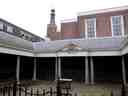 6
6Fish market
Buy tour to unlock all 16 tracksTo spot the Fish Market, look for a historic open structure with stone columns and a triangular pediment across the top, crowned with a golden crest and the date "MDCCLXXVI" right…Read moreShow less
To spot the Fish Market, look for a historic open structure with stone columns and a triangular pediment across the top, crowned with a golden crest and the date "MDCCLXXVI" right above the main open area. Imagine standing here over a century ago-this street, just about 40 meters long, would have been bursting with life and the unmistakable scent of the sea. Fishmongers would shout their prices, fishermen would tell tall tales of the one that got away, and shoppers, baskets in hand, would haggle and laugh beneath the echoing roof of the Vishal. Today, things are a bit quieter, but you’re surrounded by history. Many of these buildings are proud national monuments, standing watch over generations of trade. The Fish Market isn't just a spot on the map-it's where Zaltbommel's energy once came to life, connecting the Kerkstraat with the Old Fish Market, Korte Strikstraat, and Koningsstraat. Think of the deals struck and secrets swapped here, from slippery eels to gossip about the neighbors. If you listen closely, you might just hear the whispers of old merchants still drifting between those columns. And I promise, nowadays it smells a lot less fishy! Enjoy this slice of living history, tucked right here in the beating heart of Zaltbommel. Ready for the next stop, or need a quick imaginary snack?
Open dedicated page →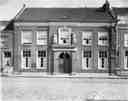 7
7Old Men and Women's House
Buy tour to unlock all 16 tracksIn front of you is a stately, symmetrical brick building with a grand doorway and-if you look straight above the entrance-you'll spot two stone statues: one of an old man and one…Read moreShow less
In front of you is a stately, symmetrical brick building with a grand doorway and-if you look straight above the entrance-you'll spot two stone statues: one of an old man and one of an old woman, keeping watch over the door like timeless guardians. Now, let’s travel back to the year 1778, when the air here would have carried the sounds of clattering carriages and the whispers of townsfolk wandering down Nieuwstraat. Right where you’re standing, imagine the freshly built brickwork rising grand and proud, designed by the city’s own master builder, C. van Leeuwen, on top of what used to be a peaceful Begijnhof. This wasn’t just any house-it was the Old Men and Women’s House, a classicistic refuge where elderly townsfolk could live out their golden years. Picture the fluttering lace curtains and the gentle glow from the tall windows. Rumor has it, if you listened close at sundown, you might have even heard some friendly bickering drifting from behind those bricks-old-timers arguing lovingly over who’d win in a game of checkers! Gaze at the Louis XVI-style window above the doorway, flanked by those two statues, carved to remind everyone that every story-no matter how old-deserves a place in the heart of the city. Now a national monument, this building stands as a living memory, quietly inviting all passers-by to imagine the laughter, the wisdom, and the warmth that once filled its halls. And who knows? Maybe those statues are still eavesdropping-so mind what secrets you share!
Open dedicated page →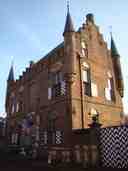 8
8Maarten van Rossum museum
Buy tour to unlock all 16 tracksLook for a striking medieval building with tall pointed towers, brick walls, and shutters decorated with a red and white chevron pattern-just ahead of you. Welcome to the City…Read moreShow less
Look for a striking medieval building with tall pointed towers, brick walls, and shutters decorated with a red and white chevron pattern-just ahead of you. Welcome to the City Castle Zaltbommel, or as the locals call it, the Stadskasteel! Right now, you’re gazing at the majestic Maarten van Rossumhuis, which, if you ask me, looks like the sort of castle where a mischievous knight might suddenly appear at a window just to wave at you. This impressive fortress stands at the beating heart of Zaltbommel’s history and is now a museum stuffed with centuries of secrets. It all started back in 1905, when a group of proud townnotables displayed their collection of “old stuff”-and, surprise, surprise, it was such a hit that they needed a permanent home for their treasures. With a dash of local enthusiasm and a sprinkle of financial support, the collection soon found shelter here, in this very building, thanks to the generosity of the famous Philips family. Inside, the museum brings the past back to life! Fancy gazing at glittering silver, heavy copper, delicate tin, and furniture that practically whispers stories of dinner parties and candlelit mysteries? You can stroll past paintings, glassware, ancient maps, and a photo collection that goes all the way back to 1860-think of that, a Zaltbommel selfie from the 19th century! But wait, there’s a twist! The museum is also home to a magical tribute to Fiep Westendorp, the beloved illustrator born here. You’ll spot her drawing table, the very place where characters like Jip & Janneke sprang to life. I sometimes wonder if the sound of a pencil scratching paper still echoes from her room… The City Castle isn’t just a relic-it’s alive, updating its displays to tell the stories of Bommelerwaard from the 16th to the 20th century, mixing tales of war, peace, and creative spark. So, as you stand before this fairytale fortress, imagine all the objects, laughter, and secrets echoing behind those thick, story-soaked walls!
Open dedicated page →To spot the Oil Mill, look ahead for a narrow cobblestone street bordered by a brick wall and traditional tiled-roof houses, with a wooden shed to your right. Welcome to the…Read moreShow less
To spot the Oil Mill, look ahead for a narrow cobblestone street bordered by a brick wall and traditional tiled-roof houses, with a wooden shed to your right. Welcome to the storied Oliemolen! If you listen closely, you might just hear the echo of old wagon wheels rumbling over these very cobblestones. This street, just 140 meters long, has been bustling with life since the 16th century. It’s not just the charm of the old brick walls-although if those walls could talk, they’d tell you tales of monks, millers, and perhaps the odd nosy neighbor peeking through the hedges! Here at Oliemolen 2 stands a monumental house from around the 1500s, whispering secrets of centuries past. Behind the wall hides the “Mispelhof” heemtuin, a wild garden famous for its rare medlars, while the “Kloosterhof” herb garden tickles your nose with the scent of rosemary and thyme drifting over the fence. Nearby, you’ll stumble upon the old Jewish cemetery, its stones guarding ancient stories under the same name as this street. And don’t miss the city wall-older than your grandmother’s favorite joke-complete with a small gate leading you to the green Singelwal. Every stone here has a memory, every breeze a whisper. Take a moment: can you feel history humming under your feet?
Open dedicated page →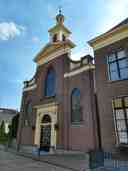 10
10St. Martin's Church
Buy tour to unlock all 16 tracksTo spot St. Martin's Church, look ahead for a grand brick building with tall arched stained-glass windows and a cream-colored entrance, topped with a wooden bell tower and an open…Read moreShow less
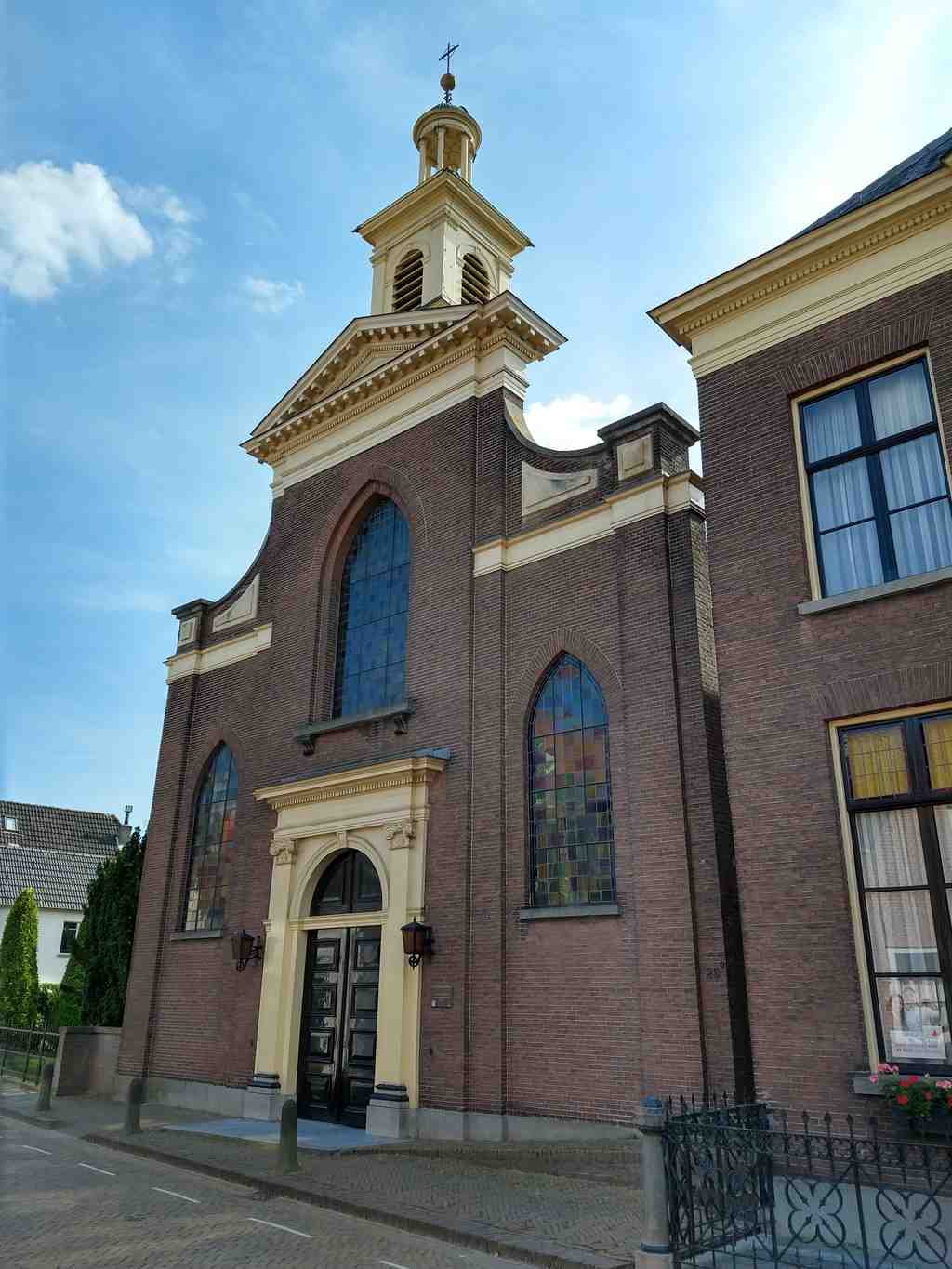
To spot St. Martin's Church, look ahead for a grand brick building with tall arched stained-glass windows and a cream-colored entrance, topped with a wooden bell tower and an open little dome. Now, let yourself drift back in time, standing here outside the St. Martin’s Church-a place where echoes of prayers and laughter still seem to linger in the brickwork. Built as a so-called “waterstaatskerk,” this church was actually funded by the Dutch government between 1824 and 1868. Imagine the builders, dressed in old-fashioned coats, hammering away with the hopes of a whole community swirling around them. Only the central hall remains from its original grand design, but even that holds stories thick as fog on a winter morning. Gaze up at that wooden bell tower with its quirky open dome, crafted in sturdy brick-some locals used to joke it looked like a hat perched on a gentleman’s head! If you listen carefully, you might hear the faint sound of the great organ, crafted in 1831 by Carl Friedrich August Naber from Deventer. This wasn’t just any organ; it was the pride of the town, drawing crowds to hear music shimmer through the pews on sunny days and echo on rainy nights. So while you’re here, standing in front of this quietly majestic building, remember you’re at the center of joy, hope, and just a dash of drama-because every great church has its secrets, doesn’t it?
Open dedicated page →To spot the Market, just look for the open street lined with elegant, historic facades, including a cream-colored building with tall windows and several classic Dutch gables,…Read moreShow less
To spot the Market, just look for the open street lined with elegant, historic facades, including a cream-colored building with tall windows and several classic Dutch gables, right where bustling stalls and people tend to gather. Welcome to the beating heart of Zaltbommel, the Market! Imagine it centuries ago when this 55-meter-long street was alive with the shouts of traders, the scent of cheese, and wheels creaking on cobblestones. You’re standing where merchants once set up their stalls for the town’s legendary market, and where today, historic mansions and the stately city hall (designed by Anthony Viervant in the 1700s) now look down on you. And here’s a twist-this isn’t just a place for commerce! The famous Philips brothers, founders of the world-famous electronics company, were born right here. Their childhood home still stands, filled with secrets from days gone by. The plot thickens: none other than Karl Marx-yes, Marx himself-was a regular visitor, penning parts of Das Kapital while visiting the Philips family. Imagine the buzz as Marx debated in candlelit rooms, his thoughts mixing with the sweet notes of piano music, for their friend Franz Liszt, the renowned composer, often dropped by! So while you browse the market or admire the architecture, remember you’re walking in the footsteps of inventors, philosophers, and virtuosos-quite a cast for such a small stage!
Open dedicated page →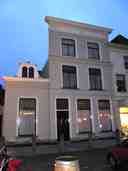 12
12The Keijsers Croon
Buy tour to unlock all 16 tracksRight in front of you is a tall, elegant cream-colored house on the corner, its smooth facade trimmed with white, big windows with rounded corners, and five decorative brackets…Read moreShow less
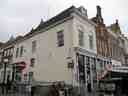
Right in front of you is a tall, elegant cream-colored house on the corner, its smooth facade trimmed with white, big windows with rounded corners, and five decorative brackets just under the roof - and if you spot stone posts connected by sturdy chains along a small stoop, you’re in the right place! Now, let’s travel back in time together. Imagine the year is somewhere in the 16th or 17th century, and the streets of Zaltbommel are buzzing with merchants, carts, and gossip. The Keijsers Croon was already standing watch over Waterstraat 44, solid and proud on the corner near the Waterpoort, the city’s gateway to the river and a key entrance to town. This house has seen it all-sieges, celebrations, and centuries of change. But here’s the twist: in the 19th century, Zaltbommel decided to reinvent itself, and even magnificent old houses couldn’t escape fashion! Plain facades became all the rage, so De Keijsers Croon got a brand-new look. By the third quarter of the 1800s, it had a neat plastered face, crowned with five decorative consoles designed by A.M.A. Gulden, plus those windows with the chic rounded edges. Out front, sturdy stone posts and heavy chains still guard the stoop as if protecting secrets of ages gone by. And, if you peek behind, a real medieval marvel hides in the garden: the best-preserved stretch of the ancient city wall, soaring to its full original height-complete with battlements! So next time someone says “if these walls could talk…”-believe me, these ones surely could, and what stories they’d tell!
Open dedicated page →
Frequently asked questions
How do I start the tour?
After purchase, download the AudaTours app and enter your redemption code. The tour will be ready to start immediately - just tap play and follow the GPS-guided route.
Do I need internet during the tour?
No! Download the tour before you start and enjoy it fully offline. Only the chat feature requires internet. We recommend downloading on WiFi to save mobile data.
Is this a guided group tour?
No - this is a self-guided audio tour. You explore independently at your own pace, with audio narration playing through your phone. No tour guide, no group, no schedule.
How long does the tour take?
Most tours take 60–90 minutes to complete, but you control the pace entirely. Pause, skip stops, or take breaks whenever you want.
What if I can't finish the tour today?
No problem! Tours have lifetime access. Pause and resume whenever you like - tomorrow, next week, or next year. Your progress is saved.
What languages are available?
All tours are available in 50+ languages. Select your preferred language when redeeming your code. Note: language cannot be changed after tour generation.
Where do I access the tour after purchase?
Download the free AudaTours app from the App Store or Google Play. Enter your redemption code (sent via email) and the tour will appear in your library, ready to download and start.
If you don't enjoy the tour, we'll refund your purchase. Contact us at [email protected]
Checkout securely with 


