
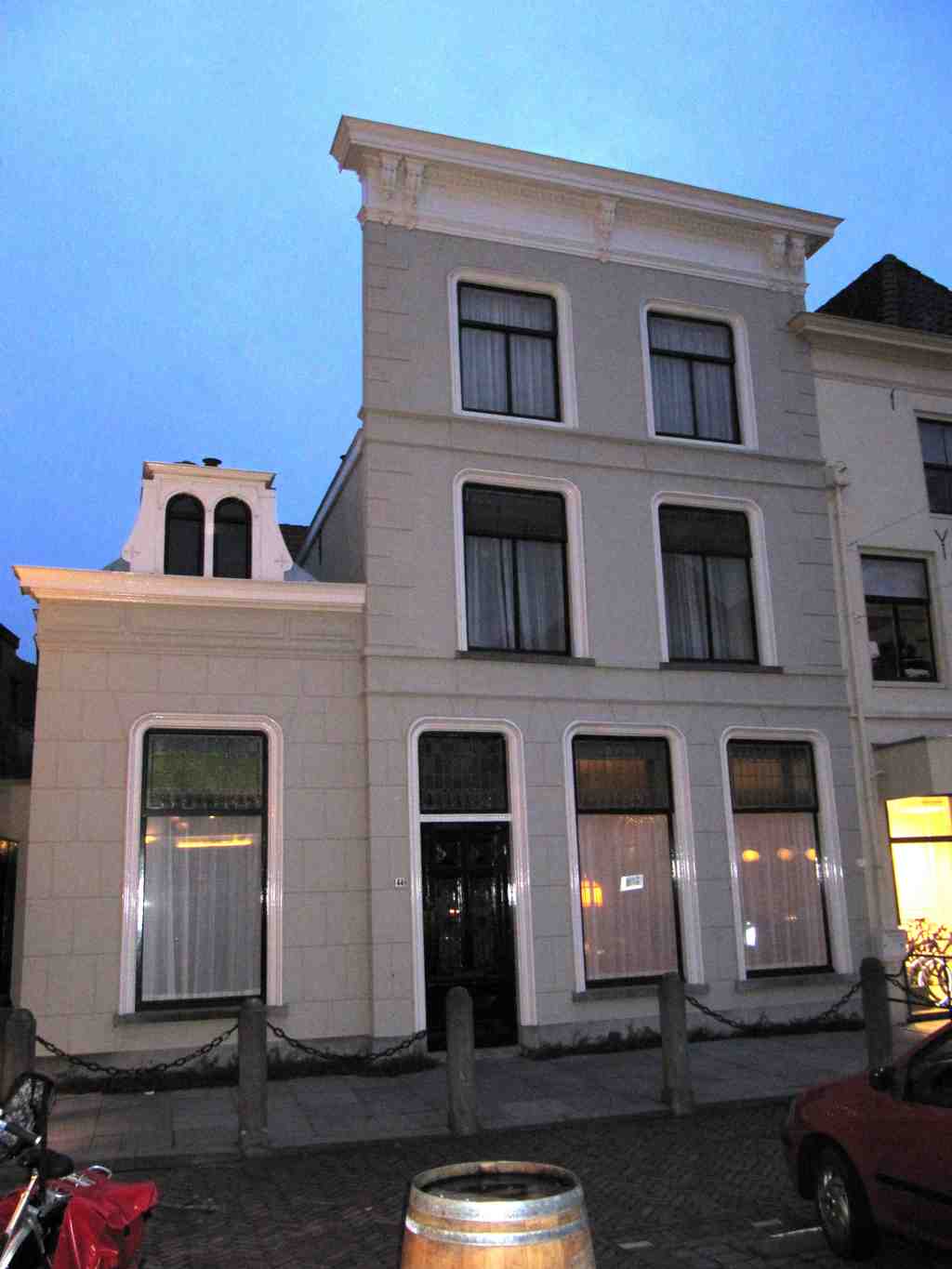
Right in front of you is a tall, elegant cream-colored house on the corner, its smooth facade trimmed with white, big windows with rounded corners, and five decorative brackets just under the roof - and if you spot stone posts connected by sturdy chains along a small stoop, you’re in the right place!
Now, let’s travel back in time together. Imagine the year is somewhere in the 16th or 17th century, and the streets of Zaltbommel are buzzing with merchants, carts, and gossip. The Keijsers Croon was already standing watch over Waterstraat 44, solid and proud on the corner near the Waterpoort, the city’s gateway to the river and a key entrance to town. This house has seen it all-sieges, celebrations, and centuries of change. But here’s the twist: in the 19th century, Zaltbommel decided to reinvent itself, and even magnificent old houses couldn’t escape fashion! Plain facades became all the rage, so De Keijsers Croon got a brand-new look. By the third quarter of the 1800s, it had a neat plastered face, crowned with five decorative consoles designed by A.M.A. Gulden, plus those windows with the chic rounded edges. Out front, sturdy stone posts and heavy chains still guard the stoop as if protecting secrets of ages gone by. And, if you peek behind, a real medieval marvel hides in the garden: the best-preserved stretch of the ancient city wall, soaring to its full original height-complete with battlements! So next time someone says “if these walls could talk…”-believe me, these ones surely could, and what stories they’d tell!


