
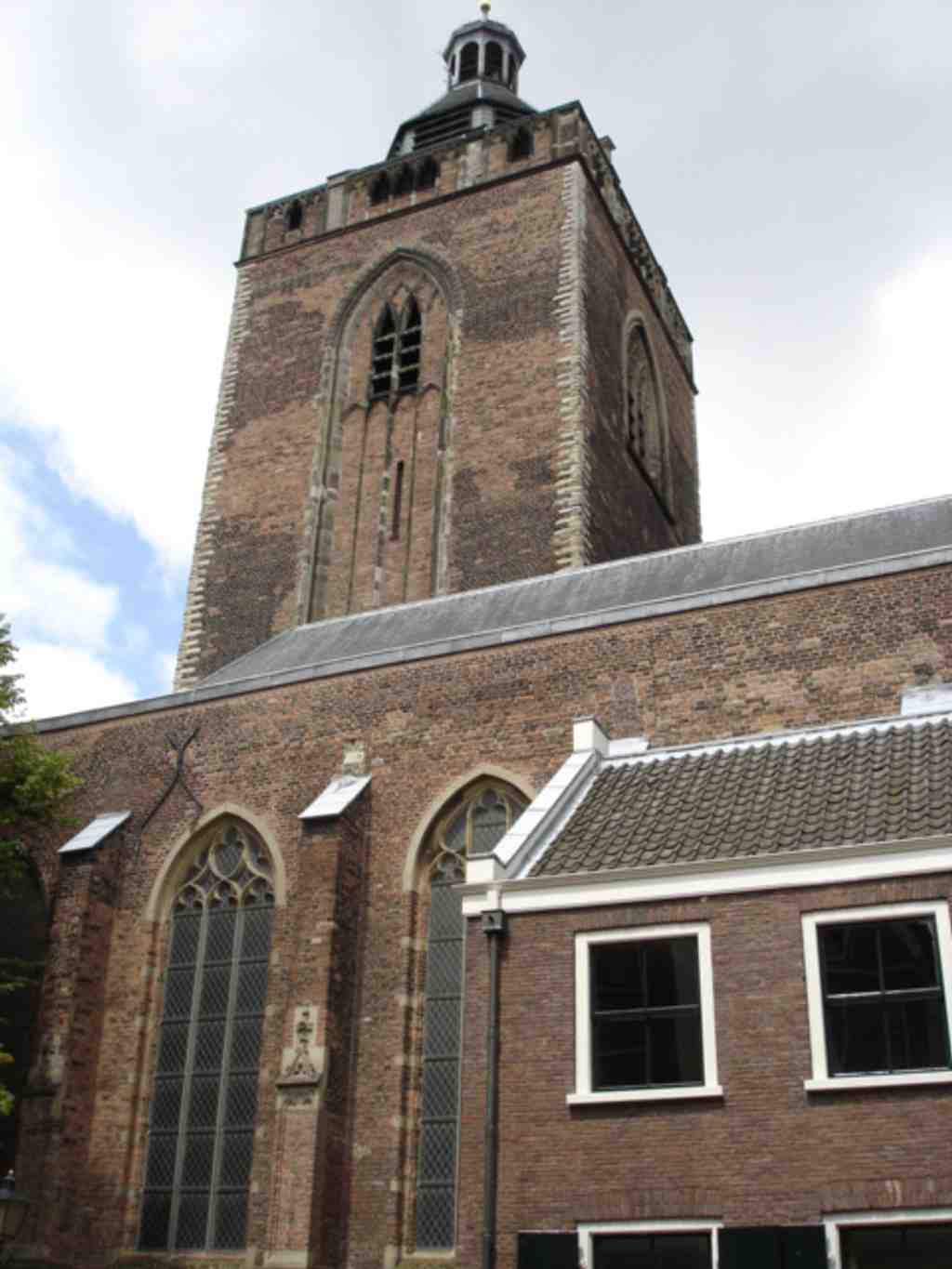
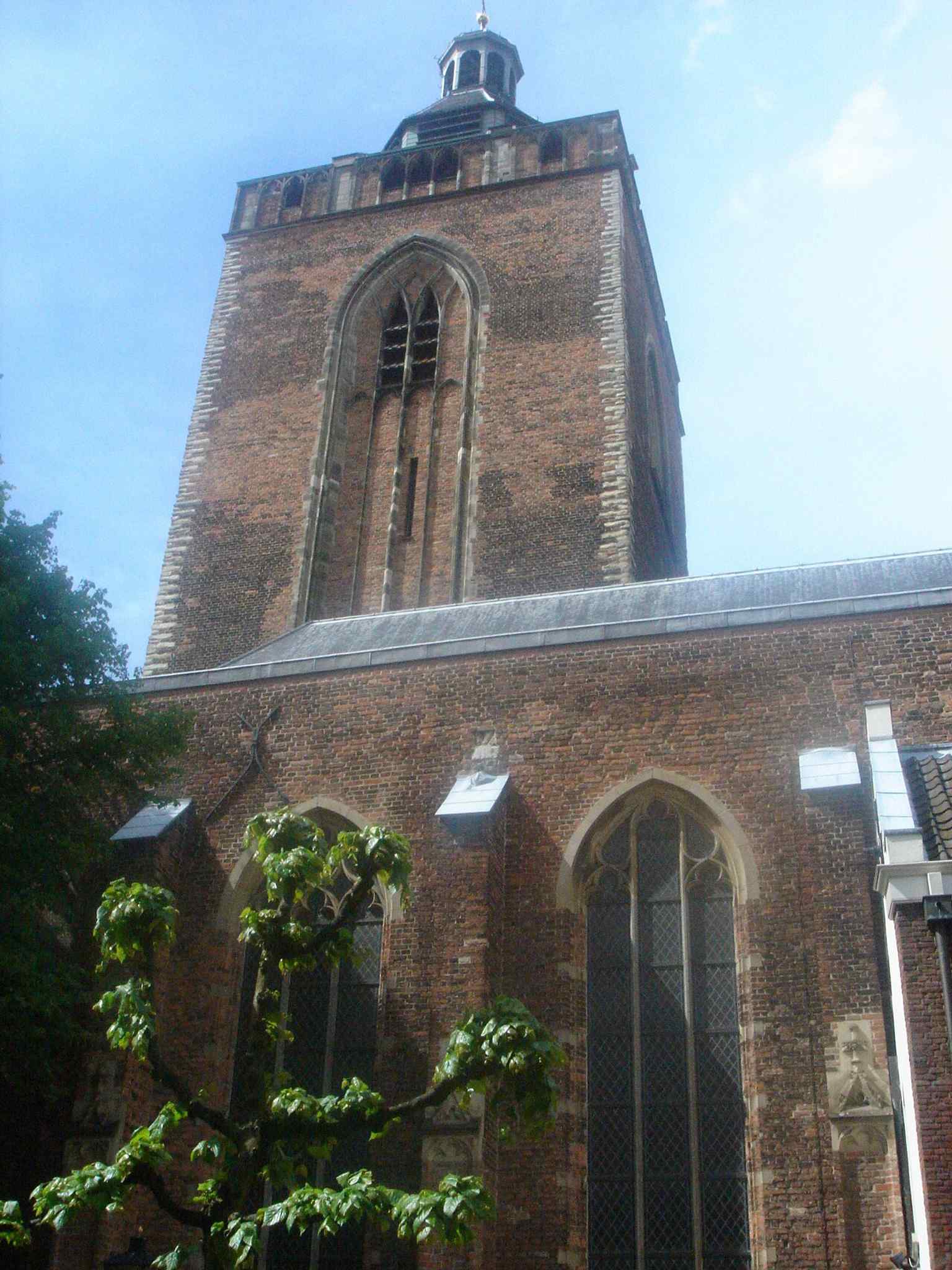
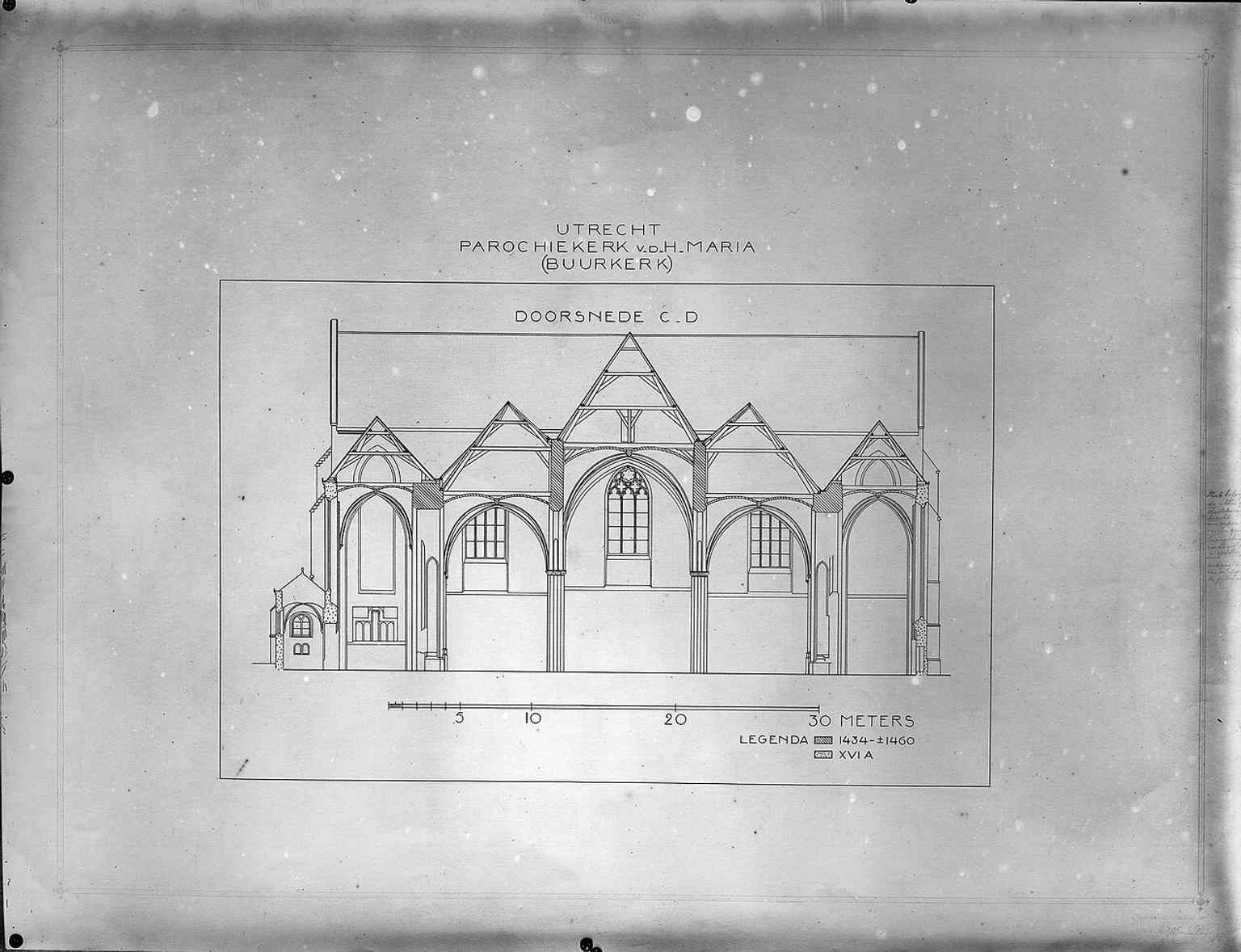
On your right is a massive, square brick tower featuring tall, pointed arched windows and a curious, small domed structure capping its flat roof. Welcome to the Buurkerk, the oldest of the four medieval parish churches in Utrecht!
This place began in the tenth century right in the middle of a bustling trade district. For hundreds of years, this was the absolute heartbeat of the city. It was not just a place of worship. The local trade guilds, which were powerful medieval associations of craftsmen like bakers and blacksmiths, set up their own altars right inside. The church even held two sets of bells. It had sacred church bells, but it also held the secular city bells. The city used the ban-bell to announce public executions and council decisions, while the wake-bell told the guards when to open and close the city gates.
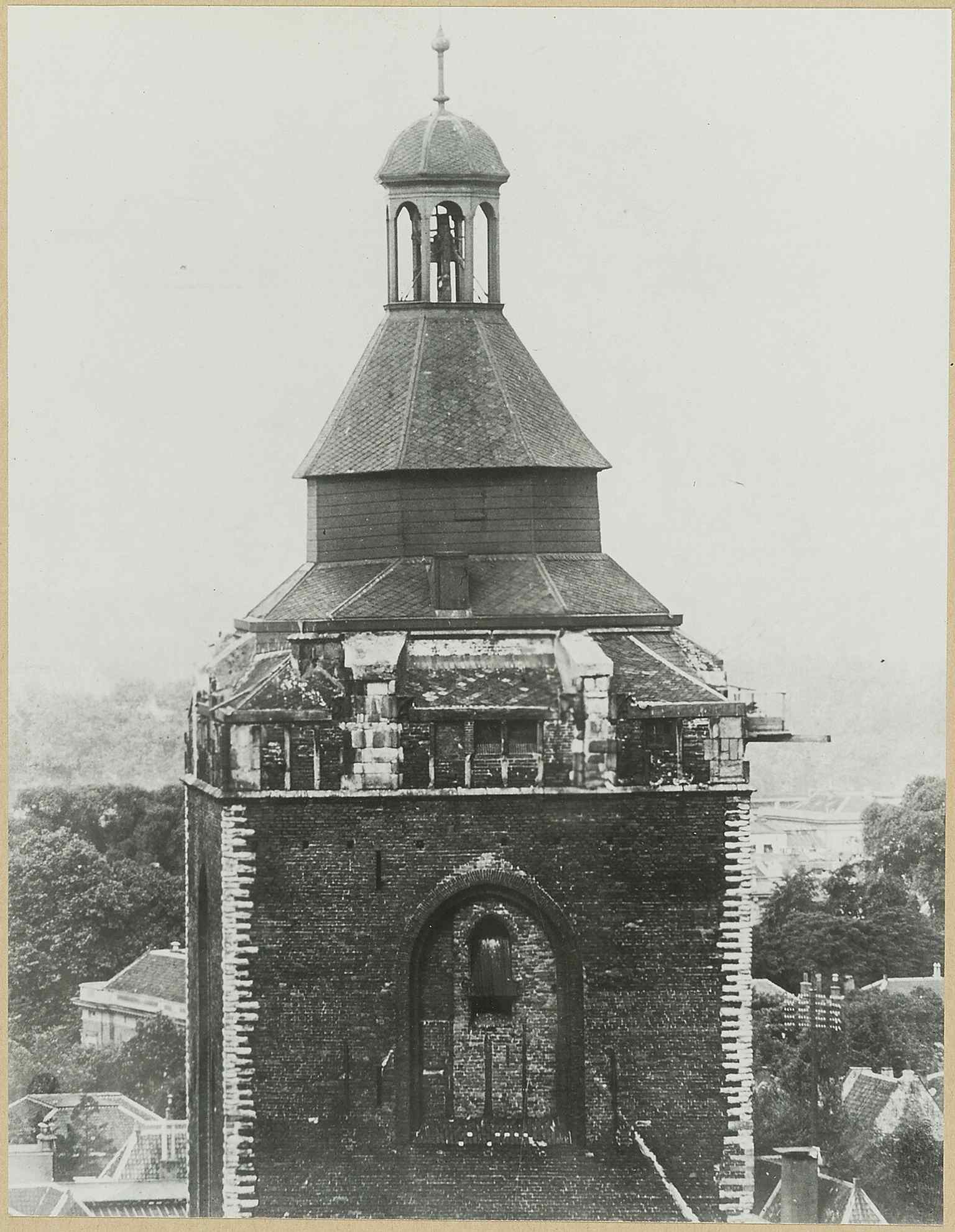
But look up at that tower. The builders started it around thirteen seventy, and they had grand ambitions. They planned to build a towering, eight-sided lantern on top, just like the famous Dom tower nearby. But those plans never materialized. Instead, the builders capped it with a temporary roof. If you check your app, you can see a close-up of that temporary top, which has stubbornly survived since thirteen eighty-eight. Sometimes, temporary solutions really do last forever.
The Buurkerk holds some truly wild stories. In fourteen fifty-seven, a woman named Berta Jacobsdochter, better known as Sister Bertken, decided to leave the outside world entirely. She asked the builders to wall her into a tiny cell right inside the church. She lived entirely enclosed in that little room for fifty-seven years, writing beautiful poetry and prose until she died at the age of eighty-seven.
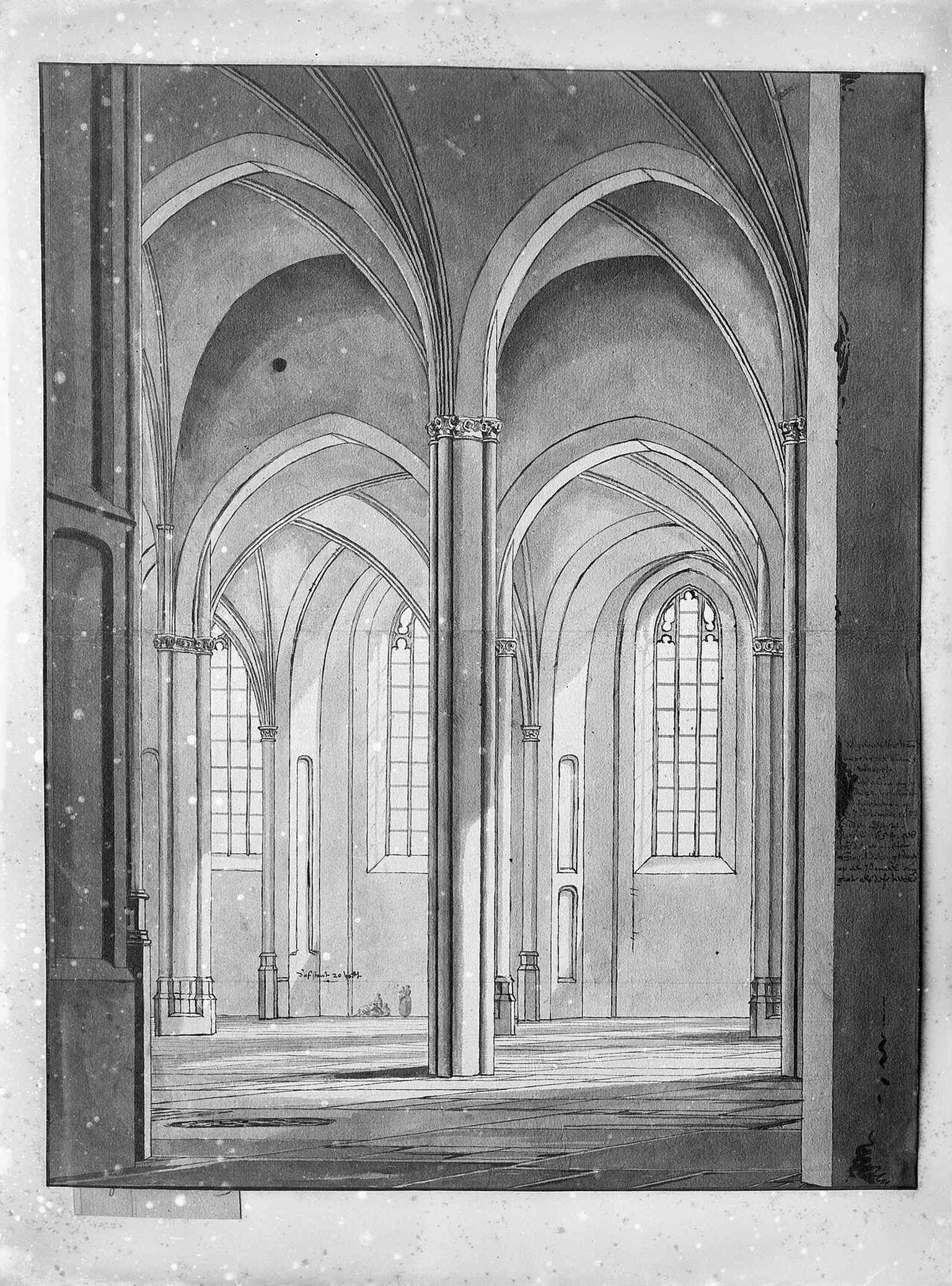
The church also had a bit of a traffic problem. By fifteen eighty-six, the locals had developed a terrible habit. Instead of walking around the massive building, people just drove their carts and horses directly through the choir, the large eastern section of the church where the priests usually sang. The city got so tired of the chaos that they simply demolished the entire choir to build a proper street.
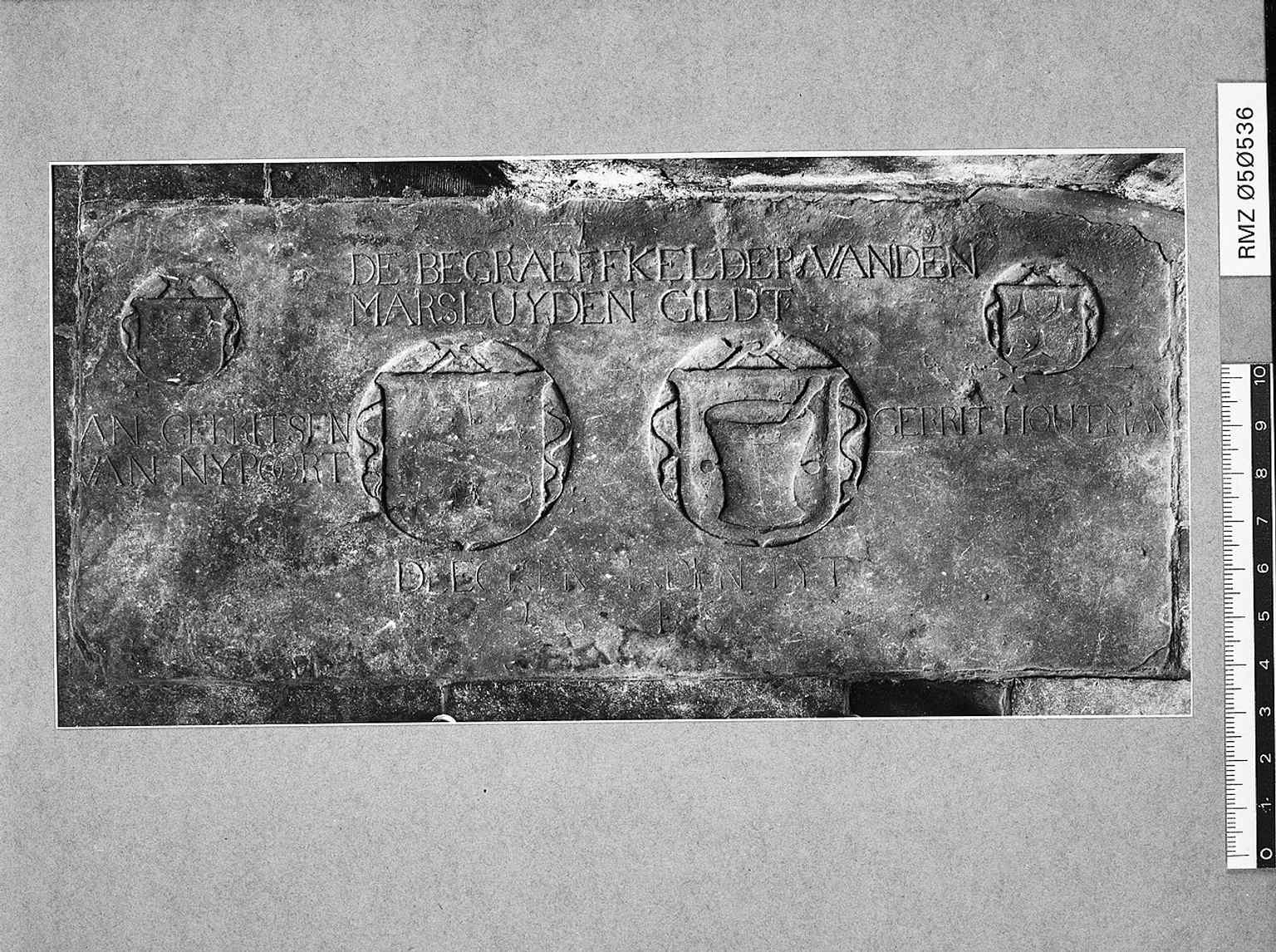
Over the centuries, the Buurkerk survived massive city fires, a devastating summer storm in sixteen seventy-four that ripped off the roof, and French soldiers who used the holy space to store hay and bake bread. Since nineteen eighty-four, the building has held a totally different kind of magic, as the national museum of self-playing musical instruments. Have a look at your screen to see a fascinating comparison showing a seventeenth-century Smith's Guild memorial board, spanning the transformation from a historic church into a lively musical clock museum.
The museum has its own operational schedule, but you can admire this incredible exterior twenty-four hours a day, seven days a week. It is amazing how a building can completely transform its purpose over a thousand years. Enjoy the lively atmosphere, and when you are ready, let's head to the next stop.






%20-%20Utrecht%20-%2020233800%20-%20RCE.jpg)


%20noordzijde%20met%20oorspronkelijk%20korbeelstel%20-%20Utrecht%20-%2020233854%20-%20RCE.jpg)

