
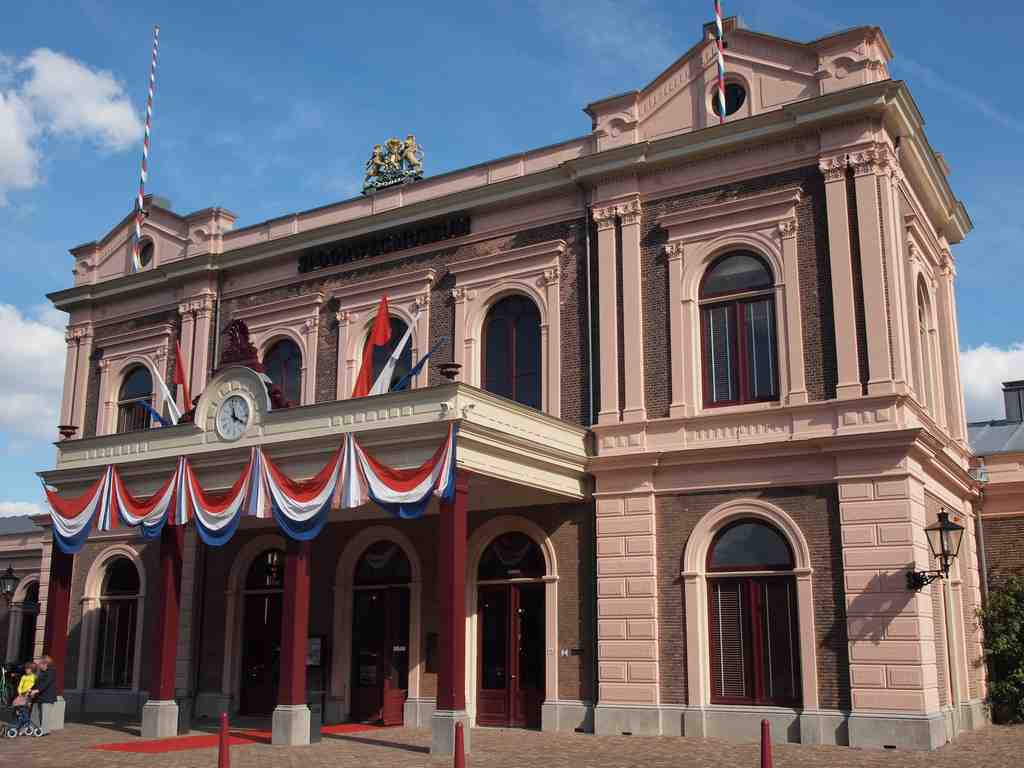
To spot the Railway Museum, look straight ahead for a grand, light-pink building with tall arched windows, ornate columns, a stately crest at the top, and Dutch flags draped over a clock above the entrance.
All right, traveler, take a deep breath of that fresh Utrecht air and imagine the gentle rumble of a train approaching-not the modern, whisper-quiet electric ones, but the proud clatter and hiss of a steam engine. You’re standing at the magnificent old Maliebaan station, home to the Railway Museum-the ultimate playground for anyone who’s ever held up a toy train and gone “choo-choo!” (Don’t worry, I won’t ask if you still do).
Now, this isn’t just any museum. Picture it: The year is 1927. The Dutch national railway wanted to save the stories of their iron giants, and back then, it was just some photos, dusty maps, and curious little gadgets tucked away in Utrecht’s main railway office. It might have seemed like a scrapbook club for trainspotters at first, but soon, the ambition grew-a real mission to rescue, cherish, and show off the trains that had zipped families, lovers, soldiers, and daydreamers across the country.
Trouble rolled in with World War II, and much of that early collection was lost-gone like smoke on the wind. But the dream of preserving railway history survived (like a stubborn steam engine chugging uphill). Some artifacts hid out in the Rijksmuseum in Amsterdam for a while, but Maliebaan-the gorgeous Victorian station you see before you-was waiting quietly for a second chance. In 1954, it finally reawakened, its halls echoing again with footsteps, laughter, and stories as the Railway Museum made its new home here.
Walk closer and imagine the old station bustling: ticket sellers calling out, velvet-clad travelers fussing with their hats, porters hauling trunks through a fog of steam and coal dust. This wasn’t just a functional building; it was a gateway to adventure. The museum has grown and shape-shifted along with the railways themselves-slowly, then all at once-expanding and innovating with every decade. In the 1960s, it got so stuffed with actual trains that they had engines sitting on the plaza outside, weathering the Dutch rain like stoic metal sentinels. Somebody finally realized, “Hey, let’s build a roof!” and by the late '70s, there was a bridge, more exhibit space, and the beginning of a true indoor wonderland for railway buffs.
If you’d walked into the right wing in the ‘80s, you’d find yourself among relics of historic rail-delicate bridge models, paintings, and even a few ghosts (not literal ones…unless the cleaning crew is keeping secrets). The left wing celebrated sleek modernity-featuring the nose of a “Sprinter” train, so you could finally see what one looked like up close, without running alongside the tracks waving your arms.
By the late 1980s, the museum shape-shifted again: the “railway landscape” out back let folks take rides on both models and real trains-yes, there’s nothing quite like the thrill of pretending to be a 19th-century railway tycoon for a day. More treasures arrived: a signal box, a crossing house, even one of the Netherlands’ original railway bridges. Oh, and they finally set up that most important of connections: a little rail service from Utrecht Centraal straight to the museum’s front door. No excuses now!
Jump to the 2000s, and the museum underwent a top-to-bottom glow-up. Interiors were restored to their 19th-century grandeur, complete with the sparkling “Royal waiting room,” which came over from the old Staatsspoor station in The Hague. (Imagine waiting for your train in there and hoping your carriage isn’t delayed-you might run into a Dutch royal in search of a snack!)
But the real magic is in the stories tucked everywhere: the first Dutch steam engine, carriages from legendary trains like the Orient Express, and hulking monsters like Indonesia’s CC50, which looks as if it could pull half of Utrecht behind it. There are sleek electric beauties, diesel workhorses, and even a tram or two still hanging around like old friends.
Whether you love the hypnotic rhythm of steel wheels or you’re just here for the fun, the Railway Museum at Maliebaan is living, rolling proof that you don’t need a time machine-just a ticket and a little imagination. So, ready to board? The next adventure departs any time you like.
Interested in knowing more about the maliebaan station, expansion and renovation or the 2003 remodeling


