
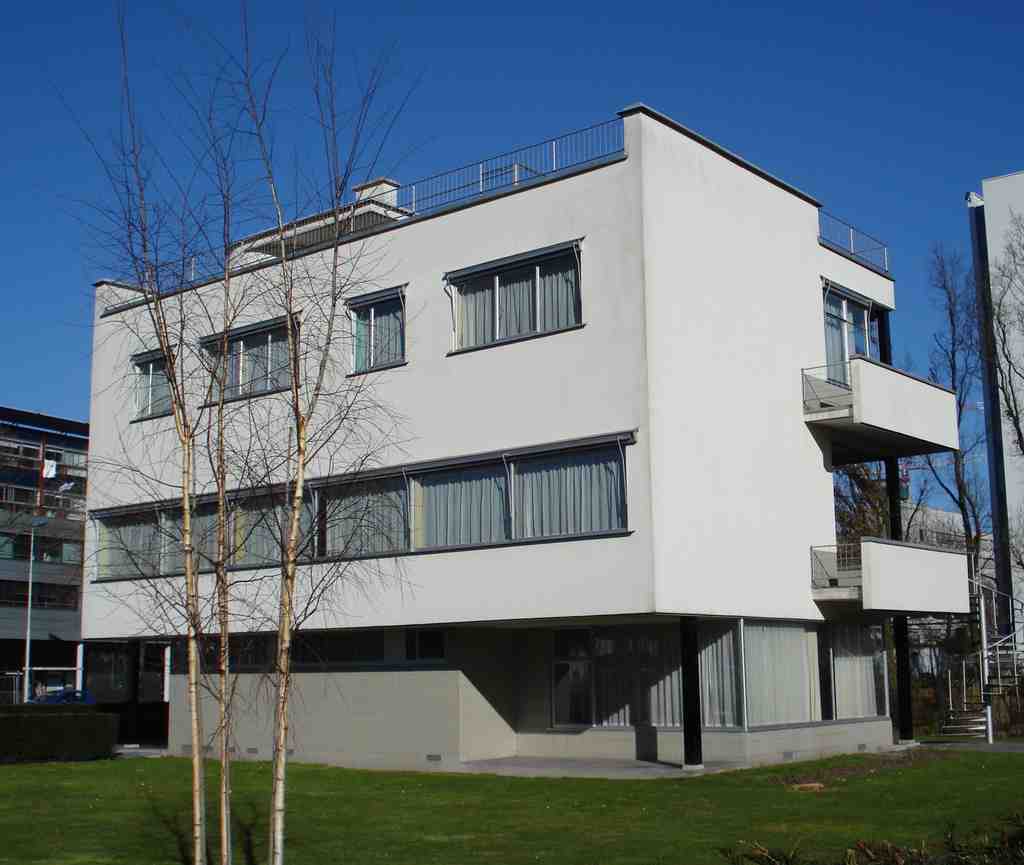
To spot Sonneveld House, look for a striking white, cube-shaped building with wide horizontal windows and clean, modern lines set slightly above the ground-it almost looks like it’s floating on thin black pillars beside a tidy green lawn.
Now that you’re standing before this bold slice of Rotterdam history, let me take you on a journey back to the early 1930s-a time when Rotterdam was buzzing with ideas and change. Walk a little closer, and you might just hear whispers of grand plans and restless ambition swirling around the clean, white walls.
Imagine it’s 1932. Here, architect Leendert van der Vlugt, armed with a vision and quite possibly too many cups of strong coffee, is planning a home for A.H. Sonneveld, a true industrial pioneer. Sonneveld, having wandered the skyscraper-filled, bustling streets of the United States and worked near the cutting-edge Van Nelle factory, wanted something radical: a house so modern, it would make his old, dark home feel as outdated as yesterday’s newspaper. Out with noisy ornaments, and in with light, air, and space! Every detail was meticulously considered-from the furniture’s metallic armrests (Sonneveld personally asked for the curvy ends to be chopped off for style!) to the position of the house on the lot, squeezing every last Dutch sunbeam into the garden.
Step into the era’s spirit: after a world rocked by industrial revolutions and a devastating war, many thinkers were searching for better ways to live. While some explored new politics or spiritual philosophies, others, like Sonneveld and van der Vlugt, poured hope into fresh architecture and design. Their motto? “Form follows function!”-in other words, a house should help, not hinder, your day.
Take a moment to picture the family’s life here. All around, you’d have heard the click and whir of modern gadgets and the soft swish of an automatic dumbwaiter, while a system of central clocks made sure everyone-or at least the toast-was punctual. Most striking: every room had instant access to outdoor space-balconies, roof terraces, even the staff rooms had sunny escapes. And speaking of staff, Sonneveld insisted everyone living or working here got the same comfort, from warm bathrooms to their own radios for music. Revolutionary! You could say it was the kind of workplace where the only drama was if the radio played the wrong song.
In the decades that followed, this house would witness world-shaking events: during WWII, it became a first aid post as bombs fell over Rotterdam. After the war, it survived traffic chaos, wild building plans, and even a period as Belgium’s consulate. Through it all, you might imagine the house steadfastly keeping its windows sparkling and its marble skirting boards pristine.
By the 1990s, Sonneveld House was ready for a comeback. Meticulously restored right down to its chocolate-colored Bauhaus carpets and original kitchen-complete with the revolutionary Bruynzeel “modular” design-it opened up as a museum, drawing visitors from around the world. If you listen carefully, you might catch echoes of children on audio tours, or the gentle clink of 1930s tea cups during anniversary parties.
So there you have it! A home born from hope, shaped by global travels and local innovation, and still as modern as ever-if not a little less obsessed with synchronizing clocks. Go ahead, walk around its crisp white lines and glassy windows. Just don’t try moving in-it might not have Wi-Fi, but it certainly has stories to spare!


