50+ languages

 Rotterdam · Netherlands
 Rotterdam Audio Tours
Discover Rotterdam with self-guided audio walking tours
headphones
2 tours
pin_drop
20 landmarks
translate
Top landmarks
The Rotterdam everyone knows.
The landmarks in every guidebook — and the tours that tell you what guidebooks don't.
A few words on Rotterdam
Bombed flat. Built back bolder.
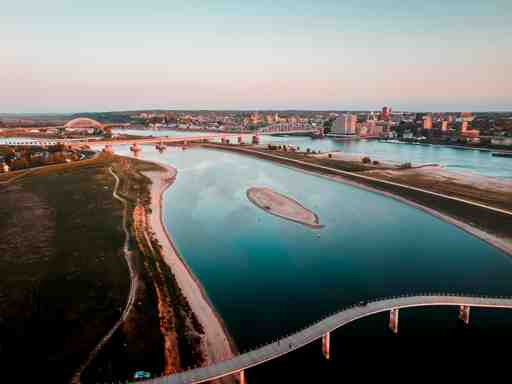
On May 14, 1940, the Luftwaffe bombed Rotterdam nearly to rubble. About 900 people died and 80,000 were left homeless in a city that had existed for nearly six centuries. The reconstruction began almost immediately and never really stopped. Where Amsterdam preserved and celebrated its old city centre, Rotterdam simply built new things and let them be excellent. The Lijnbaan, Europe's first pedestrian shopping street, opened in 1952. The Cube Houses by Piet Blom arrived in 1984. The Erasmus Bridge, a swan-shaped cable-stayed span, crossed the Nieuwe Maas in 1996. The Markthal, a residential building shaped like a hollow arch with a painted interior ceiling, opened in 2014. Each decade added something that nobody in Amsterdam would have permitted.
The port is the largest in Europe and the seventh-largest container port in the world, handling 40 million tonnes of goods annually.
Parts of the city sit more than six metres below sea level. In 2011, Rotterdam became the western terminus for China-Europe freight rail services. The city has 38 skyscrapers and over 350 high-rises. More than half the population has a parent born outside the Netherlands, and 180 nationalities are represented. In a country often associated with homogeneity, Rotterdam is a genuine exception.
Rotterdam
Rotterdam FAQ
Before you walk.
Every Rotterdam tour, in your language.
All 50+ languages, included with every booking.
🇬🇧 English🇫🇷 Français🇪🇸 Español🇩🇪 Deutsch🇮🇹 Italiano🇯🇵 日本語🇨🇳 中文🇰🇷 한국어+ 41 more
star AudaTours Unlimited
Visiting more than one city? Subscribe.
Unlock every Rotterdam tour — plus thousands more worldwide. Cancel any time.
$4.99/week · Cancel anytime


Loved by travellersThousands of tours started.
Thousands of tours started.
Plenty of opinions.
4.8 across the App Store and Google Play. Here's a few we keep coming back to.
starstarstarstarstar
This tour was such a great way to see the city. The stories were interesting without feeling too scripted, and I loved being able to explore at my own pace.

Jess
Tbilisi Tourstarstarstarstarstar
This was a solid way to get to know Brighton without feeling like a tourist. The narration had depth and context, but didn't overdo it.

Christoph
Brighton Tourstarstarstarstarstar
Started this tour with a croissant in one hand and zero expectations. The app just vibes with you, no pressure, just you, your headphones, and some cool stories.

John
Marseille Tourdownload Get the app Pop your headphones in.


Pop your headphones in.
Step outside.
Free to download. Tours in every city. Start in 60 seconds — no account, no card.

headphones
~ 4 min until your first tour starts
public
1,000+ cities worldwide
all_inclusive
AudaTours
Unlimited
Every tour. Every city. One subscription.
3096 tours2272 cities138 countries50+ languages
$39 /year
all_inclusive Explore Unlimited