
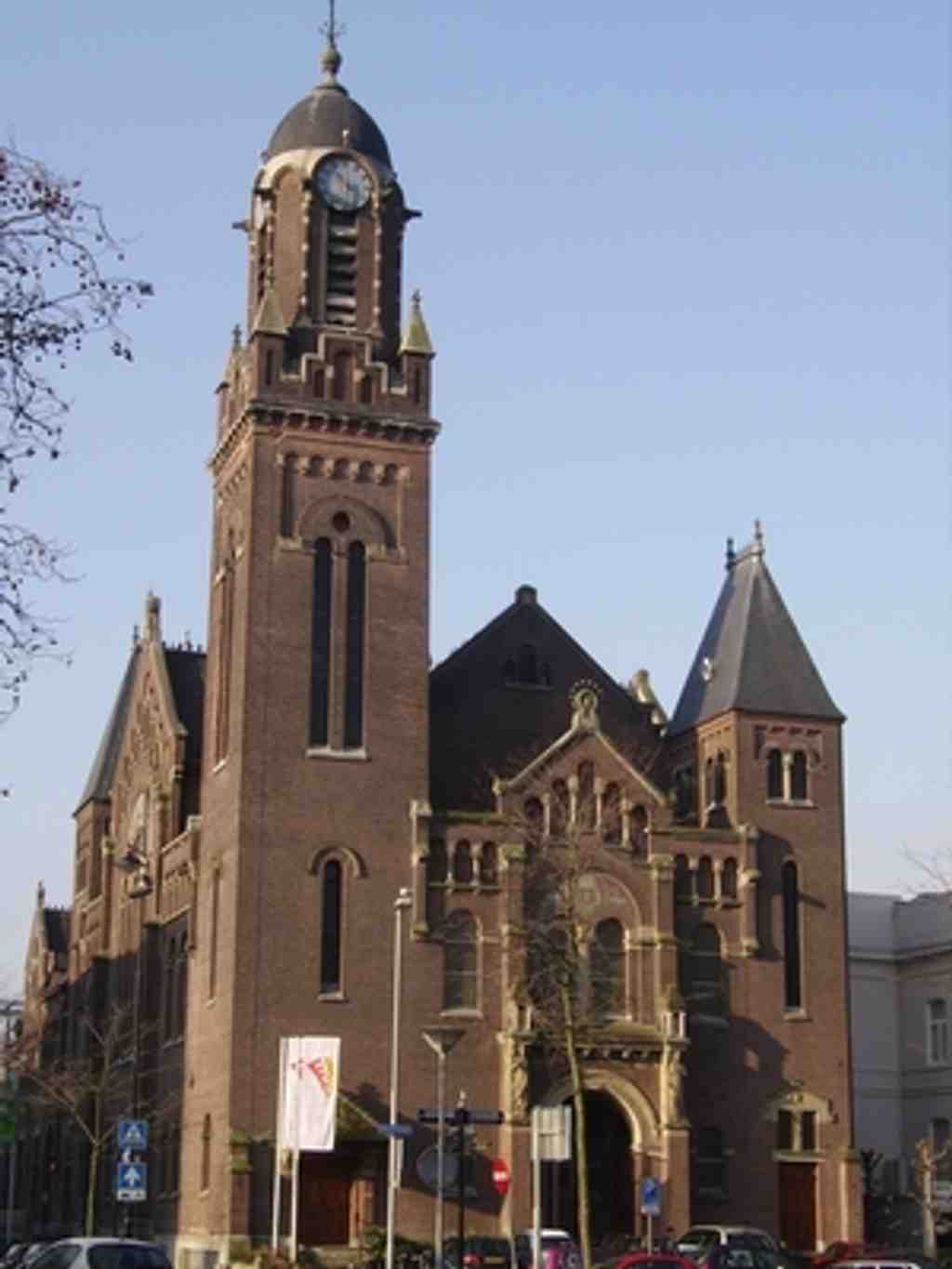
To spot the Arminius Church, look for a grand square building made of red brick, with a towering, clock-topped spire rising high at the corner where Museumpark and Westersingel meet-it's hard to miss with its arched doorways and decorative stonework right in front of you.
Alright, get ready to dive into a story where faith, architecture, and a bit of rebellion meet! You're standing face-to-face with the Arminius Church, a place with roots so deep it almost needs its own archaeologist. Imagine yourself here in the late 1800s-the bustle of the city is all around, but a different energy hums near these walls. The church wasn’t always sitting pretty on the Westersingel. The Remonstrants, a group of independent thinkers who split from the mainstream church back in 1610, spent years meeting in secret. It's true-picture hushed voices echoing through a hidden church tucked away in an old brewery. If walls could talk, that old brewery on Vissersdijk would’ve had more drama than a soap opera.
Back then, public worship was forbidden for these folks. Even after religious freedom in 1795, the Remonstrants clung to their “secret church” for almost another century, either out of habit, stubbornness, or maybe because they liked the craft beer connection. But fate had other ideas-floods swept through their old spot, turning sermons into swimming lessons. After another particularly soggy incident in 1894, talk of a fresh start wasn’t just a hope-it was a necessity.
Now, here’s where the plot thickens! The city wanted their old patch of land to expand the stock exchange, so there was a swap. The Remonstrant congregation landed a plot right here, on the edge of the then-untamed Land van Hoboken. Imagine the foundations taking shape in 1895, stones stacked by determined hands and hopeful hearts. The building itself was a marvel-designed by Henri Evers and Jacobus Stok, complete with a hint of family ties and church politics (Evers was married to the preacher’s daughter, talk about keeping it in the family).
On May 23, 1897, the Arminius Church opened its doors with a festive ceremony, and a year later, the majestic organ came alive-its first notes probably rattling the rafters and maybe a few nearby windows too. Don’t forget to look up: that 45-meter tower isn’t just for show. In 1909, it was equipped with clocks and, if you listen closely, you might almost hear the chimes today.
The architecture is something special. It’s bold-square in structure, dressed in red brick and dressed up with decorative stone, giving you a splash of neo-Romanesque flair. See that magnificent central portal? Over it, is an inscription: “Unity in what is necessary, freedom in what is uncertain, in everything, love.” If you ask me, it’s the world’s shortest-and probably best-life advice. Breathe in the beauty of the sculpted figures, the glass mosaics by Facchina, and the cheerful stained glass. When the sun shines, patterns of colored light flicker through the windows, painting the floor in shifting designs-almost as if the church is holding its own private light show.
Inside, the square layout, wooden vaults, and galleries rest on iron columns, making the space airy and full of gentle echoes. Jugendstil details appear everywhere-carved wood on the pulpit, stylish lamps, and flowers hidden in the glasswork, a bit like a treasure hunt for art lovers. Above you, there’s an American pine ceiling held by stone pillars-tough enough to outlast a few lifetimes of sermons!
And here’s a fun twist-this building was almost real estate instead of a place for worship, and the Remonstrants had to bargain for the right to build. They won, and now, both the church and its legendary organ are protected monuments, cherished reminders of the struggle for freedom and the joy of expressing faith openly.
So next time you walk by, remember: this isn’t just a church-it’s a testament to perseverance, family dramas, flood-induced renovations, and the everlasting quest for unity, freedom, and love. Not a bad legacy for a “hidden” congregation that stepped into the spotlight, right?


